Lead Quality vs. Lead Quantity: Why B2B Teams Are Rethinking Their Funnel in 2026
Bigger buying committees and tighter budgets are forcing B2B teams to rethink lead quality vs. quantity. Here's how top teams rebalance the tradeoff in 2026.
Updated June 19, 2026

Launching a software product from scratch isn't a complex, unknown path anymore. However, most software teams overcomplicate it. You might have seen it happen...
A brilliant software product development team spends months crafting elegant code. The architecture? Flawless. The deployment? Smooth. But then zero adoption. The product dies a slow, expensive death.
Why? Because software success today demands equal parts development excellence and market intelligence, which starts way before your first sprint planning session.
Looking for a Digital Marketing agency?
Compare our list of top Digital Marketing companies near you
With this article, you'll stop launching products that nobody wants. Instead, understand your target audience before you begin any software product development. Then, market strategically to get the maximum return on your hard work.
Before your developers write a single line of code, you need real clarity. Not the kind that comes from boardroom assumptions, but the kind that emerges from systematic research.
Software development research isn't just a box to check but the foundation that determines whether you're building a product or burning cash. Smart executives know that every dollar spent on early research saves multiple wasted dollars in development pivots later.
Forget what you think users want, and instead, find out their key pain points and needs.
Start your user research by talking directly to your target users. Go beyond surveys with pre-written answers and have actual conversations to dig into their daily frustrations and workflow bottlenecks.
Consider running structured interviews with 15-20 potential users. Ask open-ended questions like:
Record these sessions (with permission) and look for patterns in their responses.
Your UX team should help you build detailed personas based on these conversations. But personas aren't just demographic data dumps. They need to capture emotional triggers, decision-making processes, and the specific moments when users feel most frustrated with current solutions.
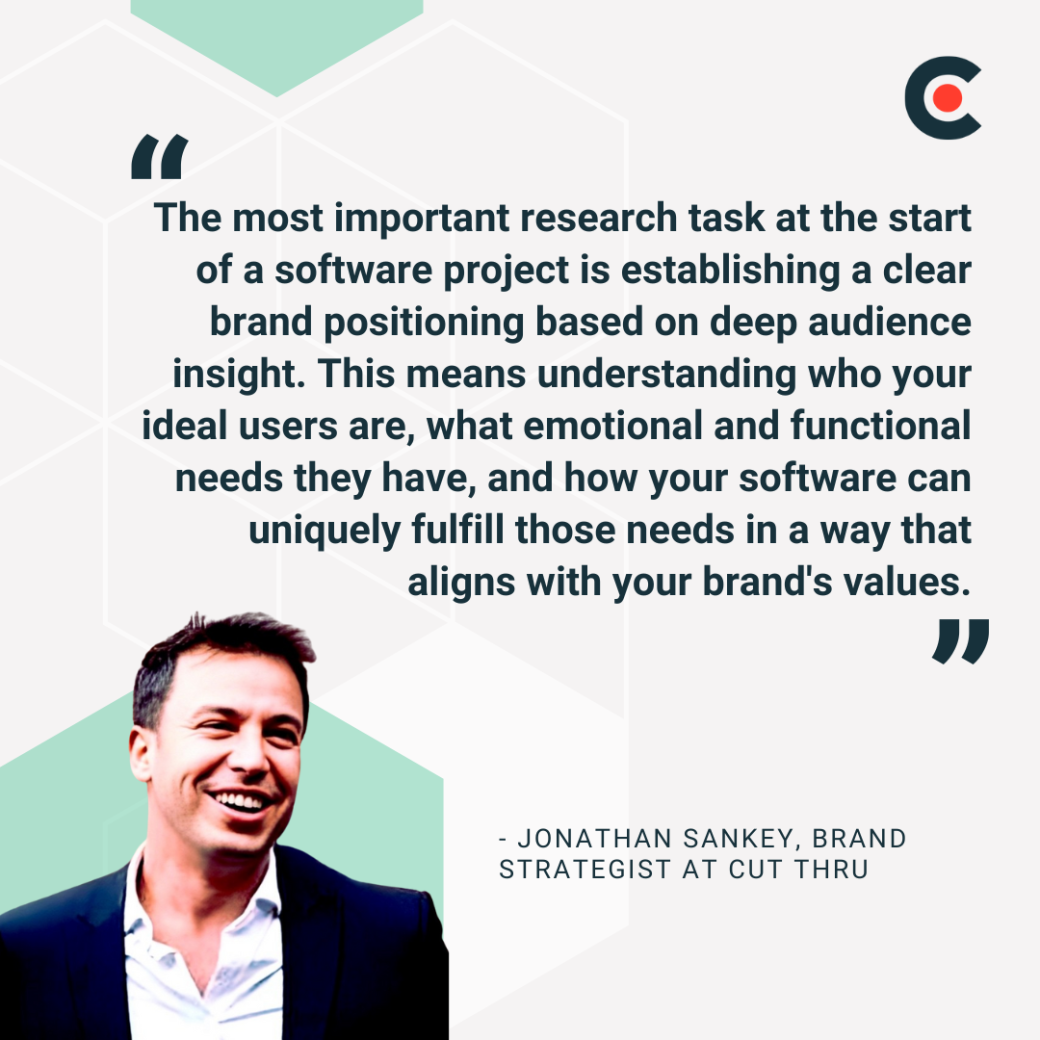
"The most important research task at the start of a software project is establishing a clear brand positioning based on deep audience insight. This means understanding who your ideal users are, what emotional and functional needs they have, and how your software can uniquely fulfill those needs in a way that aligns with your brand's values. Without this clarity, the product risks blending into a crowded market or failing to build trust. A strong foundation in brand strategy ensures your software resonates meaningfully and consistently from day one," says Jonathan Sankey, Brand Strategist at CUT THRU.
Map out customer journeys that show exactly how users currently solve their problems.
These pain points become your product's features and a useful guide during software ideation.
Once you understand your users' needs, it's time to "define success and align it with all stakeholders," as Shailendra Gupta, CEO of Mind IT Systems, puts it. This alignment phase determines whether your project thrives or becomes another statistic.
But your stakeholder meetings need structure. So, create a requirements document that clearly outlines:
Jovana Milicevic, Growth Director at Itekako, emphasizes the importance of having a shared "understanding [of] how solving this problem translates into business impact. Getting this right early not only guides better product decisions but also helps avoid costly pivots down the line."
All this helps transform marketing insights into concrete product functionality.
Your competitors have already made mistakes. Learn from them.
"It is also important to research the market to answer 'why us' or the differentiators of the project," emphasizes Tahir Qazi, CEO of iQuasar. Your competitive analysis should reveal gaps in the market, such as features nobody offers, audiences everyone ignores, or use cases competitors haven't considered.
Technology decisions made today impact your marketing capabilities tomorrow. Research available frameworks, platforms, and integrations with both development efficiency and marketing effectiveness in mind.
Consider these technical factors:
Your technical stack should support marketing goals. Choosing a headless content management system (CMS), for instance, gives marketing teams flexibility to create landing pages without developer involvement. Selecting frameworks with strong application programming interface (API) support enables future integrations with marketing automation tools.
Software marketing isn't something you bolt on after development. You must weave it throughout the entire software development procedure. These tasks ensure your product doesn't just function well but actually reaches and resonates with your target audience.
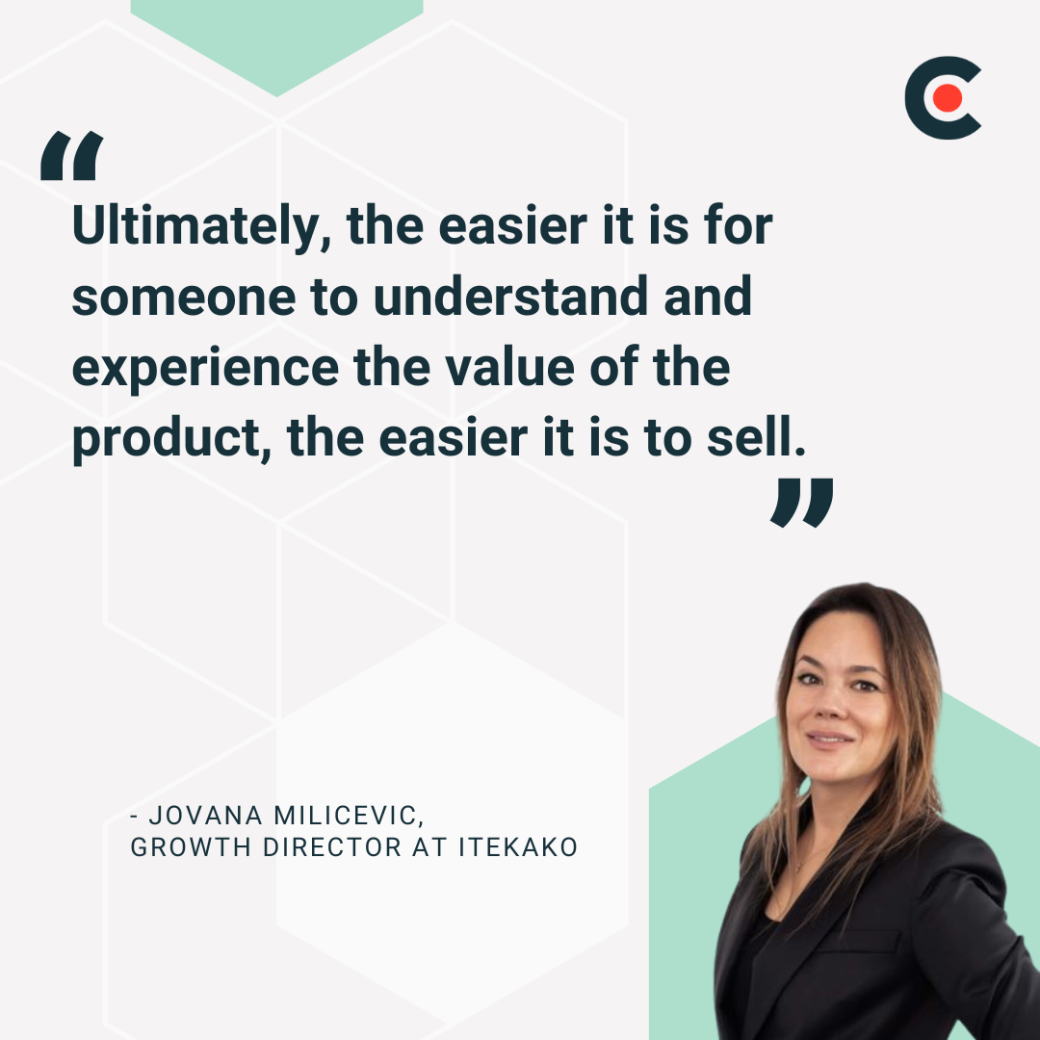
"Ultimately, the easier it is for someone to understand and experience the value of the product, the easier it is to sell," Milicevic reminds us. Every marketing task should focus on clarifying and amplifying your product's value.
SEO for software products starts with understanding how your audience searches. They're not just looking for "enterprise resource planning solutions," they're also typing "how to manage inventory across multiple warehouses" or "the best software for manufacturing scheduling."
So, build your keyword strategy around:
Then, create content that matches search intent at every stage.
Software development marketing through social media isn't about being everywhere, but it's about being where your audience pays attention. For instance, B2B software buyers hang out more on LinkedIn and industry-specific forums, not Instagram.
Create your strategy and content calendar with this in mind. Your content calendar should also include:
"Developers should build with storytelling and differentiation in mind. That means thinking beyond just functionality and considering what will make the product stand out in a crowded market. For example, features that demonstrate clear user value, measurable impact, or unique capabilities are easier to market," Milicevic explains.
And never forget to share your development journey. When you overcome a technical challenge or implement user feedback, tell that story. It humanizes your brand and builds trust before launch.
You can't improve what you don't measure. Define success metrics that matter for your software development project management:
Implement tracking tools early. It could be Google Analytics for website behavior, Mixpanel or Amplitude for product analytics, and Hotjar for understanding user interactions. These tools need to be configured during development, not after.
"The build should support deep linking, thus seamlessly connecting with any performance marketing in the future," Gupta advises. Your analytics setup should track user journeys from the first touchpoint through conversion and ongoing usage.
Your brand isn't just your logo but the complete experience users have with your product. Every interaction, from error messages to email notifications, communicates your brand personality.
Develop clear guidelines for:
"Developers should keep in mind that every feature and interaction is a reflection of the brand, so simplicity, clarity, and emotional impact matter," Sankey notes. Your onboarding low, for instance, should feel consistent with your marketing website. Jarring transitions between marketing promises and product reality kill trust instantly.
Email still remains your most direct line to potential users. Start building your list early with a strategic approach:
Pre-launch campaigns
Launch sequences
Post-launch retention
Each email marketing campaign should drive one specific action. Trying to accomplish everything in one message accomplishes nothing.
Finding the right software development partner means looking beyond technical skills. You need a team that understands the intersection of technology, user experience, and market positioning.
"Look for a development partner who understands that building software is as much about solving the right problem as it is about writing clean code. They should be comfortable working at the intersection of product, brand, and user experience," Sankey advises.
Evaluate potential partners by their discovery process. "Look for signs of this in how they approach discovery: do they ask strategic questions about your users, value proposition, and business model? Do they have experience conducting user interviews, rapid prototyping, or validating product-market fit?" Milicevic suggests.
Size matters, too. "Choose partners who work with 10 to 20 clients, and not thousands, because otherwise to build something really big, that level of collaboration may not be possible with a very big firm," Gupta recommends. Smaller firms often provide the dedicated attention and strategic thinking your project needs.
Success in software product development comes from treating research and marketing as integral parts of your software development process, not add-ons.
When you understand your users deeply, align stakeholders around clear goals, and build with marketing in mind, you create products that don't just work; they win in the market. The nine tasks outlined here aren't sequential steps but interconnected activities that inform and strengthen each other throughout your software development plan.
Your next software project doesn't have to be a leap of faith. Make it a calculated stride toward market success.
Ready to dive deeper? Download the full software development checklist today.
Set your software development project up for optimal success with expert guidance on the following subjects: