
Your Brand Strategy Problem Probably Isn't a Messaging Problem
AI made brand execution cheap, but not brand strategy. Here's why agencies must shift from logos to diagnosing the gap between what companies say and do.
Updated September 2, 2026

Even a great product can struggle to succeed if customers don’t understand what makes it different. Features, pricing, and support matter, but product branding is what helps your offering stand out and stick with customers.
Product branding helps your offering stand out, build trust, and give customers a reason to choose it over similar products. A strong brand strategy also creates a consistent identity that customers can recognize and remember.
In this guide, we’ll explain what product branding is, why it matters, and how to build a memorable product brand in three steps.
Looking for a Public Relations agency?
Compare our list of top Public Relations companies near you
Your company’s brand represents your organization as a whole, including its mission, values, and overall market reputation. Product branding, on the other hand, is narrower and more tactical. At its core, product branding encompasses creating a distinct identity for a single, specific item, even if that product exists within a larger portfolio or product line.
Product branding includes:
Together, these factors help your customers recognize your product, understand what it does, and connect with it. With the right product branding, your marketing team is doing a significant chunk of your sales team’s job for them.
In most markets, feature parity is common. Even if you have a technical advantage at launch, competitors can often replicate it without breaking a sweat. Pricing is even easier to match. What’s much more difficult to copy is how people perceive your product, and that’s where branding works the hardest.
Buyers face a practical reality: They often can’t fully evaluate a product’s technical quality before they buy it, especially in software, SaaS, and B2B markets, where the real test takes place only after implementation. Lacking a way to verify quality up front, consumers tend to rely on brand signals, such as reputation, trust, and credibility, to predict the product’s caliber and merit. A product that feels more credible and established and that consumers can envision using in their own lives automatically earns the benefit of the doubt, even against a more objectively suitable option.
Without strong branding, less-than-memorable products tend to blend in with the rest, compete primarily on price, neglect to make an impression, and end up playing by their competitors’ rules.
Study your audience demographics, such as age, job title, industry, and company size. You must know who they are before you can understand their behavior.
Demographic data tells you who your audience is, but not the reasons behind their purchase decisions. Understanding buyer behavior gives you an immediate leg up in the race to create a product brand that people respond to.
That means identifying your audience’s biggest pain points, what frustrates them about their current solution or workaround, their goals, their challenges, and why they’re looking for a solution like yours right now.
With this information, you can turn your list of product features into a story. You’ll do this through messaging that directly addresses the problem your audience is already trying to solve, using their words rather than technical jargon or marketing speak.
You might be surprised at how many research options you have to choose from. Each one reveals a different facet of your audience’s needs and motivations.
In the same vein, don’t underestimate the importance of online forums and social media discussions, which often reveal both the challenges your audience is trying to solve and the specific vocabulary they use around the topic. These findings can be more useful for product messaging than anything you might see in a formal survey or interview.
Your demographic research will begin to pay off when you use it to position your product in the market.
After performing audience research to determine who your audience is and what problem they’re trying to solve, the next step is to analyze the competitive field. What does the product do better, faster, or differently than your competitors’ offerings? Establishing the answer requires comparing your product’s features with the alternatives and identifying the gaps it fills that the competition doesn’t.
Many marketing teams give in to the instinct to list every advantage their product offers, but that actually dilutes the message more than backing it up. You can’t be everything to everyone. Focus on one or two core differentiators, and create your product branding around them.
Consider these real-world examples.

This Toronto-based computer and network security firm chose trust as its main differentiator. 1Password centers its product branding and architecture around zero-knowledge security, and the company now protects more than 1.3 billion credentials for over 180,000 clients, including Slack, Stripe, and Salesforce.

Email startup Superhuman created its AI-powered productivity platform entirely around speed. With the platform’s keyboard shortcuts, near-instant load times, and lightning-fast email client, users report getting through their messages twice as fast as they did on Gmail.
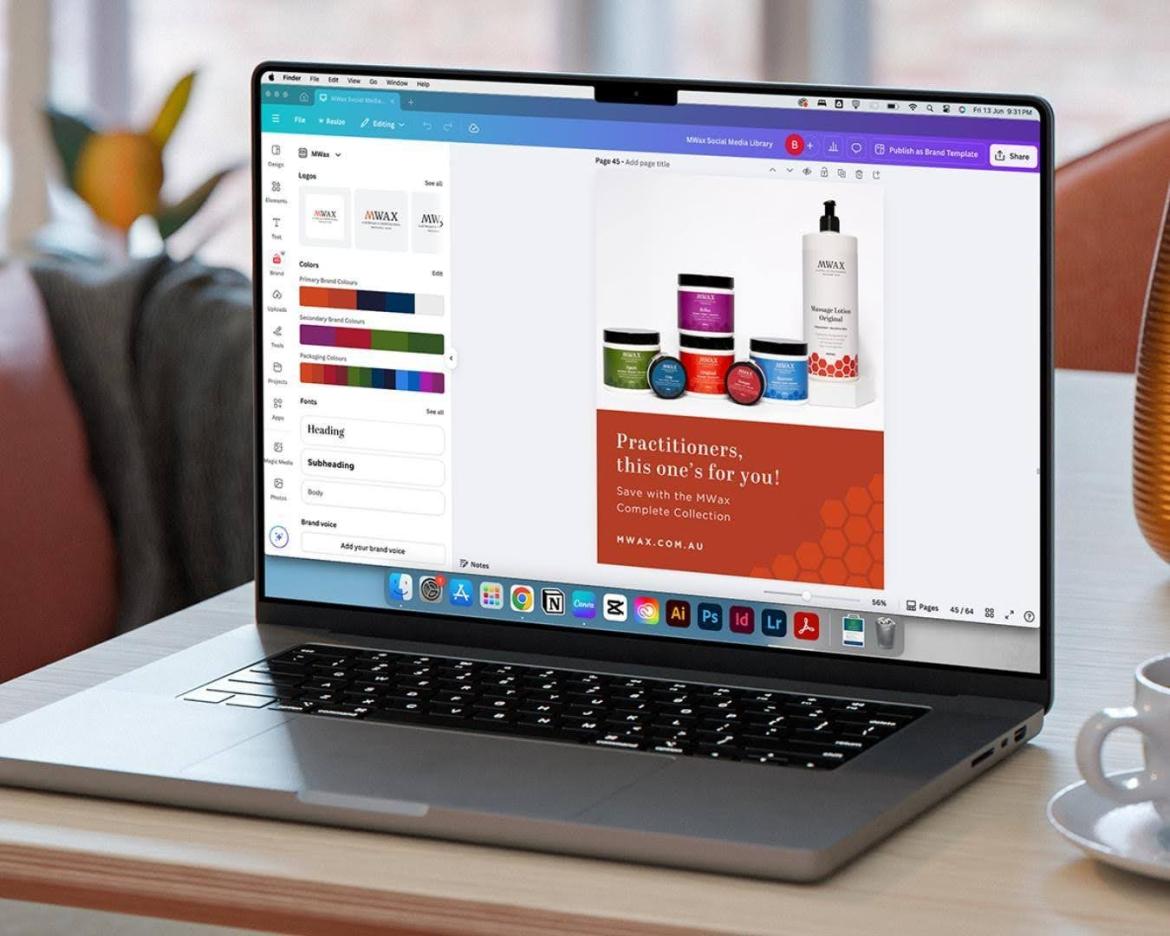
Canva is well known as a design platform for non-designers. The platform’s thousands of templates, intuitive user interface, AI tools, and collaboration functionality are ideal for marketing teams with varying skill levels. Canva’s ease of use has directly led to over 260 million monthly users.
Your instinct might tell you the key to positioning is to list every possible benefit of using your product, but that simply isn’t accurate. A definitive, specific claim is more credible and more memorable than a laundry list of features (like the list you’d find on any other product’s spec sheet). None of the three companies mentioned above tried to compete on every dimension at once, and their restraint is exactly what made each one recognizable.
Treating every product feature as a differentiator and failing to lean into one or two is an error that marketing teams frequently make during product positioning. Others include:
Good positioning revolves around taking a stance, staking your claim, and refusing to sway, at least long enough for the product branding to do its job.
Once you’ve established your product’s messaging during product positioning, every visual and verbal component must echo that message everywhere a customer encounters it.
Your product’s visual identity consists of the elements someone sees before they read or hear a word of your messaging. These elements include the logo, color palette, typography, and overall design language.
Many teams that lack design expertise in-house recruit outside help. If you’re considering doing the same, Clutch’s hiring guide for graphic designers will take you step by step through vetting a design partner’s portfolio and process before making it official.
The product’s name, tagline, messaging, and tone of voice combine to create its verbal identity, which encompasses the elements someone hears or reads. Consistency is mandatory across all touchpoints, from your website and support verbiage to the product UI and sales materials.
Together, the visual and verbal identity should consistently reinforce the value and quality that you’ve promised consumers your product delivers. Without that through line, even the most professional, polished advertising tends to fall flat.
As an example, if your product positioning centers on enterprise-grade reliability, your branding should feel polished, dependable, and professional throughout. Your website should make that promise, but it should also appear baked right into the product interface, the onboarding emails, the support documentation, and even the tone of an error message.
Stripe, a platform that enables businesses to accept online and in-person payments, commits to consistency like this across nearly every surface a developer touches: its marketing site, technical documentation, dashboard, checkout flow, and more. The financial platform's consistent identity encourages developer trust before they ever write a line of code.
Every touchpoint is an opportunity to either reinforce the brand promise or cut it off at the knees. Without consistent positioning, customers absolutely notice on some level, even if they can’t articulate what feels incomplete or off.
It’s often here, at the juncture of all of its components, that product branding falls apart. When different teams own the visual and verbal identity, keeping design, marketing, and product development separate, they’re more likely to lack the through line that ties them together. Maintaining consistency requires deliberate coordination, whether that’s a shared brand brief, a style guide for every team to reference, or regular check-ins among the teams responsible for each touchpoint.
It’s essential not to treat audience research, positioning, and identity as three separate projects running in parallel. There must be a sequence in which each step depends on the one before it.
If you skip a step or even perform them out of order, it shows. Maybe your company's positioning relies heavily on assumptions rather than user research, or perhaps your product’s logo looks professional but doesn’t communicate who it’s for.
By the same token, don’t consider product branding a one-time task you finish before your product launch and then never revisit. Markets fluctuate, competitors reposition their products, new brands emerge, and audience preferences shift. Periodically revisiting this sequence enables your brand to stay relevant and avoid looking out of touch with your audience.
Product branding is far more than colors and logos. It's a strategy, and it often makes the difference between a product people remember and one that competes on price until something newer and more compelling replaces it. Thoughtful product branding earns audience attention more easily, creates trust before sales conversations even start, and lets you hold your ground when a competitor rolls out something new. That's an authentic advantage, and it doesn’t wait until launch day to make itself apparent.
If you need a hand with pre-launch product branding, working with an agency that specializes in exactly that can put you ahead of the competition. Clutch makes it easy to compare product branding agencies with verified reviews from real clients, so you can find the ideal partner for your specific product and market.