Micro SaaS: How Solo Developers Build Profitable Products
Solo developers now make up 35% of startups. Discover how micro SaaS lets individuals build and launch profitable products without a big team.
Updated May 26, 2026

Thousands of products hit the market every year, but only a fraction survive. Those with the best chance have a strong, well-crafted product launch marketing plan. This is what product launch experts say is essential to creating a plan that sets your product up for success.
Out of the endless list of products that enter the market every year, only 20% survive — why is that?
The secret is a well-thought-out product launch marketing plan. It's not enough to just have a great product — you need to know how to introduce it to the world. Even the most innovative products can flop without a solid marketing strategy.
Looking for a Software Development agency?
Compare our list of top Software Development companies near you
Ilgin Kezer, Head of Business Development at Cool Digital Solutions, says that, “a successful product launch relies heavily on marketing, and a multi-channel strategy can optimize reach.”
A product launch marketing plan is the key to a successful launch. It outlines your marketing goals, target audience, messaging, and tactics. It's essentially your blueprint for generating buzz and driving sales.
In this guide, we'll walk you through creating an effective product launch marketing plan.
A product launch marketing plan can help you find out what your audience wants and give them just that.
Paul Wareham, Product Manager at Mindsea, says their company promotes seamless collaboration between the development and marketing teams to create compelling content and product launch plans.
“We focus on clearly communicating the exact problem the product aims to solve for users and highlighting how our solution meets their needs effectively,” said Wareham. “By doing so, we help ensure that the marketing messaging resonates with the target audience and accurately reflects the product’s value proposition.”
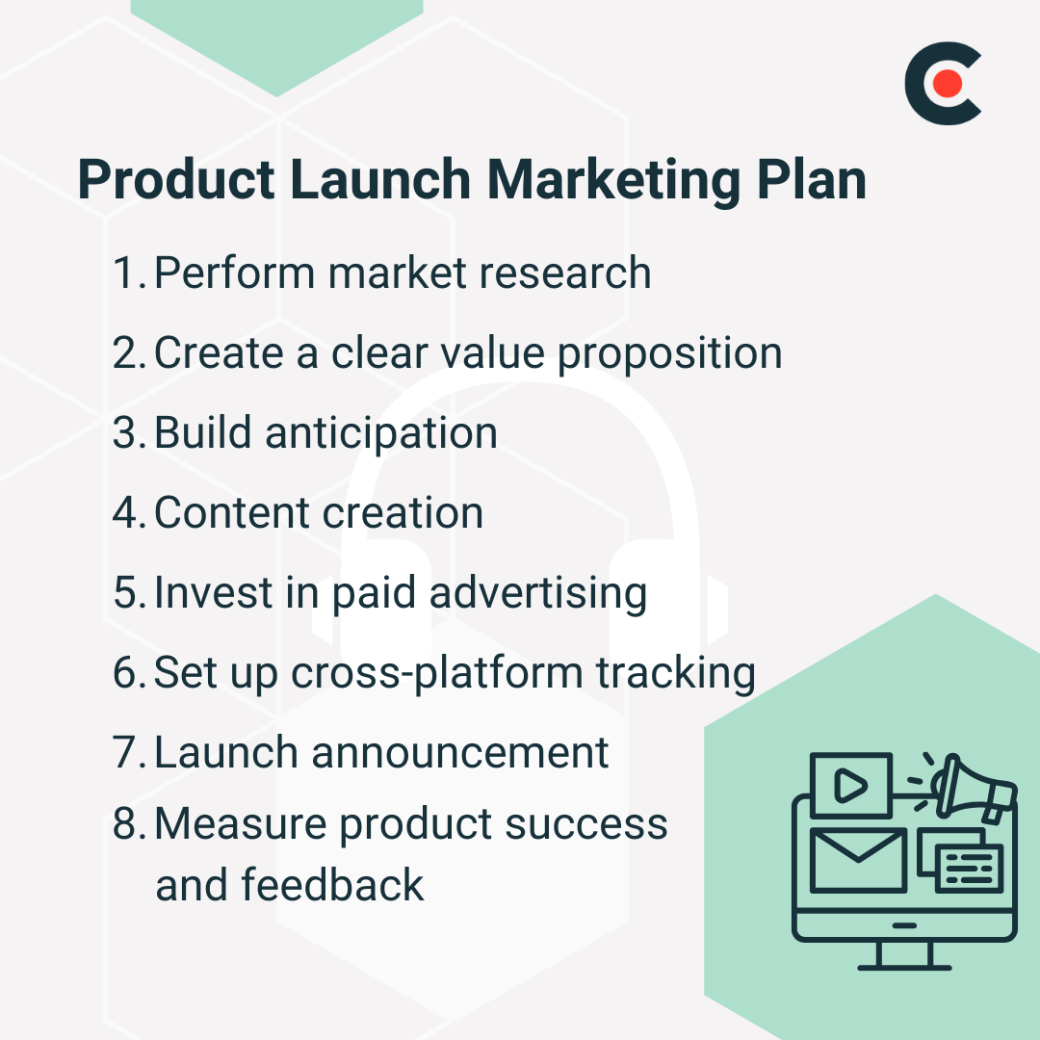
Here's how you can create one with just eight simple steps:
Before you even think about launching your product, you need to understand your market inside and out. We're talking about market research. This is your chance to find out everything you need to know about your competitors, what they're doing right, and what you're doing wrong.
Here's what your to-do list should look like:
The next phase of market research is learning all about your ideal consumer. Using sources like the US Census Bureau and conducting surveys are smart choices — practiced by 85% of professionals.
Don't just stick to numbers, though. Get to know your customers deeper with qualitative research methods like in-depth interviews (34% of researchers' preferred choice). This will help you understand their motivations, pain points, and true wants.
The next step is to develop a unique selling point (USP). If you want to stand out from your competitors, your product simply won't survive without a USP. It tells your audience why your product is superior, especially if they're already loyal users of the competing products.
Amit Samsukha, Director & CTO at Emizen Tech, says that “A distinct value proposition, combined with diverse marketing channels, expands reach and enhances engagement.”
Your USP should align with four factors:
When you've answered the questions of what, how, who, and why, it's time to develop a multi-channel strategy. That means defining a roadmap that takes the product from your imagination to the customer's hands (or computer, if your product is digital), this is the heart of your product launch marketing plan.
It's all about the best way and time to announce the product. Since you're opting for a multi-channel strategy, you don't have to restrict yourself to one form of media.
Each channel should consistently get one thing across: the USP. But since you'll be catering to the specific preferences of the audience on that platform, the content will be unique every time. For instance, visual content performs better on Instagram, while articles are more suitable for LinkedIn.
You may even get results in places you wouldn't expect. For instance, 86% of consumers say they recall podcast ads more than any other channel! Who would've thought?
Yes, a groundbreaking product can certainly generate buzz. But to maximize its impact, you still need a well-executed product launch marketing plan.
It's not enough to just release a product into the market and hope people stumble across it. You need to create a strategic plan to generate excitement, drive awareness, and, ultimately, boost sales.
At Magora, their team works closely with marketing teams with beta testing programs that engage users with demos and teasers.
“[Beta testing programs] engage early adopters to validate the product and generate word-of-mouth marketing,” said Andrew Volgin, Head of Business Development at Magora.
To achieve this, we'd recommend you to:
All your outreach efforts should focus on engaging influencers and brand advocates who can amplify your message during this time. Collaborating with influencers can extend your reach by a ton! Brands that engage influencers see an average return of $6.50 for every dollar spent on influencer marketing.
Of course, any product launch marketing plan is incomplete without content creation. That includes promo materials like emails, blog articles, press releases, and social media posts. Each type of content plays its role in generating excitement and informing your customers.
When it comes to email, the more personalized and segmented, the better. Such emails can deliver six times higher transaction rates than generic ones. Add a few engaging visuals and a CTA, and you're golden.
“Another powerful tactic is storytelling,” said Kezer. “Businesses can build an emotional bond with their audience by crafting an engaging story that emphasizes how the product helps customers with their problems or goals.”
Meanwhile, blog articles can educate your audience about the product's benefits. According to Impact Group Marketing, companies that regularly blog receive 97% more website links. That's all the organic traffic you need during the launch phase.
You can also opt for press releases for formal announcements. These press releases should include essential information such as product features, launch dates, and media contact details. When done right, they can generate millions of views.
Your product launch marketing plan will flourish once you invest in paid ads. You'll reach a broader audience much faster. A well-planned paid ad campaign can yield a lot — an average of $2 for every $1 spent on Google Ads.
You don't have to restrict yourself to a certain type of paid ads to yield returns:
All of the above options can lead to different types of success for your business.
Before you launch your product, you need to ensure you're ready to track its performance from the get-go. This is the time to set up cross-platform tracking and conduct thorough campaign analysis.
Cross-platform tracking gives a holistic view of customer behavior across all your channels. You can opt for Google Analytics and UTM parameters to track the performance of specific campaigns, ads, and content.
Finally, you're ready to launch your product! This is a pivotal moment — your product's formal introduction to the market.
That means you need to create a truly compelling press release. It should include critical product features, benefits, launch date, and availability. Distributing this announcement through multiple channels can also maximize reach.
Hang on. Your work isn't done yet! You still need to measure the success of your product launch marketing plan and gather feedback. It's time to see how well your product meets everyone's needs.
Remember when you set up cross-platform tracking and analysis? This is when it'll come in handy. But how can you effectively monitor when you don't know what you're tracking?
Here are the key performance indicators (KPIs) you should keep an eye on:
These aren't just a few fun numbers to look at. Companies that regularly analyze their marketing data are five times more likely to make informed decisions that positively impact their return on investment (ROI). For instance, tracking conversion paths can show you which channels are most effective in driving sales so you can allocate resources more effectively.
“By monitoring user analytics and gathering feedback, we can provide insights that inform ongoing marketing strategies and product improvements,” said Wareham.
Launching a product is thrilling, but it's no time to wing it. Now that you've read our guide, you can create a winning product launch marketing plan.
“A poorly designed marketing plan can prevent a product from reaching its intended audience,” said Samsukha. “A strategic marketing approach maximizes reach, builds awareness, and boosts adoption.”
If you need help developing the perfect marketing strategy or building your dream marketing team, head over to our directory of marketing professionals to assist with your vision.