![How to Create a Budget for BI & Analytics Services [With Template]](https://img.shgstatic.com/clutch-static-prod/image/resize/715x400/s3fs-public/article/f07e9d6bd89e7f70df9c94301acdd847.png)
How to Create a Budget for BI & Analytics Services [With Template]
Use our custom template for your business intelligence and analytics needs.
Updated October 6, 2026

Even with strong cybersecurity measures in place, many small businesses still fall victim to cyberattacks, and it can cost them hundreds of thousands of dollars. Clutch surveyed 562 small business owners who have been impacted by cyber threats to identify how they recovered and what they're doing to protect themselves now.
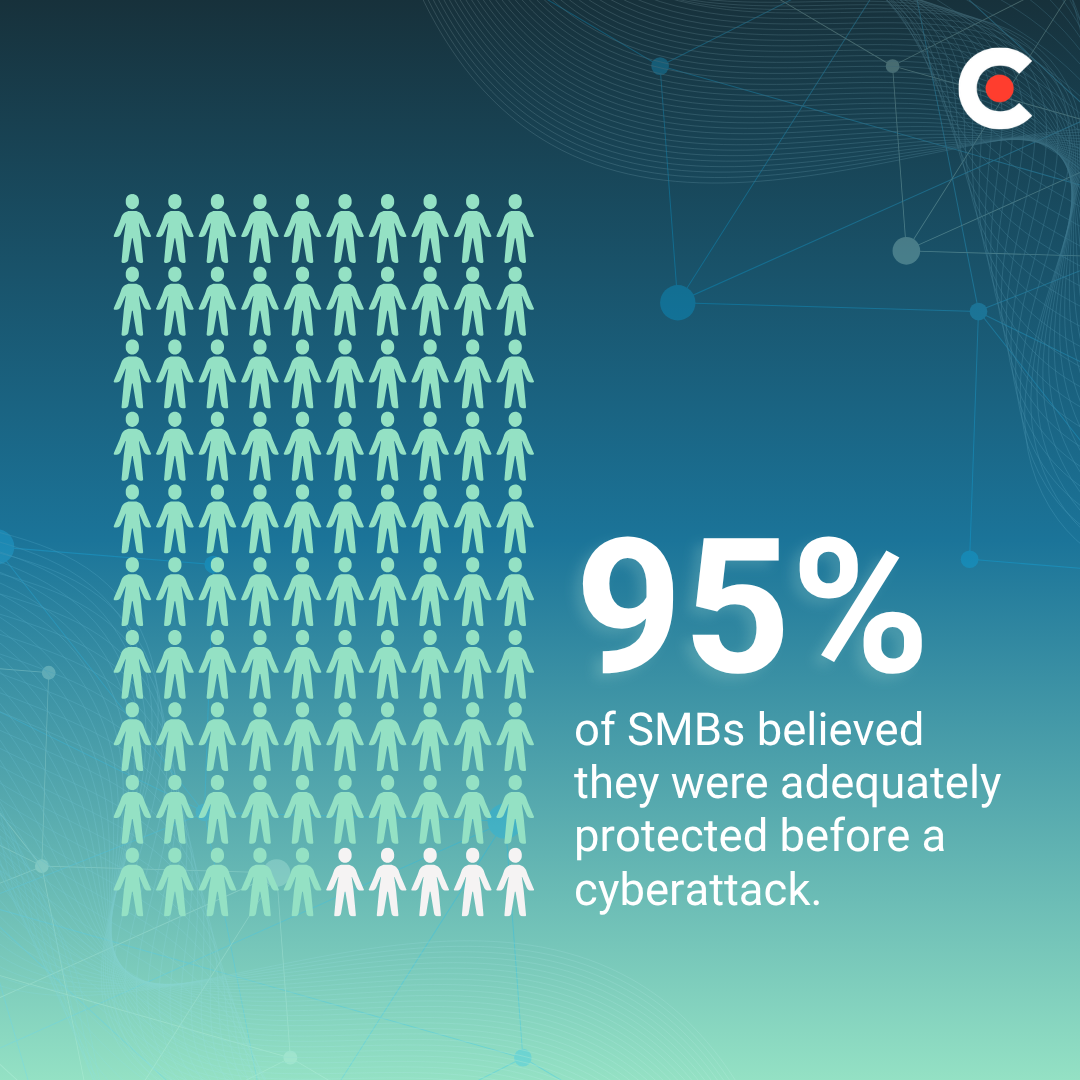
Nearly seven in ten (68%) small businesses have been impacted by a cyberattack, even though 95% thought they had sufficient measures in place beforehand and 64% believed their cybersecurity posture was strong.
Looking for a IT Services agency?
Compare our list of top IT Services companies near you
Those are frightening statistics for many small business owners who worry about operational disruptions, recovery costs, and the impact on their reputations.
The good news: most (86%) are able to recover within the first 3 months. But getting back on their feet requires more than restoring systems. Businesses must contain the attack, assess the damage, communicate with affected parties, and make changes to prevent another incident.
We surveyed over 500 small business owners who have experienced a cyberattack to identify how it impacted their business and the steps they took to recover and strengthen their defenses.
Key Findings:
Data breaches (62%), phishing scams (53%), and ransomware (51%) were the most common types of cyberattacks that these small businesses faced, and the impact was significant.
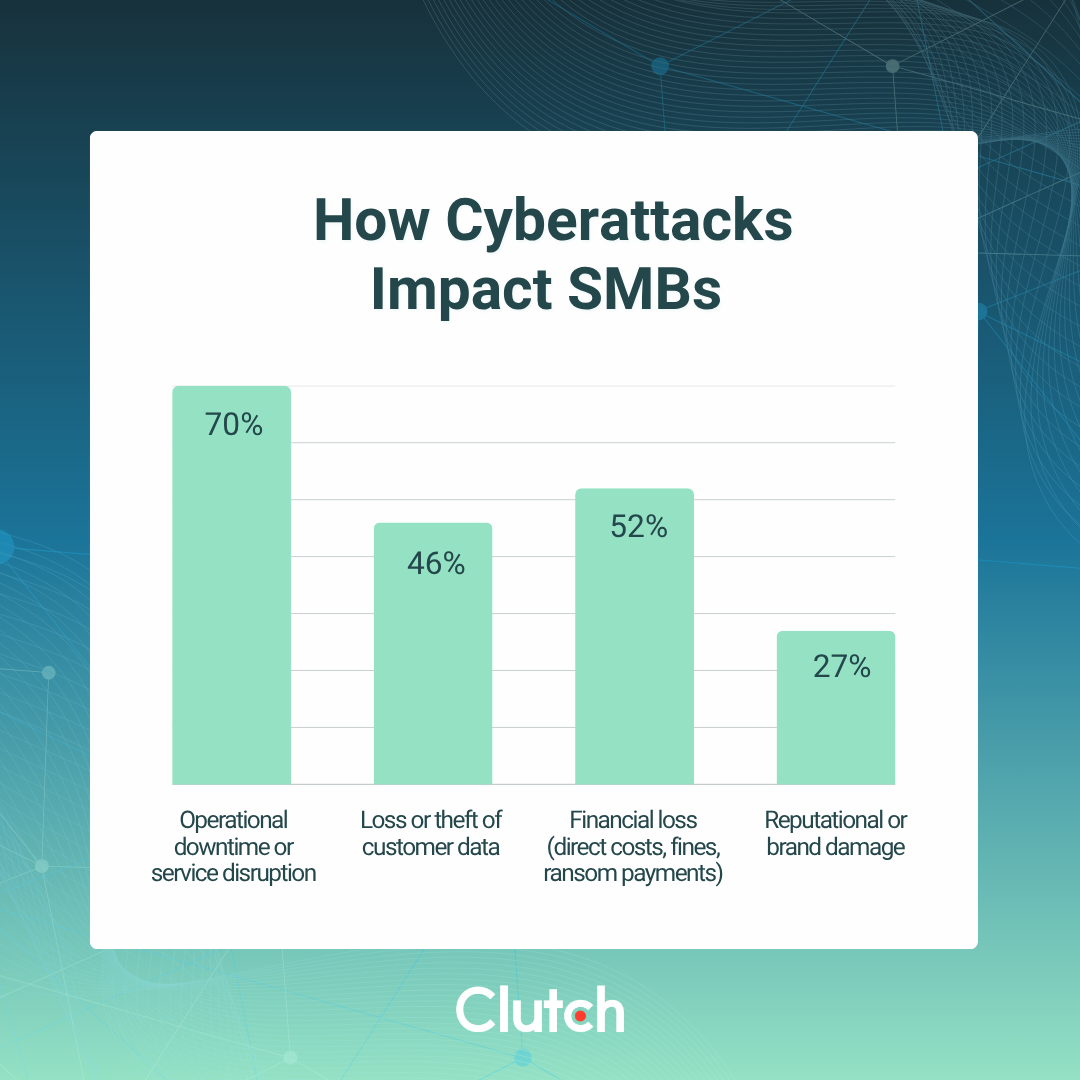
Seventy percent experienced operational downtime or service disruptions, while 52% reported financial losses, and 46% experienced the loss or theft of customer data.
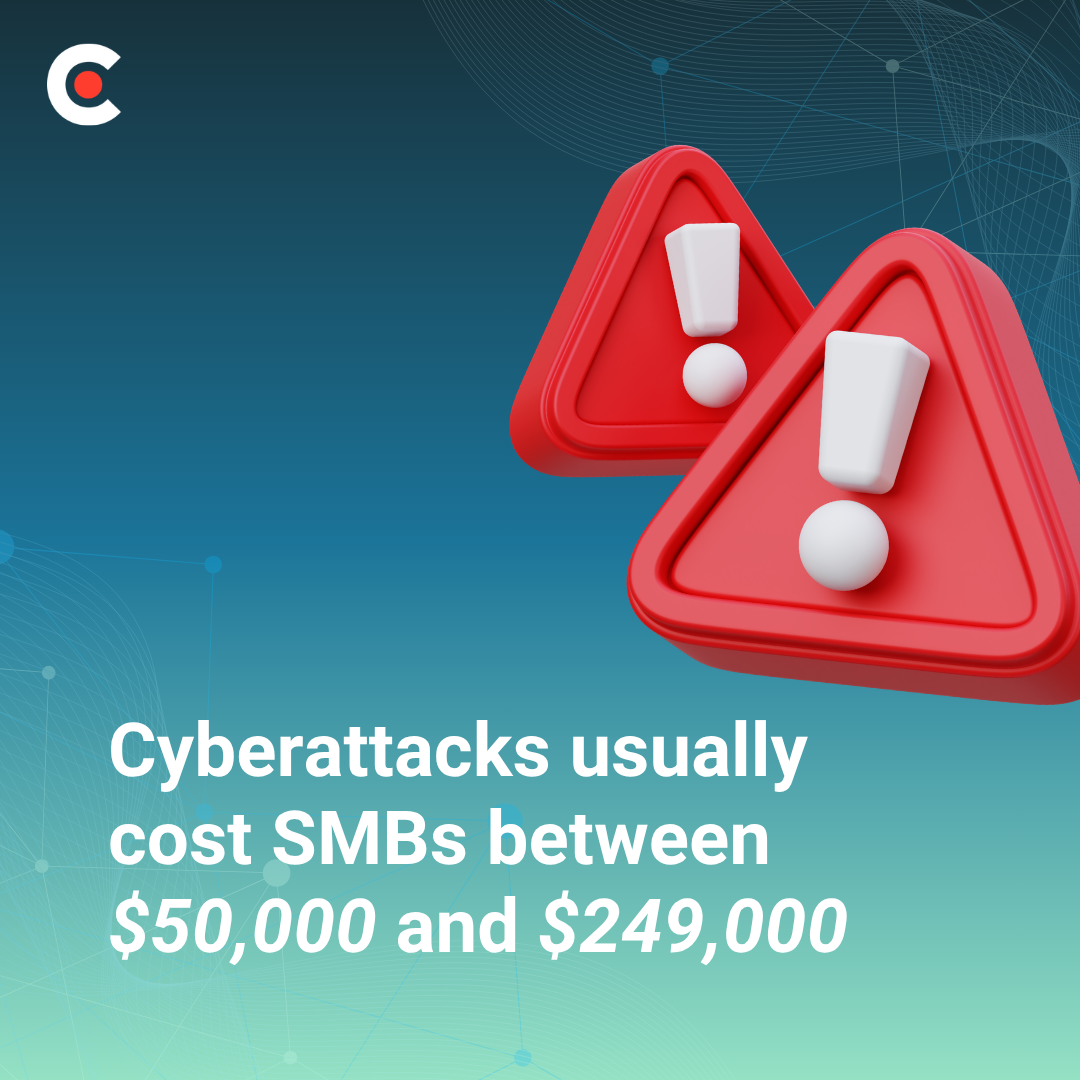
The financial impact was substantial for many businesses. Nearly a third (31%) incurred losses between $50,000 and $249,000, while another 26% estimate they spent between $250,000 and $999,000. These costs can include fines, ransom payments, recovery efforts, emergency IT support, legal fees, and lost revenue from operational disruptions.
For small businesses, recovering from an attack can be particularly difficult. Many lack the financial reserves and IT resources needed to absorb prolonged downtime, restore systems, and implement an effective disaster recovery plan.
When operations stop, businesses may struggle to cover basic expenses such as rent and employee salaries, even as they face additional costs to repair networks, hire emergency IT contractors, and address legal or regulatory issues.
Still, 86% of businesses said they were able to recover within three months. While that suggests most businesses can eventually get back on their feet, a serious cyberattack can create a financial burden that takes much longer to overcome. For businesses without sufficient cash reserves or recovery resources, the consequences can threaten their ability to stay open.
When a cyberattack puts a business at risk, how quickly and effectively they respond can have a major impact on the recovery process. A fast response can help contain the attack, limit further damage, and reduce the costs associated with restoring operations.
The good news is that most businesses act quickly after an attack, with 55% making changes within the first few days.
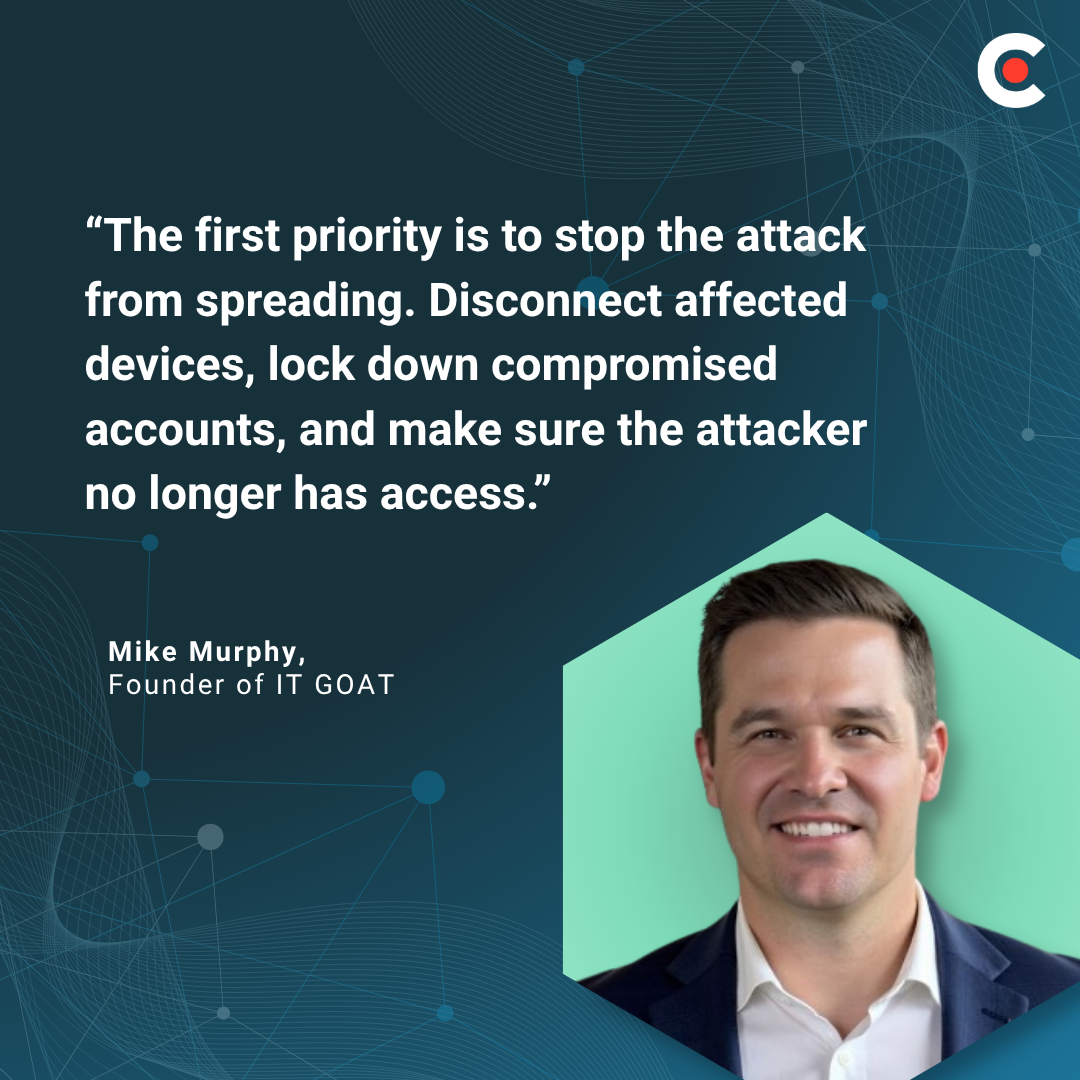
“The first priority is to stop the attack from spreading,” advises Mike Murphy, Founder of IT GOAT. “Disconnect affected devices, lock down compromised accounts, and make sure the attacker no longer has access.”
The first priority should be to contain the attack and prevent it from spreading. This includes disconnecting compromised networks or devices and securing the affected systems.
“Then, run a full security scan across the business to understand what happened and what needs to be fixed. We typically recommend looking back at least six months of activity because attackers can sometimes be inside a system long before anyone notices. That review can help uncover suspicious logins, compromised accounts, weak security settings, and other signs of how the attack happened,” advises Murphy.
Once the threat is under control, businesses can then turn their attention to restoring operations and addressing legal and regulatory requirements. Seventy-five percent of companies notified affected parties, such as customers whose data had been exposed, and 77% reported the incident to law enforcement.
Taking these steps early can help businesses move from containing the immediate threat to recovering operations and strengthening their security against future attacks.
Additional reading, “AI & Cybersecurity: Implementing AI for Threat Detection.”
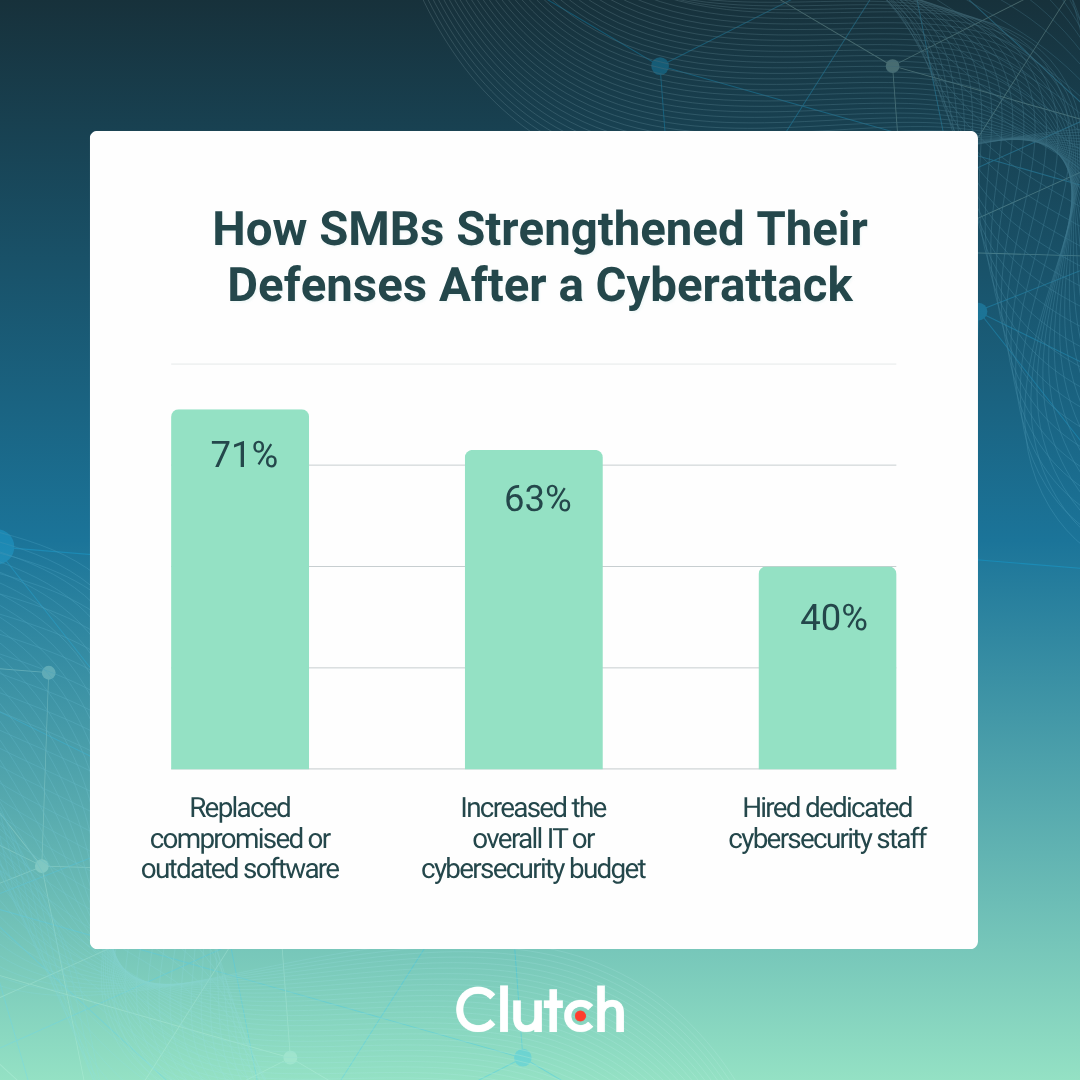
Unfortunately, businesses can face recurring cyberattacks, and those that have experienced one need to focus on rebuilding their defenses. Those who have been attacked did this by replacing the compromised or outdated software (71%), increasing their IT budget (63%), or hiring dedicated cybersecurity staff (40%).
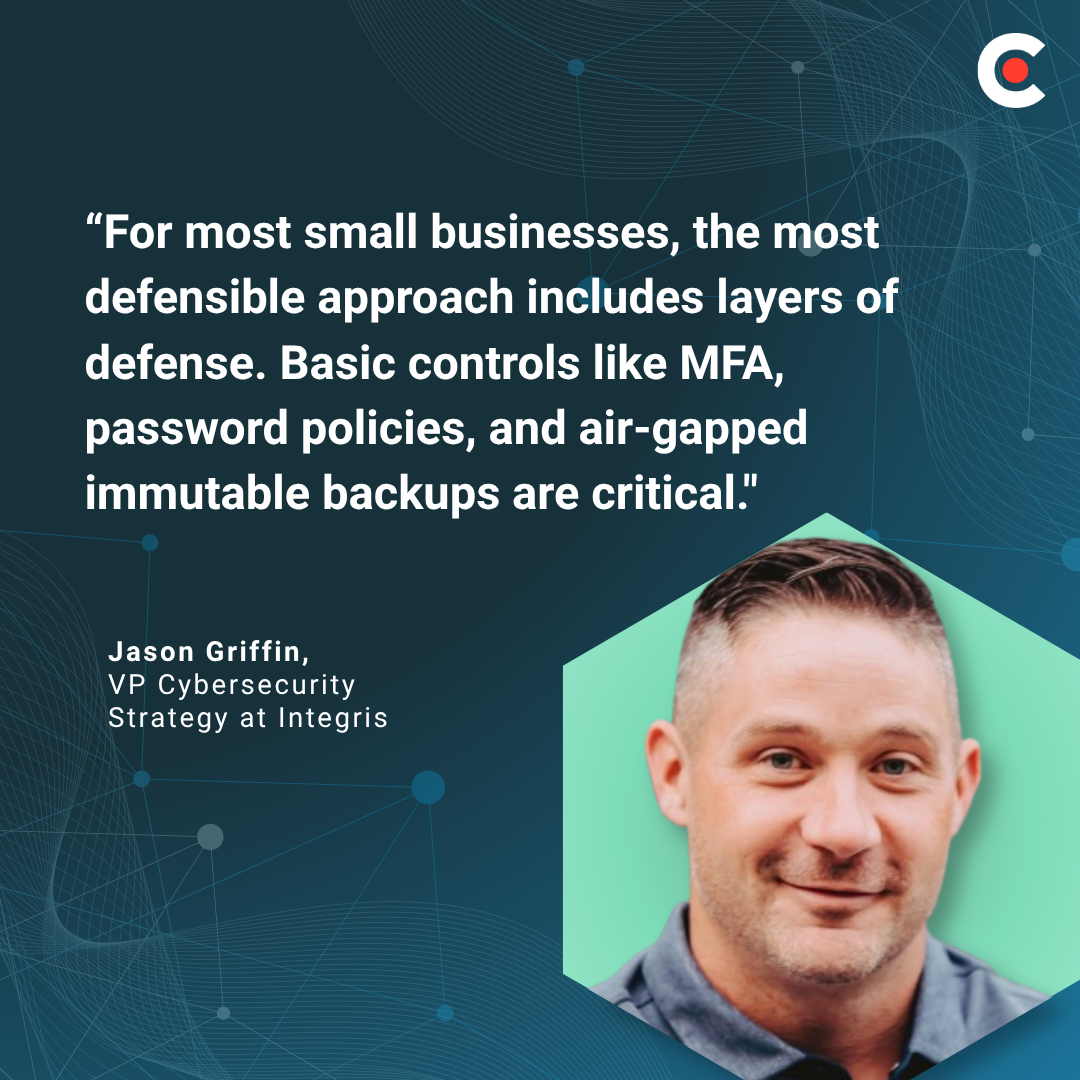
“For most small businesses, the most defensible approach includes layers of defense. Basic controls like MFA, password policies, and air-gapped immutable backups are critical. Monitoring and alerting tools can be a leading indicator of suspicious activity,” says Jason Griffin, VP Cybersecurity Strategy at Integris. Even a few foundational controls can strengthen a small business’s security posture. When combined, these layers make it harder for attackers to gain access and limit the damage in case of an attack.
Recovering from an attack also gives businesses an opportunity to identify weaknesses in their security and make changes to reduce the risk of another incident. “Seeking continuous improvement related to risk should be incorporated into a cybersecurity program,” says Griffin.
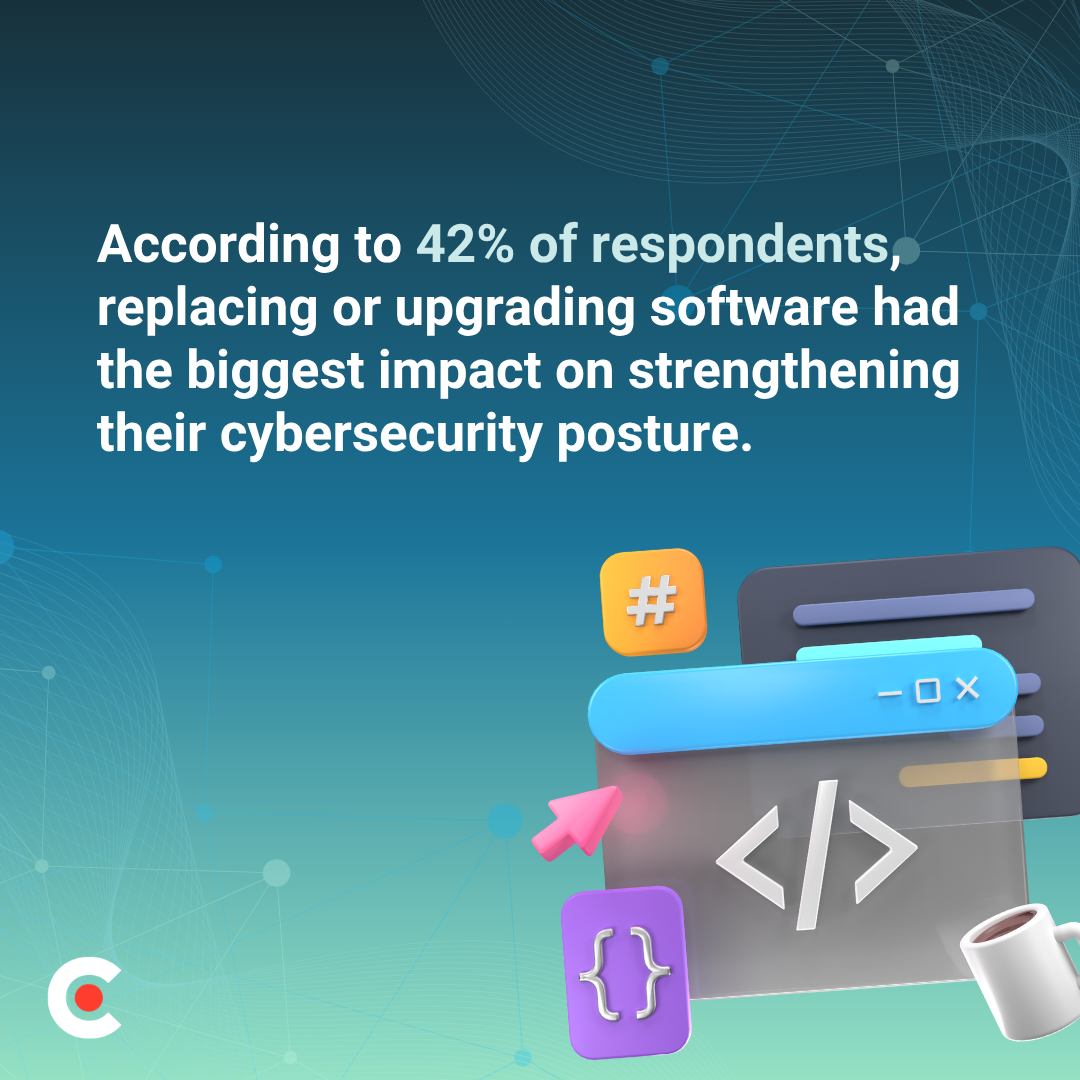
According to 42% of respondents, replacing or upgrading software had the biggest impact on strengthening their cybersecurity posture, followed by increasing their cybersecurity budget (22%).
Businesses should already be updating their software regularly because software developers regularly release updates to fix known vulnerabilities, but it is particularly important to fix compromised software because bad actors can reuse the same entry point to attack your systems again if you haven’t patched the exploited vulnerability.
If a breach occurred because your team was relying on unsupported or outdated software, applying a patch may not be enough. Once software is no longer maintained, it stops receiving critical security updates, leaving the business vulnerable to future attacks. In these cases, replacing the software with a supported, modern alternative may be necessary.
A cyberattack can also expose weaknesses in a company’s broader security strategy, from gaps in threat detection to inadequate systems and staffing. As a result, many businesses increase their cybersecurity budgets after an incident to address the vulnerabilities that contributed to the attack and reduce the risk of another one.
Investing in stronger threat detection tools, replacing outdated software, and hiring IT and cybersecurity professionals can be costly, but it helps businesses identify threats earlier and respond more effectively.
Ultimately, these investments demonstrate that companies have learned from the attack and strengthened their defenses to reduce the risk of it happening again.
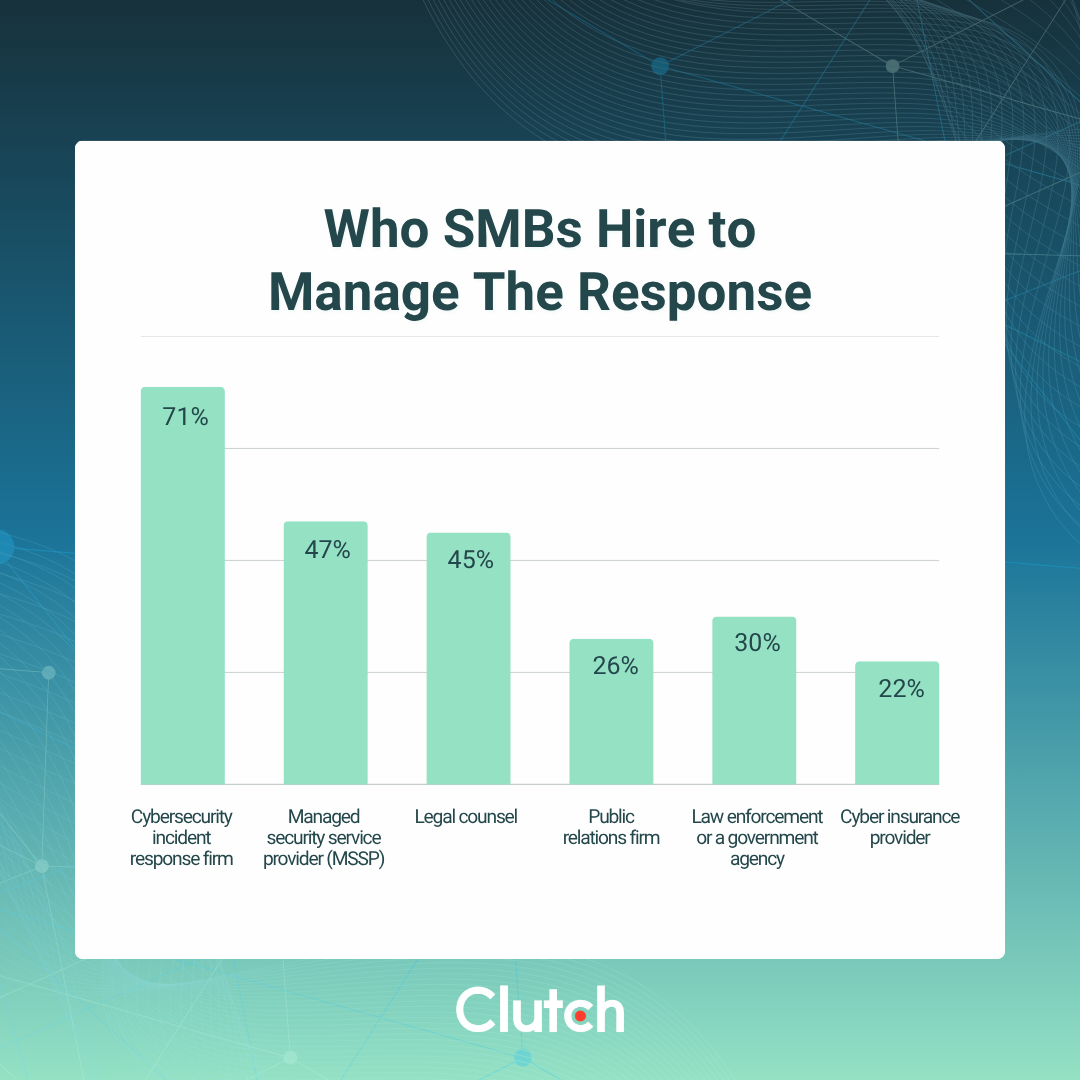
After a cyberattack, many small businesses don’t have the internal resources to manage the response. That’s why 91% of companies hire an external partner who has the expertise they need to fully recover.
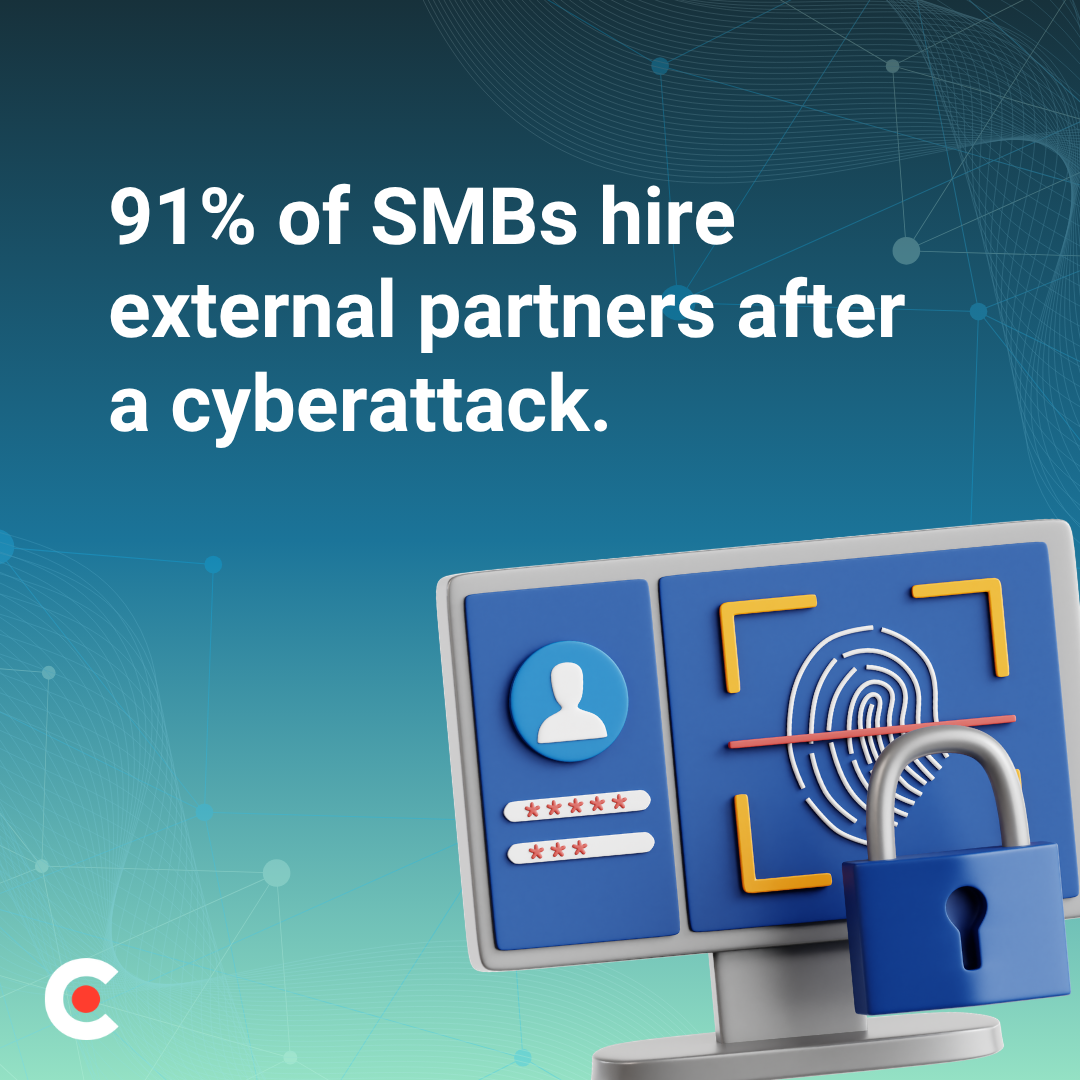
Most (71%) hire an incident response firm to immediately assess the scope of the breach, isolate affected systems, and restore existing systems. In addition, 47% hire managed security services providers (MSSPs) to provide ongoing monitoring and risk management.
Recovering from a cyberattack requires more than fixing the immediate problem. Businesses need to identify how the attack happened, address vulnerabilities, and strengthen their defenses to reduce the risk of another incident. Working with experienced cybersecurity and managed service providers can give businesses access to the specialized expertise and ongoing support needed to do both.
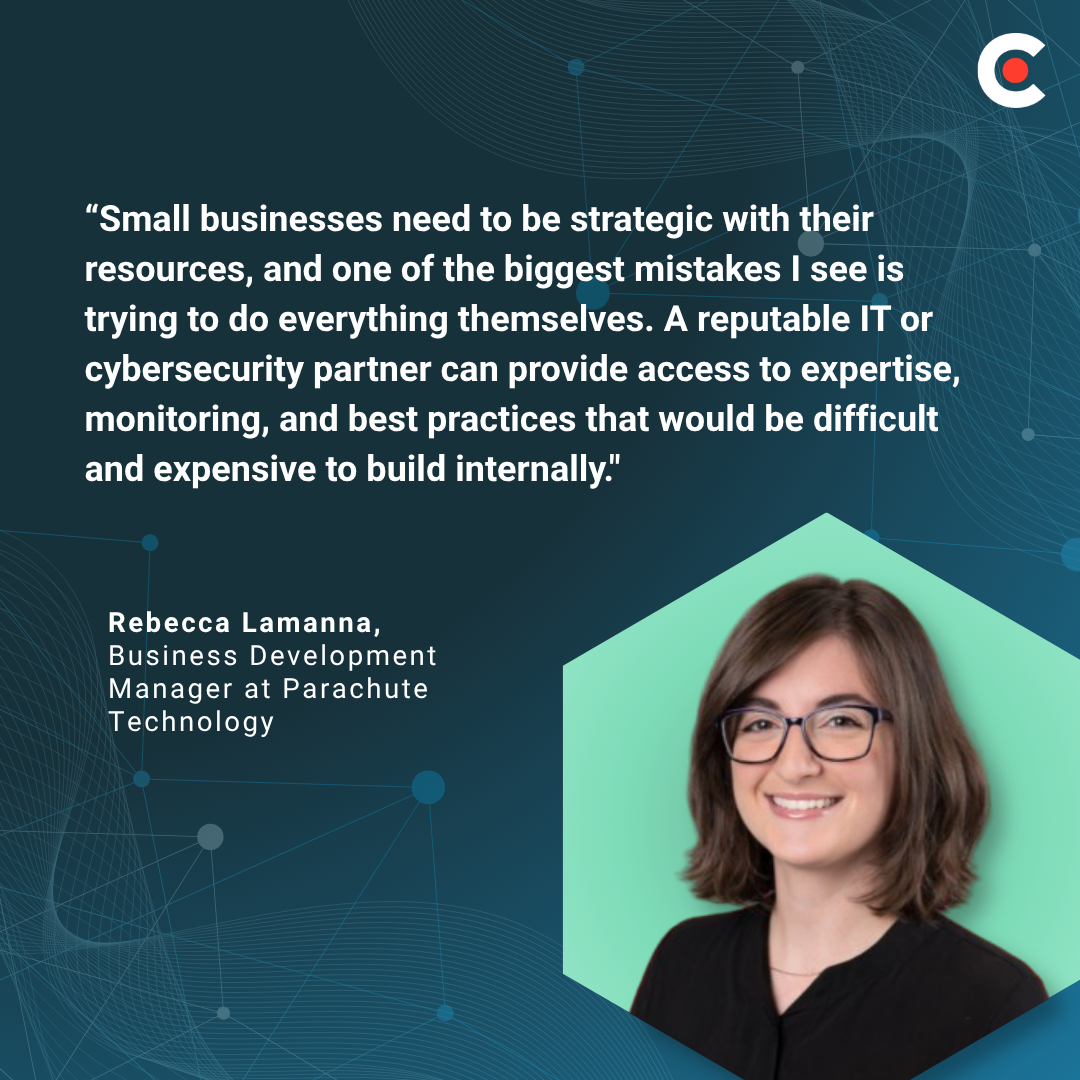
“Small businesses need to be strategic with their resources, and one of the biggest mistakes I see is trying to do everything themselves,” said Rebecca Lamanna, a business development manager at Parachute Technology. “A reputable IT or cybersecurity partner can provide access to expertise, monitoring, and best practices that would be difficult and expensive to build internally. From there, success comes from consistently executing the fundamentals: multi-factor authentication, employee training, patching, backups, and ongoing monitoring. Cybersecurity is a layered strategy, not a product.”
On Clutch, you can search for industry-leading cybersecurity and MSP providers that can help you respond to an attack, strengthen your security infrastructure, and prevent future threats. Search for providers based on their services, industry experience, client reviews, and more.
For most small businesses, though, fully recovering from a cyberattack takes more than just restoring systems and resuming operations. Almost half (45%) hire legal counsel to understand what their legal obligations are, including breach notification requirements and regulatory reporting. Thirty percent work with law enforcement to ensure compliance and increase their chances of recovering their losses.
Additionally, more than a quarter (26%) hire PR firms to manage communication with customers and the media. A PR agency can help minimize the fallout by addressing what happened and informing affected customers what they should do.
In a world where 90% of consumers say protecting their personal privacy is very important to them, that can be the difference between whether customers lose confidence in a business or feel reassured that the company is taking the incident seriously.
When a cyberattack puts hundreds of thousands of dollars, sensitive company data, and customer trust at risk, businesses have to take a hard look at how they protect themselves. For many, the attack exposed weaknesses that were easy to overlook before, such as outdated technology, inadequate backups, and gaps in staffing and employee training.
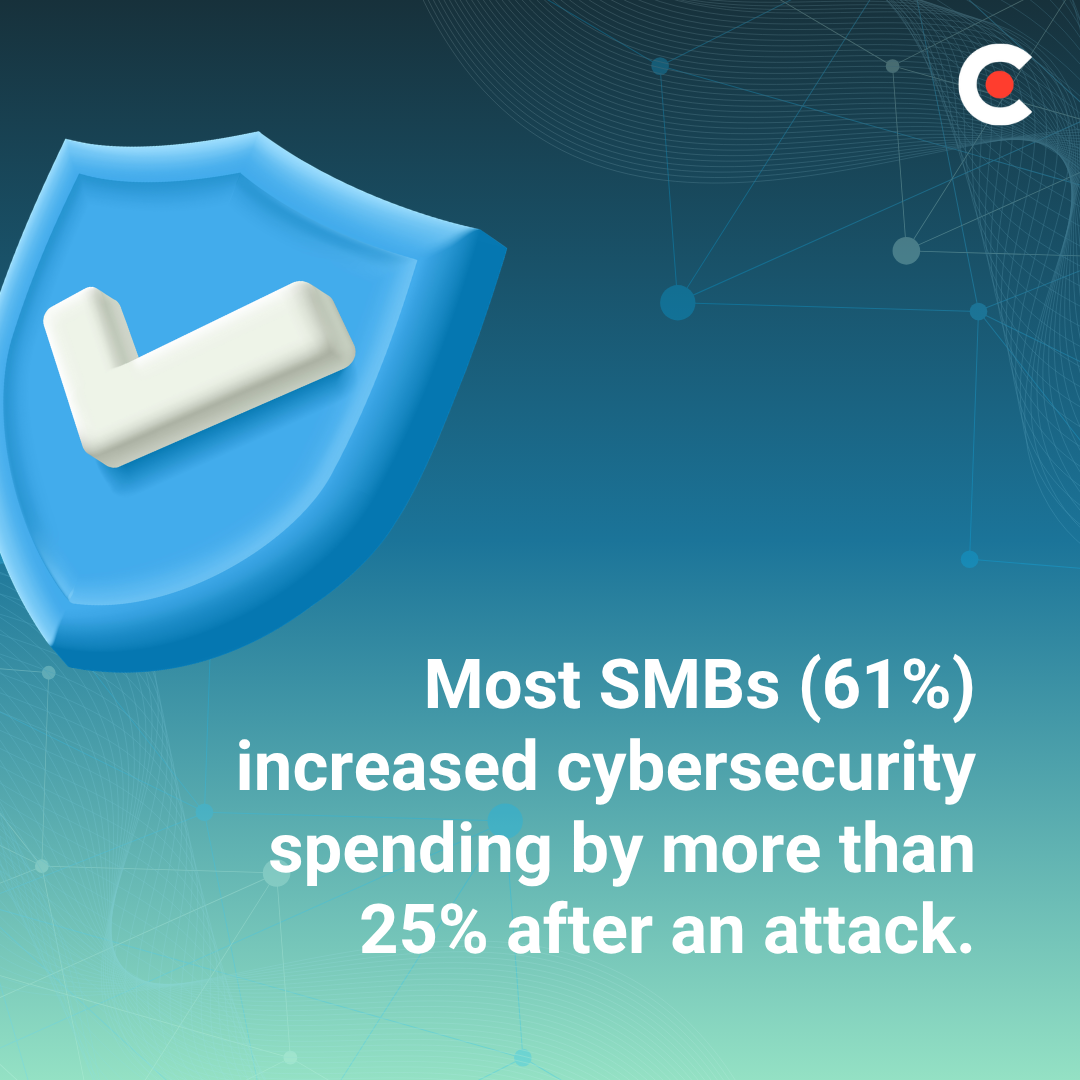
In response, small businesses make significant changes to their cybersecurity strategy and investments. Among businesses that increased their cybersecurity budgets after an attack, 61% increased spending by more than 25%, signaling its heightened importance.
The increased budget likely goes towards new staff, cybersecurity training, and updated tools or security programs.
Forty percent hired dedicated cybersecurity staff, adding internal expertise to help identify and respond to threats. Twenty-one percent changed technology vendors, suggesting that some businesses reassessed whether their existing technology and providers were adequately protecting them.
Another 21% revised their data backup and recovery strategies, while 15% provided additional cybersecurity training for employees.
These changes reflect one of the most difficult realities of a cyberattack: the goal cannot simply be to get systems back online. Businesses also need to understand what went wrong and make meaningful changes to prevent the same vulnerabilities from putting them at risk again.
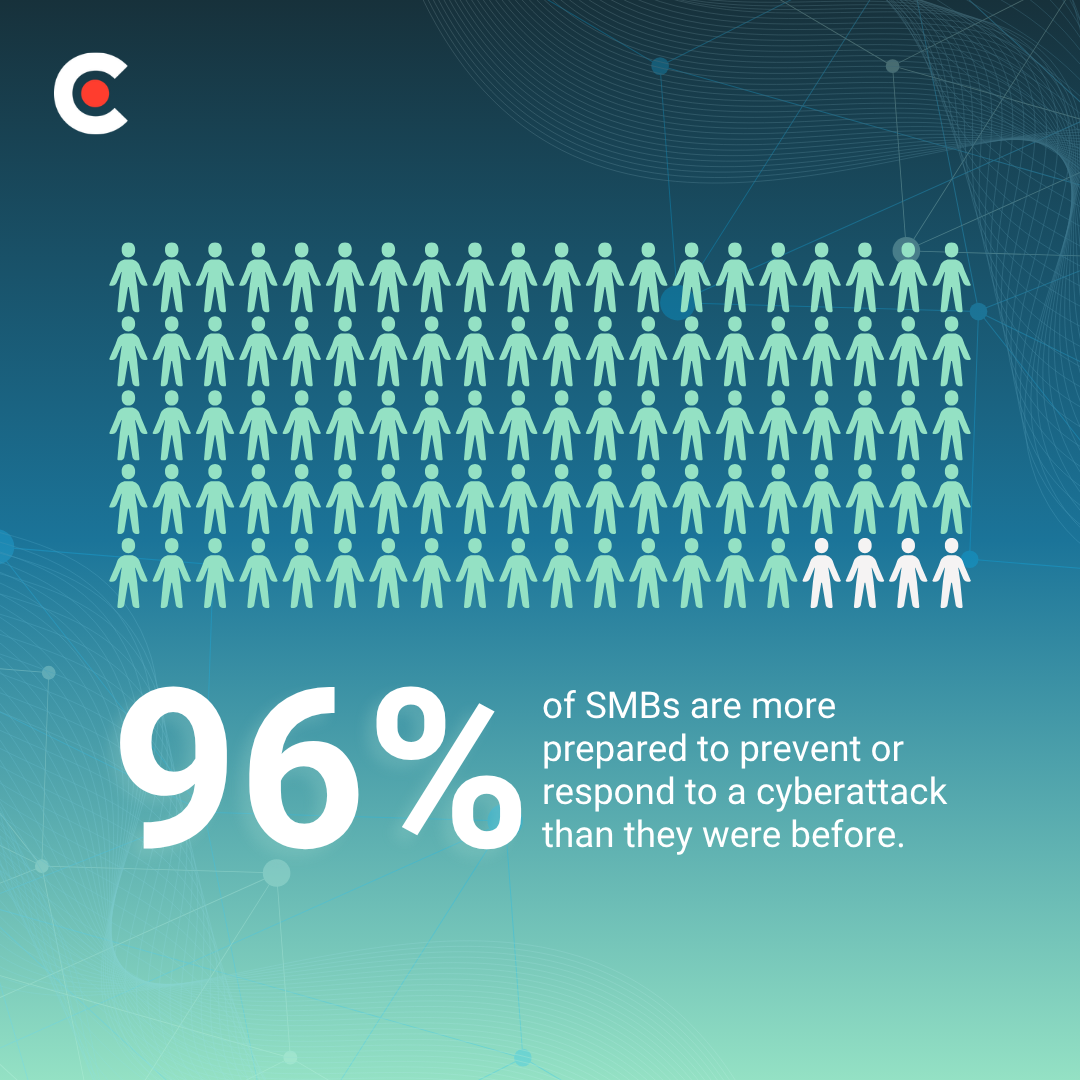
The changes companies make immediately after a cyberattack can help leaders feel more prepared, knowing they’ve identified and addressed the vulnerabilities that contributed to the incident. In fact, 91% said they feel better prepared to prevent a cyberattack than they did before, and 96% are confident they are now better prepared to prevent or respond to a cyberattack.
Despite feeling more prepared after an attack, 84% of businesses had faced a cyberattack before, showing that even after taking steps to strengthen their defenses, businesses can remain vulnerable to another incident. This is further underscored by the fact that 95% reported having sufficient security measures in place before the attack.
For many companies, the challenge is having the resources to keep improving their security. Forty-one percent still identify cost as the biggest barrier to improving cybersecurity, making it difficult to maintain or expand their protections.
Another 23% cite a lack of internal expertise, which can leave businesses without the specialized knowledge needed to identify vulnerabilities and respond to increasingly sophisticated threats.
If you lack the budget or in-house expertise to strengthen your cybersecurity, you should consider working with an external MSSP or cybersecurity firm. Outsourcing can give you access to specialized expertise and ongoing security support without the cost of building and maintaining a large internal team.
Cyberattacks can shut down operations, expose customer data, and cost hundreds of thousands of dollars. And while most businesses are able to recover, that doesn’t erase the damage.
However, small businesses that learn from each attack and make meaningful changes can be better prepared for the next one. That can mean investing in better security tools, replacing outdated technology, hiring cybersecurity experts, improving backup and recovery plans, and training employees to recognize and respond to threats.
You cannot eliminate the risk of a cyberattack, but you can make it harder for an attacker to cause lasting damage. Preparing before an incident happens gives your business a better chance of containing the threat, protecting your customers, and getting back to work when every hour of downtime counts.
Clutch surveyed 562 small business owners who had experienced a cyberattack in September 2026 using the polling site SurveyMonkey. All respondents were based in the United States between the ages 18-99; 50% were male and 50% were female. All respondents were required to complete the survey in full to be included in the final analysis.
Recovering from a cyberattack involves more than restoring systems and getting back to business. This article explores how small businesses respond after an attack and the steps they can take to strengthen their cybersecurity, address vulnerabilities, and reduce the risk of future incidents.