Lead Quality vs. Lead Quantity: Why B2B Teams Are Rethinking Their Funnel in 2026
Bigger buying committees and tighter budgets are forcing B2B teams to rethink lead quality vs. quantity. Here's how top teams rebalance the tradeoff in 2026.
Updated November 9, 2026

Comment sections surface brand problems days before the press does. This lays out the signals worth watching, the tools and habits that catch them early, and what to do once one shows up.
Every release note, every ad, every update carries a comment thread under it.
Public, immediate, and specific enough that a team can act on what it finds there.
Looking for a Digital Marketing agency?
Compare our list of top Digital Marketing companies near you
Catch a recurring complaint at that stage, while it's a handful of threads, and it gets handled before it spreads anywhere. Miss it, and the same complaint moves from one thread to a dozen, then onto someone's timeline, then into a reporter's inbox.
Sprout Social's research puts the expectation plainly: people want a reply on social and community channels inside a day, often inside an hour. And that expectation only tightens from here. Trust gets earned in the comments or bought back after the headline runs. The second route is far more expensive.
A comment section is a focus group that never closes.
Most days it runs useful and low-drama, think thanks, a feature people like, users answering each other's questions. Other days the same thread is bug reports and refund demands and people who are plainly furious.
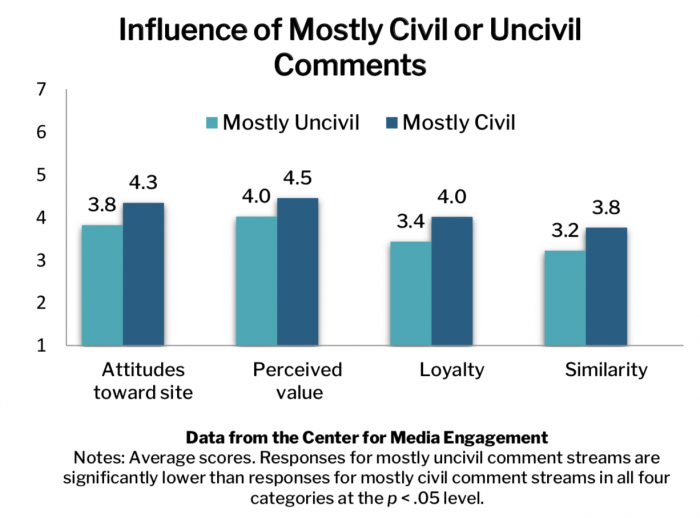
Either way, it's all signal, provided someone reads it for the pattern rather than firing back post by post.
Three things deserve watching in parallel:
Ten complaints about a broken login the week of a release is an engineering problem.
A wave of refund requests is a sign that something is wrong with the policy. Certain words belong in their own bucket, like unsafe, misleading, and data. They drag legal and compliance into it, they go straight at trust, and they climb the ladder faster than any complaint about a clunky button.
The moment one thread becomes many threads across different platforms, the problem has already begun to move.
A few things reliably mean trouble is building:
Any one of these on its own might be noise. A cluster of them, a sharp change in tone, or a safety question that keeps getting asked — that is where a closer look pays for itself. Teams that read these patterns and answer with something real tend to settle the legitimate issues before they grow into something that outlives the thread.
Andrew Bates, COO of Bates Electric, runs a 24/7 electrical contracting operation that fields emergency calls across eight states.
He says, “In field service, the first sign of a real problem is never the formal complaint. It’s the same small gripe turning up on three different job reviews inside a week. We treat that cluster as a work order before anyone escalates it, because by the time a customer sits down to write a long post, the easy fix on our end is already gone.”
None of this needs a lab or a budget, though a few tools make it faster. Sentiment and topic models read tone at scale and pull out the entities and phrases people keep repeating, fast enough to alert in near real time.
The part no tool replaces is a person reading comments several times a day. Their job is tagging — issue type, severity, which part of the product — then saving the example with a link and a screenshot, and noting whatever's needed to reproduce it, down to device, app version, and region.
Four cases make the point better than any framework does.
Players were already picking apart the game's grind and its microtransactions in Reddit threads and comment sections well before EA said anything official.
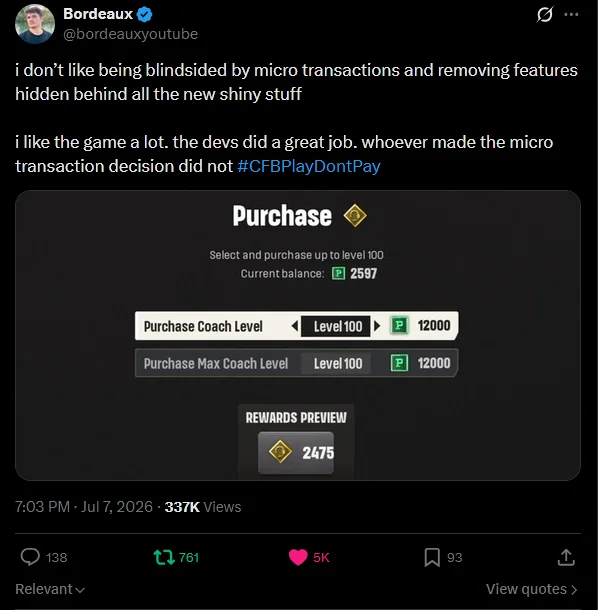
When the company did respond, defending the design, that reply became the most downvoted comment in Reddit's history and pushed a complaint that had lived in gaming forums onto international news.
The signal had been in plain view for anyone tracking it. When a large number of users flag the same fairness problem, that is a product issue, and treating it as a messaging issue is what makes it worse.
The company's own comment sections and social replies were calling the ad tone-deaf within hours of it going up. Press coverage caught up fast, and Peloton spent weeks managing the fallout and explaining what it had meant.
When a brand's own threads fill with one objection, the moment to pause and respond is while the narrative is still forming.
This one ran for months. Users kept posting about phones slowing down after iOS updates, and for a long stretch it read as scattered frustration. Then independent analysis lined up with what people had been saying, the story broke wide, and it ended in lawsuits and an expensive settlement.
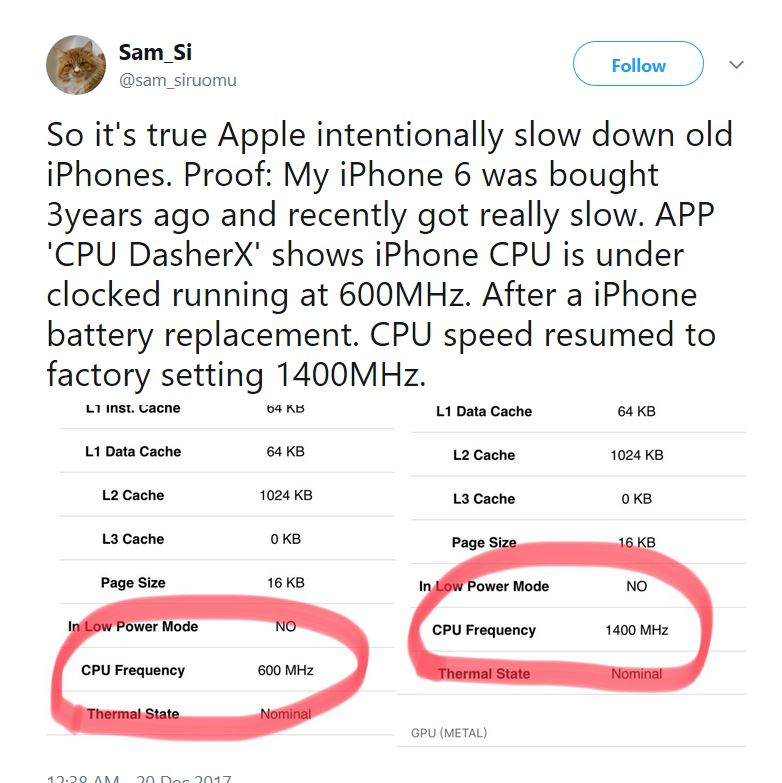
Repeated technical complaints across forums, support tickets, and comment sections usually mean a real systemic fault, and a fault like that deserves a direct answer early rather than a wait to see whether it fades.
The app went down during a volatile stretch of trading, and the anger was immediate: app store reviews, subreddit threads, and social comments all at once.
That velocity pulled in press attention and regulators. During a service incident, how fast comments pile up is itself the signal, and status updates have to go out before the full root cause is known.
A good plan takes a bad afternoon and gives it a sequence someone can follow step by step. Length isn't the point. What it needs is to answer a few questions before the pressure is on.
Spell out who's watching which channels and when, and which of those people can respond or kick it upstairs without checking first.
What separates a P0 from a P2, and what trips an issue up a level: volume crossing a threshold, a safety claim, or a regulatory keyword.
Holding statements get written ahead of time as well. One for an outage, one for a defect, one for a data incident. The harder cases — a safety concern, a policy shift — get theirs too, each with blank space left in for the details that make the wording real.
Then there's the fast path — a direct line into engineering, legal, and leadership, a live channel for updates, and a single place everyone treats as the truth on where things stand.
The evidence log is the piece people skip and regret. As examples come in they get saved, tied to whatever ticket they belong to, and marked up later with how the thing was resolved. If a public postmortem ever becomes necessary, the record already exists.
Treat the whole exercise the way a building treats a fire drill. Stage a fake incident. Clock the real numbers — detection, alignment, posting, first update — and cut whatever's dragging the chain.
Here, getting there fast beats getting the wording perfect.
A quick note (naming what the team is seeing, crediting the specifics people gave, laying out the next step) does more good than a flawless statement that shows up a day later. When the investigation is still open, say so outright, commit to a time for the next update, and come back to the same thread to deliver it.
The reply belongs where the complaint started.
If there is a fuller update somewhere else, link to it, but answer in the comment section first. Once the fix ships or the policy changes, the work is to go back to the threads that drove the concern and close them out with the outcome. People remember whether anyone came back.
Showing the work is what rebuilds standing: what happened, who it affected, what changed, and what keeps it from happening again. Edelman's Trust Barometer has turned up the same finding year after year. Clear, consistent communication holds credibility together when it is under strain.
Analytics mostly does one job: it makes a weak signal loud enough to notice. The groundwork is knowing the baseline for each channel, because the alert worth having is the deviation from that baseline, not the raw count.
Jeffrey Zhou, CEO and founder of Fig Loans, runs a fintech lender built around transparent, customer-first borrowing.
He says, “When you handle people’s money, silence in the feedback channels is the dangerous reading, not the safe one. A sudden run of confused questions about a fee or a payment date tells us something broke in how we explained it, and we would rather catch that in the comments than in a regulator’s inbox. That is the whole reason we watch the baseline as closely as we do.”
A handful of measures earn their place:
Topic clustering pulls the themes out of the mess.
Lining today's threads up against past incidents shows which responses worked and which mistakes not to repeat, and over enough cycles the patterns start to show, like which keywords tend to run ahead of press coverage or churn, which complaints evaporate after a single fix.
Analytics speeds up the judgment call. It does not stand in for it.
A comment thread moves fast, and then it is gone, buried under the next release note inside a day. The complaint it carried out lasted it, resurfacing somewhere slower and harder to scroll past.
Public reviews are where it settles. They sit in one spot, dated, tied to a named buyer, and they stack up over time. A run of the same complaint, or a rating that slides month over month, reads as the early warning a comment section gives, with more weight behind it because someone signed for it. A profile on Clutch pulls that record together, and it earns a read on the same schedule as everything above.
The brands that stay ahead of the headline are already reading both feeds on the ordinary days, before there is anything to find.