
Reading Comment Sections Before a Crisis Hits
Comment sections flag brand problems days before the press does. The signals worth watching, the habits that catch them early, and what to do when one shows...
Updated November 24, 2026

Third-party cookies are leaving. Your CRO program does not have to leave with them, as long as the signal it runs on is yours.
The way to keep CRO alive after third-party cookies is through first-party behavioral data, tied to events you own and tested with experiments you run server-side. The rest is implementation.
Media buyers should be the ones who are nervous about the deadline.
Looking for a Digital Marketing agency?
Compare our list of top Digital Marketing companies near you
If your job is optimizing the product, the loss is smaller than the noise around it suggests. Cross-site identity never told you why a checkout form bled users on the third field. Behavioral data told you that, and it still does.
You keep the signal by collecting it yourself: event-level, first-party, and scoped to a session rather than a person.
That setup survives Safari’s tracking prevention. A session-scoped ID expires rather than trailing someone across the web.
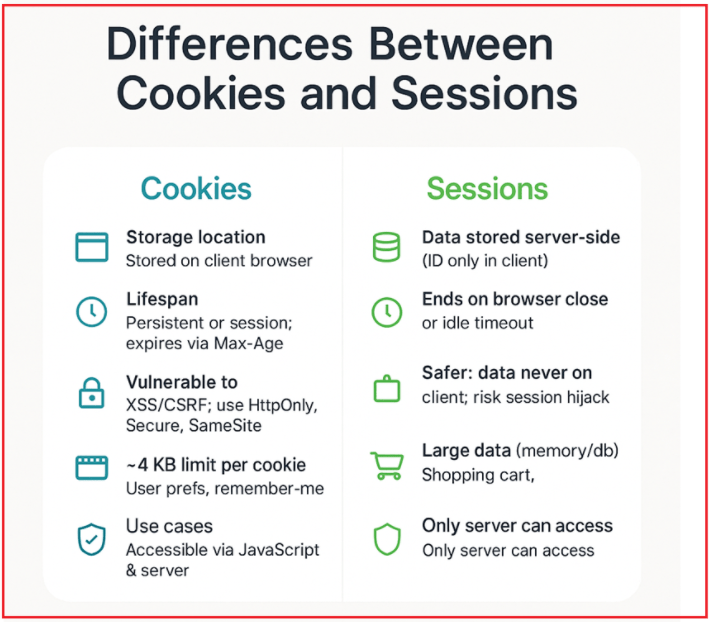
Server-side event streams give you a validation layer and keep tags off your critical rendering path. Consent-aware collection scales with what the visitor has agreed to, keeping your GDPR and CCPA story defensible rather than improvised.
The engineering cost is real. Moving tagging to the server side means someone now owns the pipeline.
Jeffrey Zhou, CEO and founder of Fig Loans, runs a fintech lender that underwrites small installment loans for borrowers the big banks turn away.
Zhou says, “Finance never got the loose retargeting other verticals leaned on, so we built the funnel on first-party signals years before the cookie deadline meant anything.
When an applicant stalls on income verification, we catch it in the event stream that day and fix the step, not the ad.”
This allows teams to identify funnel problems early and improve the user experience using data they collect themselves.
Instrument the handful of events that map to intent, then attach each one to a metric a stakeholder already defends. View, add to cart, checkout start, completed purchase, lead, signup.
Each one carries the context you will actually query later: device, screen size, the page state when it fired, which form variant the visitor saw, the error code that came back. A property nobody reads is overhead with good intentions. Cut it.
Context is where the wins hide. Tag “checkout start” with the form variant, and you can see that variant B stalls only on mobile Safari, which a top-line conversion number buries. Without that property, you are guessing; with it, you are debugging.
The other trap is counting volume. Raw leads look great in a Monday report and say nothing about whether sales can close them.
Gavin Yi, CEO and founder of Yijin Solution, oversees a precision manufacturing operation that runs CNC machining and custom hardware production for B2B buyers.
Yi says, “A contact form on a manufacturing site means nothing by itself. Plenty of them are students or competitors pulling specs. We stopped celebrating form fills and started scoring which behavior on the spec pages comes before a real purchase order, and the whole optimization effort got sharper.”
Tracking these behaviors helps businesses identify serious prospects and focus their efforts on leads with stronger purchase intent.
Behavioral data pays off most where the purchase is large, and the decision is slow, because every hesitation becomes a signal you can act on.
A long deliberation generates a rich first-party trail: repeat visits, spec comparisons, saved items, a request to talk to someone. Those are the easiest serious-buyer signals to instrument and the most valuable to optimize around, and none of them need a third-party cookie to capture.
Cheap, impulse purchases give you almost nothing to read, unlike expensive ones.
Tanyaporn Trirotanan, Vice President of Veerasak Gems, runs a Bangkok house that has cut and exported certified loose rubies, sapphires, and spinels to dealers and collectors since 1982.
Trirotanan says, “A buyer deciding on a high-value ruby does not convert on the first visit. They come back, they compare certificates, they ask for a private viewing. We track which of those behaviors actually precede a sale, because with stones this valuable, guessing at what moves a serious buyer gets expensive fast.”
These patterns help businesses understand buyer intent and improve the purchasing experience at every stage of the decision process.
Assign variants server-side or at the edge, keyed to a first-party session or a login, and the cookie question never reaches your experiments.
You kill the client-side flicker that lets users see the control before the variant swaps in. You slip past the ad blockers that eat test scripts. The split holds steady for the full session instead of reshuffling when a cookie drops.
Then check your sample ratios before you trust a single result. A sample ratio mismatch wrecks a test before anyone reads it, so compare the observed split against the ratio you intended early in the run.
Evan Miller’s piece on how not to run an A/B test still covers the rest of the ways a test will lie to you.
Without cross-site IDs, your evidence becomes first-party journeys, modeled conversions, and controlled experiments, and you split reporting by consent state so the bias stays in view. People who decline tracking are not a random slice of your traffic.
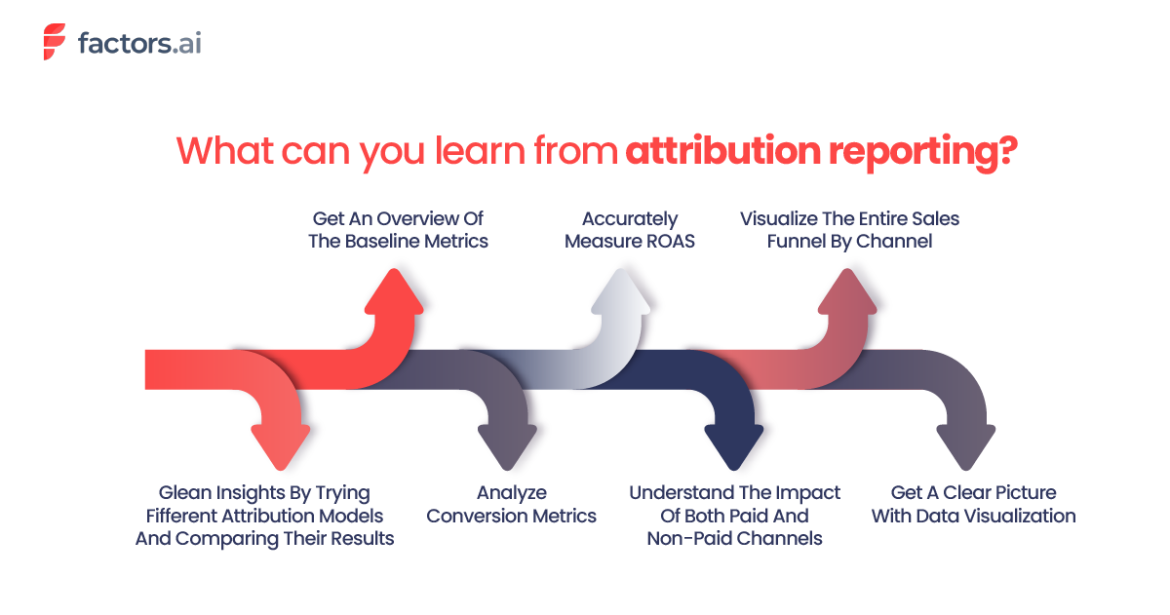
Drop them into the same chart as consented users, and you are comparing two groups that do not belong together. Write a data contract for every event payload while you are at it, so “Add to Cart” fires on the same action and carries the same fields no matter which squad ships the button.
Home services feel the attribution gap first, because the money starts on the phone.
Nick Wiese, Regional Vice President at Priority One Heating & Air Conditioning, oversees a residential HVAC contractor that handles installs and emergency repairs for homeowners.
Wiese says, “Most of our jobs open with a phone call, and a phone call is invisible to half the analytics setups I have seen. We tag the behavior that leads to the call, the repeat visits to the financing page, the service-area pages, so we know which pages book work instead of guessing from the last click.”
Lean on modeled conversions and cohort analysis instead of chasing perfect user stitching across sessions and devices, which you will not get. For the long-horizon questions, incrementality tests or media mix modeling fill what session data cannot reach.
Meta’s open-source Robyn is a fair starting point. Treat privacy as a design constraint while you build: collect less, keep it only as long as it earns its place, and state the trade in plain language. Data minimization and privacy by design are the reference points.
You need the right mode on the tools you have more than you need new ones. A short map:
Cookies leaving costs you a layer of inference you were better off not trusting, and little else CRO depends on. The teams that come out ahead read their own behavioral data the fastest and ship the fix, regardless of the size of their old identifier graph.
Open your stack and put one question to every event you track: does this describe intent, or did someone log it out of habit? Delete the second kind.
If you want to understand how visitors interact with your website and identify what is holding them back from converting, Clutch can help you find the right CRO and analytics experts.