Evaluating an Marketing Agency in the AI Search Era
AI search has completely changed how people interact with online content. When an AI summary appears at the top of search results, Google users only click a...
Updated May 29, 2026

Social listening has become a cornerstone of modern marketing, helping teams track and respond to shifting consumer sentiment in real time. Learn how to leverage this technique to help your business thrive.
People always talk. So, what are they saying about your brand and industry? If you aren’t paying attention, you could miss out on emerging trends, hidden product issues, and big opportunities. That’s why social listening is becoming more commonplace. It helps marketing teams track the online conversation to improve decision-making.
This article takes an in-depth look at what social listening is in marketing. You’ll learn how to get started, challenges to avoid, and the benefits of leveraging the strategy for your brand.
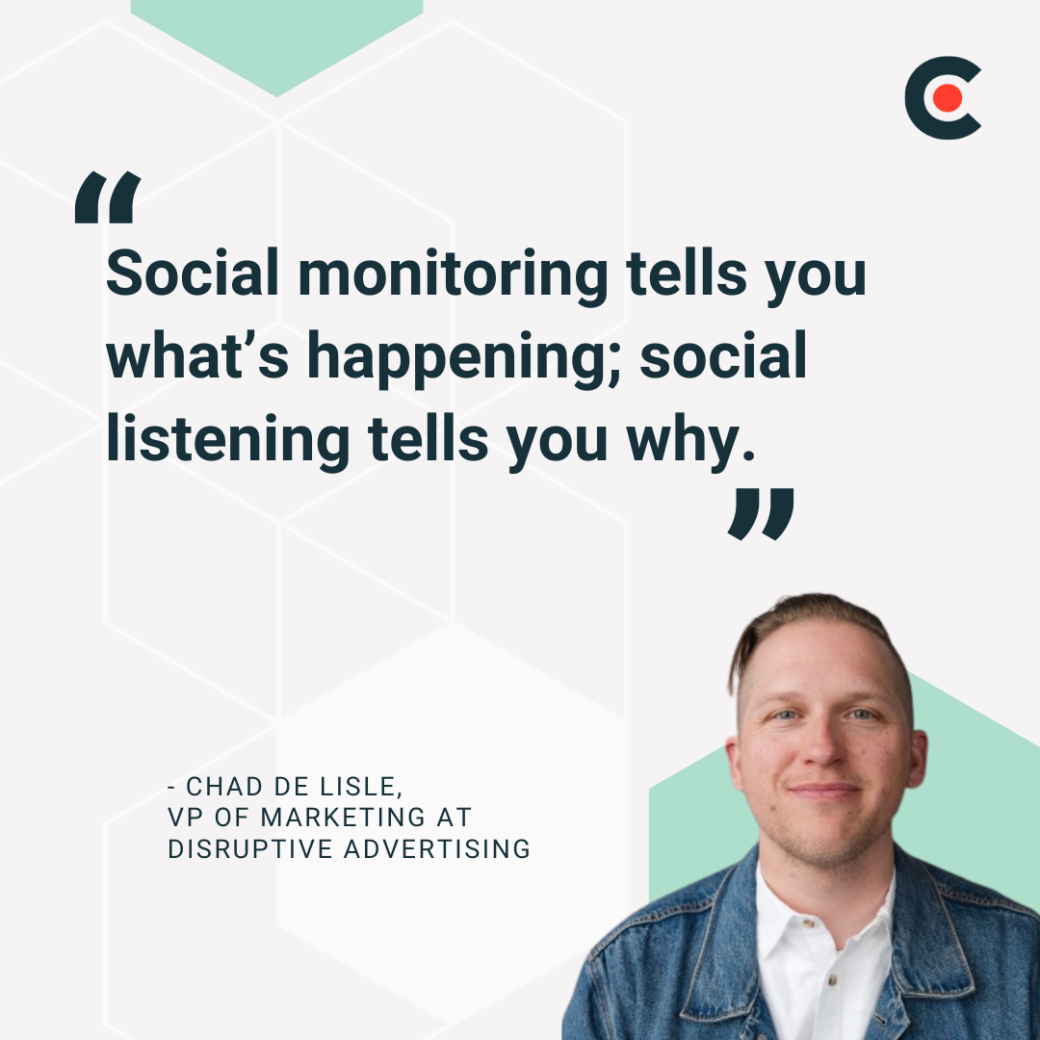
First, let’s differentiate social listening from another common tactic, social monitoring. The latter tracks specific brand mentions, while the former takes a broader approach, considering industry-wide chatter, competitors’ social presence, and related topics. Or, as Chad de Lisle, VP of marketing at Disruptive Advertising, puts it, “Social monitoring tells you what’s happening; social listening tells you why.”
This article focuses on social listening, which occurs on a major of user-engagement platforms including:
Brands review relevant conversations to track their target audience’s evolving views. This helps marketing teams respond to shifting consumer sentiment in near real time.
De Lisle explains why this is valuable: “[Social] listening gives brands the emotional insight to adjust their messaging, build community, and influence perception — making it [a] powerful tool for long-term growth.”
Your business needs to consider which avenue works best for your company’s social listening strategy.
Social listening makes marketing teams more effective through each of the following benefits:
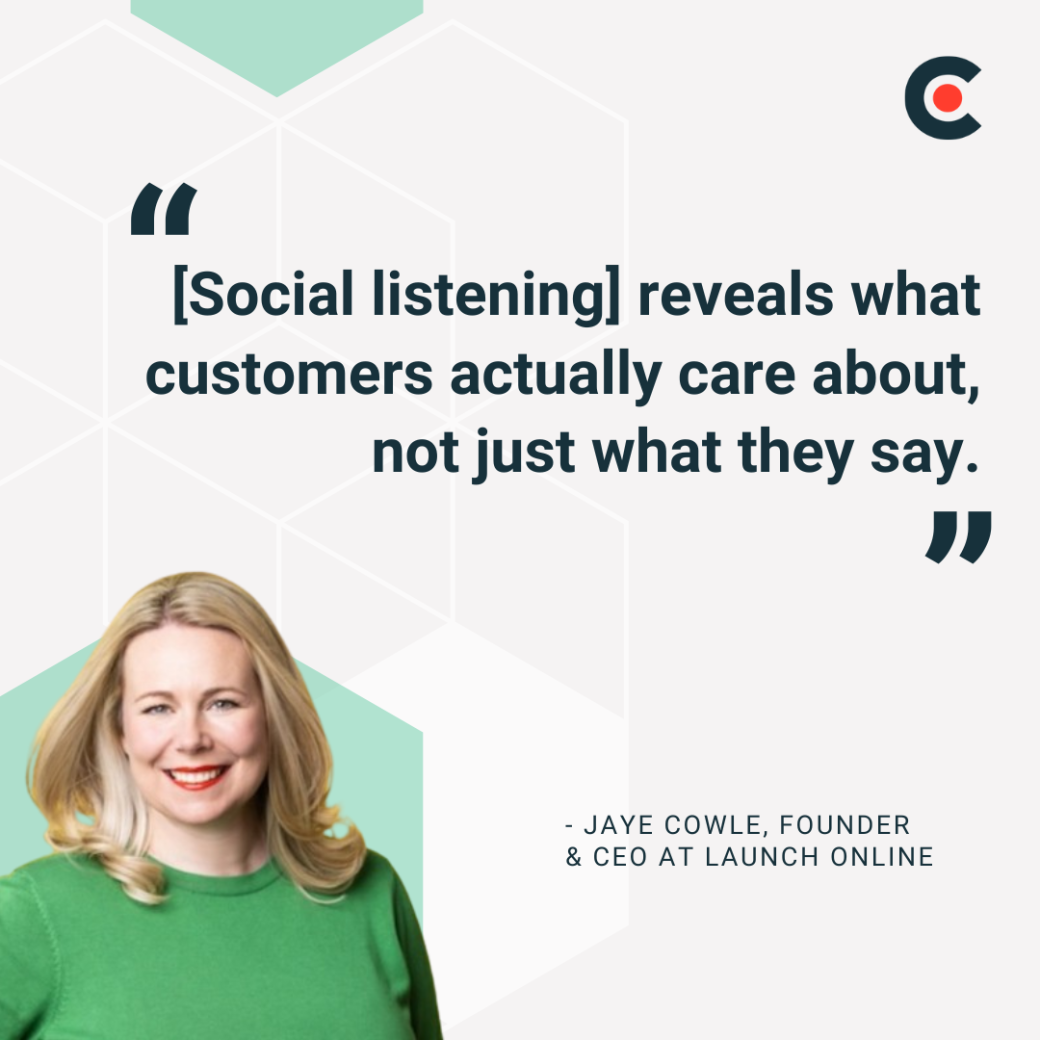
Jaye Cowle, Founder & CEO at Launch Online, says that social listening “reveals what customers actually care about, not just what they say.” That can drive a business to take non-consensus actions that add extra value to the brand.
For example, Wendy’s used social listening while developing its new app. The fast food chain found that people were discussing how to get a quick meal without breaking their diets.
This prompted the development team to add an interactive nutrition-tracking feature to the app, even though PR teams were skeptical. The feature was a hit, bringing many new users to the app organically who may never have found it otherwise — a benefit Wendy’s only earned through social listening.
Social listening provides real-time insights that brands use to make better decisions. But the process isn’t without its challenges. Recognizing these can help your company use the strategy more effectively:
Awareness is the first step toward overcoming these challenges. You’ll also likely need strategies for separating noise from signal in these massive data sets.
For example, you might use an automated sentiment analysis tool and validate its findings with a human touch. Or you could segment conversations by topic, time, and source to zero in on what matters most to your business. Some teams even outsource social listening to third-party providers that specialize in it.
Following a structured approach to social listening will help you avoid challenges and unlock bigger benefits. Of course, your process will vary based on your company’s goals. So, use the following step-by-step instructions to create a custom social listening strategy that meets your needs.
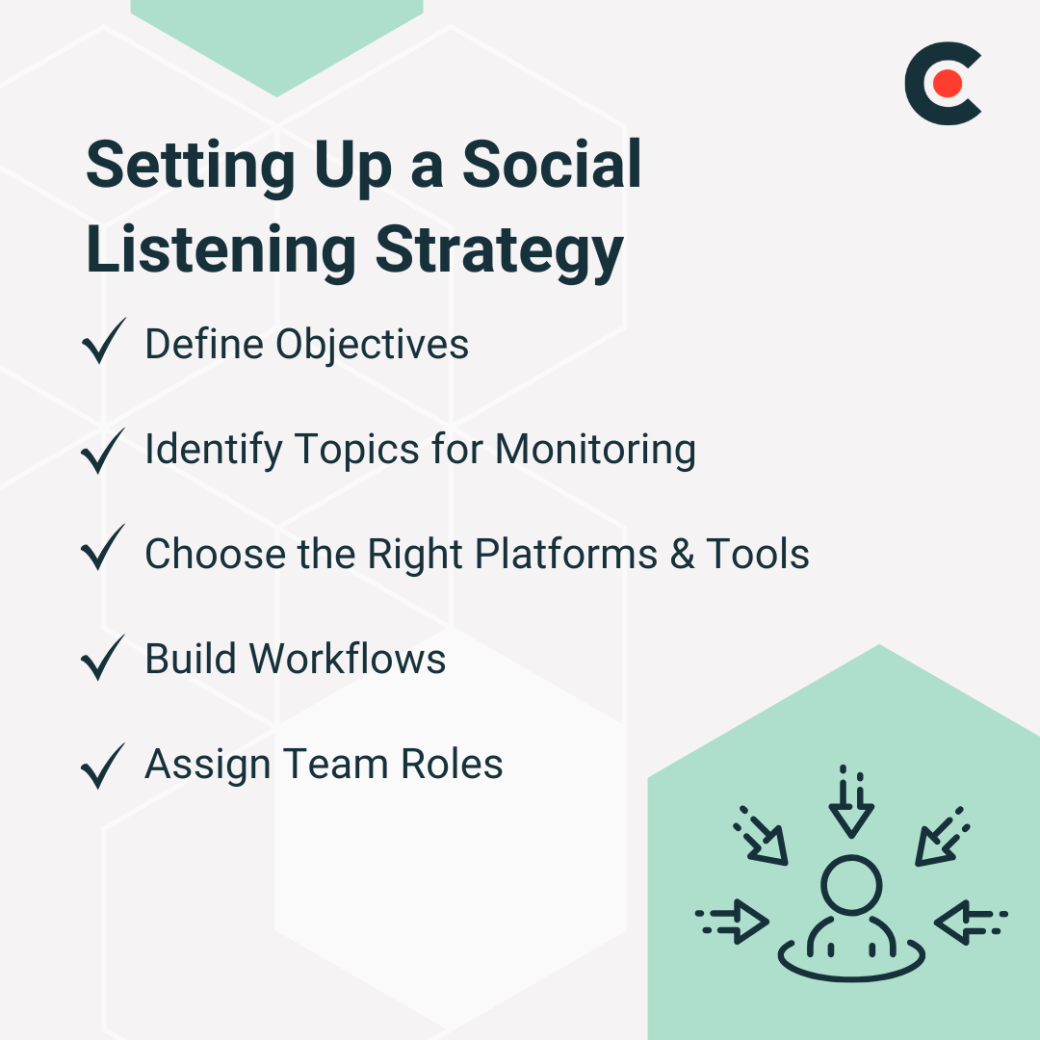
The first task is defining your social listening objectives. These will influence which conversations you track, the platforms you prioritize, and how you’ll determine success. If you don’t know what you hope to find in all that data, it’ll be easier to drown in it. So, consider whether you want to:
You can prioritize one of these objectives or choose several. The key at this point is knowing what you want to achieve so you can develop strategies to achieve it.
Now that you have an objective, consider what you’ll need to track to achieve it. For example, if you want to see how customers feel about your latest product launch, you’d probably track mentions of the product name and nicknames across several platforms.
Or maybe you want to find gaps in competitors’ offerings to target. If so, you could track their complaints on review sites to see what keeps coming up. In both examples, the objective determines the kinds of posts and sites you watch. This helps to minimize data overload, generating value sooner.
Some other topics you may want to listen to include:
Consider what your business’s goals and objectives are to make a choice.
Next, choose the social media listening tools and platforms you’ll use to track conversations. This may depend on your industry, in addition to the objectives you outlined previously. For example:
You’ll also need to decide whether to track these conversations manually or through a platform that offers automated assistance. Manual tracking can work, but it typically takes longer than going through a platform. If you want to speed up the process, the following tools are among the most widely used:
Each platform offers distinct features and benefits, so it’s worth exploring several before signing a long-term agreement. For example, Talkwalker can detect your image in social posts to capture conversations that don’t explicitly mention your brand. Sprout Social offers an integrated social media CRM and helps with publishing responses.
Now you’re ready to design a repeatable workflow for your social listening activities. This integrates the practice into your broader marketing efforts, creating a uniform process that delivers results you can measure accurately over time.
Some key elements for a good workflow include:
Automation is the future.
Finally, you’re ready to assign employees responsibility for social listening tasks. As part of this process, consider creating a centralized dashboard where each task owner shares updates. This allows everyone to benefit from the full range of insights, even though each employee may only be responsible for a percentage of them.
Assign roles based on how employees support your marketing efforts. This keeps employees within their areas of expertise, allowing them to provide deeper insights.
For example, a social media manager is a good point person for monitoring daily activity and flagging urgent issues. A content strategist can monitor insights on blogs, videos, and social content, while a customer service manager watches social sites for complaints.
Now that you have a system in place, let’s review some best practices for keeping your process sharp. Here are three worth considering:
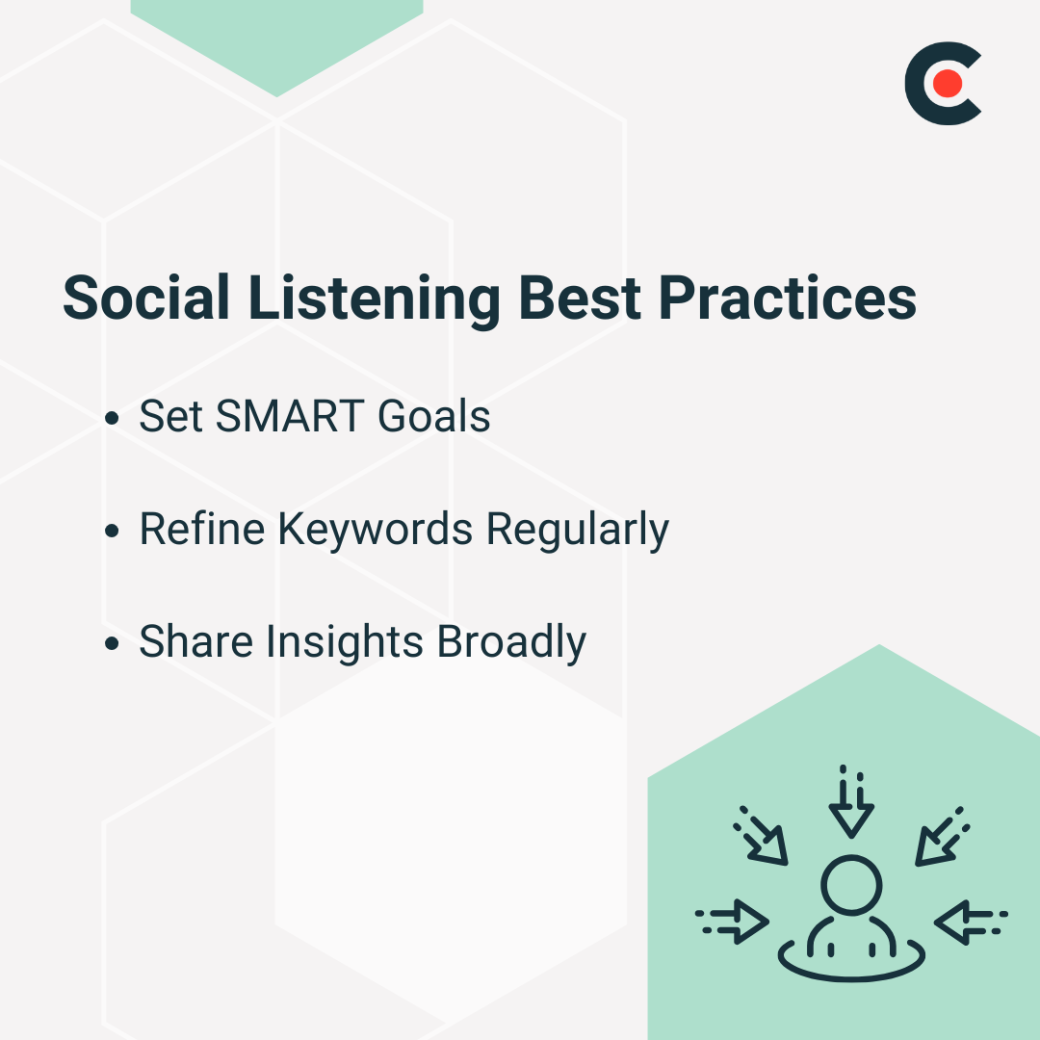
These best practices are key to an effective social listening strategy.
If you’re spending time and money developing a social listening strategy, it’s important to keep an eye on the future. Consumer behaviors evolve quickly, and you don’t want to get left behind with out-of-date practices.
Some key trends to watch today include:
Read more: ‘How Social Media Signals Impact SEO’
Social sites have a wealth of information about your brand, its target audience, and how they’re responding to changes in your industry. Listening to these conversations can make your company more nimble. You’ll be able to respond to change faster than competitors, adapt your marketing to match emerging trends, and find more competitive advantages to improve your bottom line.