What Are AI Influencers? A Guide to Virtual Creators
AI influencers abound on social media. Clutch explains what they are, why brands partner with them, and whether people can tell them apart from human...
Updated July 23, 2026

AI is changing how companies find, evaluate, and hire talent. For recruiters facing rising application volumes and pressure to move faster, AI hiring tools can help streamline repetitive tasks and improve the candidate experience.
Hiring has become more complex than ever. Recruiters are managing higher application volumes, competing for top talent, and facing growing pressure to deliver a faster, more personalized candidate experience. As these demands increase, AI hiring tools are becoming an essential means of streamlining recruiting without sacrificing quality.
Looking for a Artificial Intelligence agency?
Compare our list of top Artificial Intelligence companies near you
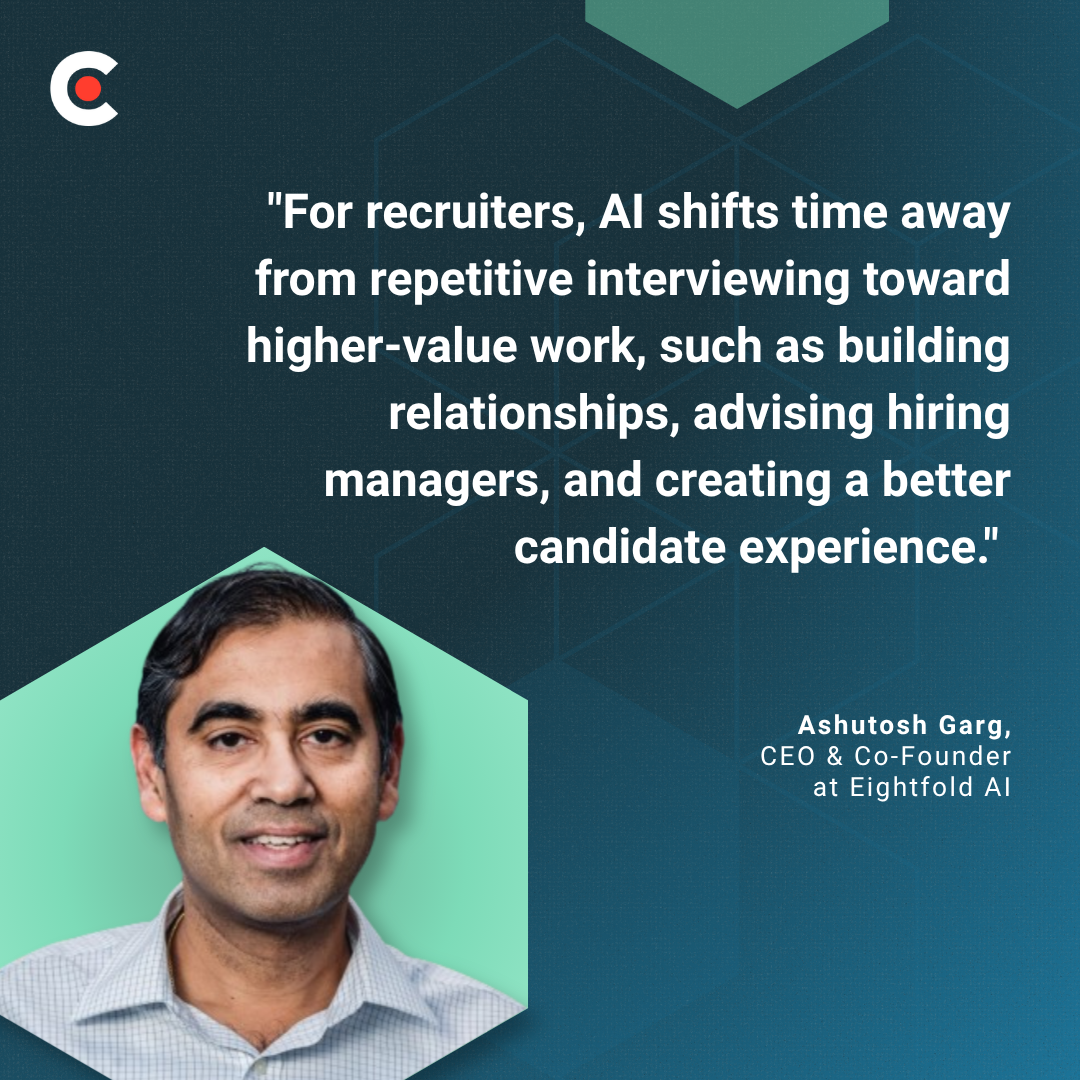
According to Ashutosh Garg, CEO and co-founder of Eightfold AI, the biggest opportunity isn't replacing recruiters but helping them focus on higher-value work. "For recruiters, AI shifts time away from repetitive interviewing toward higher-value work, such as building relationships, advising hiring managers, and creating a better candidate experience," he explains. As AI continues to evolve, Garg believes the best systems won't replace recruiters. Instead, they'll give them more time for judgment, relationships, and the creation of a better candidate experience.
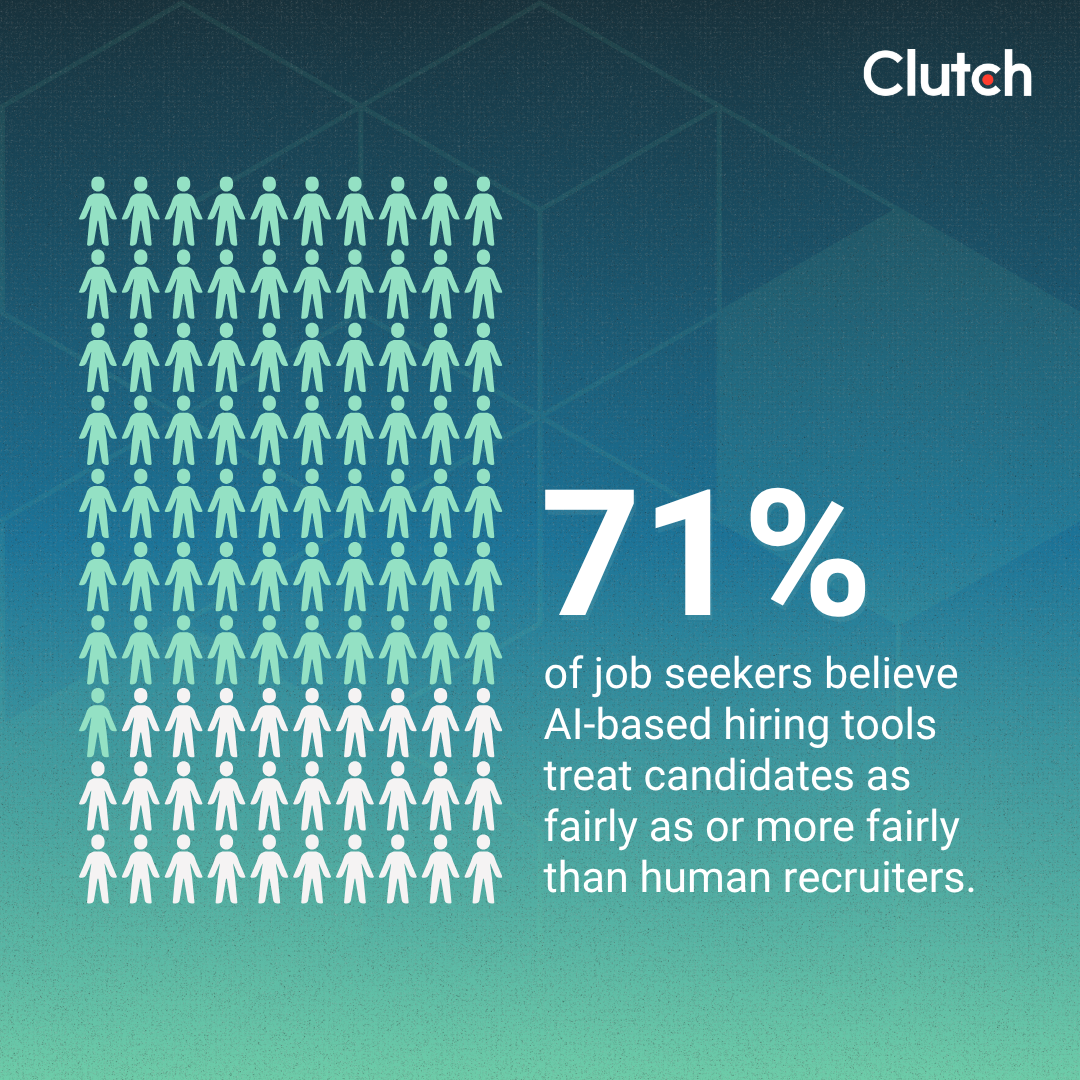
Candidates appear to be receptive to this shift. A Clutch survey of nearly 600 full-time workers found that 71% believe AI-based hiring tools treat candidates as fairly as or more fairly than human recruiters, suggesting that thoughtful AI adoption can improve efficiency without compromising the candidate experience.
If you're considering adding AI to your hiring process, understanding where it delivers value and where human oversight remains essential is critical. This guide explains how AI recruiting tools can help reduce time-to-hire, improve hiring efficiency, and support better hiring decisions. You'll also learn the potential risks to watch for and best practices for implementing AI responsibly.
AI has quickly become a standard part of modern recruiting. Today, 87% of companies use AI in some stage of the hiring process. Rather than serving as a niche technology, AI is becoming a baseline expectation for organizations looking to hire efficiently and stay competitive.
Its versatility is one of the biggest reasons for its widespread adoption. AI can support nearly every stage of recruitment, from sourcing candidates and screening resumes to scheduling interviews, communicating with applicants, and even extending offers. It can help with:
One of AI's biggest benefits is its ability to shorten the hiring process. By automating repetitive tasks like resume screening, interview scheduling, and initial candidate assessments, recruiters can spend less time on administrative work and more time engaging with qualified candidates.
The impact can be significant, particularly for organizations hiring at scale. Companies, including FedEx and Unilever, have used Paradox's Olivia recruiting assistant to reduce hiring workflows that once took up to seven days to fewer than 48 hours.
AI-powered screening can also help recruiters identify qualified candidates more quickly, while asynchronous video interviews allow hiring teams to review responses on their own schedules instead of coordinating multiple live interviews.
When implemented thoughtfully, AI can help recruiters move candidates through the hiring process more efficiently while still delivering a responsive, engaging experience.
There are several types of AI recruiting tools for different stages of the process.
Tools like Workable, Greenhouse AI, and Eightfold AI use natural language processing (NLP) to parse resumes against job descriptions, score candidates on fit, and surface the top tier for human review.
When evaluating a resume screening tool, look for:
HireVue, Spark Hire, Paradox, and VidCruiter all offer AI interview tools. There are two types of AI video interviews: asynchronous video interviews, which let candidates record answers on their own time, and conversational AI screens, where a chatbot or voice AI asks questions and captures responses on the spot.
Both formats give recruiters structured, scored responses to review, instead of requiring a scheduled live call for every first-round candidate.
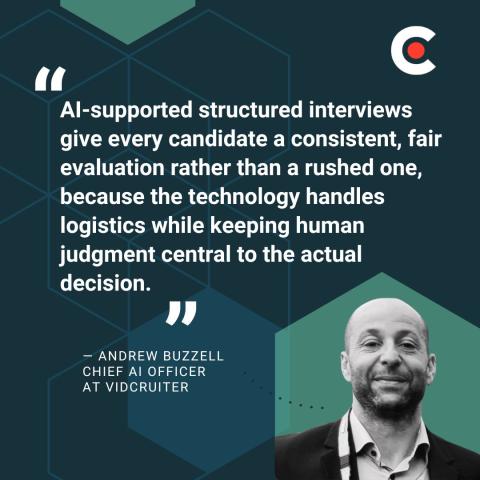
"AI-supported structured interviews give every candidate a consistent, fair evaluation rather than a rushed one, because the technology handles logistics while keeping human judgment central to the actual decision," explained Andrew Buzzell, the Chief AI Officer at VidCruiter. "That combination is what lets companies move fast in 2026 without turning hiring into a numbers game that leaves candidates feeling like an afterthought."
Before launching AI interviews, employers should set clear scoring rubrics tied to role competencies — the skills and qualities that the role actually requires. A clear rubric ensures that evaluations are consistent and defensible if a candidate questions a hiring decision. Otherwise, two candidates giving similar answers could be scored differently depending on which reviewer (human or AI) is watching.
Fetcher, Eightfold, and SeekOut scan external databases and internal ATS records to identify candidates matching the criteria for a role. This includes applicants for previous roles who could be a fit for a current opening, as well as possible candidates who haven't applied anywhere and may not be actively job hunting.
These solutions are particularly useful for hard-to-fill technical roles with a limited pool of active applicants. When the most qualified talent aren't submitting applications on their own, outreach to passive candidates may be necessary to meet hiring targets.
Scheduling and candidate communication tools such as GoodTime, Calendly's AI layer, and Paradox remove the scheduling bottleneck that slows down hiring. Candidates pick their own times, interviewers are confirmed automatically, and reminders go out automatically, so what used to require days of back-and-forth only takes minutes.
AI chatbots on career sites and ATS portals extend that same relief to candidate communication by answering applicant questions around the clock. This not only lightens the load on recruiting coordinators but also helps close the drop-off that occurs when candidates apply, hear nothing back, and eventually stop waiting.
The technology can be a boon to any recruiting business, but how do applicants really feel about AI's role in the hiring process? No matter how good a resume screening tool is, if you don’t understand what your candidates think of it, you might miss the mark when deploying it.
In Clutch's survey, 77% of workers believed the companies they've applied to have used AI to screen their applications. Clearly, candidates already know — or strongly suspect — that AI is in the loop.
Accordingly, trying to hide this fact will backfire. Instead, to build trust, be transparent and let applicants know you use AI from the start. A simple one-line note in the confirmation email, like “Your application will be reviewed using AI-assisted screening,” is all it takes. Employers who provide this clarification often see better engagement and fewer drop-offs midway through the process.
Using AI can even improve the candidate experience. The survey also found that 71% of people think AI-based hiring tools treat candidates as fairly, or even more fairly, than humans do. Candidates often feel this way because these tools use standardized questions and consistent scoring criteria, and the interviewer’s mood doesn't factor in.
You can even lean on AI interviews to further the screening process — 61% of workers who participated in AI-led interviews reported a positive experience. If discomfort shows up, it's usually due to unfamiliarity with the format rather than the format itself. Well-designed AI interviews, with clear instructions, reasonable question sets, and prompt feedback, tend to score well with candidates.
The efficiency gains of AI in hiring are real, but so are the risks. Liability cannot be outsourced to AI — employers remain legally responsible for discriminatory outcomes, regardless of whether the algorithm or a third-party vendor caused them.
You also must watch out for bias. A 2022 study found that 61% of AI recruitment tools trained on biased hiring data replicated the discriminatory hiring patterns. In other words, if a company's hiring has historically underrepresented certain groups, an AI trained on the past hires may perpetuate the problem.
AI tools also need human oversight. Significantly, 93% of hiring managers say human involvement remains essential for final decisions and complex assessments. For example, AI should shortlist candidates, not outright select, and the final hiring decision should always have a human in the loop.
To reduce bias and liability risk, be careful to adopt and consistently follow several best practices:
Together, these practices reflect that while AI can narrow your candidate pool and speed up the hiring process, you should never run it without a clear paper trail or a person checking its work. That way, the efficiency that AI provides won't come at the cost of being able to defend yourself when and if complaints are filed.
Ultimately, companies that focus on documentation, analysis, and bias reduction from the start see greater gains and savings. It's almost always more expensive — in legal costs, reputational damage, and lost trust with candidates — to retrofit compliance after a problem surfaces than to build it in from the start.
There's a right way to adopt AI in recruitment. Rather than overhauling your entire hiring process at once, start by identifying a single bottleneck, such as resume screening or interview scheduling, where manual work slows recruiters down or causes candidates to drop off.
Test an AI tool in that area and measure its impact. Did it save recruiters time? Did candidates move through the process faster? Did the candidate experience improve? If the tool integrates with your existing systems and meets your standards for fairness and transparency, you can expand its use across your hiring process.
If implementing AI feels overwhelming, an experienced partner can help you choose the right tools, establish compliance safeguards, and launch your program more efficiently.