
Why Salesforce Staff Augmentation Is Becoming a Strategic Choice
Salesforce staff augmentation is no longer a stop-gap. Learn why more businesses now use external specialists to access expertise, move faster, and scale...
Updated June 19, 2026

Data security is a leading concern for businesses of all sizes — but how much should you be spending? Clutch surveyed 250 IT and cybersecurity professionals to determine how much businesses are budgeting for data security and what influences the costs.
Data security is no longer optional. As threat actors grow more sophisticated, the pressure to protect digital infrastructure and sensitive data increases each year. In 2025, businesses across every sector are investing more in data protection. Companies recognize the damage that a breach can cause in both financial and reputational terms. A single breach can cripple operations and cost millions.
The shift to hybrid work and cloud-based operations has increased the risk of cyberattacks. This makes endpoint security and identity management priorities. Businesses must now defend against ransomware and AI-powered phishing schemes — the threats that didn’t exist a decade ago.
Looking for a IT Services agency?
Compare our list of top IT Services companies near you
But proactive security isn’t just about compliance. It’s a competitive advantage that builds trust with customers and partners.
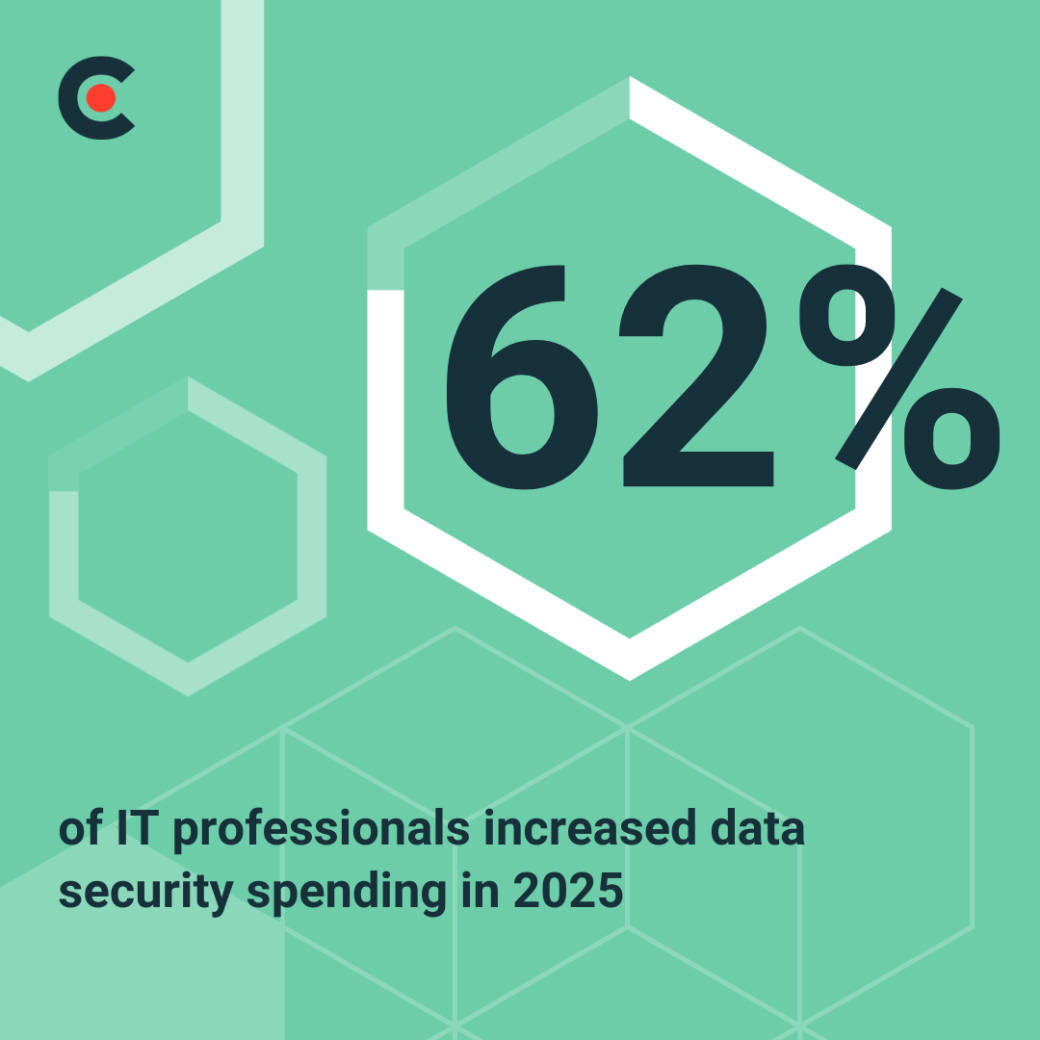
Our survey of 250 IT and cybersecurity professionals revealed that 62% of businesses increased their data security spending this year. You don’t have to look far to see why. Take the 2023 MOVEit breach, for instance. Hackers exploited a zero-day vulnerability in the secure file transfer software. They gained unauthorized access to customer data from multiple organizations. The attack affected financial institutions and healthcare providers. In the end, firms faced lawsuits and compliance reviews.
This is a clear sign that data security is no longer a nice-to-have. Investing in cybersecurity services protects your business.
Learn more about Clutch's data security survey in, "What Businesses Need to Know About Data Security & AI in 2025."
Recent industry trends show an increase in cybersecurity spending. This year, spending could rise to $212 billion. This reflects the rising threat facing modern businesses. Attacks are becoming more sophisticated and frequent each year, which makes security spending a necessary safeguard rather than an optional expense.
Even with these increasing costs, many companies still find themselves unprepared when confronting advanced cyberthreats and zero-day vulnerabilities.
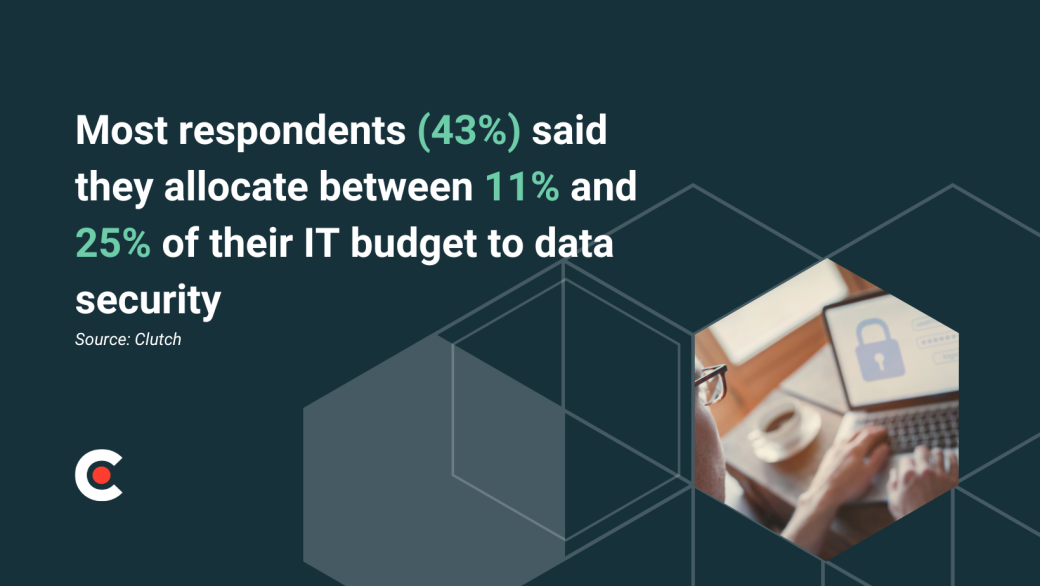
Most respondents (43%) said they allocate between 11% and 25% of their IT budget to data security. For context, most IT projects reviewed on Clutch usually exceed $200,000.
That may seem high, but consider the alternative — a single cyberattack can cost far more than a proactive investment. Several factors influence how much you should spend, including:
As businesses grow beyond certain thresholds, security requirements increase dramatically. This is due to changing threat profiles and regulatory obligations. Enterprise-level organizations often implement multi-layered security operations centers with 24/7 monitoring capabilities. Such investments can reach into the millions annually.
Larger businesses with multiple locations and complex IT systems face higher data security costs. They manage more endpoints and employee devices. This increases their attack risks. For instance, a multinational corporation needs advanced firewalls and monitoring across regions. This may not be the case for a small startup with a single office.
Distributed teams and Internet of Things (IoT) devices add complexity. This requires investments in threat detection and secure remote access solutions. For instance, a retail chain with thousands of point-of-sale systems must secure each terminal against skimming malware. On the other hand, a remote-first tech company may prioritize virtual private networks and zero-trust network access.
The more sensitive the data you handle, the greater your data security needs. Companies storing customer financial details or intellectual property invest heavily in encryption and access controls. A breach of such data can lead to severe implications. This is why data security is non-negotiable.
Your choice of technology impacts data security expenses. Modern tools such as AI-driven threat detection and zero-trust architecture cost more. However, they offer better protection.
Outdated systems, such as those in the 2024 Change Healthcare breach, amplify risks and recovery costs. Hiring a skilled IT firm can help you select the right tools for your needs.
Hiring expert cybersecurity professionals is necessary but costly. Training existing staff or hiring experts drives up budgets. Companies lacking in-house expertise can partner with managed IT service providers offering data security services.
Not all industries treat data the same way. Still, not all data holds the same value.
An investment firm and a healthcare organization will have considerably different requirements. Industries handling sensitive information or operating under strict regulations naturally spend more on data security. The risks of non-compliance or system compromise are simply too high.
Let’s take a look at where spending must be a priority.
The healthcare sector faces tricky challenges due to the nature of its data. Apart from protecting patient information, healthcare companies must protect the integrity of their medical devices and telehealth platforms. Cybercriminals are now targeting these devices. Investing in secure communication channels and regular security training for staff is necessary to maintain compliance and patient safety.
Keep in mind that healthcare data is deeply personal and largely regulated. Patient records and insurance details deserve protection at every level. A breach can lead to identity theft and irreversible damage to patient trust.
In 2023, HCA Healthcare suffered a hack that exposed personal information from over 11 million patients online. The hack affected patients in 20 states, including Texas and Georgia. As a result, the company incurred high legal fees and regulatory penalties. But even more importantly, it had a significant impact on their reputation.
It’s no surprise that healthcare companies often allocate a larger slice of their IT budgets to security.
Financial institutions manage large amounts of sensitive financial data, from credit card numbers to investment records. Regulations such as the Payment Card Industry Data Security Standards (PCI DSS) call for advanced data security measures. A breach could disrupt markets and erode customer confidence.
Take the 2017 breach that Equifax suffered. The hack exposed 147 million customers’ Social Security numbers and financial details. The company agreed to a $425 million settlement to help those affected by the data breach.
To mitigate such risks, financial institutions need to adopt advanced technologies. This includes artificial intelligence and machine learning that improve encryption protocols and detect anomalies in transaction patterns.These tools allow for proactive threat identification. They also help with compliance with regulatory standards and build customer trust.
Financial firms should allocate substantial budgets to data security. This helps with real-time monitoring and fraud detection.
Government and defense systems hold data related to national security and intelligence. A breach here does not just disrupt operations, it can endanger lives and compromise entire systems.
In 2020, the SolarWinds breach exposed the vulnerability of government systems. Russian hackers gained access to multiple federal agencies through a corrupted software update.
The fallout was huge, leading to a re-evaluation of how public institutions manage cybersecurity. Government agencies now direct significant resources toward securing their digital infrastructure.
Retail and e-commerce companies process a high volume of transactions daily. Each one contains sensitive customer data. You must secure payment details and shipping addresses against leaks and fraud.
The JD Sports cyberattack in the U.K. affected 10 million customers. The hack exposed addresses and order details, leading to regulatory investigations and customer backlash.
With e-commerce continuing to grow, retailers are funneling more money into hiring e-commerce developers. This involves securing online platforms and backend systems.
Creating a data security budget isn’t about picking a number out of thin air. This should reflect the company’s size and industry risks. It also needs to consider the tools and personnel required. Organizations should build cybersecurity budgets from the ground up. Start by assessing the business’s digital assets. Identify what needs protection and evaluate the existing risks. Also, determine where your vulnerabilities are. Then build a budget based on those gaps.
Spending decisions must prioritize delicate systems. For instance, an e-commerce business should first secure its payment processing system. A healthcare provider should focus on encrypting patient data and securing portals that access medical records.
Working with experienced service providers can lead to the best results. Find firms specializing in cybersecurity services to help you identify your priorities and implement proper safeguards.
Data security is non-negotiable in 2025 as cyberattacks grow in scale and impact. You face rising threats that demand strategic investment to protect sensitive data and maintain trust. Our survey shows that 62% of businesses have increased their data security spending, with 43% allocating between 11% and 25% of their IT budgets to data security alone.
Costs vary by business size, data sensitivity, tech stack, and workforce skills. Meanwhile, industries such as healthcare, finance, government, and e-commerce invest heavily due to regulatory pressures and sensitive data.
As cyber threats evolve, businesses rise to the occasion and integrate new cybersecurity technologies and automated threat intelligence platforms. These advancements improve data protection and streamline compliance with global regulations. A culture of continuous improvement and vigilance can help companies stay ahead of adversaries. This safeguards their digital ecosystems effectively.
Real-world breaches, such as the Equifax hack, highlight the financial and reputational harm of inadequate data security. Budget wisely by assessing risks and adopting modern tools. Don’t forget to train your staff on data security practices. Partner with reliable cybersecurity service providers to optimize your data security strategy.
![How to Create a Budget for BI & Analytics Services [With Template]](https://img.shgstatic.com/clutch-static-prod/image/resize/715x400/s3fs-public/article/f07e9d6bd89e7f70df9c94301acdd847.png)