
Is Your Phone Spying On You? (And How to Stop It)
Do you worry your phone is spying on you? You’re not alone. Learn how smartphones collect your data and what you can do to reduce what you share.
Updated December 17, 2025

The manufacturing landscape is shifting beneath the feet of industry leaders who aren't paying attention. In 2025, competitive advantage no longer stems solely from equipment quality, labor efficiency, or even cost optimization. The companies capturing market share are those leveraging operational intelligence real-time data insights that drive better decisions and faster execution. But here's what most manufacturing executives overlook: this intelligence isn't possible without intentional IT infrastructure investment.
Smart manufacturing is no longer a future concept. It's operational reality in facilities across the Midwest and beyond. Yet the technology that enables this transformation—sensors, automation systems, predictive analytics, only delivers value when built on a foundation of strategic IT infrastructure. Without it, manufacturers are essentially building high-performance engines on cracked foundations.
Industry studies show only 16 % of manufacturers report full real-time visibility across their manufacturing process, while nearly half still lack a corporate-wide data strategy, underscoring how common IT/OT visibility gaps remain.
Looking for a IT Services agency?
Compare our list of top IT Services companies near you
Consider this scenario: A $40M packaging company approached us wanting to deploy IoT sensors across production lines. When we asked about their network security posture and data storage architecture, they couldn't answer. "Our IT person handles it," they said, "but honestly, I don't know if we're secure." They were prepared to invest six figures in smart manufacturing technology while operating blind on the foundational infrastructure supporting it.
This isn't unusual. Most manufacturing operations evolved incrementally: a new production line here, a quality control system there, inventory management software over there. Each implementation was handled independently, creating isolated pockets of technology rather than cohesive systems. Now, as manufacturers attempt to extract value from smart manufacturing, they're discovering their IT environments can't support it.
The consequences? Data silos, security vulnerabilities, failed implementation timelines, and missed competitive opportunities.

Smart manufacturing generates unprecedented data volume. Production sensors transmit readings every few seconds. Quality control systems capture measurements for every unit produced. Maintenance monitoring runs continuously. Inventory tracking happens in real-time. This data firehose is worthless without the infrastructure to collect, transmit, secure, and analyze it.
The manufacturing leaders winning right now understand something critical: smart manufacturing success depends on four interconnected IT foundations. Neglect any one, and the entire initiative underperforms.
Smart manufacturing demands reliable connectivity that traditional manufacturing networks weren't designed to handle. Most manufacturers discover that their existing infrastructure can't transmit the data volume generated by smart operations—or worse, they find fragmented networks where operational technology (OT) systems remain completely separate from information technology (IT) networks.
This separation creates data silos. Production floor systems can't communicate with business operations. Quality systems operate independently from maintenance data. IoT sensors feed into isolated platforms that don't integrate with enterprise systems. The result: islands of information instead of unified operational intelligence.
What's required is a unified network infrastructure that securely connects production floor devices to enterprise systems. This means network segmentation that protects critical systems while enabling data flow, sufficient bandwidth to handle continuous sensor streams, and redundancy that keeps operations running if primary connections fail.
The practical translation: Before deploying any smart manufacturing technology, assess whether your network can handle increased data volume without compromising production or security.
Data collection isn't valuable. Data correlation is.
One aerospace supplier we worked with collected production data from 12 different systems but was unable to identify the cause of quality issues. Production metrics, quality measurements, maintenance schedules, and equipment performance data existed in separate systems. When we integrated these data streams, a clear pattern emerged: specific maintenance intervals coincided with quality rejections. The integration revealed that 15% of quality failures could be prevented through adjusted maintenance scheduling.
That's the difference between collecting data and leveraging data.
Smart manufacturing requires platforms that normalize and correlate information from diverse systems. Manufacturing execution systems (MES), enterprise resource planning (ERP), quality management platforms, and maintenance management software must communicate seamlessly. This integration transforms raw data into actionable operational intelligence—identifying efficiency bottlenecks, predicting quality issues, and optimizing resource allocation.
Without integration capability, manufacturers end up with dashboard overload: impressive-looking analytics that don't drive actual operational improvements.
Equipment downtime is the manufacturing enemy. Industry estimates suggest that unexpected downtime costs manufacturers over $ 50,000 per hour. Smart manufacturing promises to prevent this through predictive maintenance, which identifies equipment failures before they occur.
But prediction requires more than basic monitoring. It requires machine learning algorithms to analyze equipment behavior patterns, historical maintenance correlations, and real-time performance metrics. Vibration data, temperature readings, operational cycles, and maintenance histories must converge to identify failure indicators.
Manufacturers implementing predictive maintenance see measurable results, including 25-30% reductions in maintenance costs, 35-45% decreases in equipment downtime, and significantly extended equipment lifespans. However, these results only occur when the IT infrastructure supports continuous data collection, advanced analytics, and proactive alert systems that reach maintenance teams before problems escalate into crises.
The cost of smart manufacturing connectivity is increased attack surface. We've documented an 87% spike in manufacturing cyberattacks directly correlating with increased operational connectivity. Every sensor, automated system, and data integration point represents a potential vulnerability.
Traditional IT security approaches fall short for manufacturing environments. You can't simply lock down connected devices when production continuity is paramount. Security strategies must protect both IT and OT systems while maintaining operational reliability.
This requires network segmentation isolating critical production systems, endpoint protection designed for industrial devices (not just computers), encrypted data transmission protocols, and incident response procedures accounting for both business and production implications.
Manufacturing leaders often assume security is either "turned on" or "turned off." Smart manufacturing demands security strategies that are simultaneously robust and operationally transparent.
Before pursuing smart manufacturing, manufacturing executives need honest answers to fundamental questions:
1. Can Your Network Infrastructure Handle Smart Manufacturing Data?
Production sensors generate terabytes of monthly data. Quality systems capture thousands of measurements daily. Maintenance monitoring runs continuously. Assessment question: Does your current network reliably handle this volume without affecting production or creating security vulnerabilities?
2. Do You Possess Data Integration Capabilities?
Smart manufacturing value emerges from connecting data across systems. Can your organization correlate production efficiency data with quality measurements, inventory levels, and maintenance histories? Can leadership access unified operational dashboards revealing cross-system insights?
3. Is Your IT Infrastructure Secure Enough for Connected Operations?
Each connected device and data integration point increases security risk. Do you have network segmentation protecting critical systems? Endpoint protection for industrial devices? Incident response procedures accounting for production impact?
4. Do You Have Strategic IT Support, Not Just Reactive Maintenance?
Smart manufacturing requires ongoing optimization, security updates, new system integration, and strategic planning. Is your IT support reactive (fixing problems when they occur) or strategic (planning for manufacturing success)?
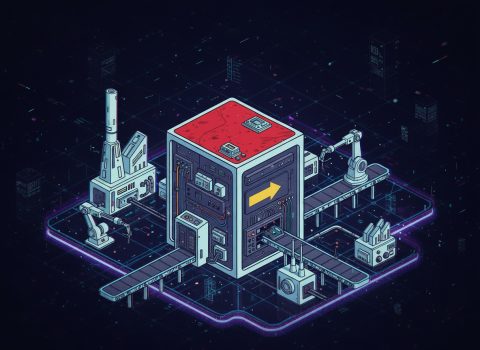
Based on experience helping manufacturers build smart manufacturing capabilities, the practical implementation path includes four phases:
Manufacturers waiting for smart manufacturing to become "more mature" or "less expensive" are making a strategic mistake. The competitive advantage isn't in having cutting-edge technology, it's in converting operational data into decisions that improve efficiency, quality, and profitability faster than competitors.
Our survey found 87% of manufacturing leaders want better visibility into technology investment ROI. Smart manufacturing IT services provide that visibility when implemented on a solid infrastructure foundation. The companies that will dominate the next decade won't be those with the newest gadgets, they'll be those extracting maximum value from operational intelligence.
The question isn't whether to pursue smart manufacturing. The question is whether your IT infrastructure will support it when you do.
![How to Create a Budget for BI & Analytics Services [With Template]](https://img.shgstatic.com/clutch-static-prod/image/resize/715x400/s3fs-public/article/f07e9d6bd89e7f70df9c94301acdd847.png)