
Task Automation: How to Cut Repetitive Work
Task automation saves time, gets work done faster, and reduces errors. Learn how to automate repetitive tasks step-by-step and how to decide what to automate.
Updated May 21, 2026

Every team is feeling the same squeeze. More data, more tools, more pressure to move faster.
AI and automation stopped being optional somewhere along the way, they're just how the work gets done now.
n8n keeps showing up in those conversations.
Looking for a Artificial Intelligence agency?
Compare our list of top Artificial Intelligence companies near you
So what is n8n? It's a workflow automation platform with open-source roots: workflows built in a visual editor, nodes connecting to different services, and n8n orchestrating the data and actions between the systems already in use.
Let’s take a closer look at how it works and whether it can benefit your setup.
An AI model produces an answer. On its own, that answer doesn't do much. The value shows up in what happens next, in whether a customer gets notified, a record gets updated, or a human review gets triggered. That's where n8n earns its keep.
n8n can:
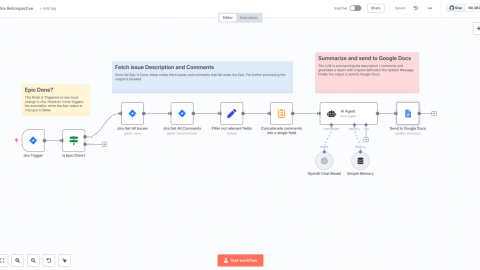
McKinsey research suggests generative AI could add between $2.6 trillion and $4.4 trillion to the global economy annually, largely by automating knowledge work and improving decision speed and quality.
That number only materializes when insights get operationalized, which is exactly the gap n8n fills.
n8n speaks API fluently, which matters more than any specific integration list.
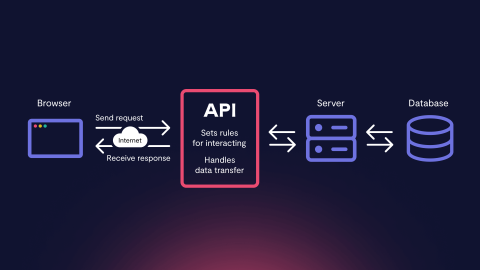
Whether the model lives on OpenAI, Hugging Face, a LangChain orchestration layer, or a custom TensorFlow endpoint, it connects the same way, through a node or a direct HTTP call.
Anything not on the list gets reached with a bit of custom code.
Gregor Emmian, Deputy Chief Digital Growth Officer at Rise, works in fintech environments where AI systems and operational workflows must move in sync without creating friction for internal teams or end users.
Emmian notes, “Most teams still underestimate how much operational coordination sits around the model itself. The scoring or prediction layer is only one piece of the system.
The harder part is routing decisions correctly, handling exceptions, syncing data between platforms, and making sure the workflow still behaves predictably once volume increases or new compliance requirements get introduced.”
A concrete example: a model scoring fraud risk, with n8n fanning out the results:
This separation matters in practice. Engineers focus on model optimization while business users modify how AI outputs flow through the organization, without filing tickets, without waiting on a sprint.
Good AI work depends on good data flow, and this is where n8n does most of the heavy lifting, especially for companies managing increasingly complex global mobility across systems, teams, and operational data.
It pulls from databases, SaaS tools, webhooks, and file drops, cleans the data on the way through (dedupe, validate, enrich, standardize), then routes it onward to the warehouse, the right person, or the next system in line.
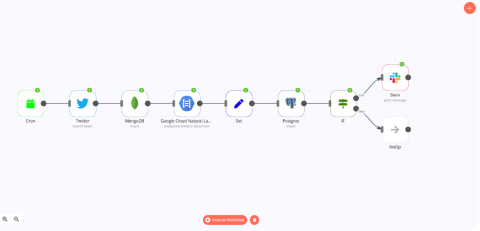
A typical setup runs CRM-to-warehouse ingestion automatically, scores accounts overnight with a churn model, and drops outreach tasks on account managers when risk crosses a threshold.
The real challenges show up at scale:
Bryan Henry, President of PeterMD, works in a healthcare environment where operational automation only works if sensitive patient information stays tightly controlled across systems.
Henry observes, “The difficult part is rarely generating the insight. It’s controlling where that information moves afterward, who can access it, and ensuring workflows remain reliable once patient data starts passing between systems. As AI becomes more operational in healthcare, the infrastructure layer matters just as much as the model itself.”
The companies getting this right are treating automation infrastructure as a long-term operational system, not a temporary AI experiment. Once workflows start touching regulated data, reliability, auditability, and access control stop being backend concerns and become core business requirements.
The workflows that last are the ones that can change without much fuss when something shifts.
Picture a workflow that takes new customer signups, runs them through a scoring model, and sends the promising ones to sales. It works. But then:
None of that is a rebuild. Someone opens the workflow, adds a branch, adjusts a step, ships it. Ten minutes of work, not a new project.
Growth changes the shape of things.
Wade O’Shea, Founder of BusCharter.com.au, runs a transport operation where booking flows, scheduling logic, customer communication, and supplier coordination constantly shift based on availability and demand.
O’Shea explains, “Automation becomes difficult to maintain once the business starts changing faster than the workflows were designed for. New routing rules are added. Customer priorities shift. Different regions need different handling.
The systems that hold up long term adjust quickly without rebuilding the entire process every time something changes operationally.”
n8n grows with your workflow, so it can run on bigger infrastructure when traffic picks up, and changes can be tested on a copy before they touch the real thing. So a new rule is tested safely before it affects an actual customer.
The bigger payoff comes from building useful pieces once and reusing them.
Say a workflow needs to strip personal information out of customer records before sending them anywhere.
Rather than rebuilding that logic in every workflow that needs it, it's built once and called whenever it's needed.
The same goes for things like pulling customer details from the CRM or formatting a prompt for an AI model. When the rules change (and they will), you only have to tweak a step, not rewrite the whole thing. That's how n8n helps.
The next wave of automation won't just call a model.
It'll coordinate agents, tools, and data in real time. Expect tighter hooks into vector databases and retrieval-augmented generation, better prompt management and evaluation loops, and richer event-driven patterns so workflows respond instantly to changes across the stack.
Safety and governance will also receive more attention.
Hong Zhou Jin, CEO of eSign.AI, works in document automation and digital agreement workflows where AI systems sit inside approval chains, compliance processes, and legally sensitive operations.
He notes, “As AI workflows become more autonomous, companies are going to care much more about traceability inside the system itself.
They need visibility into how decisions were made, how information moved between platforms, what triggered certain actions, and where human review still exists in the process. Once AI evolves from a standalone tool to an operational infrastructure, you have to prioritize transparency and auditability.”
Frameworks like NIST's AI Risk Management Framework are gaining traction, and practical guardrails, PII scrubbing, human-in-the-loop checks, prompt input validation, and audit trails will become standard.
n8n is well-positioned for this because it's already the connective tissue. As AI capabilities mature, the value shifts to orchestration, observability, and control. Visual, flexible tools have an edge there.
Most companies face operational coordination problems.
The models are improving fast. APIs are everywhere. New tools appear every month.
But none of that matters much if teams still rely on disconnected systems, manual handoffs, fragile automations, and workflows nobody fully understands once they become complex.
The companies getting real value from AI improve how information moves through the business, how decisions trigger actions, and how workflows adapt when conditions change.