What Are AI Influencers? A Guide to Virtual Creators
AI influencers abound on social media. Clutch explains what they are, why brands partner with them, and whether people can tell them apart from human...
Updated July 28, 2026

AI is a major part of the modern job search, from scanning resumes to conducting interviews. To help you pass your AI interview with flying colors, we’ll explain how AI scores your performance and provide useful tips to show yourself to your best advantage.
If you’re looking for a job in 2026, you already know the search is an unpredictable, demanding slog. The market is all but frozen, the competition is brutal, and hiring happens at a glacial pace.
But there’s a new trend dominating today’s job search that job seekers need to be aware of: the use of AI, from the resume scan to the first interview.
Looking for a Artificial Intelligence agency?
Compare our list of top Artificial Intelligence companies near you
In fact, the first “person” you interact with when applying to work for a company might not be a human being at all. Instead, companies are relying on conversational AI to conduct automated interviews.
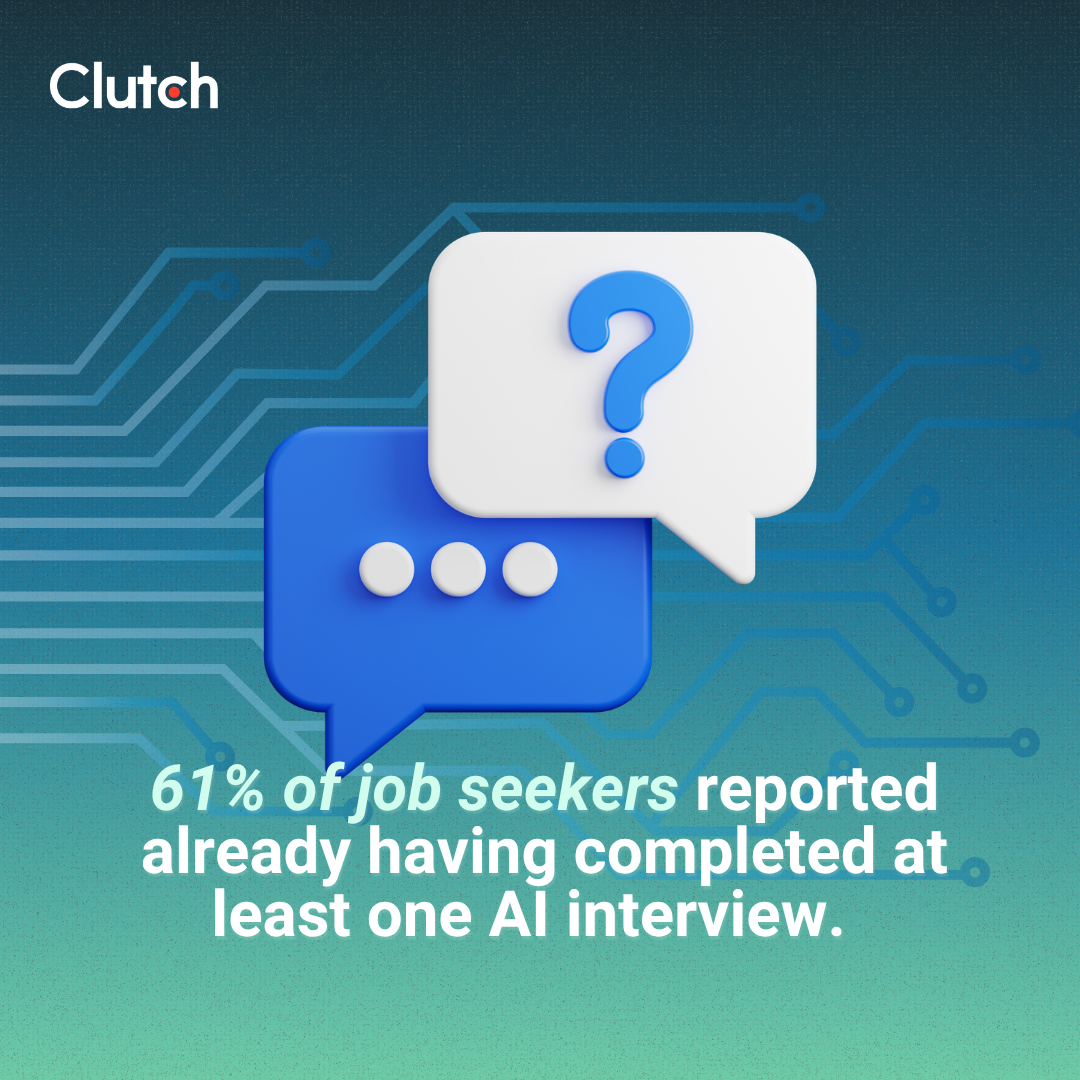
According to a recent Clutch survey, 61% of job seekers reported already having completed at least one AI interview.
The very thought may dismay some people, who worry that their application will end up in the trash without a single living human laying eyes on it. However, 80% of workers said they’re okay with employers using AI to screen resumes before a real person reviews them.
To help you prepare, we’re taking a closer look at the types of AI video interviews you might encounter during your job search and detailing how AI scores your performance. We’ll also give some helpful tips for acing your next automated interview.
AI interviews are a modern recruitment tool in which candidates participate in online interviews, giving responses over video for AI tools to analyze. Typically, you’ll encounter one of two main AI video interview formats:
During or after the interview, AI scores the candidate on various elements of their interview. Natural language processing (NLP) assesses the candidate’s answers to determine if they’re authentic and spontaneous rather than scripted and memorized. AI doesn’t just listen to what you say; it evaluates how you say it.
To knock your AI interview out of the park, you need to know what the AI is actually evaluating. AI scorecards generally revolve around role-specific competencies defined by the employer, such as communication, problem-solving, leadership, and technical fit. The AI assesses each response against certain benchmarks, often drawn from high-performing candidates or existing employees at the same company.
The four main signal categories that job-interview-specific AI tracks are:
During an AI interview, the AI weighs your delivery and the way you present yourself as heavily as the content and structure of your answers. That’s why it’s critical to prepare yourself.
Put as much care into readying yourself for an AI interview as you would if you were meeting with a real human. To strengthen your interview game, try these AI-specific job interview tips.
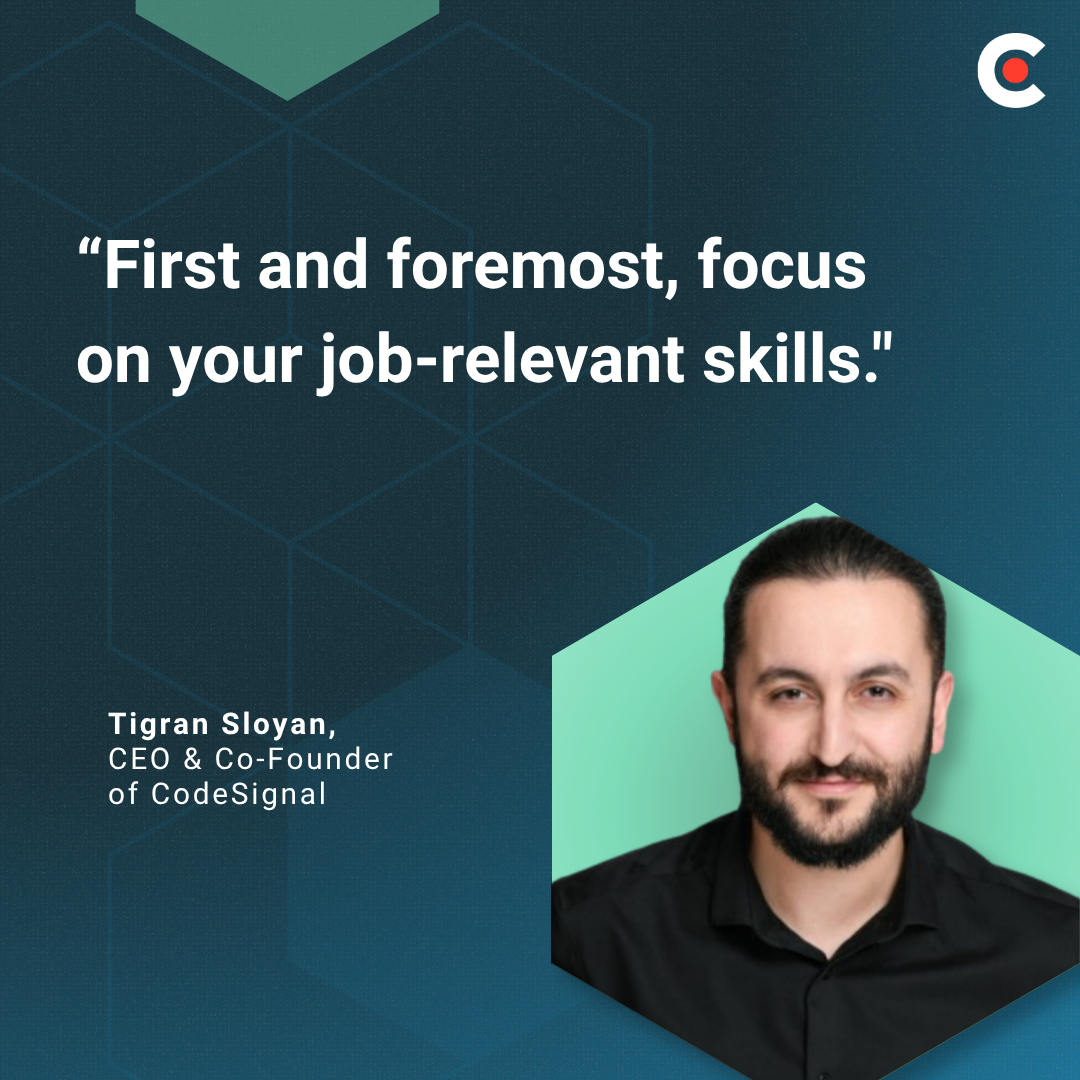
Of course, the most important aspect of your response is demonstrating your relevant skills and experience. “First and foremost, focus on your job-relevant skills,” advises Tigran Sloyan, CEO and co-founder of CodeSignal, a skills-based hiring and assessment platform that also offers AI interview software.
As with any interview, candidates should prepare key talking points that highlight their past work, problem-solving abilities, and the impact they’ve had in previous roles. Instead of trying to predict exactly what an AI interviewer is looking for, focus on clearly explaining your approach, the skills you used, and the results you achieved.
“It all comes down to finding the right skills and competencies to perform the job, then using fair, consistent evaluation to find and hire the right people,” Sloyan said. AI interviews are designed to evaluate candidates based on the same criteria, so providing specific examples and connecting your experience to the requirements of the role can help you stand out.
AI interview systems are specifically trained to parse structured responses to interview questions. Giving a rambling answer without a clear result can cause the AI to score you poorly on problem-solving, even if the content of your answer is relevant and accurate.
Interviewees commonly use the STAR framework to answer behavioral questions during job interviews, and it works well for AI interviews to prevent rambling and low-scoring responses. The STAR method breaks down into:
When asked to describe a situation, it’s best to be specific rather than use generalized statements such as “I never do [action].” Choose a real-life scenario from your professional, volunteer, or academic history. Provide detail, but keep your answers within the 60–90-second time frame. They should be complete and descriptive but succinct.
When participating in an AI interview, you should intentionally incorporate keywords from the job description into your answers. The AI system uses NLP to transcribe your spoken answers and scans for role-relevant terminology, including specific skills, tools, experiences, and competencies. Using the potential employer’s exact language helps the AI recognize your answers as highly relevant.
For example, if the job description mentions “cross-functional collaboration” or “data-driven decision-making,” use those phrases within your answers — but they must sound natural, not forced or robotic.
Also, don’t paraphrase, generalize, or infer. If the job description mentions Salesforce, you should also mention Salesforce by name, rather than saying “CRM tools.”
Beyond your appearance and your words, the AI system analyzes all of your video and auditory input during an AI video interview. This means background noise can significantly affect the AI’s ability to analyze your responses, so take your setup seriously.
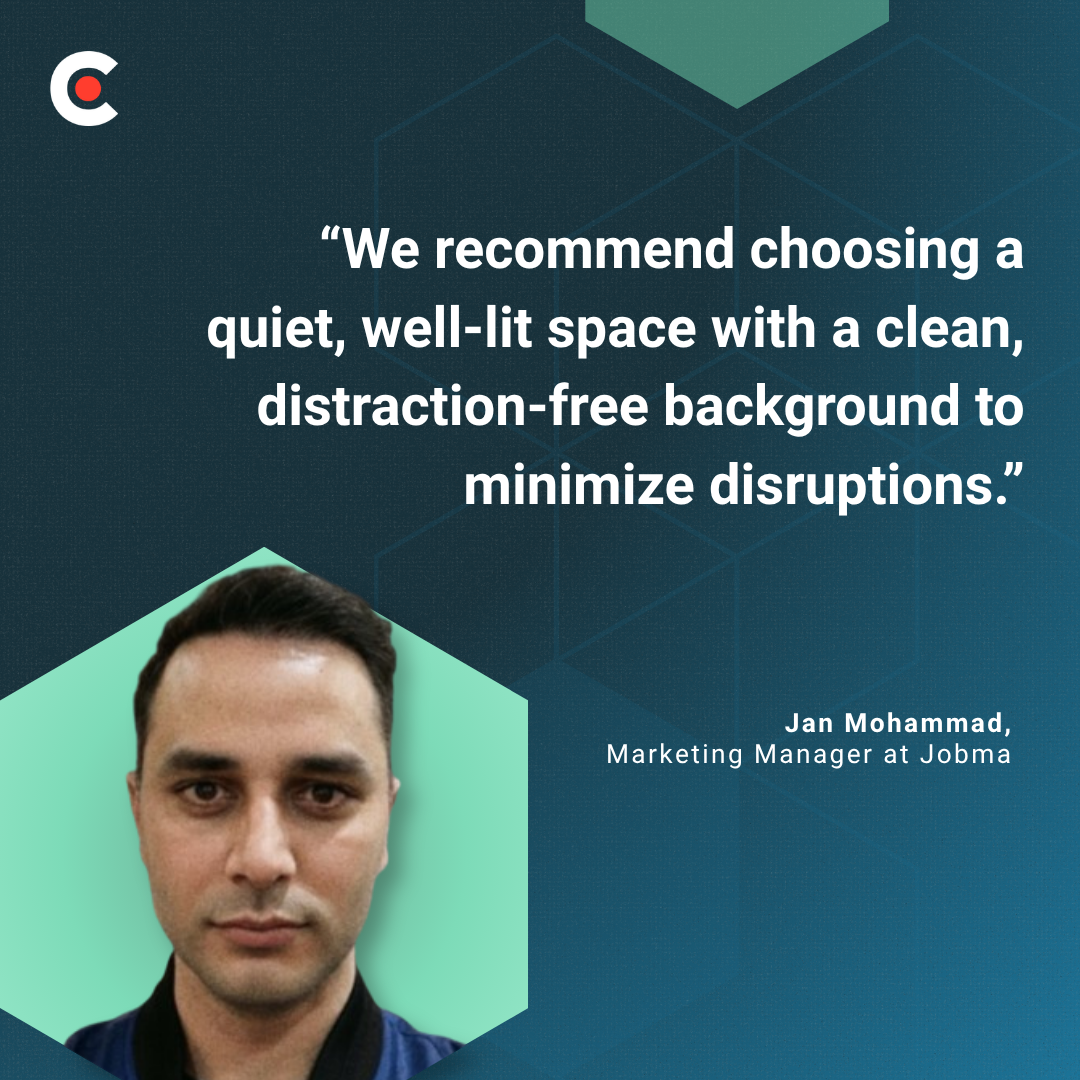
“Before the interview, candidates should ensure their camera and microphone are working and have a fast and stable internet connection,” said Jan Mohammad, Marketing Manager at Jobma. “We recommend choosing a quiet, well-lit space with a clean, distraction-free background to minimize disruptions.”
Here’s a quick environmental checklist:
Many AI systems track your eye contact, so you should look directly into the camera lens, not at your own face or the AI avatar on the screen. “During the interview, candidates should look into the camera as if they’re speaking to a live interviewer and maintain natural eye contact,” said Mohammad.
Because camera compression tends to flatten affect, even animated candidates often come across as dull or lifeless to an AI-scoring algorithm or even a human recruiter. To project genuine enthusiasm, consciously dial up your energy and vary your vocal inflection.
Emphasize key words and accomplishments with natural rises and falls in your pitch. Using open body language and smiling strategically also helps.
Keep in mind that AI tracks drops in engagement. If you start strong but your enthusiasm fades by the fourth question, you’ll see that reflected in your interview score. Maintain the same level of energy from the first question to the last.
Several platforms now offer “mock” AI interviews so candidates can practice with feedback on their structure, tone, and keyword use. For example, CodeSignal provides a learning platform to help potential candidates get familiar with its AI interview platform.
“If practice questions are available, candidates can use them to get familiar with the interview format and review the recording quality before the actual interview starts,” advised Mohammad.
Getting comfortable talking to a camera and a bot before your real interview desensitizes you to the novelty that derails many candidates.
Searching for a job has always involved putting your best self forward. The advent of AI interviews changes the format, but the goal remains the same. With a little preparation, you can breeze through the process.
AI interviews don’t have to be daunting. When you understand how AI scoring works, prepare your environment and responses accordingly, and use AI tools to sharpen your application, you can get a real, measurable edge in a fundamentally changed, highly competitive job market.