
What Are AI Influencers? A Guide to Virtual Creators
AI influencers abound on social media. Clutch explains what they are, why brands partner with them, and whether people can tell them apart from human...
Updated August 4, 2026

Find the best AI recruiting software for tech companies in 2026. Learn which platforms streamline hiring, improve candidate screening, and reduce time-to-hire.
AI is enabling job seekers to apply to more jobs than ever — in a recent Clutch survey, 86% of job seekers reported using AI to increase the number of applications they submit each week.
In tech specifically, application volume is higher than in any other industry. Our data shows that nearly 30% of tech workers apply to between 51 and 75 jobs before accepting a position, while the majority of respondents (58%) apply to fewer than 25.
Looking for a Artificial Intelligence agency?
Compare our list of top Artificial Intelligence companies near you
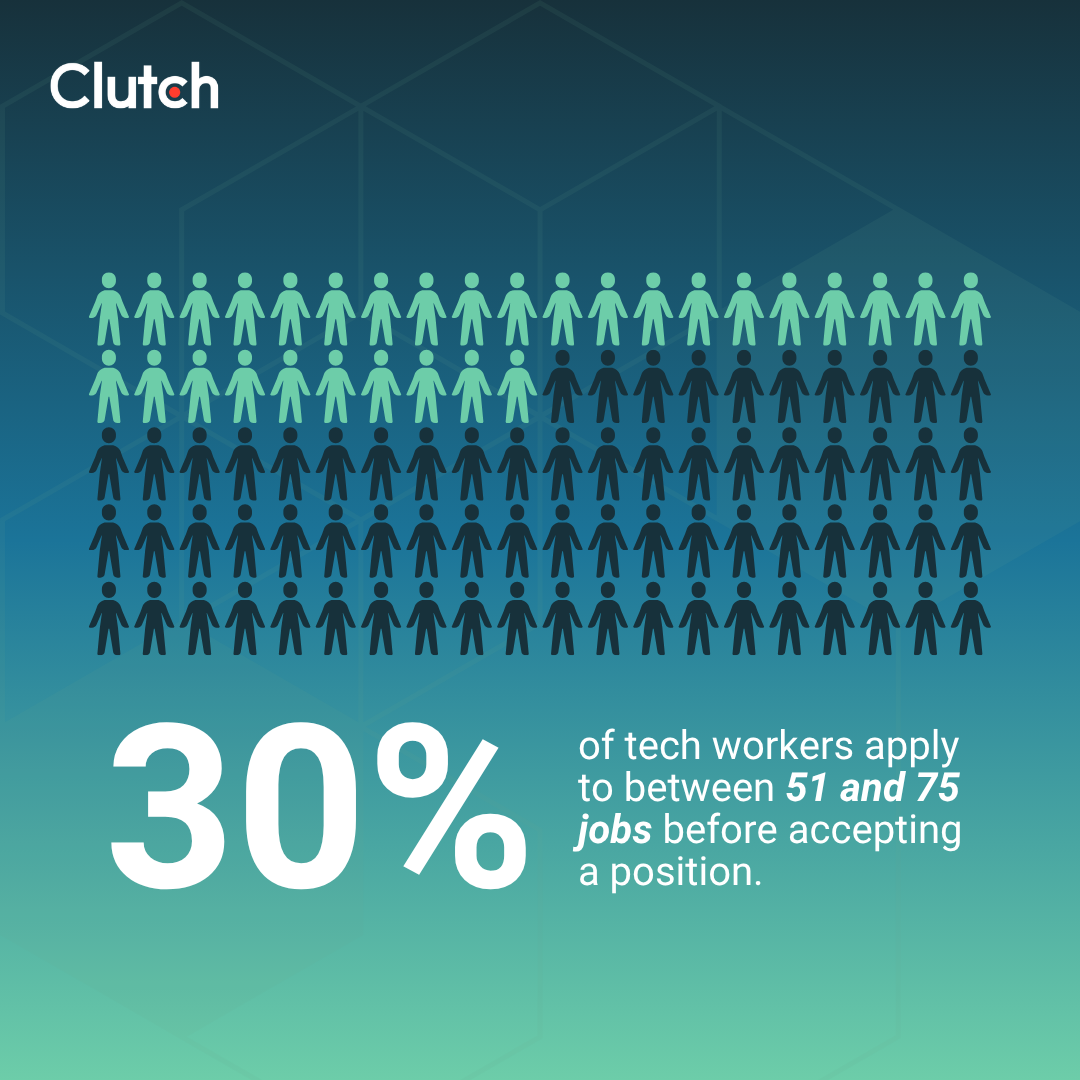
For employers looking to fill tech roles, this translates into an overwhelming surge of applications for every open role, making it increasingly difficult to quickly identify the best candidates.
That increase makes an already complicated process even harder, especially when it comes to hiring engineers.
To keep up, many businesses are also relying on AI recruiting software. This guide explores the best AI recruiting software for tech companies and shares practical tips for choosing the best tool based on your team size and hiring stage.
Your HR team may already use tools like ChatGPT to draft job descriptions or write interview questions, but AI recruiting software helps companies source tech talent, assess hard skills, screen candidates, and more. Here are a few factors to consider as you compare options.
Generic recruiting tools usually use keyword matching to identify candidates who might be a good fit. However, anyone can claim to know Python or to be able to debug an app. So, you need proof of their actual skills.
Look for AI recruiting software that analyzes technical signals beyond the resume. That might involve parsing GitHub profiles to assess the quality of each candidate's projects. Some tools also consider contributions to Stack Overflow and other sites where engineers collaborate and share advice.
Check how many profiles each AI recruiting platform covers. The most effective software includes passive technical talent, not just people actively looking for jobs. It should also regularly update the database, so you're not relying on stale information.
Some platforms cover more than 850 million profiles across North America and Europe. This lets you cast a much wider net when sourcing candidates.
Most companies prioritize fairness and objectivity during the hiring process. AI recruiting tools can help reduce unconscious bias by applying the same evaluation criteria to everyone. However, they're not all created equal.
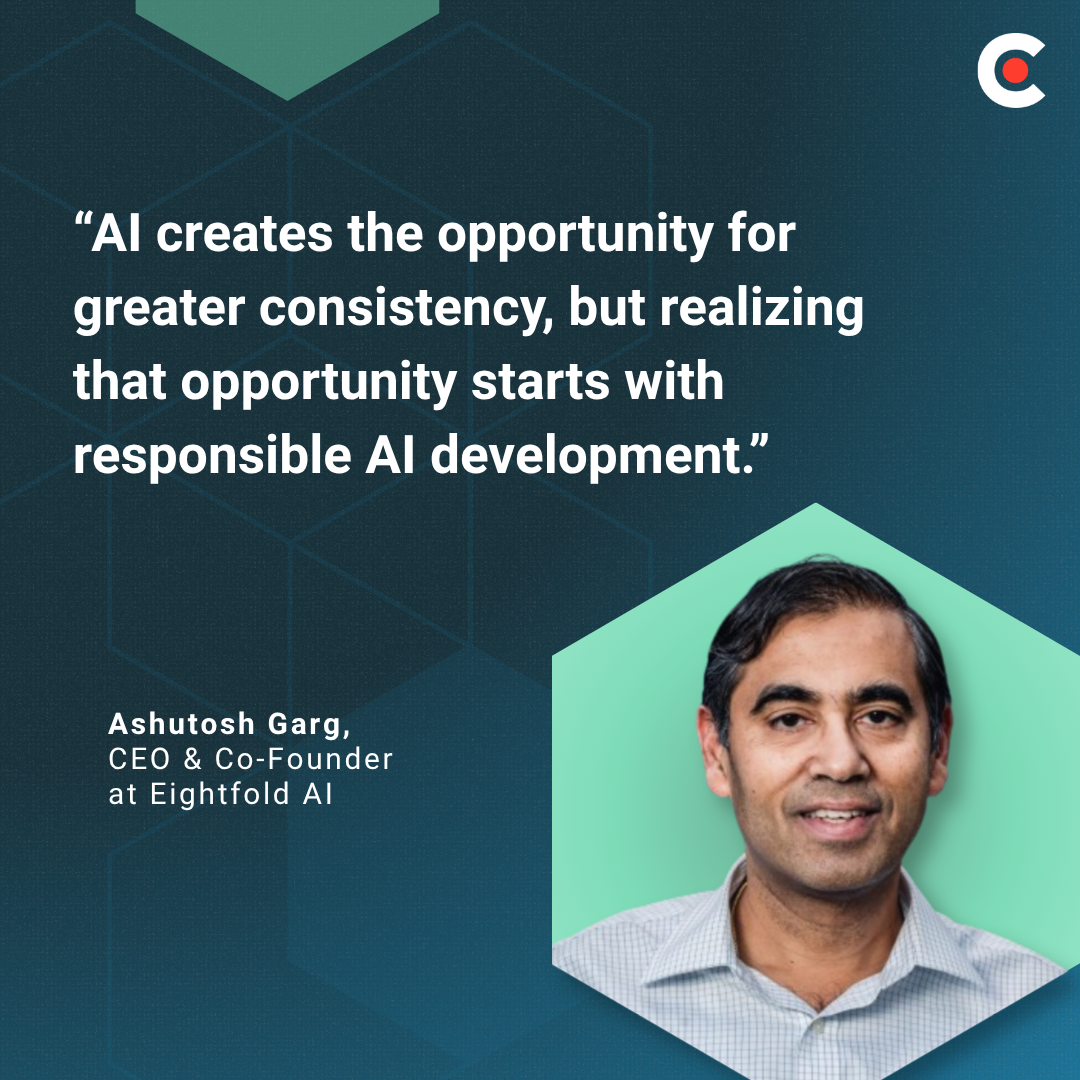
"AI creates the opportunity for greater consistency, but realizing that opportunity starts with responsible AI development," explains Ashutosh Garg, CEO and co-founder of Eightfold AI.
When employers and vendors use AI responsibly, candidates are open to it. Our data shows that 71% of job seekers believe AI hiring tools are as fair as — or fairer than — human decision-makers, and 80% support companies using AI to screen candidates.
Before you commit to a platform, ask how it assesses candidates. Ethical vendors are transparent about their practices and evaluation criteria. They also regularly test their models for bias and make adjustments as necessary.
As a busy recruiter, the last thing you want to do is spend time interviewing unqualified people. AI can speed up the process by conducting initial interviews and evaluating candidates before they speak with your team.
In our survey, almost two out of three (61%) of job seekers said they've already participated in an AI-led interview, and 61% said the technology had a positive impact on their experience.
Recruiting platforms designed for tech roles often offer live coding assessments and asynchronous AI interviews. These evaluations can tell you more about candidates than a brief phone screening, without adding anything to your team's to-do list.
Increased access is another perk. "Features like AI Interviewer give more people an opportunity to interview and showcase their skills," explains Tigran Sloyan, CEO and co-founder of CodeSignal. "It's also designed to make the interview process more consistent, repeatable, and fair than many interviews led by humans."
Sloyan continues, "More than a third of candidates use CodeSignal's AI Interviewer outside the traditional 9-5 because it fits their busy schedules better."
That flexibility makes it easier to recruit professionals who already have full-time jobs, expanding your talent pool.
Your tech company may already use an ATS, such as Greenhouse, Lever, or Workday. Some AI recruiting tools plug into these platforms, while others completely replace them. For most teams, seamless integration matters more than a bloated all-in-one platform with too many features.
Some vendors charge a per-job fee, which can quickly add up if you're recruiting for multiple roles. If you're hiring at volume, look for vendors with flat-rate plans that charge based on your company's size rather than per individual job posting.
You don't have to spend hours sitting through demos to find the right AI recruiting tool. We've done the research to find eight platforms worth considering for your next hiring initiative.
Best for: Tech-forward recruiting teams that need to source candidates quickly.
Juicebox is an AI-native sourcing engine that helps companies find passive technical candidates quickly. Top tech firms like Ramp and Cognition AI use it to hire employees up to five times faster.
Natural language search is one standout feature. Recruiters describe the candidates they need in plain English, and the AI agent searches over 800 million profiles to find matches.
For example, you might input, "I'm looking for a cloud engineer with 10 years of experience and knowledge of Terraform." Your AI Agent will identify top candidates and generate individual summaries with their skills and expertise.
Juicebox works best as a search engine, so you'll need to pair it with an ATS to manage the rest of the hiring process. Consider this option if you want to speed through the sourcing stage for in-demand roles.
Best for: Mid-size to large tech companies that want to consolidate sourcing and pipeline management into a single hub.
Gem combines AI sourcing with candidate relationship management (CRM) software. It lets you track candidates throughout their entire journey, from the moment you discover their profiles to the final offer stage.
However, this software doesn't completely replace ATS platforms. It integrates deeply with many popular systems, including Greenhouse, Lever, and iCIMS. That makes it easy to add Gem to your existing tech stack.
Gem also offers rich analytics and reporting tools. Use these features to track data across your entire pipeline. For instance, monitor where candidates drop off to fix bottlenecks early.
These benefits make Gem a solid choice for teams juggling multiple job postings or hiring many engineers on a short timeline. Customers report that this platform increases recruiter productivity by up to five times.
Best for: Enterprise tech companies with complex org structures and large hiring programs.
Built for enterprises, Eightfold AI uses skills data and career trajectories to map talent. That's particularly useful for niche technical roles where titles don't always reflect a job seeker's capabilities.
This software includes an AI Interviewer that screens invited candidates in over 22 languages. It assesses coding and soft skills, then gives recruiters a concise summary for each candidate. If you have a high-volume engineering pipeline, that cuts down on screening backlogs.
Responsible AI usage is a top priority at Eightfold. Garg explains, "We rigorously test our models for bias and build them with thoughtful data practices and safeguards designed to promote fair and responsible outcomes."
It also has a full talent intelligence layer. "Eightfold AI is not just an AI screening tool making hiring decisions," remarks Garg. "We use AI to help inform talent decisions by bringing greater consistency, better signals, and broader visibility into skills and potential, while ensuring people remain accountable for consequential hiring decisions."
The platform supports decision-making with robust talent analytics and internal mobility features, so you can find the right candidates from anywhere.
Best for: Tech recruiters running targeted outbound campaigns for specialized engineering roles.
In the tech industry, some specialists are more elusive than others. hireEZ integrates with your current ATS to help you recruit hard-to-find talent from outside your organization. Use it to find in-demand professionals, such as data scientists and software engineers.
This software uses data from your ATS to reach out to candidates through several channels, including email and LinkedIn. It tracks engagement across each channel, so you can see what's working. When interested candidates respond, the AI conducts phone screenings and schedules interviews with your team.
Use hireEZ for targeted outreach to passive candidates who aren't actively applying but might consider switching jobs for the right role. Since many of the strongest engineers rarely browse job boards, a proactive approach is often the only way to reach them.
Best for: Tech companies that want a proven ATS backbone with AI features, not a fully native AI platform.
Greenhouse is one of the most popular ATS and hiring platforms for tech companies. It includes several AI recruiting tools, including:
Greenhouse offers many integrations, so you can quickly connect it with most sourcing and assessment tools. However, the platform has a hefty price tag, with pricing ranging from around $6,000 to $70,000 per year, depending on hiring volume. While it's a solid option for enterprises, it may not fit smaller teams' budgets.
Best for: Growing tech companies (50 to 500 employees) that want a single tool to handle most of their hiring workflow.
Workable is an all-in-one HR platform designed to support the entire hiring loop. It offers AI-powered sourcing from over 400 million profiles, screening, applicant tracking, and social media promotion. It also handles core HR workflows, including time tracking and performance reviews.
This platform stands out for its AI-generated job descriptions. It analyzes your ideal candidate profile and creates targeted, inclusive job ads. Once candidates submit applications, the AI scores them based on job criteria and qualifications to minimize bias.
Workable starts at $299 per month and offers more features than lightweight sourcing tools. It's a budget-friendly option for mid-size teams that don't want to pay enterprise pricing.
Best for: Early-stage and growth-stage tech companies hiring their first engineering teams.
Wellfound is designed specifically for startups. It caters to candidates actively seeking tech roles, including many software engineers and AI and machine learning specialists.
On the candidate side, job seekers create profiles with their technical skills, compensation preferences, and equity expectations. That lets startups know which candidates are a good match upfront.
Tech companies can share unlimited job postings and sync their ATS for free. Paid plans start at $135 per month and unlock AI matching features and other recruiter tools. That makes Wellfound an affordable alternative to enterprise platforms.
Best for: Companies that want to screen and interview candidates faster.
VidCruiter helps organizations automate and streamline the recruiting process and is best known for its video interviewing capabilities. However, it also includes tools for scheduling, assessments, reference checking, and interview management.
"VidCruiter uses AI to automate the scheduling and screening steps that create the biggest bottlenecks," explains Andrew Buzzell, Chief AI Officer at VidCruiter. Instead of spending weeks coordinating schedules with qualified candidates, you can talk to your top options in days.
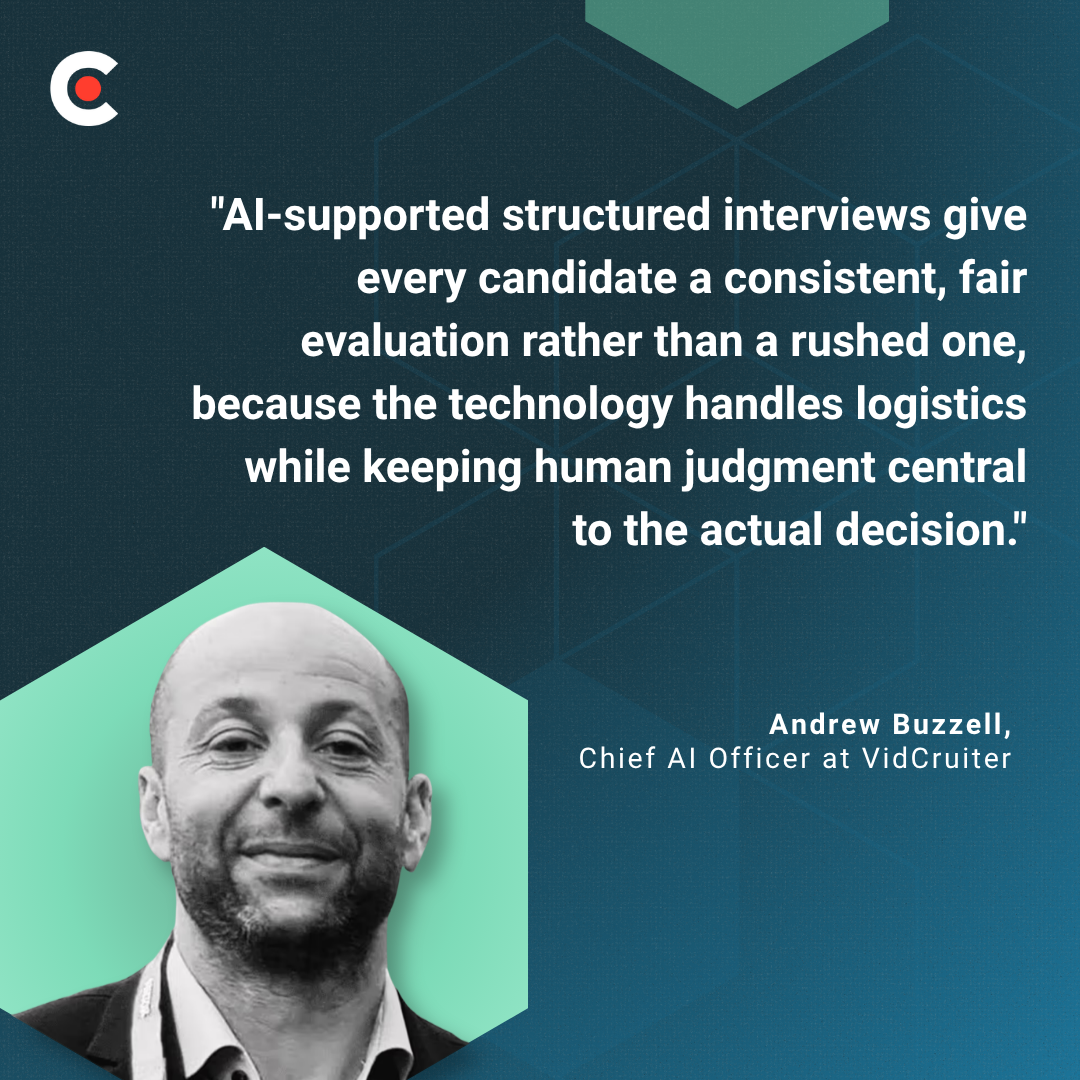
Buzzell continues, "At the same time, AI-supported structured interviews give every candidate a consistent, fair evaluation rather than a rushed one, because the technology handles logistics while keeping human judgment central to the actual decision. That combination is what lets companies move fast in 2026 without turning hiring into a numbers game."
Features like standardized scoring rubrics and transparent reporting also help recruiters evaluate candidates more fairly. Consider VidCruiter if you want to speed up hiring while keeping humans firmly in the loop.
As you weigh your options, here's a quick overview of each platform's AI features and strengths.
| Tool | Best For | Key AI Features | ATS or Integration | Starting Price | Free Tier? |
| Juicebox (PeopleGPT) | Sourcing tech candidates quickly | Natural language search; AI-generated candidate summaries | Integration | $119 per seat per month | Yes |
| Gem | Recruiting and CRM | AI analytics; candidate tracking | Integration | $130 per month | No, but offers a free demo |
| Eightfold AI | Enterprise recruiting and talent intelligence | Skills matching; AI Interviewer; talent intelligence | ATS | Not publicly available, but some reviews estimate that prices start at $10 per user per month | No |
| hireEZ | Outbound recruiting | Targeted outreach; AI screenings and scheduling | Integration | $494 per month for solo recruiters; custom pricing for enterprises | 7-day free trial |
| Greenhouse | All-in-one ATS | AI-generated interview questions; offer forecasting | ATS | Custom, but some reviews estimate pricing starts at $6,000 a year | No |
| Workable | Teams that need a comprehensive HR platform | Candidate sourcing; AI-generated job descriptions | ATS | $299 per month | Free trial |
| Wellfound | Startups | AI matching | Integration | $135 per seat per month | Yes |
| VidCruiter | Video interviews | AI scheduling and interviewing | Integration | Custom, but some reviews estimate starting prices of around $300 per month | No |
AI features aren't the only consideration when selecting recruiting software. These factors will help you narrow your options.
Start by identifying your greatest hiring challenges.
With 86% of job seekers submitting more applications per week due to AI, teams of all sizes are struggling to keep up as inbound volume spikes. If you're drowning in applications, prioritize AI screening and pipeline management tools like Gem and Eightfold.
On the other hand, if your talent pool is dry, sourcing platforms like Juicebox and hireEZ can help you broaden your reach. And if you need the whole stack in one place, go with Workable or Greenhouse.
Affordability is a key factor for early-stage startups with fewer than 50 employees. Wellfound and Workable don't require an enterprise contract and are easy to set up.
For mid-size teams, tools like Gem and Workable strike a balance between useful features and feasible costs. Meanwhile, Eightfold and Greenhouse offer robust integrations, compliance, and scalability for enterprises.
Over three out of four job seekers (78%) say they suspect they've been automatically rejected by AI systems, and 80% have changed how they write resumes to pass AI filters. That means hiring teams need screening tools that assess real qualifications, not keyword density.
Of course, ethical usage is also key. As Garg notes, responsible AI screening tools are:
Use this checklist to evaluate vendors. You should also look for companies that use third-party verified bias audits, which are more reliable than self-reported audits.
Most recruiting platforms offer trials. Before you sign a contract, run at least one open role through the tool. By tracking time-to-first-qualified-candidate, sourcing hit rate, and recruiter time saved, you'll see if the return on investment is worth it.
As the volume of applications swells, more tech companies are turning to AI recruiting tools to source and screen candidates. This software assists with everything from finding niche tech talent to testing their coding skills.
Get started by identifying your biggest bottlenecks, then looking for a platform that addresses them. With a little experimentation, you can speed up your hiring process and find the right talent.