
Why Searching for a Specialized Dev Agency Takes Longer Than It Should — And What to Do About It
Looking for a niche software development agency? Learn how to define your requirements, find specialized providers, and vet their experience.
Updated May 28, 2026

As AI becomes increasingly integrated into software development workflows, questions about its long-term impact on jobs are inevitable. While the presence of AI is growing, fear of widespread job displacement isn’t dominating the conversation.
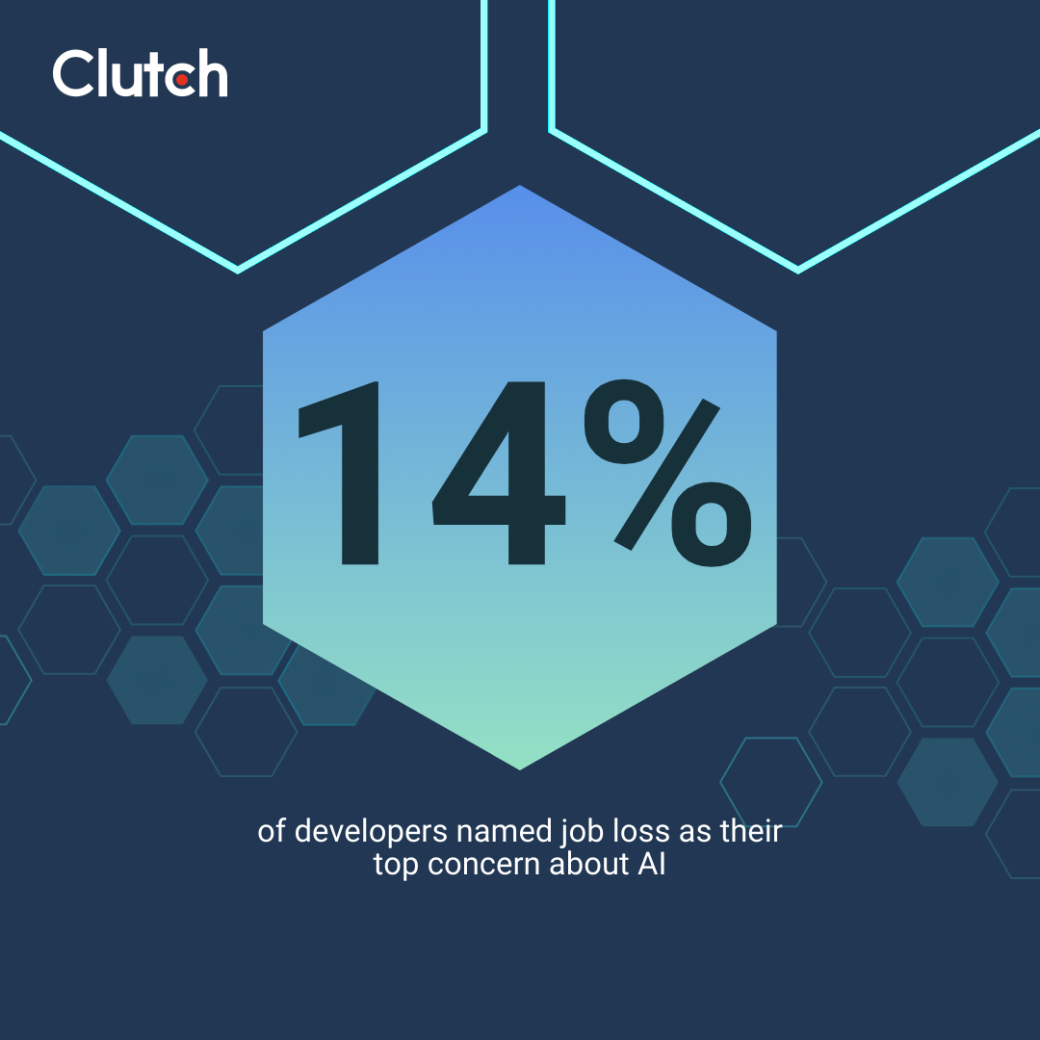
Clutch surveyed 800 software professionals and found that only 14% named job loss as their top concern about AI, suggesting that many see AI more as a tool for enhancement than a threat to their roles.
Looking for a Software Development agency?
Compare our list of top Software Development companies near you
This shift highlights a growing confidence in AI's potential to support, rather than replace, the work of software developers.
You might assume that with AI coding tools flooding the market, developers would be updating their resumes en masse. However, the majority of survey respondents don't see AI as a job-stealing robot — instead, it’s a helpful tool that can enhance productivity.
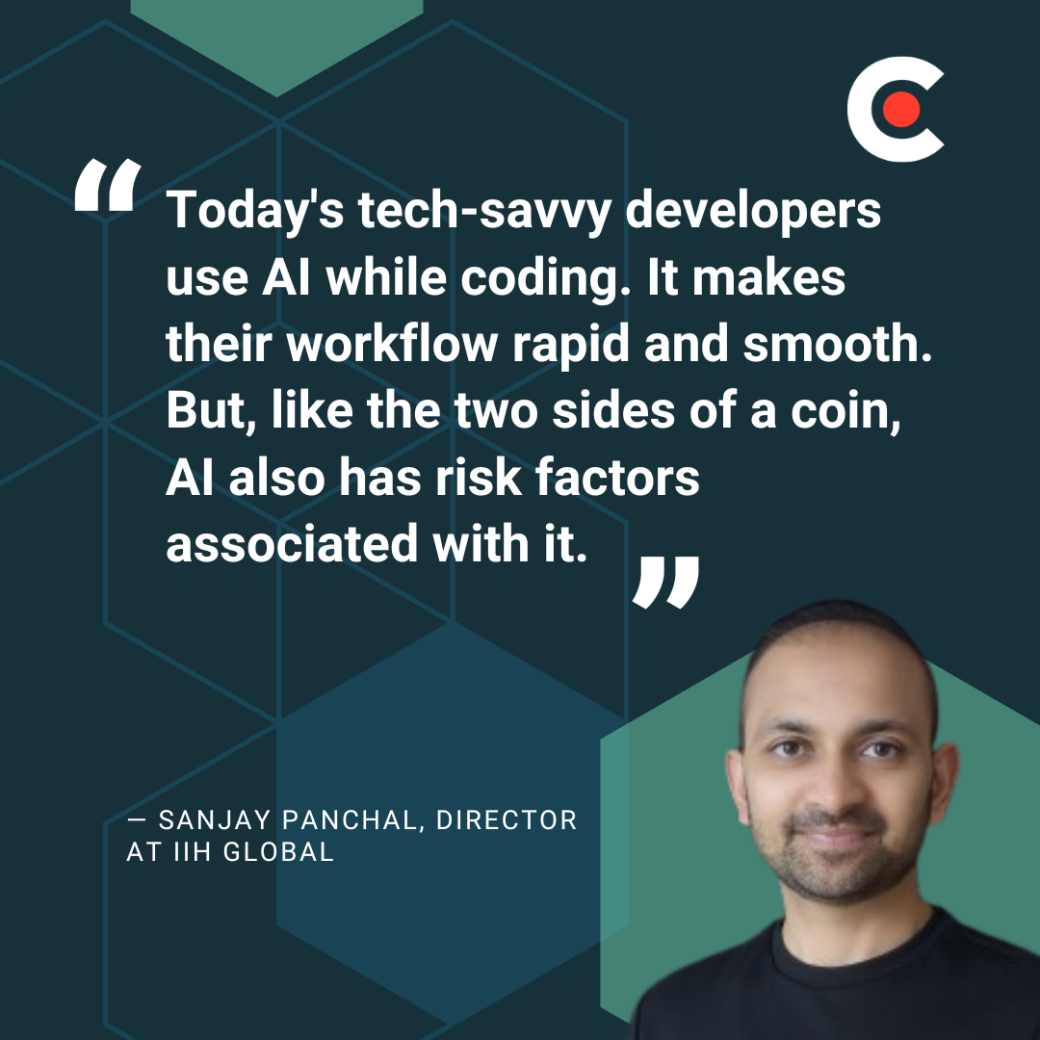
“[D]evelopers used to do each and every step, repetitively, boring and time-consuming,” says Sanjay Panchal, Director at IIH Global. “Today's tech-savvy developers use AI while coding. It makes their workflow rapid and smooth. But, like the two sides of a coin, AI also has risk factors associated with it.”
AI augments what you do; it doesn't automate you out of existence. While AI excels at tasks like boilerplate code generation, syntax suggestions, and bug pattern recognition, it still struggles to understand business context, make architectural decisions, navigate complex legacy systems, and debug intricate logic problems.
Developers who understand this are thriving. They view AI as a powerful assistant, not a replacement, because your job isn't just writing code, and it never has been. AI handles the tedious tasks while you tackle complex problems that actually matter.
“Sometimes AI code looks neat, but when you check closely, problems appear. It can have hidden security gaps, logic mistakes, scaling issues, or results shaped by old or biased data,” says Panchal. “At times, it may also repeat code patterns that could raise questions about intellectual property. These challenges can be smartly tackled by human intelligence. The primary goal is to deliver safe and reliable results.”
In short, developers are able to solve business problems, design systems, and make judgment calls that no AI can make.
While some worried that AI would make it harder for entry-level developers to gain experience or land roles, 45% of respondents say AI actively helps newcomers break into the field.
Here are a few of the key ways it's doing that:
Faster learning through smart suggestions and debugging: Remember your first debugging session? The hours spent hunting down a missing semicolon or mismatched bracket? Today's newcomers have AI assistants that catch these errors instantly. They learn faster because they spend less time on trivial mistakes.
More confidence in tackling real code: Junior developers often struggle when starting from scratch, thinking, "Where do I even start?" However, AI suggestions provide a jumping-off point. It's not the final solution, but it's enough momentum to keep moving forward.
Exposure to best practices through AI-assisted feedback: AI tools trained on millions of code repositories recognize patterns. They suggest cleaner approaches, better variable names, and more efficient algorithms. When AI suggests code, it often follows established conventions:
New developers naturally absorb these patterns and utilize AI as a learning accelerator. They learn by osmosis, picking up professional habits from day one.
Good developers don't just copy-paste blindly. Instead, they study the suggestions and gradually build their own expertise.
The playing field isn't level, but it's more accessible than ever.
Walk into any modern dev team and you'll see developers finding unique ways to integrate AI into their workflows. From accelerating routine tasks, deepening their understanding of unfamiliar technologies, and fostering more collaborative, productive teams, they are using it to enhance their productivity.
Here are a few real-world use cases:
Senior developers deploy AI to accelerate repetitive tasks. That boilerplate code you've written 100 times? AI handles it now, allowing senior devs to focus on architecture decisions, code reviews, and mentoring. They're coding less but contributing more.
Mid-level developers utilize AI to learn new libraries and languages faster. They're leveraging AI to:
For instance, do you need to pick up React for a new project? Don't stress, because AI can help you translate your Angular knowledge. Are you switching from Python to Go? AI can explain the differences and help you avoid common pitfalls.
Teams leverage AI tools for pair programming, documentation, and test generation. For example:
AI is therefore becoming part of the learning culture itself. Weekly team sessions now include "AI tool demos" where developers share new ways to boost productivity. AI can strengthen team dynamics, and everyone wins when teams level up together.
The best teams treat AI like any other tool. They experiment, share findings, and constantly optimize their workflows. They're excited by the possibilities, not frightened by them.
While teams are automating more of the development process, software development roles are evolving. Rather than spending time on tasks like coding, testing, and review, they can focus on more big-picture items.
With AI, developers are spending less time on syntax and more time on strategy.
While AI handles implementation details, developers can move up the value chain. This lets you consider questions like:
As a result, product thinking is crucial. You're no longer just building features but actually understanding why those features matter. All this moves developers closer to the business and its users.
This is the most significant mindset shift happening. You aren't just writing code anymore. Now, you're:
In a way, developers are orchestrating AI tools to create something greater than the sum of its parts.
The best developers are already mastering this collaboration. They treat AI like a talented but inexperienced junior developer — it's helpful, but still needs guidance. It's productive, but still requires oversight.
For that reason, experienced developers are still needed for specific tasks. When was the last time an AI:
Never, because these require human judgment.
Your ability to think critically about trade-offs and make nuanced decisions is what makes experienced developers particularly valuable.
As AI handles more routine tasks, the human elements of software development become even more important. Understanding user frustration, sensing team dynamics, and knowing when to compromise are all human traits that AI can't replicate.
AI can suggest architectural patterns, but developers are in charge of choosing the right pattern.
“Reviews by humans are a must. Mostly, at IIH Global, all the coding is done by the software developers manually, and at certain repetitive stages, AI comes to the utilization,” says Panchal. “So, wherever the AI-generated coding systems are taken, it has to be thoroughly checked by the team.”
Consider these scenarios:
These aren't coding problems. They're judgment calls that require experience, context, and values.
Software development is a team sport. To deliver high-quality products on time, development teams rely on clear communication. While AI tools can help support productivity, they may struggle to understand project requirements or client feedback. Teams still need someone who can ensure that the deliverables match client expectations.
AI is powerful, but incomplete without human direction. It amplifies your capabilities but can't replace your judgment, creativity, or ability to work with others. The best path forward is to supplement your abilities with AI.
So, will AI take over jobs? Not the way the media thinks.
In reality, developers aren't panicking; they're adapting. Proactive developers are already using AI to improve their skills, ship faster, and focus on work that actually matters. Those that embrace AI as a tool and focus on uniquely human skills will be most valuable for those hiring software developers in the future.