What Are AI Influencers? A Guide to Virtual Creators
AI influencers abound on social media. Clutch explains what they are, why brands partner with them, and whether people can tell them apart from human...
Updated May 28, 2026

Across the software industry, artificial intelligence is becoming a core part of how teams build, test, and ship code. Amid hiring volatility and shifting tech stacks, AI is accelerating change in developer workflows and raising new expectations for the skills teams need now.
In a new Clutch survey of 800 senior developers and engineering managers, 75% said they expect AI to significantly reshape software development within the next five years. That shift is already underway. From the rise of prompt engineering to debates about AI-generated code quality, software leaders are grappling with rapidly evolving development models and updating their hiring, upskilling, and automation strategies to keep up.
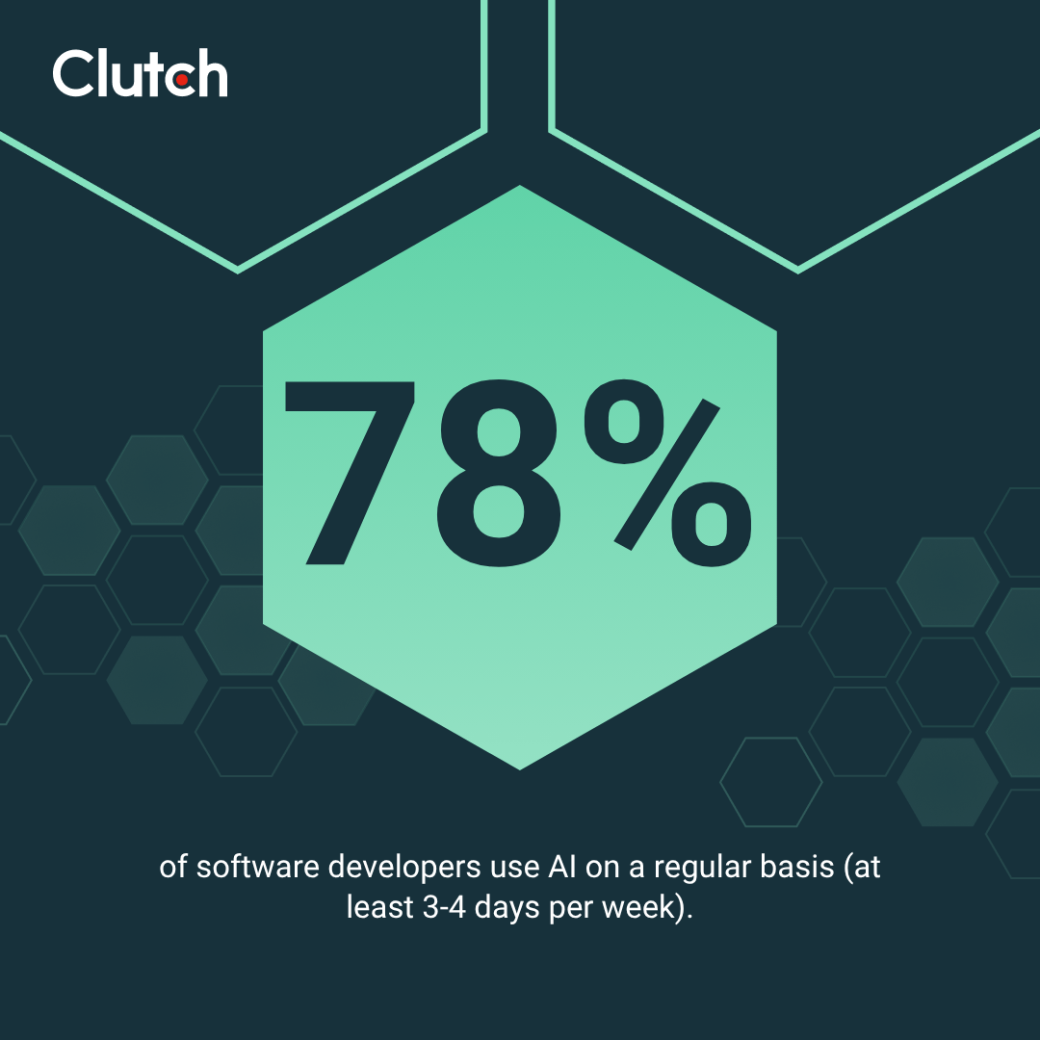
AI has become a daily tool for many software teams. In our survey, 49% of senior developers and team leads said they use AI tools every day. Another 29% said they use them most days. That means 78% rely on AI regularly – a clear sign of its deep integration across development stages.
Looking for a Artificial Intelligence agency?
Compare our list of top Artificial Intelligence companies near you
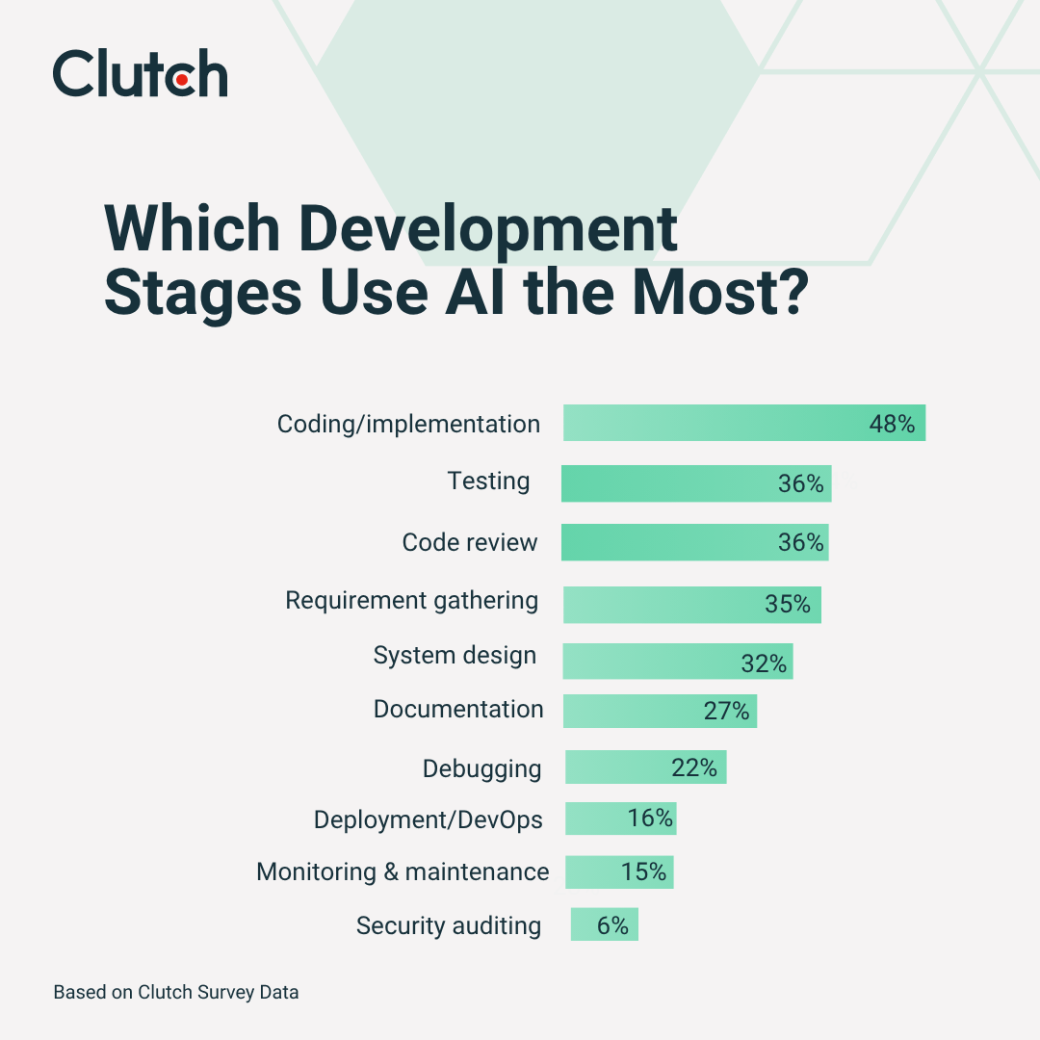
AI is most commonly used in coding-heavy stages. 48% of respondents use AI during coding, followed by 36% during testing and 36% during code review. These stages demand speed, consistency, and pattern recognition, which makes them a natural fit for automation. Software developers are also adopting AI earlier in the dev cycle (requirement gathering and system design) and post-launch (debugging), signaling broader integration across the stack.
With AI becoming more common, sentiments are generally positive regarding its rise. The largest portion of respondents had “positive” feelings about AI, at 42%. Another 29% said that they felt either “excited” or “empowered” by these tools. However, 10% of developers said they’re concerned about how AI is being used in software development, and 8% expressed skepticism.

Despite these positive sentiments, concerns loom large. Only 8% of respondents had no concerns at all. The top concern is privacy – about a quarter of respondents said they’re uneasy about how these tools handle sensitive data. After that, the focus shifted to jobs. 14% named job loss as their top concern, and another 14% said they don’t fully trust the accuracy of AI-generated code.
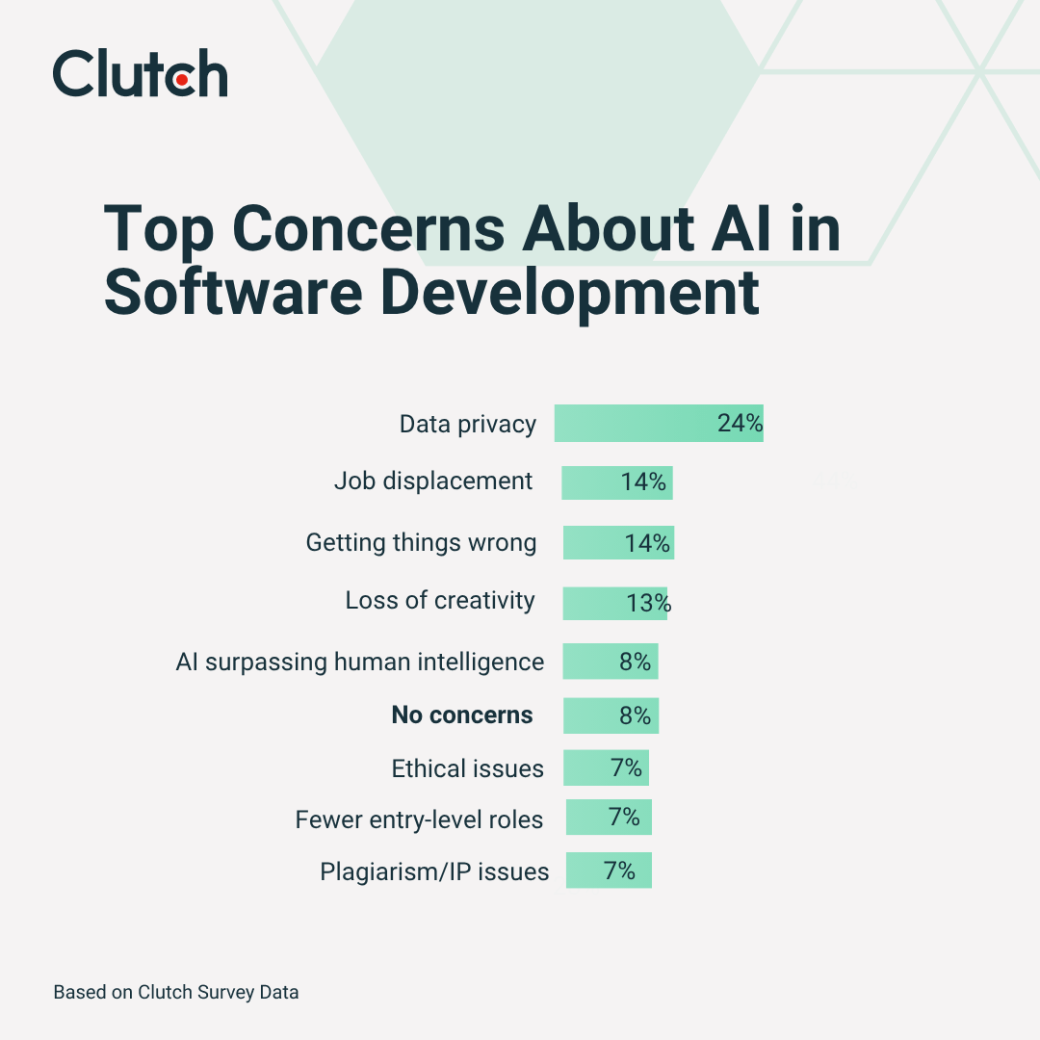
AI excites many, but job security concerns persist. In our survey, developers named data privacy and job displacement as their top concerns. That wasn’t limited to early-career roles. Nearly half of respondents said they believe AI could threaten the software development field itself, not just individual jobs.
When asked how AI might affect entry into the profession, opinions were mixed. 45% of respondents said AI might actually lower the barrier for junior developers by giving them better tools and faster ways to learn. But 37% said it would do the opposite, making it harder for newcomers to compete or even get noticed. AI's ability to automate junior-level work is reshaping hiring criteria.
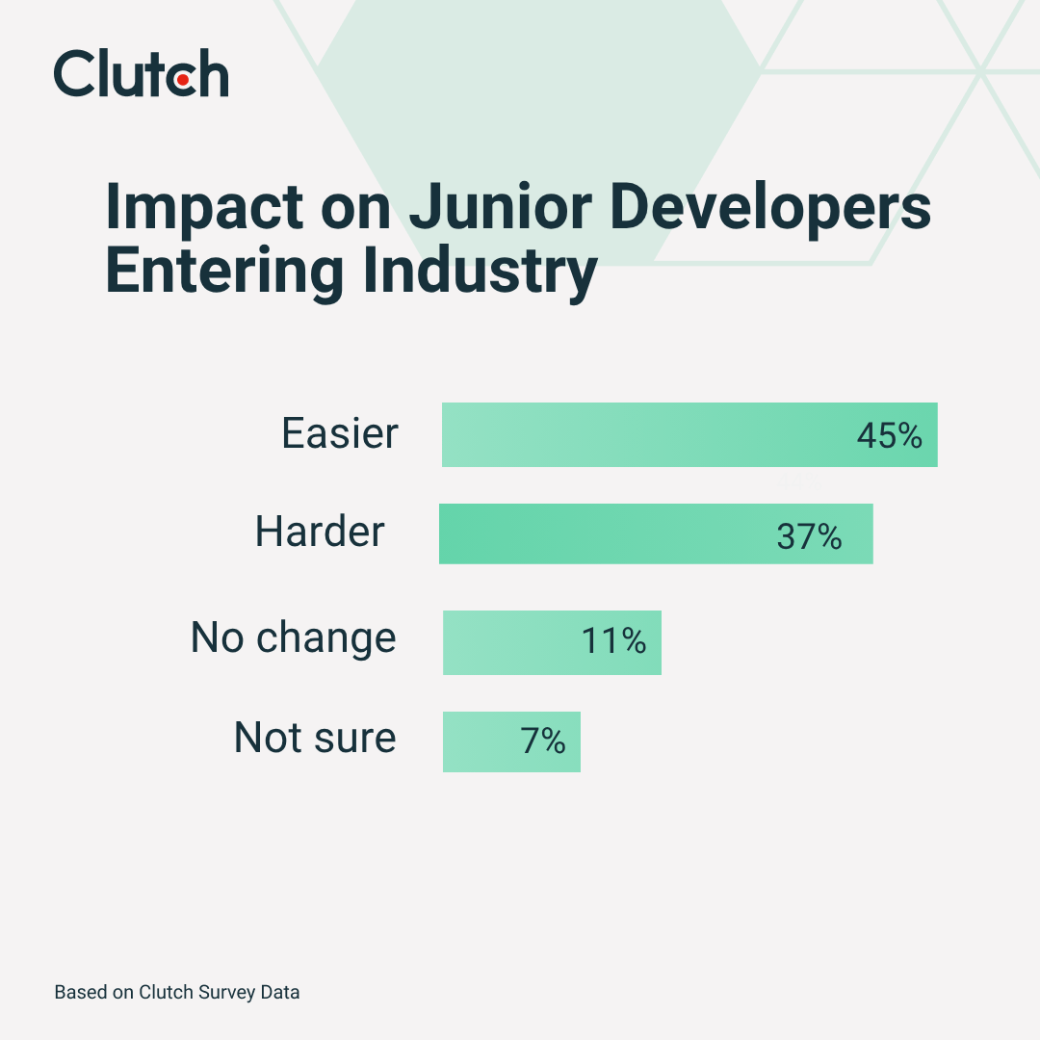
Even senior developers are uncertain about AI’s long-term impact. Some see AI as a force that could democratize software development. Others worry it’s turning into a gatekeeper, reinforcing existing hierarchies by replacing the stepping stones that helped them build experience in the first place.
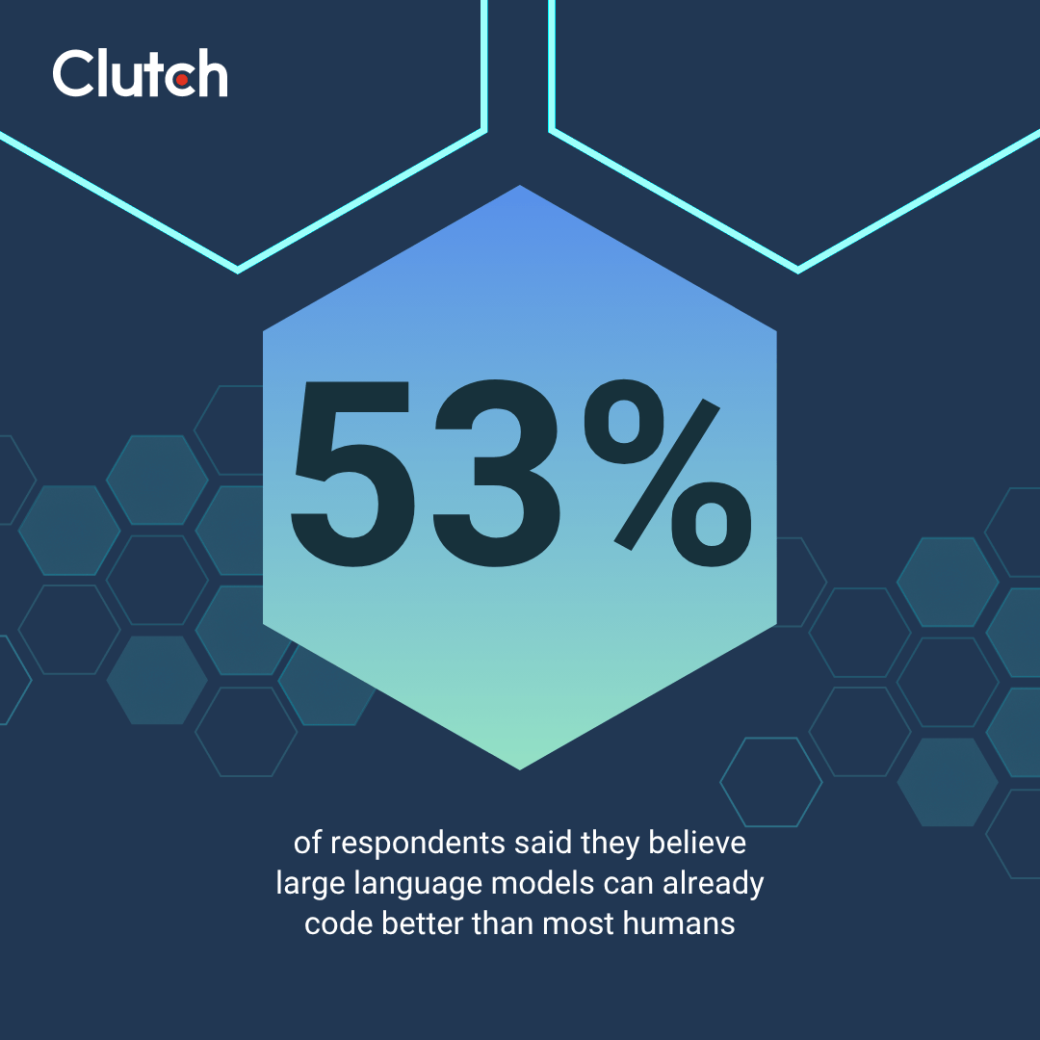
That tension is clear in the numbers. 53% of respondents said they believe large language models can already code better than most humans. Whether that view reflects optimism or concern depends on who you ask, but either way, it’s clear that expectations have shifted fast.
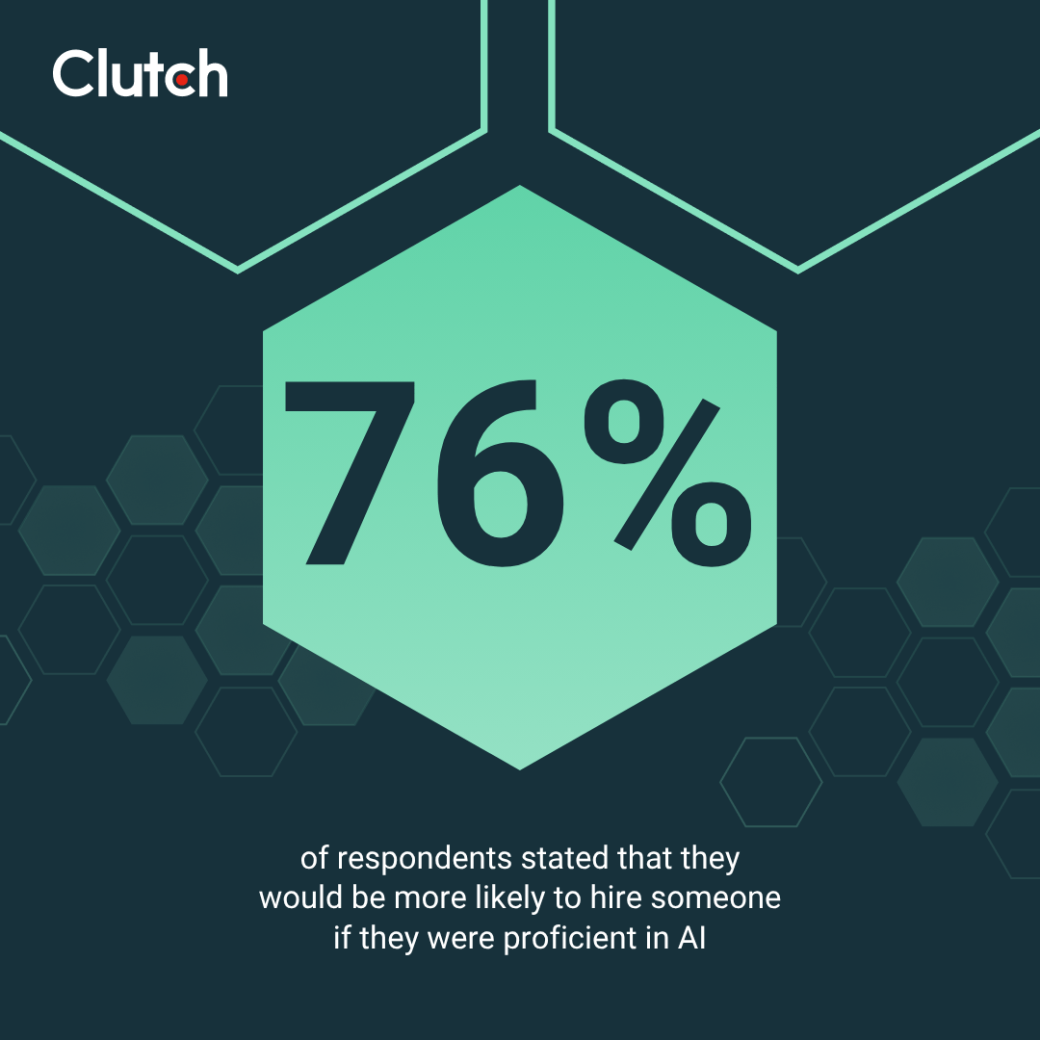
As AI reshapes the work itself, it’s also changing what teams look for when hiring. In our survey, 79% of respondents said AI skills will be essential for developers in the near future, and 76% said they’d be more likely to hire someone with AI expertise. Hiring managers are no longer focused only on language fluency or years of experience. They’re also asking whether candidates know how to work with AI tools effectively.
That shift doesn’t mean AI is just replacing people. 80% of developers said they see AI as an enabler, not a threat. Most believe its biggest value lies beyond automation. It’s not just about doing the same tasks faster. It’s about doing them differently, with new methods for debugging, testing, and prototyping that weren’t practical before.
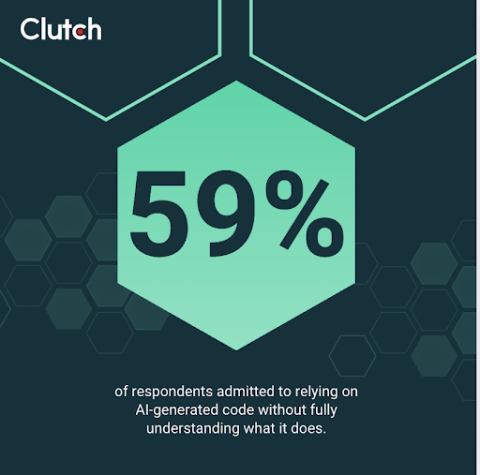
Still, there’s a gap between using AI and understanding how it works. 59% of respondents admitted to relying on AI-generated code without fully understanding what it does. That tension between speed and comprehension is becoming one of the biggest challenges for teams that want to scale responsibly.
AI is already here. Developers are using it every day for writing code, testing, and reviews. It’s not something they’re testing out anymore. It’s part of how the work gets done.
Most people in the survey said they see AI as helpful. But concerns are real. Some mentioned privacy. Others talked about job security. A few said they weren’t sure how reliable AI-generated code really is. Almost half said they believe AI could change the field in ways that are hard to predict.
At the same time, hiring is shifting. Developers who know how to work with AI have an edge. That’s showing up in the way teams choose who to hire or promote. Still, 59% of respondents said they’ve used AI code they didn’t fully understand. That gap between speed and understanding is something teams will need to work on.
Key takeaway: AI is not replacing developers. But it is changing how they work. The teams that take time to understand these tools will be better prepared for what’s next.
Explore Clutch’s list of top artificial intelligence companies.
Clutch surveyed 800 software professionals in June 2025 using Pollfish. All respondents work in development or engineering roles at companies based in North America. The sample included mid- and senior-level contributors with experience in hiring, product development, or team management.