
Generative AI vs. Agentic AI: What's the Difference?
What's the difference between generative AI vs. agentic AI? Clutch explains both types, their impact on your work, and what to consider before using them.
Updated February 17, 2026

AI shopping promises to help customers find exactly what they need, so they can spend less time scrolling through product pages. But which tools do shoppers actually care about, and which ones can brands safely skip?
Science fiction movies like "Ready Player One" and "Wall-E" show people buying everything from video game gear to food with AI. Those futuristic worlds haven't arrived yet, but your customers are already experimenting with AI shopping.
According to a recent Clutch survey, 70% of consumers use AI to help them shop online, such as asking ChatGPT to recommend chew-proof dog toys or letting a chatbot order groceries. Over half (65%) use AI assistants to research products before buying, with 32% doing so weekly.
Looking for a Artificial Intelligence agency?
Compare our list of top Artificial Intelligence companies near you
For most shoppers, using AI comes down to convenience and better decisions. Customers want help comparing products, tracking prices, and deciding what to buy. However, that doesn't mean they want to surrender all their control. Autonomy is key.
Clutch surveyed 403 consumers to learn which AI shopping tools they embrace and which ones they avoid, and interviewed the experts at Workshop Digital about the latest trends in agentic commerce. This knowledge will help your brand invest in the AI features that meet your customers' expectations and skip anything that doesn't.
Agentic commerce uses AI agents to assist customers with complex shopping tasks and to help them make decisions. Shoppers can ask an AI tool like ChatGPT or Claude to help them find exactly what they need rather than plowing through page 12 of the Google search results. For example, a busy shopper could ask an AI assistant to "order a pretty blue or red cocktail dress in size 4." The agent will find a few great recommendations (within budget, of course) and ensure the shopper’s top pick is delivered to their doorstep before their big work party.
Preston Pezzaro, Paid Media Lead at Workshop Digital, explains, "Agentic commerce puts a new lens on the online shopping journey from research to purchase. A traditional search engine results page may no longer be a consumer’s first stop for intentional research or product discovery."
Agentic commerce doesn't just stop with research, though. Pezzaro says, "Even after arriving on a brand or retailer’s site, the user experience and pathway to purchase of specific products may be further personalized and tailored through conversational interactions in a way that was not previously supported by traditional on-site search."
Amazon shoppers, for instance, can ask Rufus for personalized product recommendations. The AI also answers complex questions, such as "How long does the battery last for this robot vacuum?" or "Will this face cream make me break out?" Similarly, Shopify's AI customer service tools can recommend accessories for a recent purchase or offer a custom promotion.
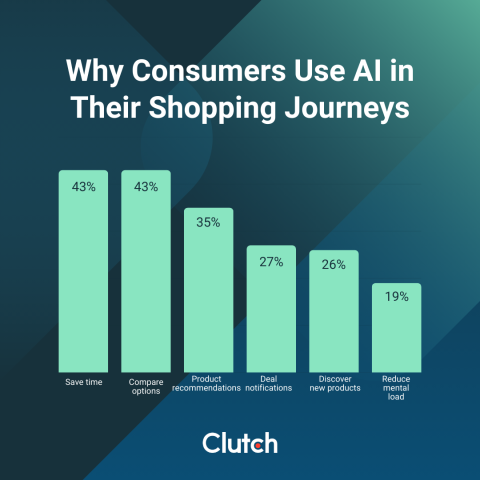
Consumers often only rely on AI for certain parts of the shopping journey. During the awareness phase, 43% of customers use AI to save time researching, while another 43% use it to easily compare options. For example, a parent might ask ChatGPT, "What are the best soccer cleats under $100 for 8-year-old girls?" Instead of browsing dozens of products and skimming guides, they can get recommendations that fit their criteria in seconds.
AI tools also come in handy during the consideration phase. Over a third (35%) of customers use this software to get better recommendations, and 27% use it to track deals or price drops. By using AI in shopping, consumers can make faster and more confident decisions. No more stressing that you're missing a huge sale or buying something that doesn't quite fit what you need.
If you've ever been trapped in a nonsensical conversation with a chatbot or received a product you didn't order, you know not all AI for consumers is created equal. Choosing the tools that customers truly value is critical. Otherwise, you're wasting resources — and potentially pushing shoppers away instead of helping them. Here are four features that excite customers and improve the shopping experience.
No one wants to overspend, but tracking prices gets tedious quickly. Customers may miss deals if they don't check at the right time or forget about products completely. With so much at stake, it's no surprise that 54% of consumers say they want AI price-drop notifications.
AI makes it easier to price-shop by continuously tracking markets. When the price falls below a certain threshold, it automatically alerts the shopper so they can pounce on the deal. This feature is especially useful for products sold by many different retailers. Customers can quickly spot the lowest price instead of hunting through dozens of websites.
Products often have drastically different features and specs, even at the same price point. Say a shopper is comparing five laptops that cost around $800 each. One device might have plenty of processing power but a tiny screen, another has bad reviews but decent graphics, and so on. Even the most diligent shoppers can quickly get overwhelmed by this deluge of information.
AI helps distill large quantities of data into easy-to-understand formats. Instead of sifting through in-depth product guides and reviews, users can ask platforms like Claude to break it down for them. The Clutch survey found that 42% of customers feel comfortable using AI to compare specs, and 41% want it to summarize reviews for them.
Some people love the thrill of uncovering a great bargain, but not everyone has time to scour the website for deals. That's why 36% of customers want suggestions for better deals or similar products. This finding suggests that customers prefer AI tools that give them more choices rather than narrow down their options prematurely.
There's nothing more disappointing than returning to a shopping cart to find an item has gone out of stock. To avoid this issue, 36% of customers want low-inventory alerts, and 22% would like reminders for seasonal or time-based purchases. These gentle nudges help shoppers plan ahead without forcing them into action. When they know what's at stake, they can make smarter decisions.
While shoppers love many AI features, they don't want to give up control over their purchases. As a result, they're less interested in tools that take away their autonomy. Respect their independence by avoiding these features.
Customers typically want AI to educate them about products and help them shop more efficiently. However, they don't want a computer to have the final say in their purchases. Only 19% say they're interested in automatic reordering.
Shoppers aren't quite ready to hand over their credit cards to AI, either. Only 4% of consumers say they'd be comfortable letting an AI assistant complete a purchase.
They're also cautious about buying products within an AI platform. Almost half (44%) say they wouldn't feel comfortable at all, while 29% would need more information before making a decision. Only 27% say they'd feel comfortable completing a purchase in an AI platform — as long as the checkout process feels secure.
The takeaway? If you're optimizing your website, don't rush to invest in agentic checkout yet. Customers may warm to this feature in the future, but so far, most remain skeptical. Save your resources for more in-demand tools.
Resist the urge to add every popular AI shopping tool to your website this year. That's too overwhelming for both your team and your customers. Instead, focus on agentic commerce tools that match your audience's actual behavior.
Prioritize these features first:
AI features that make it easy to research and monitor customer behavior, like heat mapping tools
AI chatbots, for instance, can only suggest your products if they can understand them on your website. Customers may also hesitate to buy products if your AI agent can't explain your return policy or answer basic questions, such as, "How tall is this kitchen table?"
Put less popular features lower on your to-do list. Most of your shoppers probably don't want fully autonomous shopping flows or one-click AI purchasing. They'd prefer to make the final call themselves.
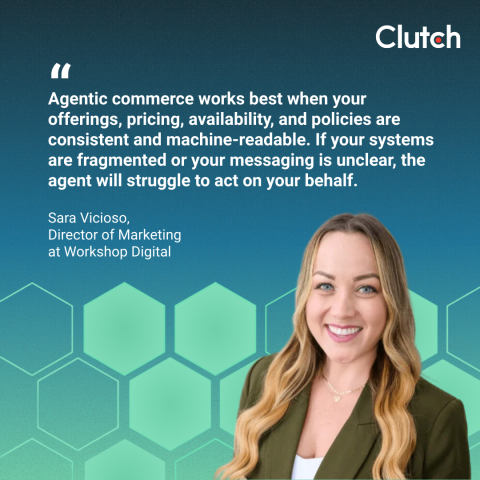
Once you've identified your top priorities, Sara Vicioso, Director of Marketing at Workshop Digital, recommends a slow and deliberate approach. "Start by getting clear and structured before getting automated," she says. "Agentic commerce works best when your offerings, pricing, availability, and policies are consistent and machine-readable. If your systems are fragmented or your messaging is unclear, the agent will struggle to act on your behalf."
For example, you may need to tidy your product descriptions so AI can make accurate recommendations. Or you might install an inventory management tool to make it easier for your agents to give updates. As Vicioso puts it, "Focus first on clarity, data hygiene, and repeatable processes, then layer in automation."
But don't wait to adopt AI tools, even if your competitors haven't yet gotten on board. Pezzaro explains, "Brands embracing agentic commerce will likely enjoy a first-mover advantage ahead of those that do not by exposing their products to additional surfaces where consumers express purchase intent, but may currently have less competition for attention."

If your products consistently show up in AI searches, for instance, you could get a leg up on competitors who outrank you in traditional search results. Likewise, customers who value personalization are more likely to return if your AI agents offer helpful suggestions.
Flexibility matters, too. AI shopping is constantly growing and improving, so be ready to pivot as soon as you spot a new trend.
AI shopping isn't just a passing fad. It's already become a central part of many customers' shopping journeys. Tools like ChatGPT help consumers compare options and discover products. Once they land on your site, they may ask an AI agent for more details or use it to double-check your shipping policies.
For brands, using AI in commerce can significantly improve the user experience. When customers can find what they need quickly, they're more likely to return. That can lead to long-term growth and more satisfied shoppers.
Not sure where to start? Hire a top-rated e-commerce agency to help you build an AI-driven shopping experience that your customers will truly love. With the right features, you can get better results while keeping your shoppers right where they belong: in the driver's seat.