
Task Automation: How to Cut Repetitive Work
Task automation saves time, gets work done faster, and reduces errors. Learn how to automate repetitive tasks step-by-step and how to decide what to automate.
Updated May 29, 2026

Artificial intelligence is changing how businesses work. Employees are using AI at all levels of the workplace—from entry-level to executive positions—to improve productivity, decision-making, and innovation. Yet there is a discrepancy between how business leaders and the rest of their team perceive the use of AI at work.
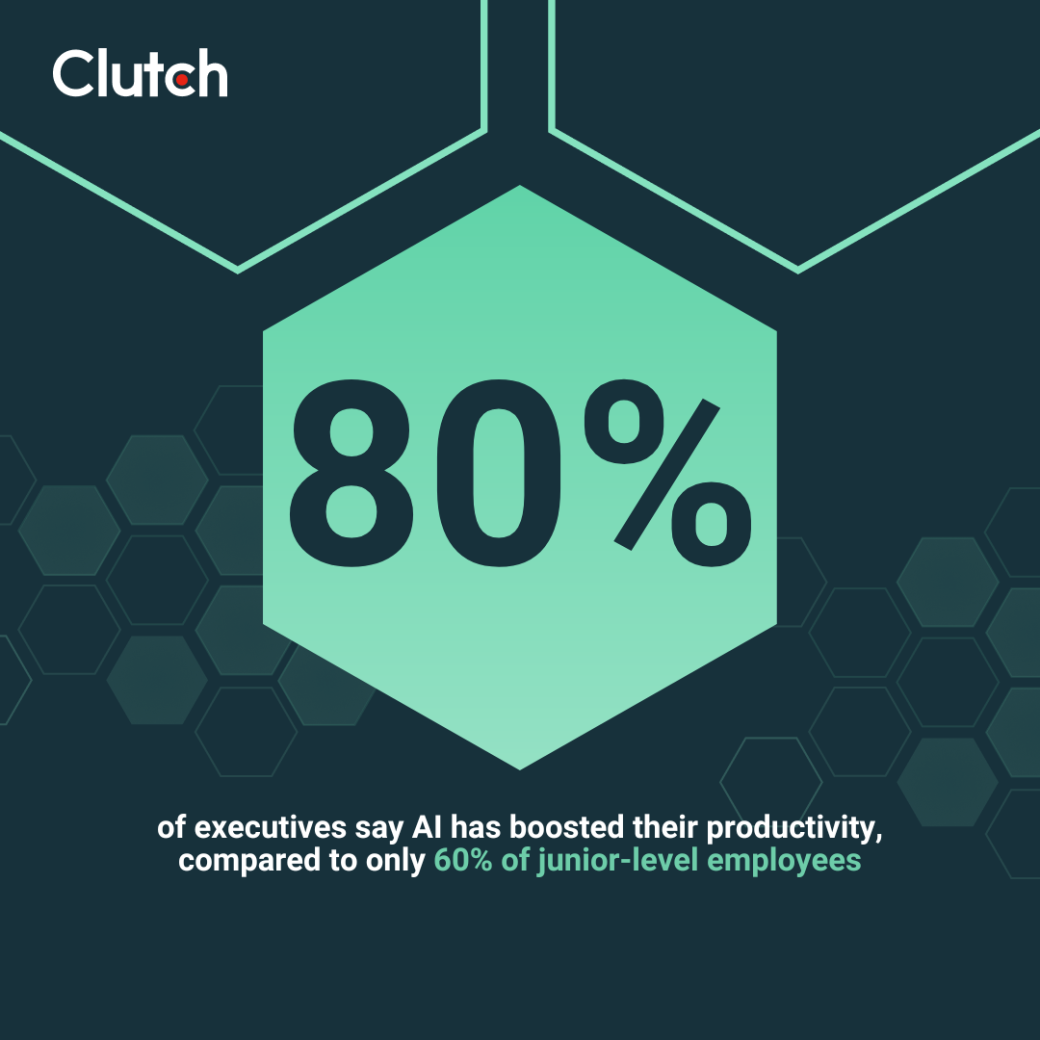
In Clutch’s survey of 250 full-time professionals, 65% of employees said AI has improved their productivity, but that number surges to 80% among directors, senior managers, VPs, and C-suite executives.
Looking for a Artificial Intelligence agency?
Compare our list of top Artificial Intelligence companies near you
There are several possible reasons for the differences. Senior-level workers often have access to more advanced AI tools, along with better training and dedicated AI support. Their roles often require strategic thinking and AI expertise, giving them an advantage in using the technology.
Regardless of the reasons why, this divide highlights the need for a smart, intentional approach to adopting AI. The right strategies can help leaders disperse AI’s benefits more evenly across the organization while compensating for its drawbacks.
When it comes to training to use AI tools, C-level leaders lead the pack. Of these executives, 59% have completed formal AI training. VPs closely follow at 55%.
In middle management, the numbers see a steep decline. Only 37% of directors, 26% of senior specialists, 21% of managers, and 19% of mid-level professionals have had formal training in the technology.
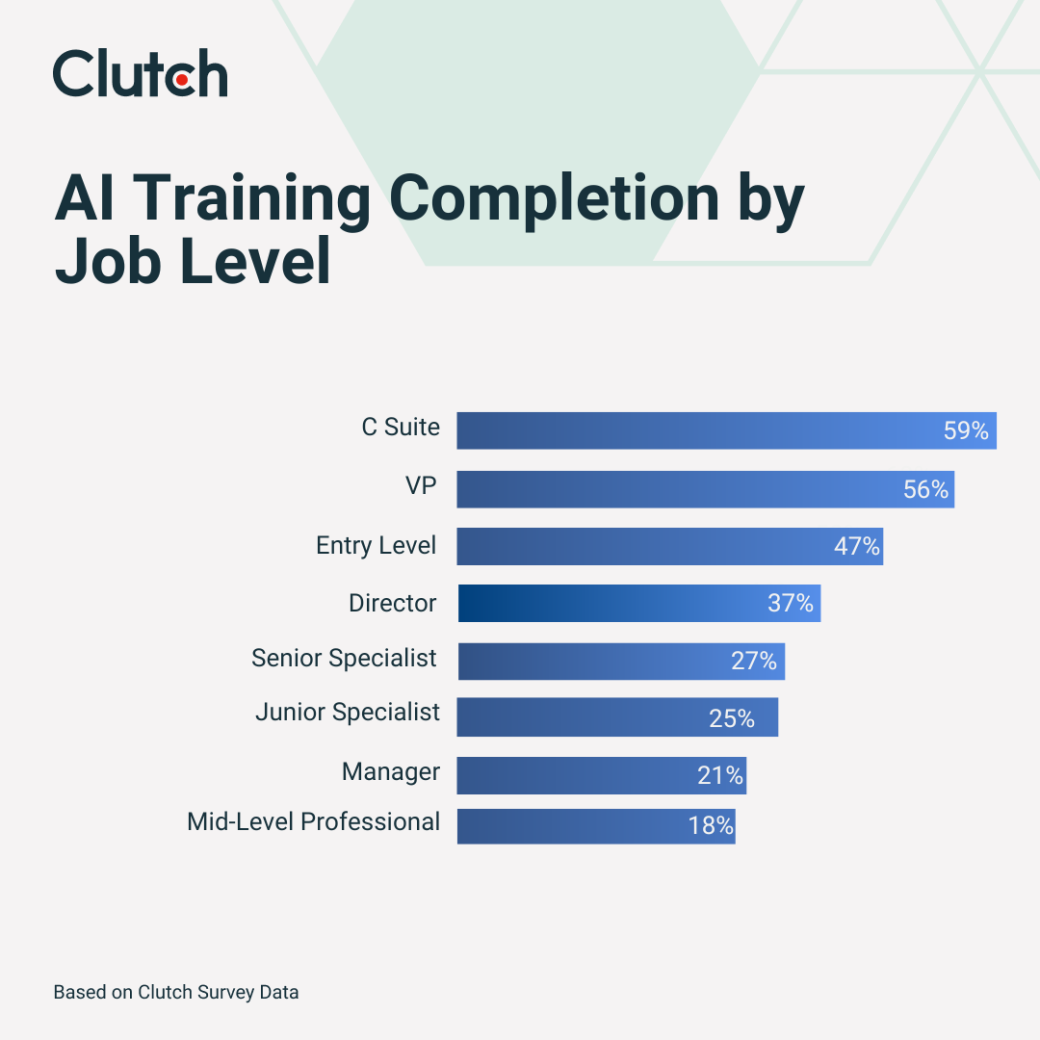
Perhaps surprisingly, entry-level employees show greater preparedness than their bosses. In fact, 47% say they’ve had AI training. Whether younger generations are preparing for the future through AI training or are being equipped by their employers, this difference reveals a concerning trend. The mid-level professionals — those who are often tasked with carrying out or managing AI initiatives — are often the least trained in the technology.
Workforces must have robust training at the operational level to benefit from the power of AI. Without being equipped with the proper education and practical experience, workers may find it difficult to incorporate AI into their routine tasks. This can cause missed opportunities, and businesses may find it hard to achieve or maintain the productivity improvements that AI can bring, thus hindering its full potential.
Solid operational-level training gives employees the knowledge needed to utilize AI systems efficiently. It helps them understand how to interpret the information provided by these systems and make informed decisions based on that data.
"I think it's my responsibility as my team's employer to make sure they get as many AI skills as possible for not only their work here at Volume Nine but wherever their career takes them," says Natalie Henley, CEO at Volume Nine. "We're going in stages at the moment, but the goal is that everyone at Volume Nine should feel comfortable prompting, assessing AI tools, working with AI agents, etc."
It's great when the combination of AI and leadership brings big improvements. However, execution teams must successfully be able to use this technology as well as the executives for an organization to see the full benefits.
The level of excitement about AI between leaders and those on the front lines can be vastly different. That can be a symptom of a general issue with how staff members embrace new tech.
Leaders often are focused on strategy and overall productivity. They may look at AI and see how everyday work could change in short order. Such enthusiasm can be a positive force for innovation. But without a solid grounding in how a workforce is using the technology in practice, it can also risk raising false hopes and wasting resources.
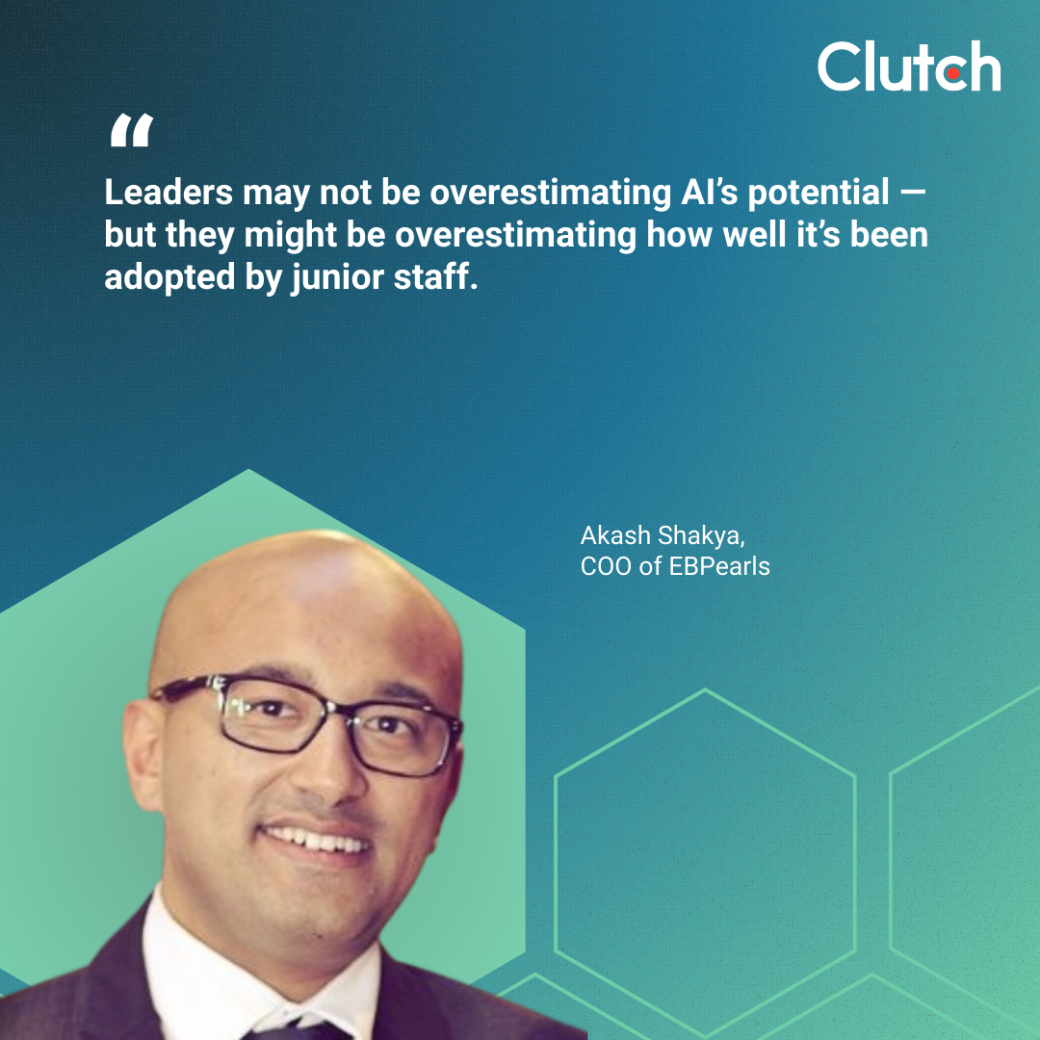
"Leaders may not be overestimating AI’s potential — but they might be overestimating how well it’s been adopted by junior staff," explains Akash Shakya, COO of EB Pearls. "Senior professionals often use AI as a thinking partner or accelerator — because they know what good looks like, they can spot useful output quickly." That may be challenging for those with less experience.
"Junior professionals might lack the confidence or domain knowledge to assess or edit AI output effectively, which can create friction instead of speed," says Shakya.
Things become even more complicated if leaders lack a clear understanding of how implementation is impacting daily processes. Without a window into the nitty-gritty, there's a danger of leadership assuming that a new system is making things more productive because it should be, not because it actually is.
This could lead to misguided decisions such as basing strategies on flawed data, overestimating efficiency, or worse, letting people go too soon only to find out later that AI is slowing things down instead of speeding them up. Mismatched expectations and lack of visibility could lead to AI sabotaging productivity instead of improving it, causing more harm than good.
The first long-term results of AI implementation in real-world situations have begun to roll in. As they analyze these results, business and operations teams may grow more cynical about the grand promises of this technology.
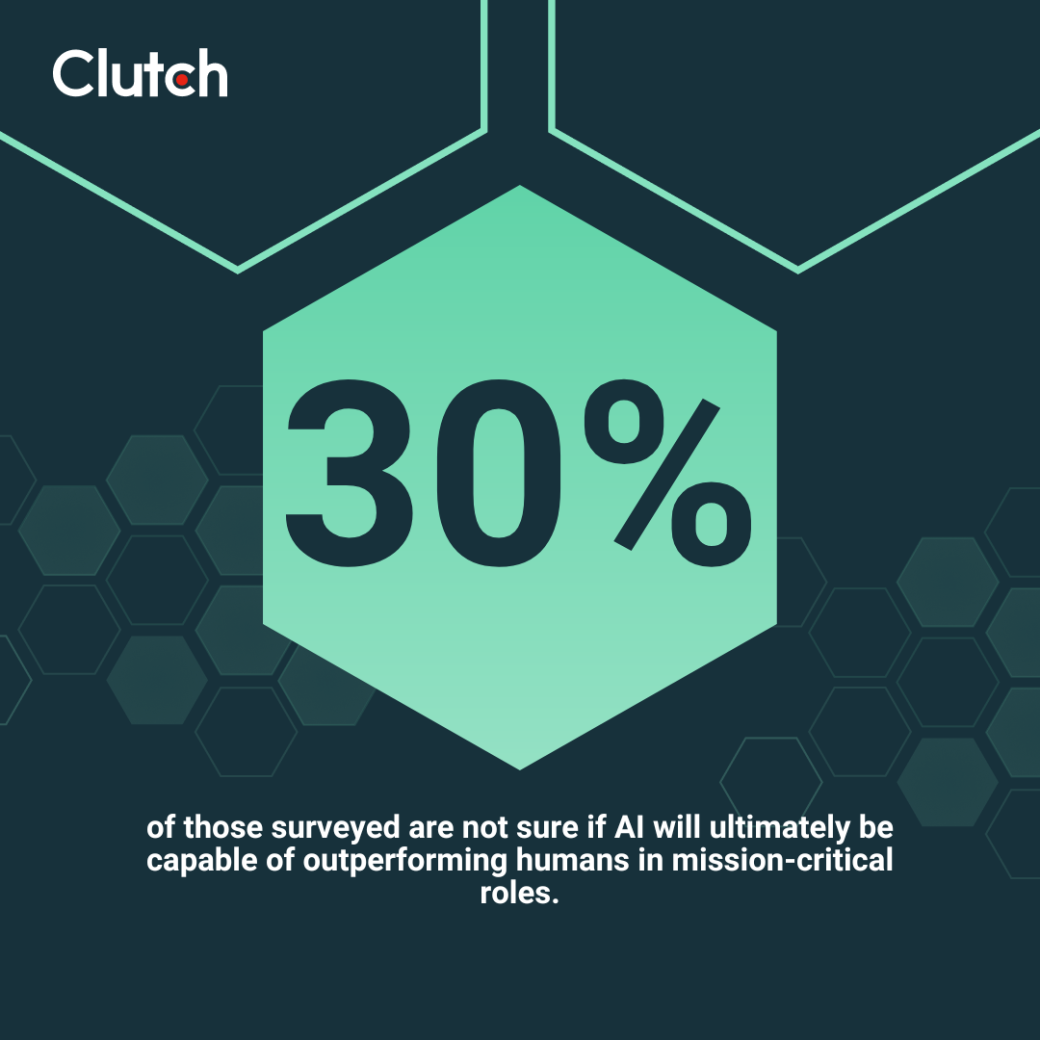
30% of those surveyed are not sure if AI will ultimately be capable of outperforming humans in mission-critical roles. This lack of faith was highest among operational employees. This may reflect a dawning awareness of AI’s limitations as the outcomes of long-term use become more fully apparent.
A growing mismatch between executive team expectations and employee on-the-ground reality can have negative impacts for all stakeholders in the organization. Telling employees they need to make do with a tool that doesn’t fit their use case will drive resistance — not just to that tool but any future technology deployments. It can lead to significant long-term risks. Lack of alignment within the employee hierarchy may erode trust in the decision-making and operational understanding of leadership.
Some organizations have plunged into AI adoption, only to change course when they realized the negatives that come with the potential gains.
Klarna's AI strategy was aggressive from the beginning. By collaborating with OpenAI, the leaders of this Swedish buy-now-pay-later company hoped that artificial intelligence could handle many of the roles of customer service agents.
At its peak, Klarna replaced 700 agents with AI. However, the company soon encountered issues with the quality of work done by the AI agents. CEO Sebastian Siemiatkowski noted, “Cost, unfortunately, seems to have been a too predominant evaluation factor when organizing this; what you end up having is lower quality.”
Klarna had 5,527 employees in December 2022 but only 3,422 in December 2024, showing how quickly AI adoption was carried out. However, service quality and employee morale dropped along with the staffing numbers.
Klarna has since hired back human workers for some previously automated roles. Siemiatkowski explained, "From a brand perspective, a company perspective, I just think it's so critical that you are clear to your customer that there will always be a human if you want."
The hiring back of humans shows the company realized the limits of the tech. AI and automation are great for processing repetitive tasks, but these tools are lacking in the critical thinking, creativity, intuition, and empathy that humans can excel in. The shift to human and technology collaboration emphasizes this balance for improved outcomes.
IBM's journey with AI automation serves as another cautionary tale. The company initially laid off almost 8,000 employees in 2023, mostly in human resources, declaring AI would take over all of those roles.
The initial results were positive. IBM reported $3.5 billion in AI productivity gains across 70 business lines. In general, IBM determined AI performed well for routine tasks, such as managing payroll and vacation requests.
However, the technology was less adept at addressing sensitive workplace issues and navigating ethical gray areas. It also performed poorly in situations involving strong emotions that require human empathy. Realizing this, the company began rehiring human employees for jobs requiring creativity and critical thinking.
CEO Arvind Krishna stated, "While we've done a tremendous amount of work to leverage AI, our total employment has actually increased because it's allowed us to invest more in other areas." This shift shows how leadership has gained a clearer view of how to use AI. It excels as a helper to human skills rather than a substitute.
Klarna and IBM are not alone. These cases highlight the need for companies to be smarter in their approach to AI deployment.
Leading organizations view AI as a partner for workers, not a replacement. Rather than trying to cut payroll costs by relying on AI entirely, they are instituting models that allow AI and human employees to work in tandem for the greatest gains in productivity.
Executives should also explore smarter ways to measure the value generated by AI systems. Productivity gains, customer satisfaction improvements, and operational efficiency are better indicators of AI success than simple headcount reductions.
While AI can be transformative, successful implementation requires every part of an organization to appreciate both its vast potential and its present limitations. The most effective models of human-machine collaboration will require ongoing retooling. This has to start at the top but work down to every level of a company.
C-suite executives must be AI advocates, but they also have to keep a level head about the technology's drawbacks and realistically assess its performance and uses. It's vital to implement inclusive, structured training and build in feedback loops with operations teams. This ensures that AI implementation strategies will be responsive to real-world conditions. The goal is to use AI to free people from repetitive tasks so they can focus on strategic work that builds relationships and drives growth.
As AI continues to develop, the most successful organizations are those that see it as a way to support human skills, rather than replacing the need for human judgment. This means continuing investment in people as well as in technology. This dual focus is what differentiates successful AI adoption from expensive blunders.