
Task Automation: How to Cut Repetitive Work
Task automation saves time, gets work done faster, and reduces errors. Learn how to automate repetitive tasks step-by-step and how to decide what to automate.
Updated June 19, 2026

Hold on, and don't rush AI integration — haste won’t guarantee success. Before creating your strategy, check the essentials of AI business transformation and its real-world applications across industries.
We are in the global AI race where organizations rush to integrate AI into their operations with unprecedented speed and efficiency. Business leaders fear losing ground to competitors and often find themselves trapped in a cycle of hastily deploying intelligent technologies. They rely on AI to manage the increasing complexity of operations.
AI has existed for decades but gained widespread attention with the evolution of GPT models and tools built around them. It is undoubtedly a life- and business-transforming technology, yet no magic lies beneath. AI solutions require expert hands to direct them if you want to achieve meaningful results.
Looking for a Artificial Intelligence agency?
Compare our list of top Artificial Intelligence companies near you
In this article, I will highlight the key elements of successful AI implementation in business, provide real-world examples of using AI in your business, and discuss the opportunities within the agentic AI trend.
AI consultants frequently discuss opportunities to use AI for business transformation with prospective and current clients. Organizations are increasingly seeking ways to integrate AI, whether to address internal challenges or improve customer experiences.
As with other transformative technologies, start developing an AI strategy by addressing a few fundamental questions:
Answering these questions will help you clearly understand how to implement AI in business. You will be able to estimate the resources and time needed to reach your AI goals, identify business processes that require modification, and understand the ROI you can expect from AI.
In the real world, AI is used in many ways by organizations from various industries. It can be leveraged to enhance customer experiences, streamline operations, and transform scientific research.
AI powers virtual try-on features, which allow consumers to see how garments and accessories fit. That makes online shopping more interactive and engaging.

Our team worked on a case where they needed to add a specific virtual try-on feature for glasses to a mobile app. The app detected real glasses on consumers’ faces, removed them in real-time from the video feed, and allowed consumers to try on new pairs virtually. It’s a great example of how technical limitations keep fading away year after year.
Many businesses use AI-driven speech analytics to analyze call transcripts, summarize conversations, and assess sentiment. This helps identify the reasons behind customer satisfaction or churn and helps adjust support strategies.
Construction businesses using AI-driven building scans can quickly estimate the replacement costs of structural elements like roofs and generate more accurate quotes faster.
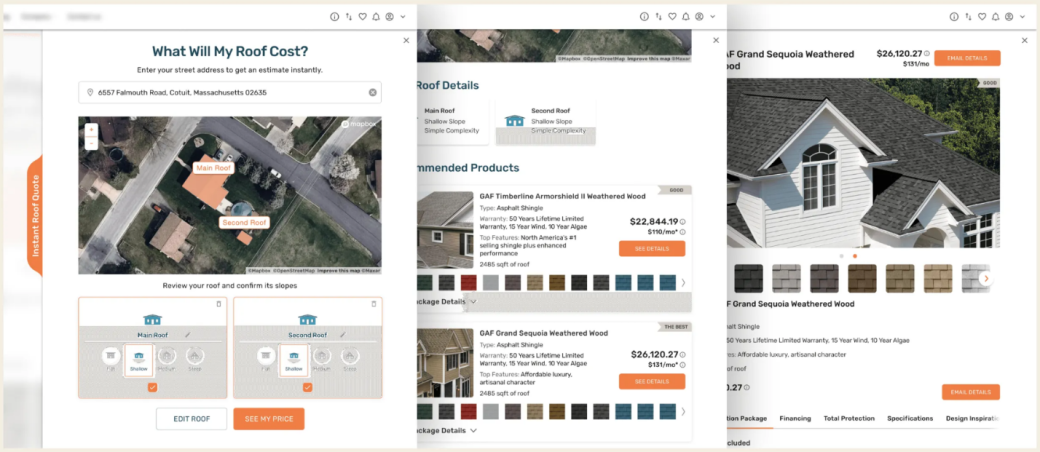
Based on statistics from one of our construction industry clients, an AI-driven approach helped them increase an average conversion rate and achieve a higher close rate on product demos.
By integrating AI into business platforms, real estate organizations simplify large-scale document management. AI helps contractors to submit bids, manage plan requests, and handle other administrative tasks more efficiently.
AI is making waves in pharmaceutical companies focused on clinical trials and novel treatment methods. It helps researchers identify potential drug candidates and optimize development processes. AI offers significant hope for cancer drug discovery and treatment adjustment.
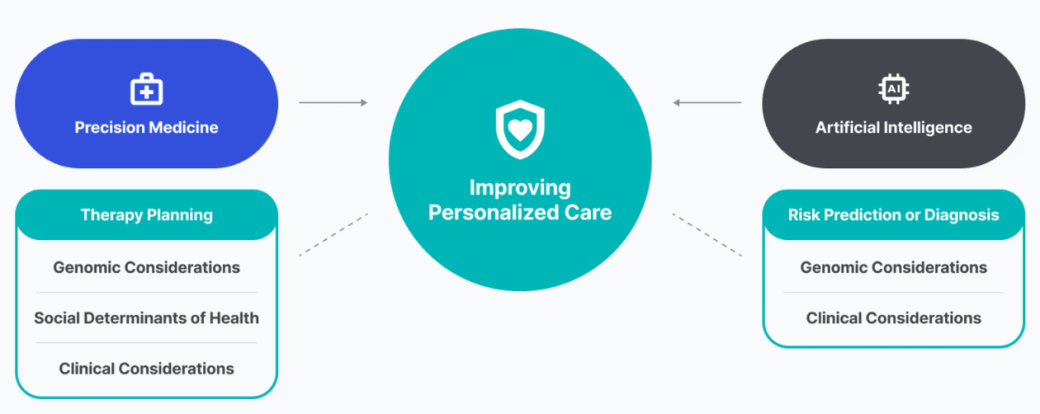
Hospitals and clinics can offload tedious tasks to AI-driven systems rather than relying solely on administrators, which will help reduce human errors. Also, AI remains the key to personalized medicine as it adjusts treatments based on a broader range of factors than a human specialist might typically consider.
Once you’ve identified how to incorporate AI into your business, the next crucial step is conducting a thorough risk assessment. Allowing AI to operate unchecked without proper oversight and regulation can lead to challenges related to bias, fairness, and accountability. No wonder responsible and ethical AI use is a key trend in 2025.
When using large language models (LLMs) to transform your business, prioritize responsible practices and place a strong focus on data governance. This is particularly important in highly regulated healthcare, life sciences, and finance sectors. Responsible AI use helps build trust with stakeholders and clients while also laying the foundation for sustainable business growth.
Invest in nurturing and developing internal talent to manage and maintain AI technologies. Hiring experienced AI engineers or consultants who are able to lead an efficient and measurable AI business transformation becomes increasingly competitive. With a skilled internal team, you ensure AI-driven solutions operate as intended and can scale as per your business needs.
Finally, decision-makers should carefully evaluate current organizational processes and identify areas where AI can add the most value. An adequate estimate of your organizational readiness is paramount for planning investments and ensuring smooth AI business integration.
On average, 76% of organizations use private clouds, and 32% of their workloads are in the private cloud. Many organizations adopting GenAI at the enterprise and mid-market levels are grappling with data security and privacy concerns. Their top priority is protecting data from corruption and unauthorized access, and private cloud solutions often provide the most effective safeguard.
Private cloud services such as Microsoft Azure Stack or AWS offer unparalleled control over data and infrastructure, making them ideal for organizations operating under strict industry regulations. In addition, cloud environments can be optimized to minimize latency and enable the secure, real-time processing of sensitive information.
Compliance is key, and a private cloud is a trusted gatekeeper that supports strict industry standards. Organizations can encrypt data at rest and in transit through specialized security protocols, protecting data from threats. A dedicated infrastructure allows customizing access controls, reducing data breach risks.
2025 will mark a significant milestone in AI agents’ adoption across industries such as finance, supply chain, sales, services, marketing, and tax. Many AI vendors actively integrate agentic AI capabilities into their solutions and platforms. OpenAI’s recent announcement of the “Operator” framework and Amazon’s Bedrock Agents framework, which will enable companies to incorporate AI agents into their enterprise, highlights this trend.
AI agents present several strategic opportunities for organizations:
AI agents will be able to work autonomously or semi-autonomously to handle routine tasks, freeing teams to focus on high-priority activities.
These agents will transform personalized interactions, managing tasks like travel bookings and offering potential applications in customer service.
AI-powered fraud detection agents are valuable in the financial sector, where fraudulent activities are widespread. Deploying them can help boost customer trust and prevent millions in losses.
AI agents in healthcare match patients with the proper medications based on their unique biological data. That helps prevent dangerous conditions and speeds up recovery.
Early adoption of AI agents allows organizations to deliver innovative services and stay ahead in the market.
AI agents grow richer in interactivity and start to reach across more than just text and into audio and visual elements. They will bring about a powerful cultural shift in how humans collaborate with intelligent technology.
When integrating AI into business, prioritize a thoughtful strategy over speed or a cult-like devotion to trends. AI's transformative potential can only be realized by setting clear objectives and adequately preparing your organization for the change.
You can approach this process independently, using your own experience, or enlist the help of a consultant. Regardless of the chosen method, balance innovation with responsibility — employ AI’s capabilities while effectively managing its risks.