
Bringing AI into the SDLC: Promises, Challenges, and Best Practices
Explore the key implications of AI SDLC and its main challenges. We also provide tips and guidelines to help you overcome the obstacles of AI-powered SDLC.
Updated December 19, 2025

With all the attention AI has been getting lately, it’s safe to say there’s some anxiety from workers about AI’s impact on their job prospects and security. Many workers worry about their employers eliminating their positions in favor of AI tools, leading to fewer positions in their fields.
The good news is that the data paints a very different picture. When you break down the data-based reality about the job market, you see that hiring remains strong despite automation fears.
A Clutch survey found that 66% of organizations report AI has not reduced hiring plans or has prompted team growth, 64% are actively hiring now, and 10% plan to open new roles within the next 12 months.
Looking for a Artificial Intelligence agency?
Compare our list of top Artificial Intelligence companies near you
Looking at these numbers, it’s clear that AI isn’t eliminating opportunities for workers. Rather, it’s reshaping work across industries.
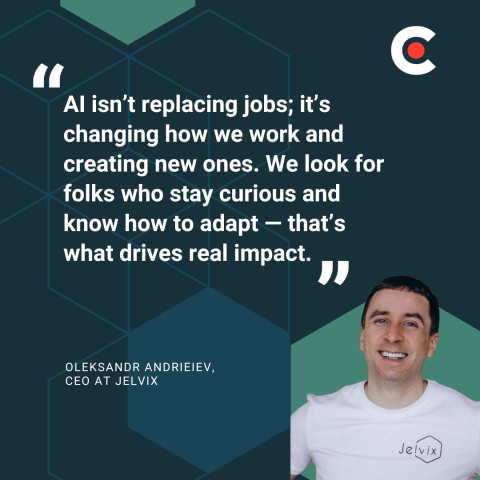
Tech professionals couldn't agree more. "A lot of our work touches AI or automation, so people who know how to use these tools or are eager to learn tend to hit the ground running," says Oleksandr Andrieiev, CEO of Jelvix. "What matters most is mindset. AI isn’t replacing jobs; it’s changing how we work and creating new ones. We look for folks who stay curious and know how to adapt — that’s what drives real impact."
Especially in tech, familiarity with AI is no longer a niche skill but an expectation. Candidates who can use automation tools and adapt to evolving workflows are better positioned to stand out in a competitive job market, signaling both immediate value and long-term growth potential.
Even as the job market evolves alongside new AI trends, there are plenty of reasons for job seekers to feel positive heading into 2026.
Developing the right skills to match what employers are looking for is essential. Candidates can expect a growing demand for human skills that complement the use of AI in the workplace.
In 2025, data science and AI specialists were some of the quickest-growing job categories, but workers don’t need to be in these exact fields to capitalize on AI trends. Job candidates with strong prompt engineering skills, as well as uniquely human skills like adaptability, creativity, and strategic thinking, will likely be better equipped to land competitive roles.
These roles aren’t limited strictly to technical industries, either. Currently, about 20% of U.S. companies have integrated AI into their workflows, and you can expect that number to grow in the coming years. In particular, the following industries will see some of the highest rates of AI integrations:
The growing use of AI in these industries also leads to more opportunities in AI-enabled roles.
Another positive for job seekers: AI can fuel higher productivity for companies, leading to new job creation. The types of opportunities available may shift, but they’ll be there for applicants who are flexible and work on developing skills that complement AI integration.
Job hunters can also use AI tools to streamline the search for a new position. There are now many AI-powered resume and cover-letter tools to help with tasks like:
Using AI tools for these tasks helps job seekers save time and potentially submit more applications, increasing their odds of interviews and job offers.
AI tools don’t stop at resumes, though. Job applicants can also take advantage of AI-powered automated job-matching systems and personalized career guidance. The job-matching systems analyze data like an applicant’s skills, experience, and education from their resume, then compare these attributes with available roles’ job requirements.
Job seekers save time because they no longer need to hunt down the roles they’re best qualified for across job listings — the system does it for them.
Applicants who want to stand out more in the job market may also leverage AI skills assessments and upskilling platforms. They can learn in-demand skills at their own pace through these AI-powered upskilling platforms to make their resumes more competitive. Then, through AI skills assessments, they can test and certify that they really have gained those new skills before adding them to their resumes.
It’s normal to get overwhelmed when starting a job search. Instead of trying to do everything at once, focus on a few specific areas.
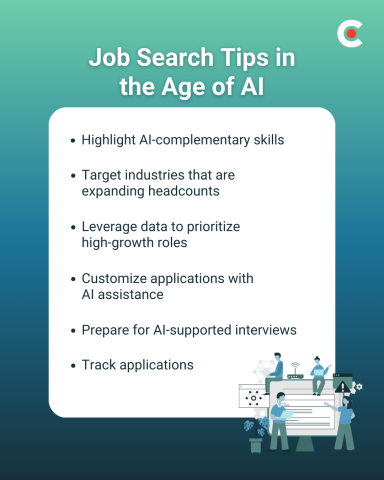
Any job seeker in 2026 should be asking one question: How will AI play a role in my industry? How are companies in the industry currently using AI tools, and what new applications are likely going forward? From there, workers can identify the AI-complementary skills that employers in their sector will want most from job applicants.
In-demand job skills may include:
Paired with experience and hard skills, these skills will make workers strong job candidates in 2026.
AI integration is creating growth in some industries, providing opportunities for those looking for new positions. The key to long-term success for job seekers is to target industries demonstrating strong hiring numbers and expanding headcounts.
High-growth industries in 2026 include:
Even without job experience in these industries before, flexible job seekers can highlight transferable skills to demonstrate why they’re a good fit.
Roles that offer career development options are some of the most appealing to employees. That’s why offering growth opportunities helps companies improve employee retention and engagement. Finding roles that actually offer the desired career growth can be challenging for job seekers, though. AI tools offer a solution.
These tools can analyze industry and job market data to forecast future demand for certain roles, identify career paths, and pinpoint the industries or specific roles with the greatest growth potential. Applicants no longer have to guess which job opportunities will support their career ambitions — they can make data-driven decisions instead.
The average job listing receives over 100 applications, so it has become challenging for individuals to stand out and get hired. Implementing smart AI tools can help job seekers save time while also making their applications more competitive.
Candidates can enter their resumes, portfolios, and other professional details into an AI tool alongside the job description to customize their application for a role. These tools then pull the most relevant details and keywords to help create a tailored application. Job applicants get more specific, targeted applications without needing to spend extra time customizing each one manually.
Some companies are now using AI for asynchronous candidate interviews. In these interviews, candidates record themselves answering the interview questions, and an AI tool analyzes their performance.
Prepare for these interviews by:
Tools like Huntr, Jobtracker.ai, and Careerflow.ai help job seekers track the status of their applications so they always know where they stand. Candidates can also use AI tools to tweak their resumes easily from one application to the next.
While AI can be incredibly useful for job seekers, they can take it too far. Some are becoming overly reliant on generative AI tools to write resumes, cover letters, and other job application materials, which can actually make candidates less appealing to employers.
Always read through any AI-generated drafts before submitting them to check for errors and add a human touch. Even when using AI, job seekers need to ensure their applications come across as authentic, not robotic.
Applicants should also be aware of how AI screening systems work on the employer’s side. Many companies now use applicant tracking systems (ATS) to filter out job applications and create candidate rankings automatically. If an application is not ATS-optimized, it may never pass the screening stage to reach a human recruiter, no matter how experienced or qualified the applicant is.
To boost their chances of succeeding in a job search with employers using AI screening tools, applicants should:
Job seekers and employers alike benefit from reframing AI as a competitive advantage rather than a threat. Despite concerns that the growth of AI would eliminate jobs and leave employees scrambling, it’s actually created many new opportunities. Market indicators are already suggesting strong opportunities for job switchers, especially those targeting high-growth industries like healthcare and information.
Strategically using AI tools to create more competitive job applications, identify roles with strong career growth, and better prepare for interviews can accelerate career mobility. It’s impossible to overstate the importance of a positive outlook, too. Job seekers who are confident and deliberate in their search in 2026 are best equipped to succeed.