Lead Quality vs. Lead Quantity: Why B2B Teams Are Rethinking Their Funnel in 2026
Bigger buying committees and tighter budgets are forcing B2B teams to rethink lead quality vs. quantity. Here's how top teams rebalance the tradeoff in 2026.
Updated November 5, 2025

For any B2B company looking to compete in 2026 and beyond, single-channel marketing simply doesn’t cut it anymore. Attempting B2B lead generation with just one outreach method is akin to putting all your eggs in one basket. And in today’s fast-paced, increasingly competitive sales landscape, companies need ALL of the marketing eggs in order to stay in the game.
Explore the essentials of a successful, long-term B2B omnichannel marketing strategy in this comprehensive guide. Not only do we cover how to create an omnichannel messaging strategy, but we’ll also share real-world examples of omnichannel lead generation done right, with results to back them up.
Don’t be left behind: Future-proof your B2B lead generation by making omnichannel marketing a standard part of your strategy.
Looking for a Digital Marketing agency?
Compare our list of top Digital Marketing companies near you
Understanding omnichannel lead generation — what it is and what it isn’t – is fundamental to successful B2B marketing. At its core, omnichannel lead generation is the strategic use of all available customer touchpoints to create a seamless and integrated sales experience. The goal is to create a single, unified experience across all outreach channels, from direct engagement to website content, social media, and email marketing, with each interaction informing the others.
Many people confuse omnichannel lead generation with multi-channel lead generation, and it’s easy to see why. Both strategies use various platforms to reach potential customers, increase brand awareness, and drive sales. But to truly master B2B omnichannel messaging, it’s important to understand the key distinctions between the two.
| Key Differentiator | Multichannel | Omnichannel |
| Prospect Experience | Product-centric: Focus is on maximizing brand exposure | Customer-centric: Approach is personalized to the prospect |
| Focus | Goal is to reach prospects; each channel treated separately | Channels work cohesively across the customer journey |
| Implementation | Outreach operates on siloed platforms | Integrated platform approach, with shared data & consistent messaging |
| Difficulty | Low to moderate effort | Higher complexity, with many moving parts |
| Use Case Example | Prospect targeted via cold email, cold calling, and social media – each separately | Prospect identified > Cold email > Follow-up cold call > LinkedIn messaging to build relationship |
B2B sales are more challenging than ever, with an increasingly saturated market, email deliverability hurdles, stricter data privacy regulations, evolving algorithms, and other factors. Connecting with prospects and converting leads into customers now requires more effort, strategy, and creativity than ever before. That’s where omnichannel marketing comes in. With a solid B2B omnichannel lead generation strategy, companies can overcome these obstacles and outpace their competitors.
Omnichannel lead generation focuses on creating genuine, human connections with potential customers. Instead of bombarding prospects with sales pitches, omnichannel messaging builds a story based on the customer’s unique needs. In an AI-driven world, investing time and effort in creating personalized connections with potential customers yields increased conversions and higher retention rates.
Organization is the core of any successful omnichannel lead generation strategy. By utilizing a centralized communication platform and a single source of truth for all customer data, companies can enhance messaging consistency across outreach channels and throughout the stages of the sales funnel. With all customer interactions centralized in one place, sales teams can more effectively integrate brand messaging across channels and provide prospects with faster and more thoughtful responses.
With all customer data and interactions integrated into a single platform, sales teams are empowered with the most up-to-date and relevant prospect information. This, coupled with AI tools that analyze customer data and preferences, can help significantly optimize outreach messaging throughout the sales nurturing process.
Ready to take advantage of everything B2B omnichannel marketing has to offer? This step-by-step implementation guide walks you through each stage of the process.
Looking at the outreach methods you’re currently using is a great place to start in building your B2B omnichannel marketing plan. Review your current messaging and channels to see what’s resonating, what could use tweaking, and if there are any gaps in your outreach.
Before reaching out to prospects, you need to know who you’re talking to. Researching your ideal customers – their demographics, behaviors, and preferences – provides key insights that can be used in your omnichannel lead generation efforts to improve conversions.
Omnichannel messaging only works if you leverage all available outreach methods and leverage each one’s strengths for optimized customer engagement. Here’s a quick look at what each channel brings to the table (in no particular order):
Content marketing expands brand visibility and enhances credibility through a variety of strategies, including SEO, blog posting, video marketing, webinars, online events, influencer marketing, and more.
Don’t just blindly trust the effectiveness of omnichannel lead generation. Prove it works by establishing KPIs and setting concrete goals before you begin your outreach. You can also test an omnichannel program against single-channel campaigns to see which performs best for your brand. Key metrics to track can include:
A centralized messaging platform is key to the success of your omnichannel lead generation program. There are plenty of omnichannel platforms to choose from. Review your options and select the one that best suits your needs. The best omnichannel messaging tools include the following capabilities:
This is where the rubber meets the road. Use your chosen platform to reach out to prospects across channels, ensuring that your messaging is consistent across touchpoints and that all prospecting efforts are seamlessly integrated.
Tips for omnichannel messaging success:
So, what does effective omnichannel lead generation look like in practice? These real-world examples of B2B omnichannel marketing demonstrate the effectiveness of a cohesive, integrated lead generation strategy.
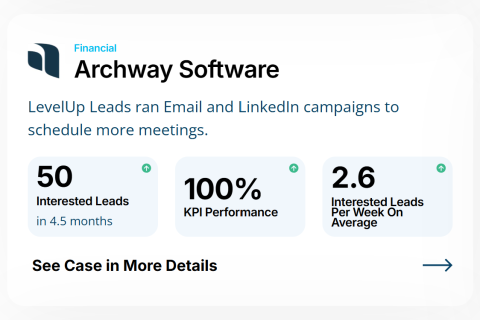
Archway Software, a SaaS company in the financial services space, partnered with LevelUp Leads, a B2B appointment-setting agency, to book more meetings with key banking industry decision makers. After developing a solid understanding of the client’s ICP, LevelUp Leads built a targeted contact list and crafted personalized messaging for email and LinkedIn, reaching prospects where they were most engaged.
This B2B omnichannel marketing strategy increased KPI performance by 100% and scheduled an additional 10 meetings per month directly to the client’s calendar.
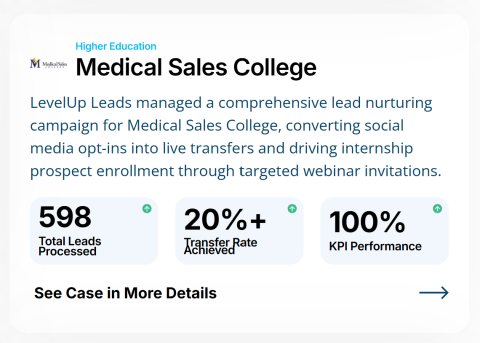
Another example of omnichannel lead generation done right is Medical Sales College, a higher education institution for medical sales reps. With a goal of increasing social media conversions, our team stepped in to develop targeted follow-up outreach strategies for engaged prospects.
Social media opt-ins who had expressed interest in receiving more information were live-transferred directly to a Career Advisor, while prospects for the College’s internship program were invited to a special webinar series geared toward enrollment. Through this strategic B2B omnichannel marketing plan, the client achieved 243 live transfers and generated 355 webinar sign-ups from 598 leads, resulting in a 100% improvement in KPI performance.
These are just two examples of how omnichannel lead generation can drive results in every industry, including hospitality, retail, financial services, information technology, and more. There are numerous case studies demonstrating the impact of omnichannel messaging on B2B lead generation.
For any business looking to stay relevant in 2026 (and beyond), adopting an omnichannel lead generation strategy is critical. To build a robust sales pipeline and a long-term, loyal customer base, companies must prioritize the prospect experience, delivering relevant, personalized, and engaging messaging across multiple touchpoints.