
Why Salesforce Staff Augmentation Is Becoming a Strategic Choice
Salesforce staff augmentation is no longer a stop-gap. Learn why more businesses now use external specialists to access expertise, move faster, and scale...
Updated June 19, 2026

A lack of skilled professionals is a major challenge in data security as businesses lean more into automation and AI than ever before. Learn more about how outsourcing can help you secure your data and prevent cybersecurity breaches.
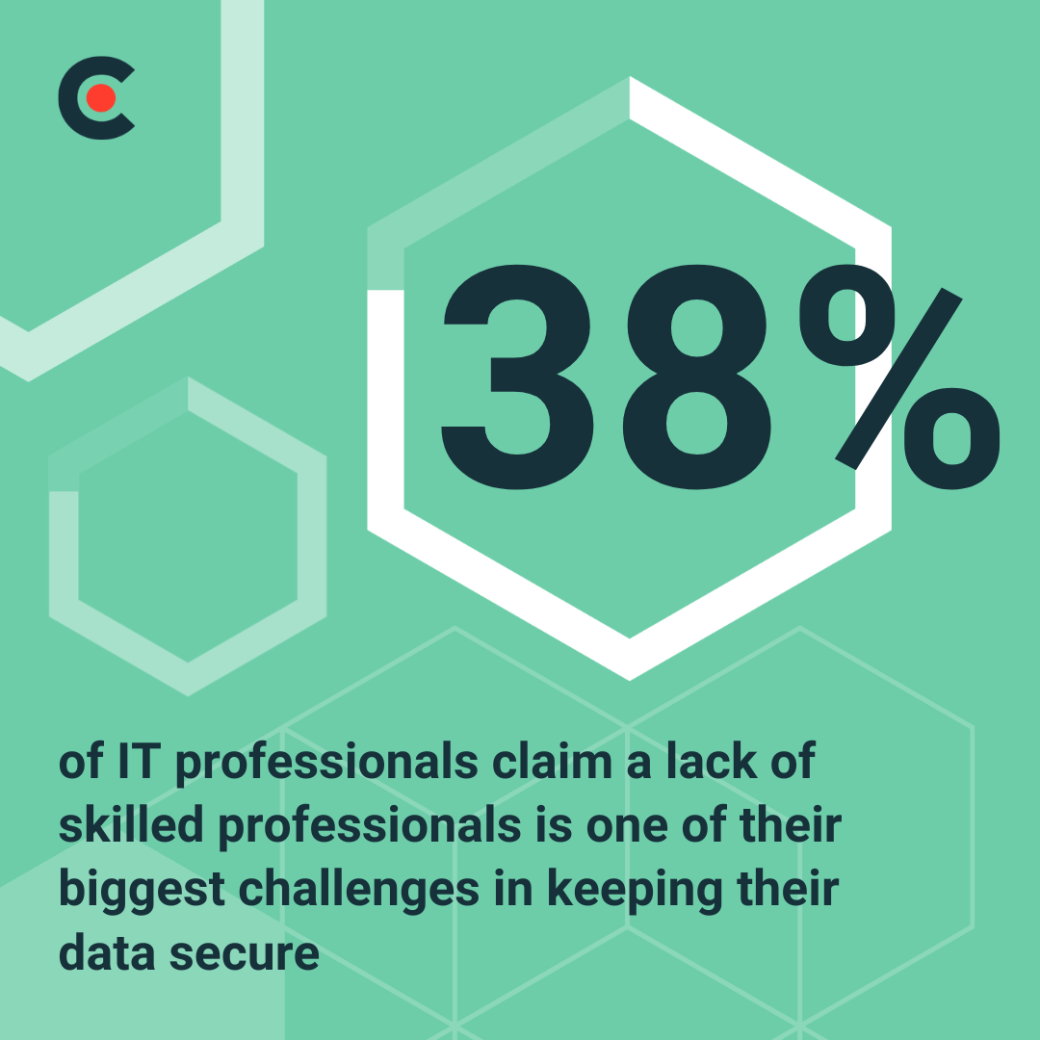
In Clutch's recent survey of 250 IT professionals, 38% pointed to one major issue in their organizations: finding the right people to protect their data. The worry isn't about tools or budgets but talent.
That stat speaks volumes about what's happening in the tech world right now. Now that companies are leaning harder than ever into automation, AI, predictive analytics, and cloud infrastructure, the demand for people who know how to manage and secure these systems is increasing.
Looking for a IT Services agency?
Compare our list of top IT Services companies near you
However, the talent pool is unable to keep pace. For cybersecurity professionals, it's no longer just about having the technical know-how. They also have to work alongside AI systems to streamline operations all while preparing for new kinds of emerging threats. It's no wonder many companies struggle to fill these roles.
Some businesses are turning to outsourcing as a viable solution for this problem. While your in-house teams need substantial time and reskilling initiatives to reach the required expertise level, outsourcing to specialized cybersecurity firms can give you access to a pool of experts right away.
Learn more: What Businesses Need to Know About AI & Data Security in 2025
In 2025, data security isn't merely a line item on your IT checklist but a must-have component that can make or break your internal operations. AI tools are generating and transferring huge volumes of sensitive data around the clock. Even a single weak link can result in major damage.
Businesses aren't only worried about hackers anymore. They're also dealing with complex digital ecosystems where one overlooked patch or misconfigured setting can open the door to serious breaches.
A recent security breach involving Oracle Cloud put the spotlight on how vulnerable even major platforms can be. According to cybersecurity firm CloudSEK, around 6 million records were stolen in the attack, which appears to have exploited a previously unknown flaw in Oracle's system. The breach impacted over 140,000 customer environments.
Attackers not only demanded a ransom but also began circulating sensitive data online. Among the stolen assets were encrypted SSO credentials, Java KeyStore (JKS) files, critical key files, and enterprise manager security tokens. It was the kind of information that could give someone deep access to internal systems.
CloudSEK noted that while the individual or group behind the breach doesn't have a known track record, the tactics used suggest a high level of technical skill. Unfortunately, even large enterprises lack the skills to tackle these new-age threats. What makes it worse is that organizations take nearly 73 days to contain a data breach, which is long enough for hackers to cause significant damage.
That's why McKinsey estimates that the cybersecurity market could be worth $2 trillion in the future. Businesses need to invest in skilled and up-to-date professionals who can spot vulnerabilities before they're exploited.
However, this is where many companies fall short. When cybersecurity teams are understaffed, vulnerabilities get missed. They are unable to detect intrusion early and respond promptly. On top of that, many professionals don't have the skills to keep up with new compliance standards, especially those pertaining to AI use.
The few people who do have the skills to mitigate these risks are often overwhelmed and at risk of burnout. They don't have the time or bandwidth to mentor and train the rest of their team. It creates a vicious cycle of understaffing and lack of expertise, which results in increased chances of cyberattacks.
Since cybersecurity talent is in short supply, many companies are turning to outsourced IT services to fill the gap. As many as 38% of organizations that already have an in-house security team are also bringing in outside experts to strengthen their defenses.
Outsourcing data security not only plugs the talent gap, but it also brings many other benefits that are hard to match with just an internal team, such as the following:
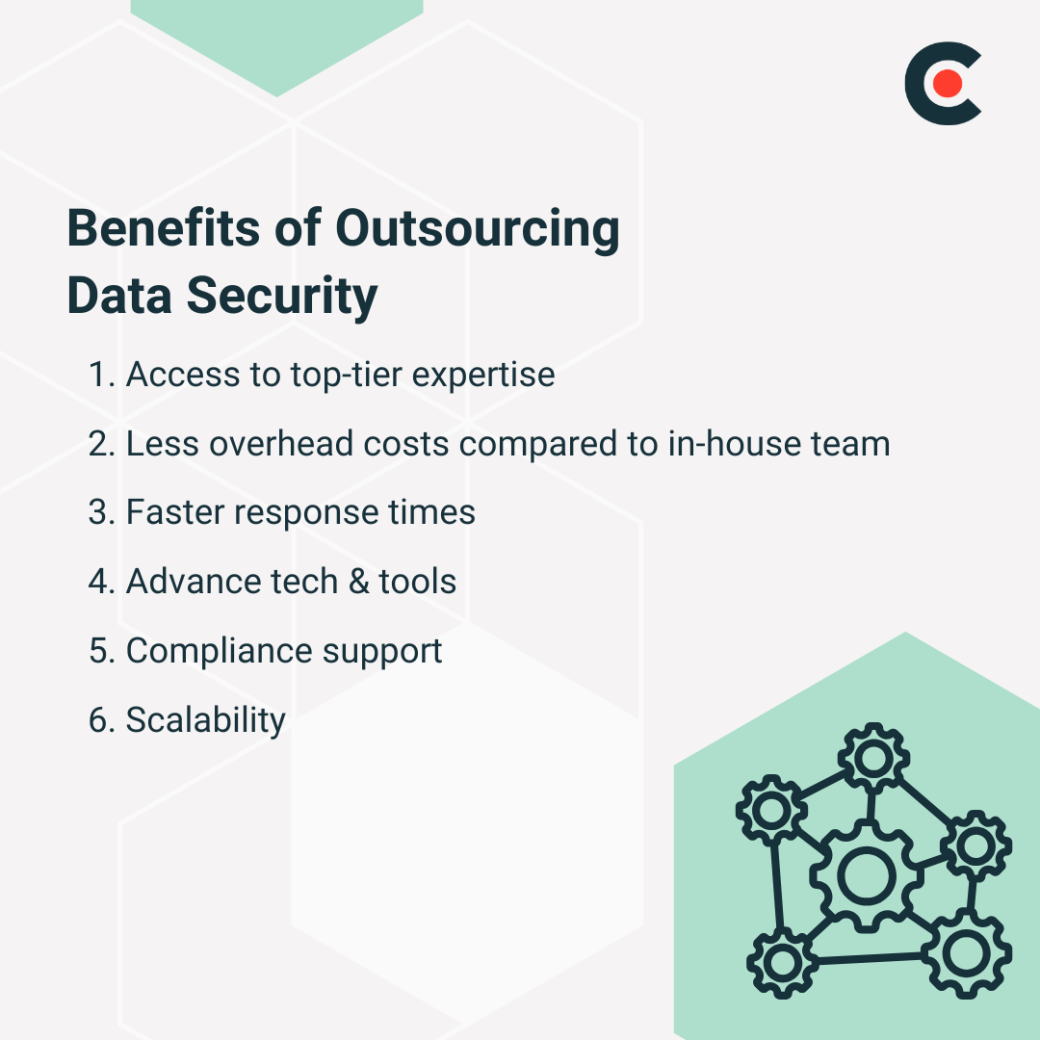
When you outsource, you get access to seasoned professionals who live and breathe cybersecurity. They constantly train and stay current with new threats, ensuring that they’re prepared for anything that comes at them.
These professionals also work with many clients, so their knowledge is more comprehensive. If you face any industry-specific threats, they can also help you navigate them.
It can be expensive to build an in-house cybersecurity team from scratch or train your existing one. You have to account for salaries, benefits, tools, training, and other overhead costs.
However, when you outsource, your outsourcing partner has already covered all these costs. You only pay for their services as long as you need them. They also invest in their training and tools, so you don't bear those expenditures.
We've already mentioned that industrial organizations take 73 days to contain a cyber threat. But do you know how long it takes them to identify it?
199 days.
If you take into account that unplanned downtime costs companies $125,000 per hour on average, this delay can be catastrophic for a business.
Reputable outsourced providers operate 24/7 and have a dedicated incident response team. These professionals are ready to act the moment something seems off.
Such agility is imperative in situations where you may be facing a ransomware attempt or a critical vulnerability.
Outsourcing can prevent issues from becoming full-blown data disasters.
Your outsourcing partner does cybersecurity for a living. This means it invests heavily in the latest tools and technologies that your in-house team might not have or be familiar with.
It uses next-gen firewalls and AI-driven threat detection tools that may be too expensive or complicated for you to manage. Plus, it has real-time monitoring systems that send alerts about potential threats. These advanced tools help amp up your organization's data security without requiring you to spend too much money or train your internal teams on new technology.
Governments and regulatory authorities worldwide have started changing compliance requirements to include AI-based data security measures. Outsourced cybersecurity providers are well-versed in all new and existing regulations.
Besides keeping your data secure, your provider also keeps you compliant. When it's audit season, you can rely on it to hand over the documentation proving your compliance.
Outsourcing data security also comes with the benefit of scalability, which is hard to achieve in-house due to high complexity and costs. Suppose you expand operations to a new location or launch a new digital service. In-house cybersecurity management would require extensive resources and time to protect these new systems.
However, your outsourcing partner can add these new systems to its infrastructure. You get the necessary support without constantly hiring or restructuring your internal team.
As the world heads towards an AI-led business landscape, making AI safer is a priority for many cybersecurity professionals. Yet, without enough talent to meet increasing cybersecurity needs, organizations should consider outsourcing their data security.
While in-house teams often lack the resources and skills to handle emerging risks, outsourcing partners are sufficiently prepared. They continuously invest in new technology and training to stay up to date. Their assistance can keep companies secure in a world where hoards of data are at risk from cybercriminals.
![How to Create a Budget for BI & Analytics Services [With Template]](https://img.shgstatic.com/clutch-static-prod/image/resize/715x400/s3fs-public/article/f07e9d6bd89e7f70df9c94301acdd847.png)