Lead Quality vs. Lead Quantity: Why B2B Teams Are Rethinking Their Funnel in 2026
Bigger buying committees and tighter budgets are forcing B2B teams to rethink lead quality vs. quantity. Here's how top teams rebalance the tradeoff in 2026.
Updated May 28, 2026

Influencer marketing is crucial to building authority, boosting brand awareness, and cultivating authentic relationships with audiences. In the B2B realm, great influencer marketing can help businesses establish themselves as trust-worthy players in their respective spaces; allowing them to create professional communities that key decision-makers can have confidence in. Here are 6 proven techniques that can help your brand when it comes to working with B2B influencers.
According to statistics, around 94% of B2B marketers believe influencer marketing is effective for their businesses.
In the age of video marketing, relying on traditional ways of marketing can be catastrophic. They will surely feed you results, but not quickly. Influencer marketing can be a golden nugget for a B2B business that relies solely on trust and commitment.
Looking for a Digital Marketing agency?
Compare our list of top Digital Marketing companies near you
Several businesses worldwide work with influencers to promote their products and services. An example is SAP, which invited five influencers to its event in Germany. The influencers spoke on data analytics, IoT, and machine learning technologies. The collaboration led to 50% of all social media mentions of this event.
Now, if we look at the stats, companies are making a profit of 520% with influencer marketing. Big numbers, right? Getting such results is easy, but proper techniques and strategies are required. If you want to learn those strategies, read along.
Team up with the best influencer marketing agencies or B2B marketing agencies on Clutch.
Unlike influencer marketing on Instagram and TikTok, B2B influencer marketing varies greatly. It involves collaborating with industry experts and thought leaders to leverage their credibility in a particular niche or industry to achieve business goals.
These business goals can be product or service promotion or delivering a brand message. Now, how is B2B influencer marketing different from B2C influencer marketing? Here is how:
|
B2B Influencer Marketing |
B2C Influencer Marketing |
| The hiring process for the influencer in B2B is long. The influencer has to prove their expertise and build trust with the client. | The process of choosing an influencer is more impulsive here. You must select a person with a familiar face and a higher following. |
| The target audience in B2B influencer marketing is the companies' stakeholders. | The audience is the group in the influencer’s following list. |
| The content complexity in B2B marketing is high. The influencer must have deep industry knowledge and the ability to communicate technical information. | The content complexity is not that tricky here. Influencers are free to improvise. |
Do you know that 69% of customers trust influencer recommendations?
While influencer marketing is projected to benefit B2B businesses, it also has some notable drawbacks.
|
Benefits of B2B Influencer Marketing |
Drawbacks of B2B Influencer Marketing |
| Increased reach: A B2B influencer has dedicated followers and networks. Hence, you are surefire to get more reach. |
Finding influencers can be challenging: Like the B2C market, the B2B market is filled with influencers. Therefore, finding one who aligns with your brand values can be difficult. It is also crucial to check if they have genuine industry expertise and are fit for long-term partnerships. |
|
Brand credibility: Collaborating with a reputed influencer can be a goldmine for a new brand. The influencer's reputation will help establish trust and credibility for your brand in the customer’s mind. |
Brand credibility: Collaborating with a reputed influencer can be a goldmine for a new brand. The influencer's reputation will help establish trust and credibility for your brand in the customer’s mind. Stats suggest that a B2B influencer with over 100,000 followers charges $5,000 to $15,000 per post. |
|
Authentic content: A B2B influencer is the master of content in their niche, so collaborating with them can help amplify content, which is a win-win scenario. Always focus on leveraging their expertise and creativeness rather than controlling the type of content. |
ROI calculation: Measuring and reporting results can be tricky in the case of influencer marketing. While you are gaining ROI from different sources, it can be challenging to assess how much came from the influencer’s side. Therefore, specific goals should be set, including key performance indicators such as engagement rate, conversions, reach, and impressions. Brands should also track ROI via unique URLs or promo codes. |
Working with influencers can be easy when you are clear on certain things, such as primary goals, how to track them, and buyer personas. However, hiring the right influencers also plays a pivotal role. Here is a comprehensive explanation of working with B2B influencers:
Before investing in any influencer, you need to understand your goals—not just your own but also your influencer’s. A clear goal helps you keep track of success.
Once you are clear on your goals, you must define KPIs to measure your success. For example, for brand awareness, the KPIs can be followers, impressions, and web traffic.
When you know what you expect, you need to understand who you expect from. You need to understand the audience and their preferences, pain points, and factors that can help you create a targeted marketing campaign. The word targeted is used here because, sometimes, in B2B, the target audience can be small industry businesses or individuals.
Account-based marketing can be an effective way to target these small sets of favorable accounts.
Pro-tip: Focus on filtering a mutual audience that the influencer and brand can engage.
As industry experts, finding the right influencer is beyond just follower count. B2C marketing may work based on that, but not B2B. B2B marketing requires authentic influencers like industry experts, content creators, brand builders, and customer advocates.
These influencers have the most influence in the market and can communicate your brand message. Moreover, as a brand, you need to look for people who can be trusted, align with your brand value, and are reliable for a long-term partnership. Now, how do we verify this?
To ensure that an influencer is suitable for your brand endorsements, you can use tools like Buzzsumo to know their authenticity. Check their page authority, domain authority, content sharers, etc. Conduct a profile audit to view their past posts, backlinks, and endorsement history.
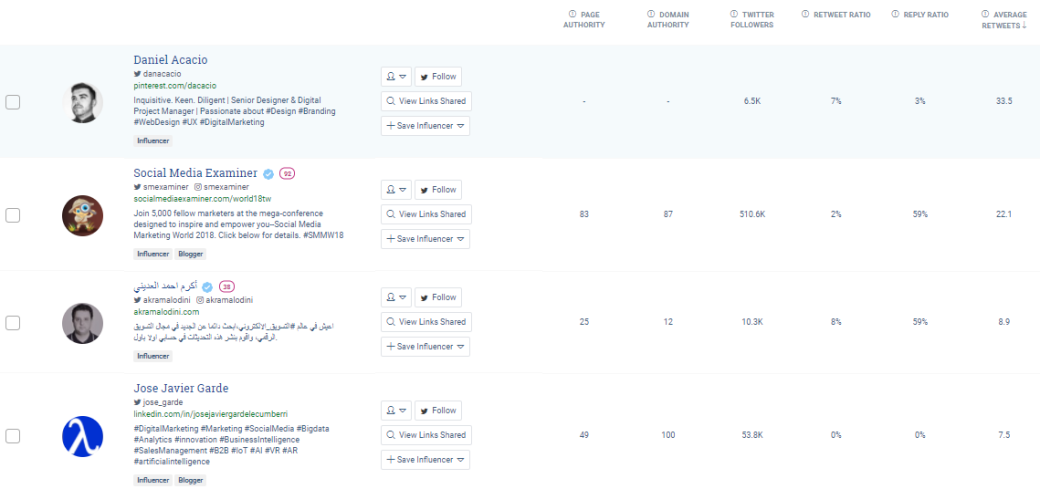
Another way to find influencers is to find partner brands and other companies where value propositions are not competing. For example, you can use LinkedIn or Quora to find relevant executives in your field.
The key to an authentic B2B relationship is building trust, which can be done in several ways. You can start by engaging with the influencer’s content regularly. Share their content and add relevant and eye-catching comments (like a question) on their content.
When on a talking level, you may have to sign a check or share equity with the influencer to ensure a long-term alignment. You can also contribute to other related media outlets and websites by featuring influencers to achieve your goal. You can get their perspectives on your projects and reach better results.
Pro-tip: Working with external advocates, such as happy customers and micro-influencers, can yield better results. Monitor them for long-term partnerships.
Nurturing a healthy working relationship with B2B influencers requires a personal touch, which can be achieved by interviewing them.
Engaging in these insightful discussions helps create high-quality content and paves the way for enduring partnerships. It also opens doors to valuable business development opportunities, allows you to reach a broader audience, and enhances your professional reputation.
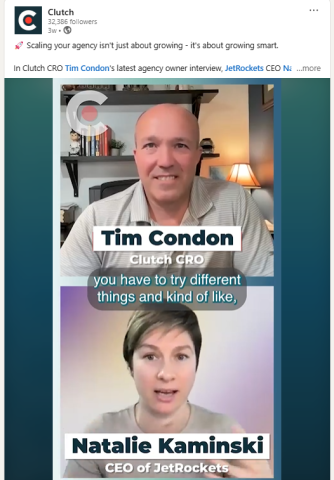
Interviewing influencers can reveal insights into their working strategies, creativity, engagement with the audience, crisis management, and more. It can also be a learning experience for your brand. Once you've got insights from your target influencers, you should turn that information into actionable content.
As a professional B2B business, your goal should be to create compelling and believable content. Here are some key factors to keep in mind:
As you may have noticed, webinars are the favorite content type for B2B influencer marketing (81%), followed by social media (74%) and blog posts (71%).
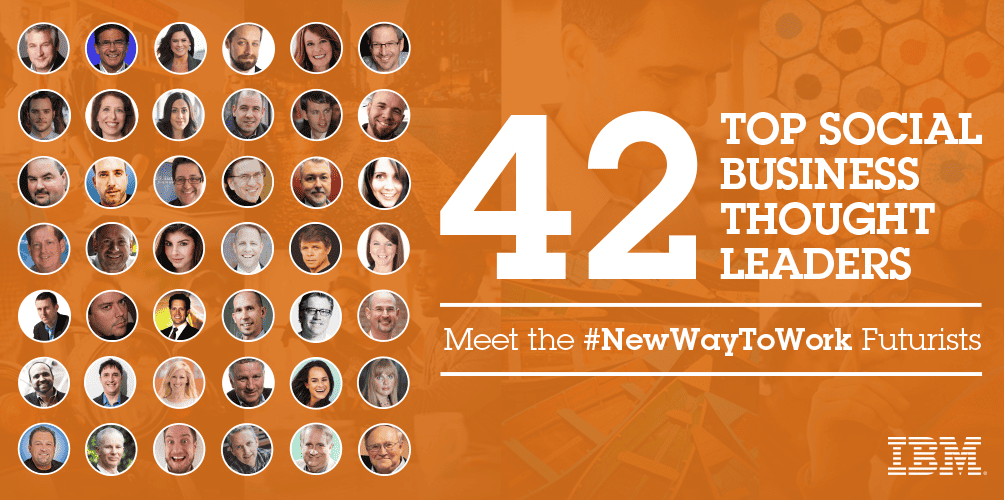
Now, this is my experience! Inviting influencers to your B2B events can be a valuable asset to your partnership. How?
To make your events even more engaging, use a QR code generator to create custom codes for event registration, presentation materials, and exclusive influencer content access. These digital touchpoints make the event experience smoother and help you track the performance of your influencer partnerships.
Without tracking key metrics of your B2B influencer campaign, you can’t determine what works and what doesn’t. Ensure you track metrics like conversions, reach, engagement, website traffic, and lead generation.
“Not every partnership with an influencer needs a strong call to action (CTA). The main goal is to ensure your audience is not pressured to buy something,” said Justin Watkins, The Founder of Battle Born Injury Lawyers. “Be ready to share your success stories to show how well your campaigns work. With clear insights into what is effective, you can increase your chances of getting support for future projects.”
Clients depend a lot on the opinions of the industry when availing services from a brand. And if you can find someone your clients trust, you can make influencer marketing an eternal way to grow your B2B business. Right now, the buzz of influencer marketing is high.
We watch many sponsored content pieces on social media channels every day. We're unsure about the exact results, but based on the surging market, we can promise that influencer marketing will boost your B2B business.