How Consumers Feel About AI in Social Media: What They Welcome (and Don't)
New Clutch data shows how consumers feel about AI in social media marketing, where they welcome it and where they draw a hard line.
Updated June 16, 2026

Social media is evolving, and having the right strategy in place is essential to brand growth. Dive into recent Clutch data to see what is driving social media strategies in 2026.
In 2026, social media feels more like a jam-packed music festival than an intimate conversation. It's constantly noisy, and people keep elbowing past you to look for their friends. You try to talk to everyone, but your competitors keep shouting over you.
With so many brands talking at once, you may feel tempted to tap out entirely. But don't delete your Instagram account just yet. It's still possible to get people to listen to your brand.
Looking for a Social Media Marketing agency?
Compare our list of top Social Media Marketing companies near you
It all comes down to using the right social media strategies. And those approaches may look very different from what you were doing five or even two years ago.
We dug into Clutch research to see what's actually working right now. Here are four trends that should be on your radar.
Plenty of people still scroll through their main feeds every day, but that's not always the main attraction. Instead, many are connecting in smaller, more niche spaces within those platforms.
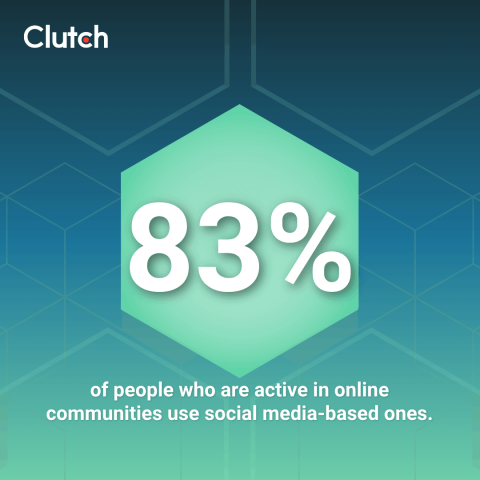
New Clutch data found that 83% of people who are active in online communities use social media-based ones.
One popular option is Reddit. There are subreddits for practically every interest, from aquaculture to mountain biking and programming. LinkedIn and Facebook Groups also host thousands of online communities. Some users join lesser-known platforms like Skool, too.
Users gather in these spaces to socialize with like-minded people and share information. They're swapping tips and chatting about the news. Sometimes they're even scolding each other. Post a picture of a cloudy fishbowl on r/bettafish, and you'll quickly get a lesson in animal husbandry.
These interactions are having a huge impact on buying decisions. When Clutch surveyed people who participate in online communities, 95% said they've found helpful information there.
In addition, a whopping 98% said they trust product recommendations from fellow members. An anonymous Redditor could have more sway than any paid ad you run. For example, r/photography's FAQ page encourages beginners to buy specific cameras and lenses.
Brands can certainly join these spaces, but not in a sales-y way. People visit these communities for educational, genuinely useful content. The last thing they want to see is yet another ad.
Redditors are especially prickly. Ferris Wheel Press is one brand that stumbled when it didn't fully understand the community norms. The founder hosted an ask-me-anything (AMA) conversation in r/fountainpens, promising to be "open, available, and accountable." Instead, he abandoned the thread and didn't respond to most of the questions or comments.
Users quickly got upset, with one commenting, "This isn't an AMA, this is a press release." Another said, "Ray, do you know what an AMA actually is?" Some even asked about the company's negative Glassdoor reviews. The event was such a disaster that a former employee stepped in to host their own AMA, where they actually engaged with the audience.
Don't let this cautionary tale scare you off. When done tactfully, joining online communities is a great way to connect with your audience on a more personal level.
Just be sure to follow these best practices:
Above all, don't share content that feels like a transaction. Customers want to speak to real people in real communities, not get blasted with promos.
Five years ago, feeds were filled with influencers hawking this or that product. They're still out there, but their influence is waning.
According to Clutch research, nearly 50% of consumers haven't bought a product based on an influencer recommendation in the past year. And only 12% trust recommendations if the post has a #Sponsored tag.
“A few years ago, influencer content felt more organic, like a genuine recommendation from someone you followed. Now, with so many paid partnerships and templated captions, consumers are more tuned in to the transaction behind the post," said Paul Bies, the President of the branding agency, Mystique.
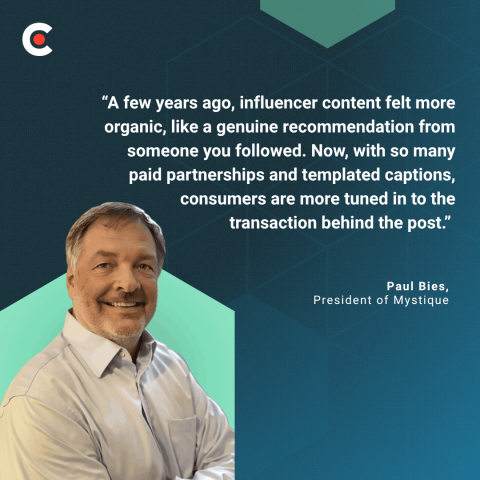
"It’s not that people completely distrust influencers," Bies adds. "It’s that the novelty and perceived authenticity have worn off.”
That doesn't mean you need to scrap all of your collaborations. Influencer marketing can still work, but it needs to be more targeted.
Focus on the groups most receptive to this marketing. Gen Z is twice as likely as Baby Boomers to trust influencers, Clutch found. Plus, 20% of consumers prefer recommendations from micro-influencers, who often feel more relatable and authentic.
Taylor Meadows (@mywildmeadows) is an example of a successful micro-influencer in the pet space. Most of her content focuses on her adventures with her Dalmatian and two cats. Sometimes, though, she partners with major brands.
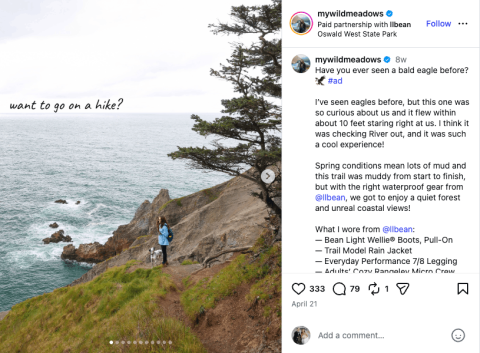
One recent Instagram post includes photos of Meadows hiking in Oregon while wearing waterproof gear from L.L. Bean. The caption includes a list of specific clothes, with links to each item in her story highlights. Meadows posts plenty of non-sponsored content, so this promo feels genuine. After all, she clearly spends a lot of time stomping around in the rain.
As you brainstorm collaborations, look for partners who share your values and audience. Credibility matters, too. Meadows's endorsement of L.L. Bean would be much less persuasive if she never shared outdoorsy content.
Humans aren't the only ones paying attention to your social accounts. AI platforms like ChatGPT also scan posts and community discussions to make recommendations.
Suppose someone asks Google Gemini for help choosing a new diet. Since it's not a nutritionist, it has to pull from outside sources. That could be an Instagram caption about intermittent fasting or a Facebook post on the protein craze. If you've been posting about these topics, the AI might even mention your brand in its responses.
Clutch and Conductor surveyed 459 marketers to find out where marketers are trying to make their content easy for AI to discover. The top platforms are Facebook (63%), TikTok (62%), and Instagram (47%).
You don't need to overhaul your social media strategies to help AI find your brand. Just structure your posts clearly with short paragraphs and lists. Put keywords up front, where both humans and AI can spot them right away. Alt text and hashtags also make it easier for chatbots to understand your content.
Of course, don't forget about your main audience: actual humans. Whether they're seeing your content on their TikTok For You page or in a ChatGPT response, they won't pay attention if it's not engaging.
Seeing people like and comment on your content is always exciting, but don't get too distracted by engagement. Just because someone glances at your product on Facebook doesn't mean they'll buy it.
Clutch data shows that 98% of consumers have seen a product promoted on social media, but only 50% have actually made a purchase through these channels this year.
Friction is one of the biggest reasons engagement doesn't turn into purchases. Most customers want instant gratification, not another chore. They're probably not going to go through the effort of visiting a separate website and finding the product again. And if they have to get up to find their credit card, forget it.
Platforms like Instagram and TikTok solve this with built-in shops. Users can browse and order without ever leaving the app. For instance, if a customer falls in love with a dress on TikTok, they can click the orange cart and buy it. It's an impulse shopper's paradise.
In-app social media purchases have taken off. Around half (48%) of Gen Z and Millennials have bought an item directly in-app. Influencers can also link directly to shops, making it easier to convince people to try something new.
Take advantage of this trend by building in-app storefronts through TikTok and Meta. Users can buy your items mid-scroll instead of making the long trek to your website (or dropping off entirely).
Be sure to tag products in your content, too. The easier the checkout, the more likely people are to go from "I want that" to actually buying it.
For many companies, social media has become the default marketing tool. As these spaces get more crowded, sharing bland or salesy content doesn't cut it anymore.
Social media users crave community and knowledge, not promotions. For the best results, focus on sharing authentic content that directly benefits your audience. That could be a how-to guide on Reddit or a collaboration with a micro-influencer who really uses your products.