Lead Quality vs. Lead Quantity: Why B2B Teams Are Rethinking Their Funnel in 2026
Bigger buying committees and tighter budgets are forcing B2B teams to rethink lead quality vs. quantity. Here's how top teams rebalance the tradeoff in 2026.
Updated May 29, 2026

Social media gives you direct access to your target audience in a friendly, relaxed environment. Learn how to choose the right platform for your business and make the most out of your social media presence to close sales without being spammy with insights from Donald C. Kelly, the founder & CEO of The Sales Evangelist.
Originally a way to stay in touch with far-away friends, social media has become much more. Today, people use social media to catch up on news, find inspiration for things to do, cope with boredom, and find products to purchase.
Brands know this and are using their socials to connect with their customers and get their products in front of them at the right time. Social selling began largely as a B2B practice, with salespeople using it primarily as a networking tool to nurture leads. However, as more shopping moved online, brands began to focus on inbound social selling by creating compelling content that brought customers to them. Almost half of all consumers use social networks for shopping-related research and to discover new brands.
Looking for a Digital Marketing agency?
Compare our list of top Digital Marketing companies near you
If you’re neglecting social media as an avenue for closing deals and making sales, you could be missing a huge part of your audience.
Learn more from Donald C. Kelly, the founder and CEO of The Sales Evangelist, on the power of social media when it comes to closing successful business deals.
Social media has opened a new avenue to connect with your target audience.
On average, people spend almost two and a half hours daily scrolling through platforms such as Facebook, Instagram, TikTok, and LinkedIn. This is a time when they’re open to hearing your message, with 64% of people reporting that they want to connect with brands online, and 70% stating they feel more connected to brands when the CEO is active on social media.
However, the same way you avoid that party guest who won’t stop talking about themselves, your customers will get tired of relentless promotional posts. Instead, the art of social selling involves being a part of the conversation and, like any good party guest, giving people something interesting to talk about.
No matter how engaging your content is, if you’re on the wrong platform, your intended audience won’t see it. To succeed at social selling, you need to know what platforms are most popular with your customers and what type of content performs best on those platforms.
During our interview, Kelly shares his perspective on leveraging social media platforms for boosting sales. He emphasizes how crucial it is to identify what platform to focus on.
Kelly says “You can take email away from me, maybe even the phone—not the phone, but you could take email, Insta, TikTok, Facebook—definitely take Facebook. But do not take LinkedIn. That is my money spot. Absolute money.”
You don’t need to be on every platform. Creating a compelling social media presence takes effort, so don’t spread yourself too thin. Concentrate on one or two platforms where your customers spend the most time.
As a professional networking site, LinkedIn is a natural choice for B2B sales. With over a billion users, 23% of whom are daily users, LinkedIn is ideal for professional networking, marketing to business leaders, and establishing yourself as a thought leader. Over 80% of B2B marketers succeed on LinkedIn, and 90% use it to find leads. Longer posts that establish your expertise perform best on LinkedIn.
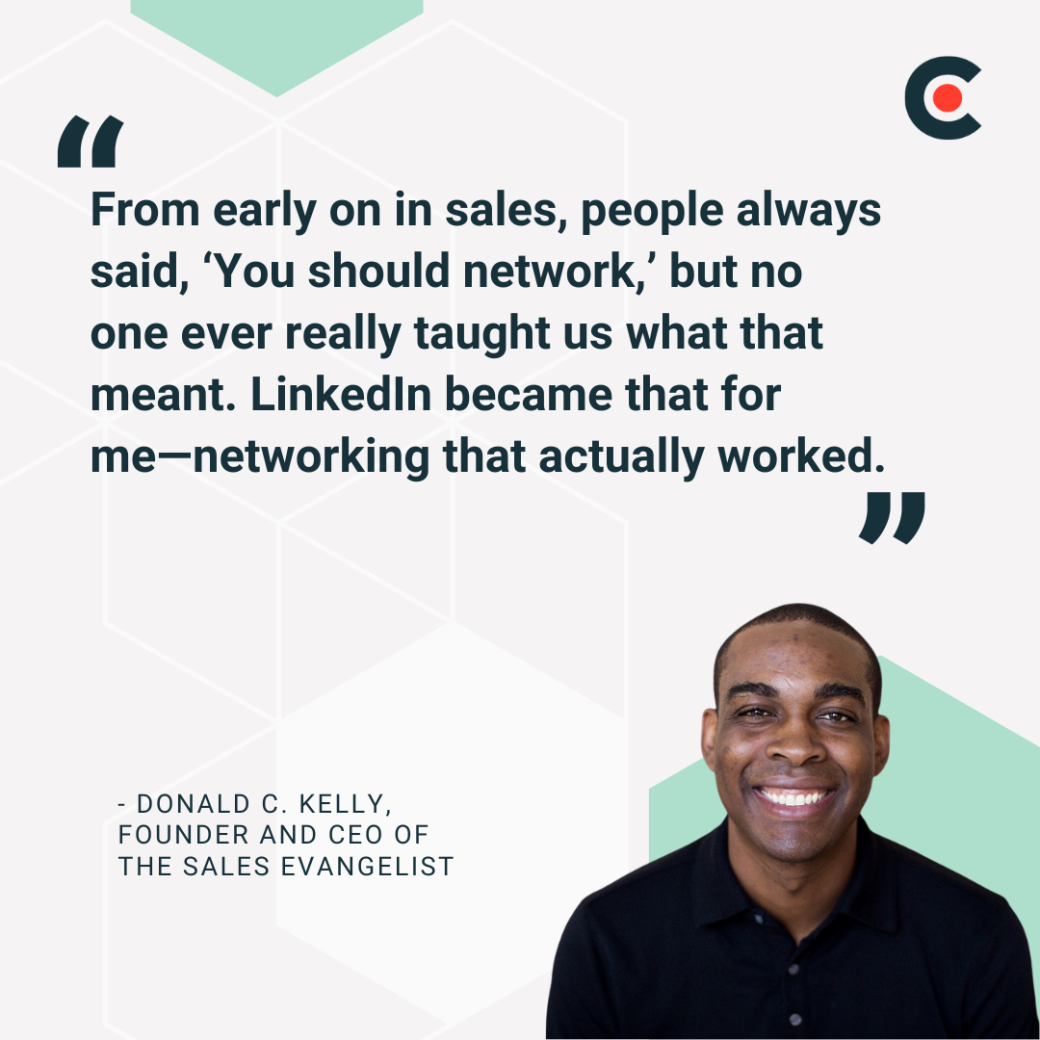
“From early on in sales, people always said, “You should network,” but no one ever really taught us what that meant. LinkedIn became that for me—networking that actually worked,” Kelly adds, pointing out how LinkedIn helped him grow in sales.
If you run a visual brand selling to younger customers, Instagram will likely be your bread and butter for social selling. With over two billion monthly active users, it’s the third most popular social media site. Its base skews young — 16- to 34-year-olds report it’s their favorite social site. Although Instagram started as a photo-sharing site, its Reels video feature currently has the highest engagement rate.
TikTok is the social platform where trends take off like wildfire. Most of its over two billion monthly visitors are under 30, and it’s home to more Gen Z users than Instagram. However, there’s a lot of crossover, so many brands post their content on both sites. TikTok’s short videos easily convert to Instagram Reels. This is the platform to be on if your target demographic is trend-driven or young.
For B2B sales, LinkedIn is undoubtedly the best place to invest your time. Users don’t mindlessly scroll through LinkedIn the way they do on other platforms. They tend to go directly to the site and engage with purpose. LinkedIn is also where the decision-makers congregate, so your marketing message is more likely to get through to the person who needs to hear it.
Here are some other reasons LinkedIn is the go-to platform for B2B sales:
Donald C. Kelly, the Sales Evangelist, recently discussed the importance of social media and sales. In his interview, he noted: “Everyone wants ‘scalable,’ right? Everything’s about scale. But here’s the issue—I’ve found that without creativity, scalability often turns into spam.”
Generative artificial intelligence (AI) is running rampant in the marketing industry right now. If you’re looking to scale your social media posting, you might have considered turning to generative AI, but as Kelly points out, that scalability comes at a cost.
It’s hard to resist the appeal of typing a few sentences into a chatbot and watching hours’ or days’ worth of work unfold in just a few minutes. When you first experience new AI technology, whether it’s poetry written by ChatGPT or podcasts generated by NoteGPT, the results are amazing — the first time and maybe the second time. By the 10th or 15th time, however, the output is repetitive and off-putting.
Automation is a powerful tool, but posting AI slop to your socials will only alienate your customers and damage your brand reputation. However, this doesn’t mean you can’t take advantage of AI tools to work more efficiently.
The key to avoiding content fatigue with automation is to personalize your content to your brand and your customers. AI can be a fantastic tool for fleshing out ideas and streamlining your social media management. But there’s no substitute for the human connection.
The reason people respond to brands on social media is that it’s a way to interact with people who often operate behind the scenes. Chatting with a bot might be fine when you need customer service help, but it doesn’t replace the authenticity of a back-and-forth conversation with another human.
The sales funnel has changed in response to the more organic nature of social selling. Today, it’s based on how people prefer to interact with brands.
Instead of cold pitching, the first step to attracting customers is to provide valuable content. Informative, creative, or entertaining content demonstrates your expertise and resonates with your target audience. Your content is what gets you noticed on social media and draws people to your brand.
Kelly notes the importance of content when using social media for sales. He comments “Content builds credibility—for me, especially on LinkedIn and the podcast. Second, it keeps me top of mind. And third, it brings direct business.”
Once you have people’s attention, you can connect with them. When people like, comment on, or share your content, it gives you an opening. At this point, they’re engaged and curious, so it’s the perfect time to interact. A response or follow-up message feels natural rather than pushy or intrusive.
Building connections requires thoughtfulness which customers appreciate. Being intentional on how you interact and communicate helps forge relationships which could lead to potential leads.
Speaking from his background, Kelly shares “One strategy I use is simple: when someone connects with me on LinkedIn, I send a personal message—nothing automated. Something like, “Hey Tim, thanks for connecting. Out of curiosity, what prompted the connection?”
This is also a good opportunity to engage with their content, opening up a two-way avenue of communication. Creating a strong sense of connection allows you to build a relationship before you make a pitch.
An ongoing conversation naturally leads to opportunities to convert. Because people have found value in your content and invested in connecting with you, they understand what you do and what services you offer. Instead of feeling spammy, a pitch at this point feels like a continuation of a conversation based on shared values.
You’ve pre-qualified your leads through your interactions, so you understand their pain points. Customers are more receptive to listening to you because you’ve laid a foundation based on genuine, unfiltered interactions.
This new sales funnel allows you to invest in your customers before you ask them to invest in you. Value-driven content and personalized engagement build momentum and match the way modern consumers want to buy.
Although social selling is a different approach, you still need to track your progress to measure your success. Key metrics you can measure include:
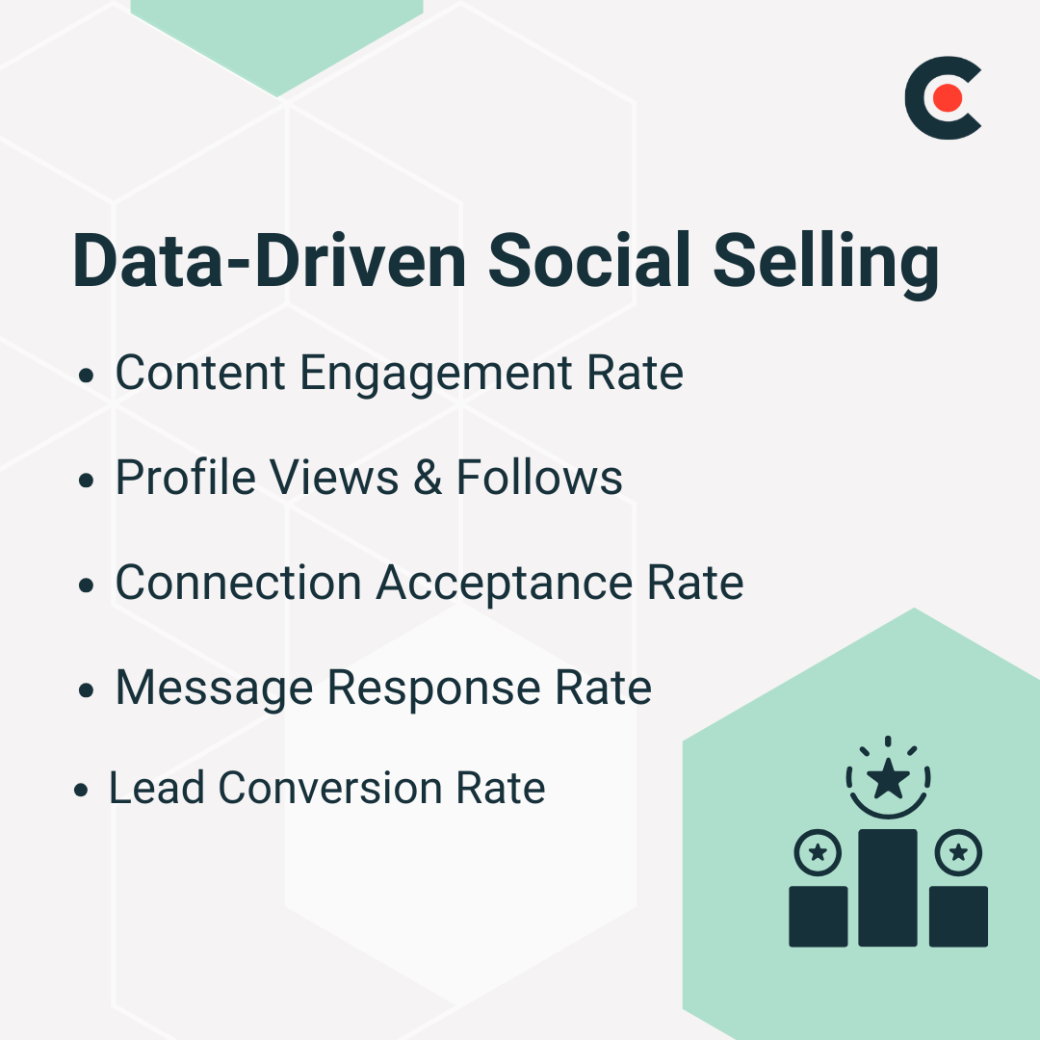
As with traditional marketing campaigns, monitoring and tracking data can help you optimize your performance for the best results.
Although platforms and channels may change, the need to connect with your audience and share how your product or service solves their pain point will always be at the heart of sales. Actively listening through social media helps you find valuable sales opportunities and gives you insight into your customers and their needs.
You need to go beyond merely listening, though. Being creative, socially savvy, and authentic will drive success in social selling.

Donald C. Kelly, is the Founder and CEO of The Sales Evangelist, helping create business development and growth strategies for small and mid-sized businesses.