
Why Searching for a Specialized Dev Agency Takes Longer Than It Should — And What to Do About It
Looking for a niche software development agency? Learn how to define your requirements, find specialized providers, and vet their experience.
Updated May 29, 2026

Proper resource planning can help your DevOps team collaborate more effectively, enhance efficiency, and even mitigate risks. Follow these tips to improve your processes.
As companies grow, DevOps teams often face a frustrating reality: adding more people and tools doesn’t automatically mean that they’re going to be able to complete projects any faster.
In fact, larger organizations can struggle to maintain the same speed as leaner, more mature teams due to growing complexity, communication challenges, and inefficient resource allocation.
Looking for a Software Development agency?
Compare our list of top Software Development companies near you
According to new Clutch data, only 36% of mid-sized teams reported deploying new features or fixes daily or faster, compared to 24% of small teams, and just 21% of enterprises — showing that release velocity depends more on operational maturity than on the size of the team.
Ultimately, this demonstrates that growth may expose inefficiencies. Without strategic resource management, teams face longer lead times, wasted tooling investments, and burnout. However, a lot of this can be solved with effective resource planning.
“Effective resource planning ensures that both human resources and technological tools are optimally allocated,” said Ivan Olin, CEO of UPline Soft. “This approach maximizes efficiency and minimizes resource wastage, allowing teams to focus on innovation and continuous improvement.”

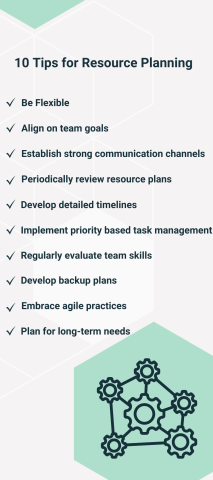
We spoke with Olin about how to scale DevOps without sacrificing speed. Below, he shares 10 practical tips to help your team increase velocity, regardless of your team size.
Resource planning refers to the process of strategically allocating people, tools, and infrastructure to ensure successful delivery. It is particularly important for DevOps teams because it ensures that software development teams have everything they need to deliver everything on-time. Otherwise, DevOps pipelines can slow down due to bottlenecks, uneven workloads, redundancies, or scaling issues.
For many, that means managing:
Resource planning must evolve as teams grow because as the organization grows, workflows become more complex and responsibilities become more specialized. Without a scalable framework for resources planning, what once felt efficient at a small-team level can quickly become chaotic, leading to delays, burnout, or inefficient resource allocation.
At first, resource planning might seem easy. Just put your best dev and ops people together and give them a budget, right? If only it were that simple.
In reality, resource planning can be incredibly challenging, especially for major projects. Here are a few common pitfalls:
These challenges can stymie even the most talented DevOps teams. However, by implementing the right strategies, fostering a culture of collaboration, and leveraging appropriate tools and technologies, these obstacles can be effectively overcome, paving the way for successful DevOps adoption and improved software delivery outcomes.
Set your DevOps team up for success with proper resource planning. Get started with these 10 tips from Olin.
Even the best-laid DevOps projects don’t always go according to plan. Anything from miscommunication to sick employees can derail a project. That’s why flexibility is crucial.
“Resources plans need to be flexible to adapt to changing project needs,” said Olin. “Rigid plans can prevent teams from effectively responding to unexpected challenges, making adaptability a key component of successful resource planning.”
Say, for instance, a key employee catches the flu a few days before product launch. If you’ve cross-trained your team, another member can take over their responsibilities to keep everything on track. Or, if you’ve built a buffer into the schedule, you can afford to temporarily pause the project until the employee recovers.
Ideally, your “devs” and “ops” people would come together as easily as peanut butter and jelly. But overcoming the “us versus them” mentality can be a real challenge, even when everyone’s happy to collaborate.
Get everyone on the same page by establishing team goals. Use the SMART framework to create objectives that are:
If you’re building a new application from scratch, your team might aim to complete three rounds of user testing by March. Or they could strive to fix 90% of bugs by the end of the quarter. These goals give your team something to rally around for greater cooperation.
Resource planning goes beyond just picking the right team members. You must also give them the tools they need to communicate.
“Strong communication channels are vital for effective resource planning,” explains Olin. “Teams that do not communicate well can face overlaps, redundancies, or even resource gaps. Regular check-ins and updates can improve alignment and resource efficiency.”
Frequent team meetings are the best way to keep everyone in the loop. Don’t just share quick updates. Instead, encourage everyone to brainstorm solutions and share constructive feedback.
Take advantage of project management tools, too. Platforms like Jira and Slack let teams communicate remotely, whether that’s troubleshooting issues or bonding over memes.
Resource planning isn’t a one-and-done activity. “Schedule periodic reviews of your resource plans to ensure they remain aligned with current project goals, workloads, and available resources,” Olin recommends. “This proactive approach helps adjust plans as needed to meet evolving needs.”
Think of these reviews like comparing a ship’s progress to a map — they give you the chance to correct course or swerve around metaphorical icebergs.
Maybe your original DevOps team was filled with Python experts, but you actually need someone with a knack for front-end development. Or perhaps equipment costs have skyrocketed, so you need to increase the budget. By adjusting your resources, you can help your team make steady progress.
Creating realistic timelines isn’t easy — just ask any project manager. You may feel tempted to set an ambitious goal to beat your competitors to market, but this approach can backfire spectacularly.
“One common mistake is underestimating the time needed to complete tasks or the resources required, leading to missed deadlines and an overstressed team,” says Olin. “Detailed timelines and thorough resource assessments can mitigate this error.”
by breaking down all the steps involved in the project. Make an educated guess about how long each task will realistically take, and add some buffer time to account for unexpected issues.
Giving your team enough breathing room can actually help shorten project timelines. When employees feel happy and relaxed, they tend to be more productive and focused. The result? Less burnout and fewer time-consuming mistakes.
Complex DevOps projects may involve hundreds of tasks. If your team doesn’t know what to focus on, they may waste time on insignificant items. Or, worse, they might end up rushing the most critical tasks at the last minute.
Avoid this issue by creating a priority-based to-do list. Platforms like Motion and Taskade use artificial intelligence to analyze and rank tasks. These tools can help your team decide what to focus on quickly.
If you prefer to go old-school, try a simple Eisenhower matrix. This grid sorts tasks into four categories:
Don’t hesitate to shuffle tasks around as your project evolves. If hackers target your business, for instance, cybersecurity might jump to the top of your list.
It’s often tricky to anticipate the exact skills a project will require, especially at the beginning. Touch base with your team regularly to make sure they have the necessary abilities and resources.
If you notice a skills gap, consider offering training to get everyone up to speed. That way, you'll support your team’s professional development while keeping the project on track. Or, you could bring in an outside expert to fill the gap.
Don’t assume that every resource will always be available. Equipment like databases and servers can fail, often at inconvenient times. And your star developer could leave for another job or need to switch to another project.
Preparation is key. Olin suggests, “Develop backup plans for critical resources to mitigate risks associated with shortages or failures.” This might involve identifying alternative tools and backing up data regularly. Thorough documentation can also help team members take over tasks if someone is unavailable.
DevOps was originally inspired by the Agile methodology, and businesses often still use them together. Agile breaks projects into “sprints,” or short cycles of work. It’s a highly effective way to build momentum and make visible progress.
Here are a few Agile fundamentals:
By emphasizing iteration, Agile lets your team address problems throughout the development process instead of waiting until the end.
Project managers often focus on short-term needs when resource planning. It’s an understandable impulse. After all, you want to help your team get started right away.
However, Olin cautions against this shortsighted approach. He explains, “Focusing exclusively on immediate requirements without considering future demands can trap organizations in a reactive mode rather than being proactive.”
Take a step back and break down the entire product development lifecycle. Outline the resources you’ll need at each stage. During the development phase, for instance, you’ll need coding tools and programmers. The testing phase might require beta users and test engineers.
By lining up these resources early, you can avoid hiccups or shortages. Plus, you won’t have to worry about running out of budget in the final stages.
You don’t need to coordinate everything by hand. Use these popular DevOps tools to plan and track your project efficiently.
Looking for a centralized project management platform? Try Jira. It allows teams to monitor progress and plan sprints. Plus, you can use it to track issues and collaborate virtually. It’s a great tool for planning and managing resources effectively.
When it comes to infrastructure resource planning, you need a cloud platform like Microsoft Azure. It offers user-friendly tools to help you monitor resource usage and scale them throughout the project.
Don’t rely on handwritten to-do lists. Asana helps you prioritize tasks and track progress. It also automates workflows, such as changing deadlines and sending notifications.
Smartsheet and MS Project are all-in-one project management tools. They’ve got tools for calendar sharing, task assignment, and more. Consider these advanced platforms for larger and more complex DevOps projects.
Resource planning needs to evolve as teams scale. What works for a small, informal DevOps group often fails once workflows become more complex and responsibilities become more specialized. Here’s how planning typically matures at each stage of growth.
At this stage, everyone wears multiple hats and collaboration is naturally high. Resource planning is usually task-based and handled through quick standups or shared boards. As a result, workload issues are visible because everyone knows what the team is working on.
However, this approach can hide underlying skill gaps or overdependence on a few individuals. As a result, you risk burnout
As teams grow, more specialization emerges. For instance, you’ll need to hire platform engineers, QA specialists, and SREs. As a result, dependencies increase and individual workloads are harder to track informally.
At this point, you’ll need to shift your resource planning strategy towards skill-based allocation and capacity forecasting for upcoming sprints or releases. Your leadership team will need to start monitoring team velocity and planning buffers to prevent blockers.
Enterprises often deal with dozens of teams, global time zones, parallel release trains, and large infrastructure budgets. For this reason, large DevOps teams need to focus on long-term scalability, automation, and cost efficiency.
Resource planning becomes strategic and data-driven, often involving centralized forecasting, utilization dashboards, and long-term hiring or tooling roadmaps. You may also start planning phases in quarterly or annual cycles, but will make frequent adjustments between each stage.
DevOps has taken the tech industry by storm, and for good reason. It’s an incredibly collaborative and effective method, empowering teams to create high-quality products.
Effective resource planning is a key element of any DevOps plan. By mapping out exactly what you need, you can complete projects more efficiently. Plus, it’s easier to stay adaptable and scale development when you have the right resources.
Need help getting started? Browse Clutch’s directory of DevOps providers. These specialists can assist with every aspect of resource planning and project management. Use our handy filters to find the perfect match for your project.