Lead Quality vs. Lead Quantity: Why B2B Teams Are Rethinking Their Funnel in 2026
Bigger buying committees and tighter budgets are forcing B2B teams to rethink lead quality vs. quantity. Here's how top teams rebalance the tradeoff in 2026.
Updated May 25, 2026

When it comes to digital marketing, throwing out random posts or emails and hoping for the best just doesn't cut it. Successful brands rely on structured campaigns to show up in all the right places at just the right times. Two of the most powerful tools in your digital marketing toolkit? Email marketing and social media.
When put together, they can cover the full customer journey. As David Ispiryan, CEO of Effeect Agency, says, "Social media and email marketing work together by engaging audiences at different touch points. Social media helps attract and nurture leads, while email marketing converts and retains them. Consistent messaging across both channels strengthens brand awareness and drives higher engagement."
Below, we'll show you how to make the most of your digital marketing campaign using a blend of social media and email. There's also a free checklist at the end to help keep you on track.
Looking for a Digital Marketing agency?
Compare our list of top Digital Marketing companies near you
Social media management involves creating, scheduling, analyzing, and engaging with content on popular platforms like Instagram, LinkedIn, Facebook, TikTok, X, Pinterest, Reddit, and Snapchat. It's about making sure every post works toward your broader marketing goals while keeping your audience engaged.
Think social media management is just firing off a few posts and calling it a day? Think again. According to Youssef Azmy, Founder and CEO of Purple Zebra, social media marketing is "about understanding the audience, creating engaging content, and utilizing analytics to continuously improve. It's a lot more than just a few posts here and there — it's a full-on engagement strategy, and businesses need experienced marketers who can craft campaigns that build community and drive results."
Brand Awareness: That strategy pays off in several ways. First, it builds brand awareness. The more consistent and intentional your social media presence, the more familiar people become with your brand. Over time, that awareness turns into trust, and trust turns into sales.
Community Building: The best brands on social media are having conversations with their audience, whether through comments, DMs, polls, or by posting user-generated content (UGC). As Ispiryan points out, "The most valuable aspect of social media marketing today is community building. Brands that foster conversations, respond to followers, and create interactive content see higher organic reach."
Drive Traffic: Brands that build strong relationships with consumers see tangible results. Every post you share is another opportunity to guide people to your website, product pages, or email sign-ups. Azmy iterates that "social media helps to catch attention from a wide audience, exposing your brand to passive scrollers and potential customers who might not otherwise be engaged. It's all about generating awareness and excitement."
If you've got the strategy on point, social media can act like a steady stream of new traffic to fuel your digital marketing efforts.
Plan Content: The first step in social media management is content planning. Planning social media content isn't about chasing trends or hoping your post goes viral. Instead, you want the content to align with your brand's objectives.
Rachel Cunningham, Content Marketing Director of Bop Design, reminds social media marketers that "virality is near-impossible to achieve and rarely translates to more revenue — at least in terms of B2B marketing. Rather than focusing on going viral, B2B companies should be focusing on content that resonates with their target market. It's far more valuable for a well-crafted post to get a hundred potential prospects to a company website than to be seen by a thousand random people who aren't in their target market." In other words, quality over quantity and targeted engagement over virality.
Content Creation: After you've planned the content, the next step is creating it. From graphics and videos to copywriting and hashtags, every element of a social media post must grab attention and deliver the desired message.
Scheduling: Then comes scheduling. Ideally, you should post content when your audience is most active. Many social media management tools let you schedule posts for optimal engagement times.
Engagement: Once the content is up, it's important to engage with it to foster relationships with your target audience. You must respond to comments, answer DMs, create interactive stories, and join conversations.
Email marketing management entails building and optimizing email campaigns to send the right message to the right people at the right time.
And no, email is not outdated. Nearly 4.59 billion people use it. Ispiryan explains that "a common misconception is that email marketing is outdated. Email remains one of the best marketing channels, with direct access to an engaged audience. Email gives brands full control over their messaging."
That control is key. Unlike social media, where algorithms can change on a whim, email lets you communicate with people who're already interested in your brand.
Direct Communication: Email marketing does so well because it allows you to land straight into someone's inbox, which 42% of people check three to five times daily. Email is also your best tool for keeping the conversation going after someone first discovers your brand. Azmy explains that "[Email marketing] allows you to nurture leads, deliver more personalized content, and ensure that your messaging continues beyond the initial social exposure." So, you can strategically guide prospects down the sales funnel.
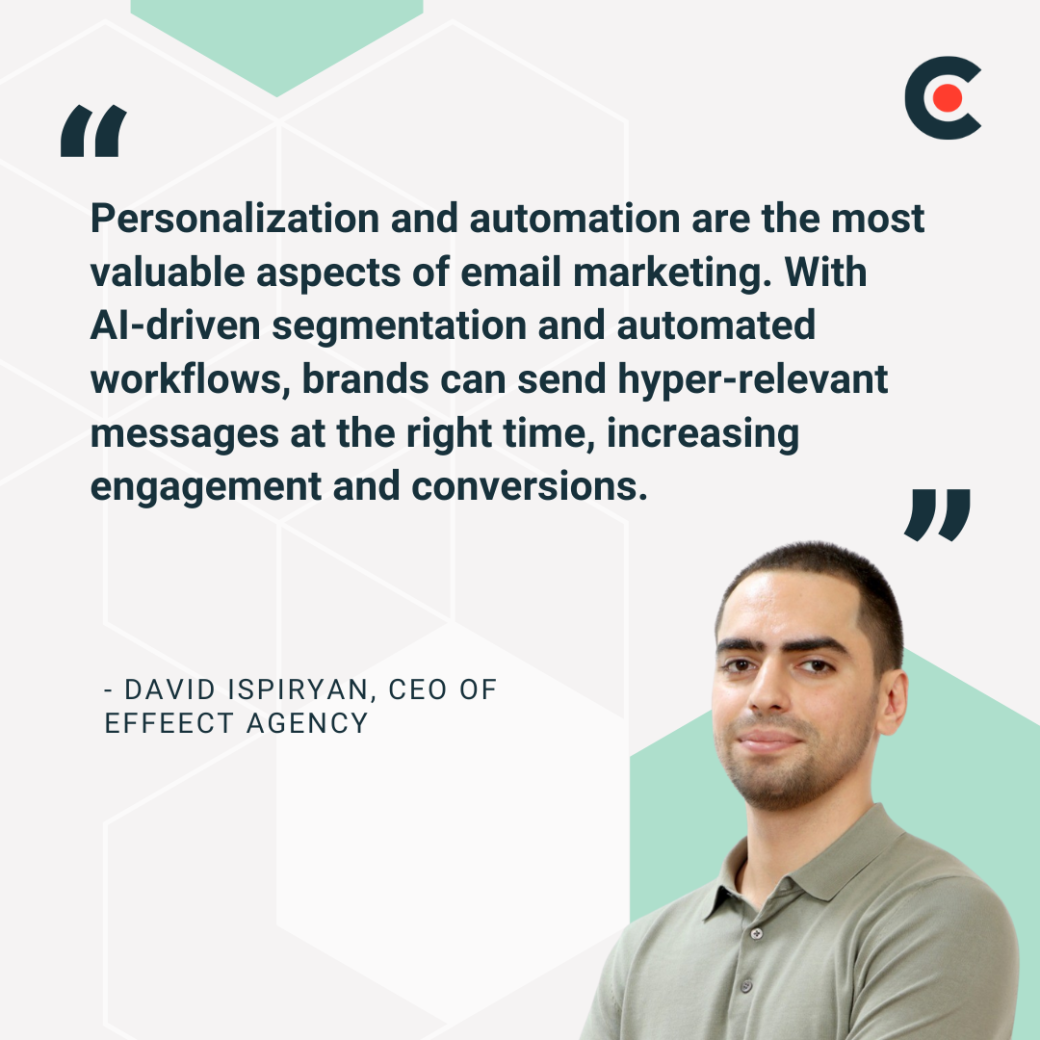
Personalization and Automation: The real potential of email marketing lies in its personalization capabilities. According to Ispiryan, "Personalization and automation are the most valuable aspects of email marketing. With AI-driven segmentation and automated workflows, brands can send hyper-relevant messages at the right time, increasing engagement and conversions." Personalized messages also increase the chances of people opening your email every time since they know you're only sending them relevant things.
After setting up a digital marketing campaign, it's imperative to review it regularly. In this review, you see what's working, what's not, and what to improve.
The first step is to determine how often to review each campaign. As you get started with your campaigns, it is recommended that you analyze data weekly. Once you feel like the campaigns are performing well enough, you may want to then review monthly or even quarterly.
Fix Errors: Your digital marketing campaign could go off the rails if you're not reviewing it regularly. Without reviewing the data, you won't know why or how to fix it.
Continuously Improve: Performance reviews allow for continuous campaign improvements. You can tweak everything from social media posting times to email frequency to maximize results. When you spot and fix issues early on, you increase your return on investment (ROI). Also, continuous optimization means more effective campaigns and better results.
Keep Campaigns Aligned with Goals: Your marketing objectives may change over time. Regular reviews keep your campaigns on the same track as your goals, so you're always focused on what matters most at that moment.
Engagement: What should you review in your digital marketing campaign? Engagement metrics like shares, comments, interactions, and likes matter the most on social media. As Azmy puts it, "Engagement shows that your audience is not only seeing your content but connecting with it." A high engagement rate is a green flag.
Reach: Sometimes, people may not engage with your content, but they do see it. That's your content's reach. Azmy explains that "reach and impressions give you a sense of how wide your net is, even if people aren't clicking or commenting. It's a sign of awareness and exposure, which lays the groundwork for future engagement. Combining engagement with reach helps you understand the overall health of your social presence."
Click-Through Rate (CTR): However, your social presence shouldn't just be limited to how many comments your posts get. Measuring the click-through rate is imperative since "likes and comments can indicate engagement with your content, but are less valuable than earning a visit to your website," as Cunningham explains.
Conversion Rate: The CTR then takes you to the next important metric: conversion rate. It shows the number of people who are actually taking action, such as buying a product, after clicking on a link.
Open Rate: As for email marketing analytics, the open rate is the most obvious one. Azmy says it best, "Open rates are critical — if no one is opening your emails, you've already lost them."
Click-Through Rate (CTR): Like social media, email CTR measurement is just as important because you want people to click on links after opening your email.
Azmy further explains that "CTR tells you how well your email content is compelling people to move beyond the subject line and actually engage with your content. If open rates are high but clicks are low, it might signal that your subject line is working, but your content isn't delivering the value your audience expects. Keep an eye on both metrics to understand what's truly driving performance." Then, the CTR should also lead to conversions, which is why you have to measure the conversion rate.
Bounce and Unsubscribe Rates: In email marketing, two other metrics also come into play. One is the bounce rate, which you must measure to check how many emails didn't get delivered. Two is the unsubscribe rate, which helps you understand if your email content is relevant and valuable to your audience. If both of these spike, this is an indication that you should clean up your email list or personalize your content.
Monitoring these KPIs is only useful if you act on what you learn. Take note of trends or patterns you see in the data and make necessary adjustments to your marketing strategy.
While in-house digital marketing management is an option, it's not always effective. A professional digital marketing agency can bring in the expertise and efficiency you might not have in-house.
The experts at these agencies are familiar with the latest email and social media marketing trends. They know the best practices and mistakes to avoid. Plus, they've got the tools and workflows to keep things running smoothly.
More importantly, they can help you scale your digital marketing campaigns as your audience size or campaign objectives increase. The result is a higher ROI, meaning you'll get the most out of your budget.
Email and social media marketing are a dynamic duo. When they work together, the results speak for themselves.
"When combined," Azmy explains, "social media sparks interest, and email marketing nurtures that interest into deeper engagement and conversions. One is a short, sharp burst of visibility, and the other is a sustained, ongoing relationship. The synergy between the two is where the magic happens."
But don't forget that a lot more goes into a successful digital marketing campaign. Content creation, SEO and PPC, testing, launching, and regular performance reviews all play a part in keeping your campaigns moving forward.
Struggling to stay on top of all these tasks? Download our free Digital Marketing Checklist to maximize campaign results.