
Why Salesforce Staff Augmentation Is Becoming a Strategic Choice
Salesforce staff augmentation is no longer a stop-gap. Learn why more businesses now use external specialists to access expertise, move faster, and scale...
Updated May 29, 2026

Launching a cybersecurity project takes more than merely installing firewalls and setting up access controls. It's a coordinated effort that requires alignment across the board, including internal teams, third-party vendors, and sometimes even customers.
Good documentation and clear communication hold everything together in these cybersecurity projects. Without these two components, key details can be missed or misunderstood. For example, a misapplied update or misunderstood protocol can open up risks you were trying to close.
On the flip side, when your documentation is clear and your communication flows smoothly, your teams move in sync. People understand their roles, and systems stay compliant. Let's learn how to do both of these things the right way.
Looking for a IT Services agency?
Compare our list of top IT Services companies near you
In a business setting, a cybersecurity project is a planned effort to protect digital assets and secure networks. It also helps minimize the risk of cyber threats in an organization.
The project may be a part of a broader IT strategy or launched in response to specific compliance needs. Cybersecurity projects typically have the following components:
The goal of a cybersecurity project is to minimize cyberattacks and costly downtime. However, that only happens when the project is built on clear, well-documented policies and supported by seamless communication.
In cybersecurity projects, product documentation is an important layer of defense. Without well-structured and standardized documentation that governs policies and procedures, users can misunderstand or misuse even the best security tools.
You need clear records that explain how things work and what to do when something goes wrong. Cybersecurity documentation also keeps teams aligned. It keeps everyone, from engineers to executives, in the loop regarding cybersecurity standards and policies.
Such consistency helps avoid confusion and improve response times. More importantly, it keeps your business in line with industry regulations.
Here are the most important document types in a cybersecurity project:
Good documentation should work for everyone (not just the IT department). Your documentation must be in plain language and have organized content that both technical and non-technical staff can navigate.
As security policies change or new threats become prevalent, you must also update cybersecurity documents. Serge Guzenko, Owner and CEO at WEZOM, recommends, ''Build in a cadence — quarterly reviews, incident-based updates, and regulation tracking — and ensure that someone on your team owns that process. Documentation should grow with your systems, not lag behind them.”
Don't forget about access. Store your documentation in a centralized location, but protect it with the right permissions. Only relevant people should have access to sensitive technical and compliance details.
The cybersecurity practices around product documentation for you to follow in your organization are as follows:
Clear communication is just as valuable as solid encryption when it comes to cybersecurity. You can build the strongest defenses, but if your team doesn’t understand them or your customers don’t trust them, you're still exposed.
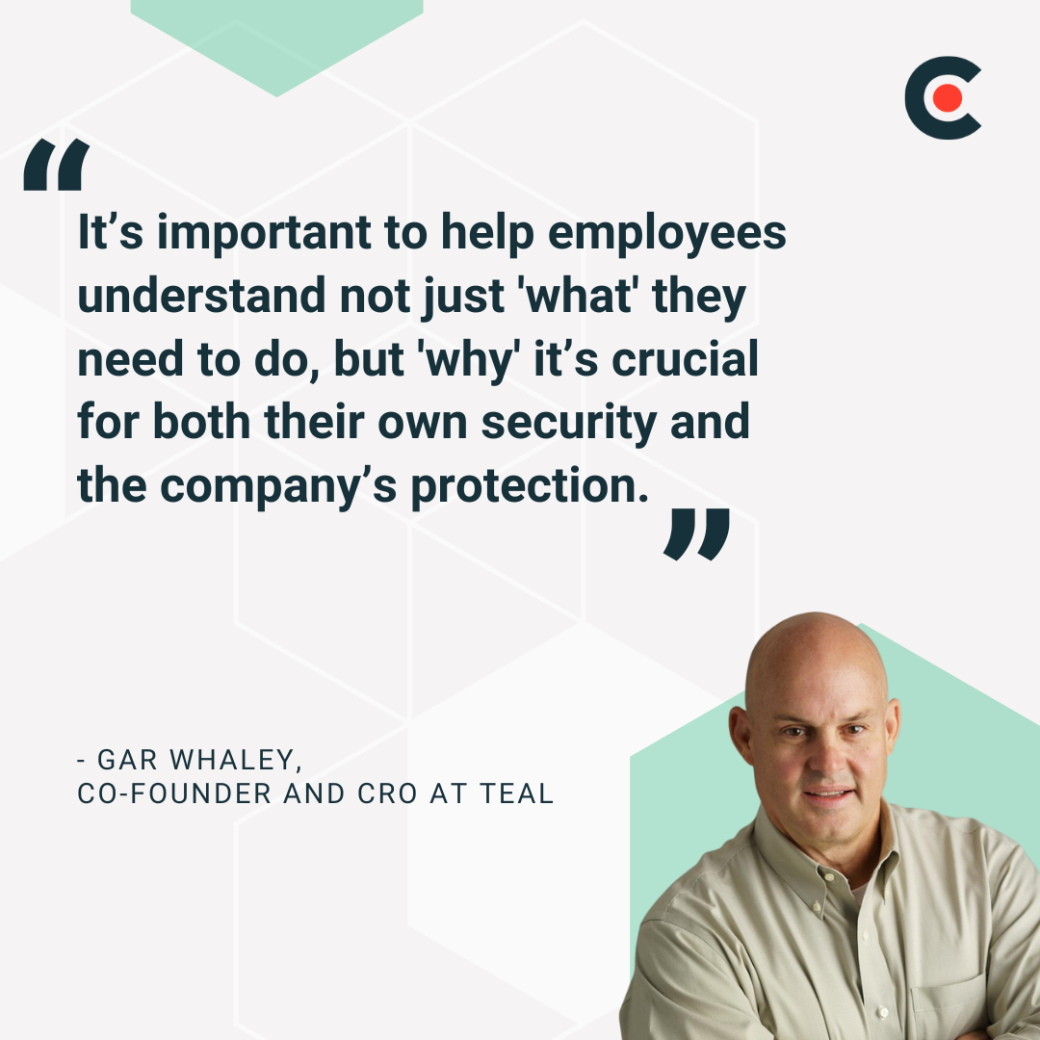
Internally, good content helps employees know what’s expected and why it matters. As Gar Whaley, Co-Founder and CRO at Teal shares, ''It’s important to help employees understand not just 'what' they need to do, but 'why' it’s crucial for both their own security and the company’s protection.”
Externally, your messaging reassures clients, partners, and users that you’re taking their data seriously. The absence of this communication results in:
Instead, you need to balance security awareness with relevant messaging to communicate cybersecurity projects without causing panic.
A cybersecurity communications checklist looks a bit different for every organization. However, here are the standard security awareness tasks you'll want to take.
IT teams need more technical context, while general employees want clear, actionable instructions. As Coy Cardwell, Principal Engineer at First Line Software, explains, ''End users do not typically need long explanations of the 'how' and the 'why' of a security vulnerability but instead just need to know directly, succinctly, what to do and what not to do, with basic examples.”
It's best to skip the jargon and focus on clarity instead. Whaley recommends you ''keep the language simple and use visuals to make things clearer.” Infographics, charts, or short videos often get the message across better than long paragraphs.
Don’t rely on a single email blast. Use your intranet, newsletters, team meetings, and leadership messages to repeat key points in different ways.
Long policy documents don’t work for everyone. As Guzenko notes, ''One of the biggest mistakes I’ve seen is giving every employee the same dense policy document, regardless of their role.”
Instead, offer short, role-specific content for different employees and teams. Whaley shares that ''interactive elements, such as gamification or real-world examples, can make learning more engaging and improve retention.” When training becomes a regular occurrence, you ultimately build a strong security culture.
Make it easy for employees to ask questions by providing a contact for cybersecurity projects. Cardwell emphasizes that ''building long-term trust in the cybersecurity team's mission to protect the company and not push employees with rules helps end-users trust and act as opposed to questioning the value of new protocols.”
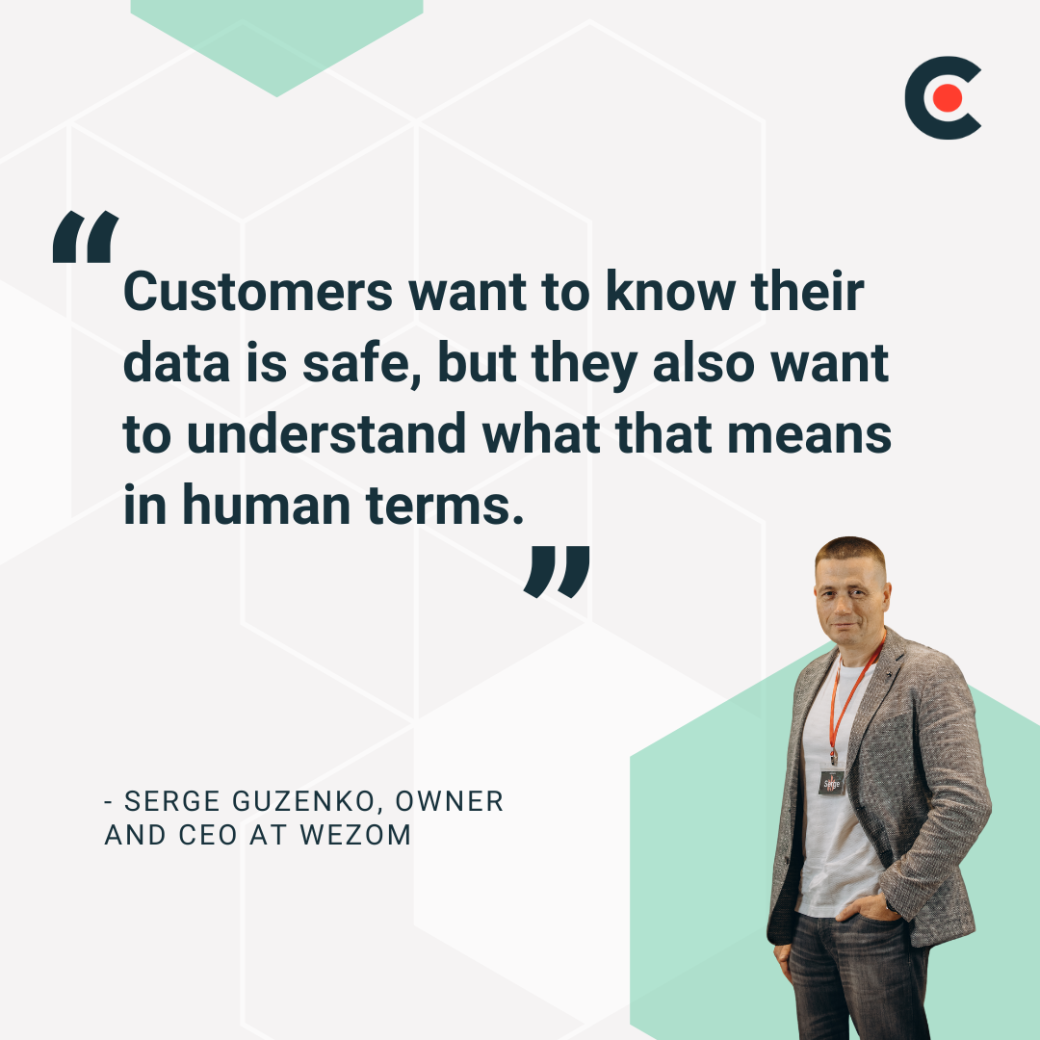
Just like employees, your customers also want to know about cybersecurity practices without having to wade through technical jargon. Guzenko puts it best: ''Customers want to know their data is safe, but they also want to understand what that means in human terms.”
But how do you accomplish this? Whaley recommends using ''simple, customer-friendly language to explain their security measures, focusing on the proactive steps taken to protect data. Highlighting certifications, industry standards, and transparent data practices shows a commitment to security without getting too technical.''
Here are some additional security awareness tasks.
Write a clear privacy and security policy statement that's easy to find on your website. It should be written in plain language with the aim to build trust and not overwhelm customers.
When security policies change or if there’s a breach, communicate early and honestly. Share what happened, what you’ve done to fix it, and how you’re preventing future issues without causing unnecessary alarm.
You can be proactive in addressing customer concerns by creating a knowledge base or an FAQ section. These resources are great ways to keep your customers informed and reduce the number of support tickets your team has to handle.
Cybersecurity projects often require a deep bench of skills, such as technical writing, regulatory knowledge, training design, and communication strategy, to name a few. That’s a lot to handle in-house, especially if your team is already stretched thin.
In instances like this, cybersecurity agencies can be a great resource for businesses. Whaley shares that these agencies can ''provide helpful frameworks and templates like NIST, ISO 27001, and GDPR to get you started. They can assist with creating and updating documents such as the Incident Response Plans, Security System Plans, and other important resources.”
Your internal teams can then collaborate with these professionals to make sure the messaging is on-brand. The collaboration is especially important for:
When selecting a cybersecurity agency, Guzenko recommends going for a partner who ''not only possesses strong expertise and relevant certifications (such as CISSP, CISA, CEH) but also demonstrates extensive practical experience addressing security threats specific to their industry.''
The agency should also offer:
When you outsource, you don't give up control. You're simply bringing in a partner who can help you work smarter and stay compliant with industry regulations.
Cybersecurity projects encompass a lot, including technical implementation and employee training. Structured documentation, such as compliance paperwork and technical guides, helps reduce risk and drive consistency.
Clear communication conveys security measures across departments and to your customers. You can outsource cybersecurity documentation to specialized agencies to maintain accuracy and adherence to industry standards.
For a practical starting point, check out our cybersecurity checklist to determine whether you're covering all your bases.