
Why Salesforce Staff Augmentation Is Becoming a Strategic Choice
Salesforce staff augmentation is no longer a stop-gap. Learn why more businesses now use external specialists to access expertise, move faster, and scale...
Updated May 29, 2026

Cybersecurity threats remain one of the top risks for organizations, but knowing where to start is often the hardest part. A cybersecurity checklist gives teams a structured way to identify gaps, prioritize protections, and stay aligned with compliance requirements. Instead of chasing alerts or ad hoc solutions, a checklist turns security into a repeatable process.
The financial risk is significant. IBM’s 2025 Cost of a Data Breach Report found the global average breach cost dropped to $4.44 million, but costs in the United States climbed to $10.22 million. The same study shows AI is now a factor in both attack methods and defense, with 16% of breaches involving AI-driven tactics like phishing or deepfakes. For leaders, the decision is no longer whether to invest, but how to build a program that reduces risk without slowing business operations.
This guide walks through seven core considerations — from risk assessments and training to vendor management and continuous monitoring — and provides frameworks you can adapt to your own environment.
Looking for a IT Services agency?
Compare our list of top IT Services companies near you
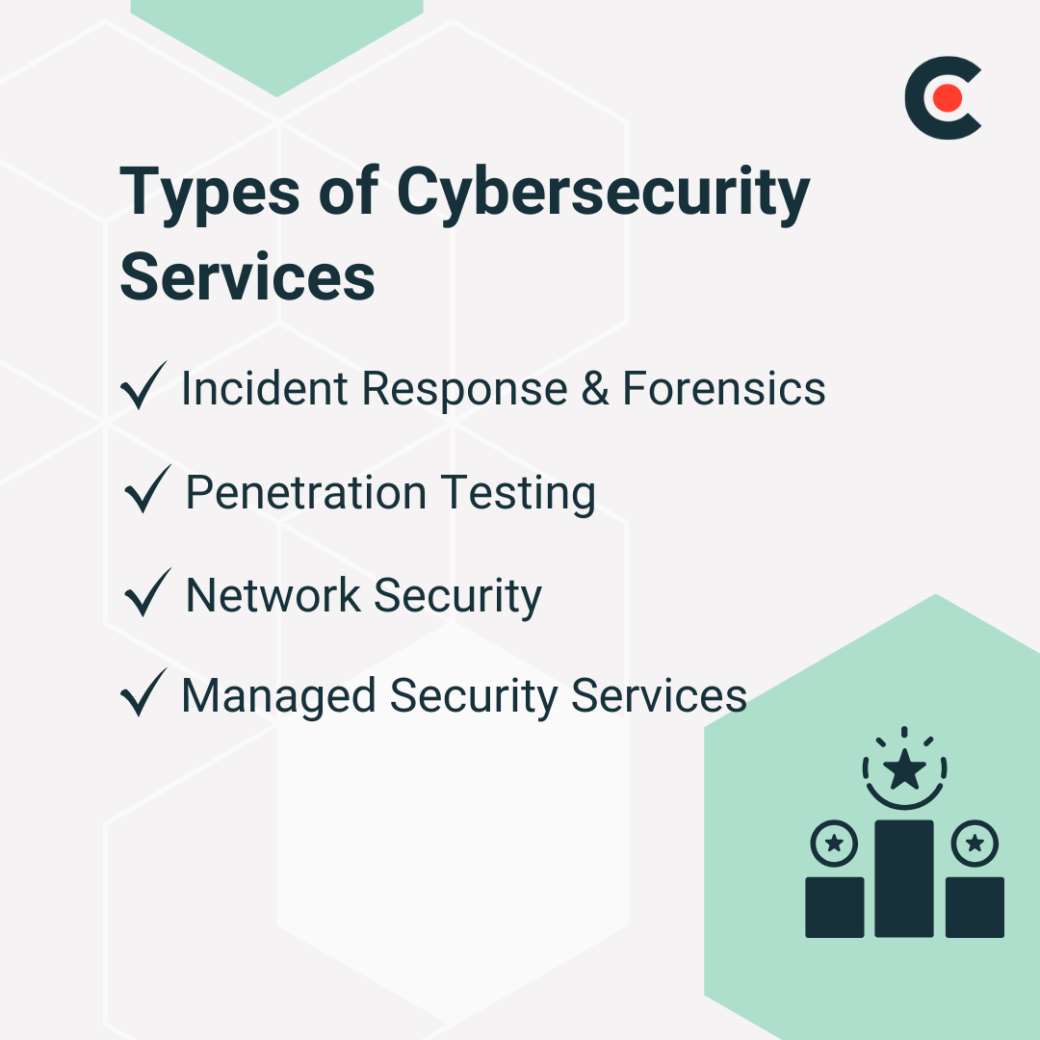
Most companies concentrate their security investments in a handful of areas. Incident response covers what to do when a breach hits. Penetration testing looks for weaknesses before someone else does. Network audits expose misconfigurations and access risks that build up over time. Managed security services extend monitoring around the clock, especially when internal staff can’t provide 24/7 coverage. Data management controls — backups, encryption, retention policies — keep information recoverable and compliant.
None of these pieces stand alone. A test might feed directly into an incident response plan. An audit often drives changes in data handling. Outsourced monitoring can surface the alerts that trigger updates to security policies. When treated as a connected set, these services give leadership a clearer view of risk and a repeatable way to reduce it.
Incident response is built around a repeatable lifecycle: preparation, detection, containment, eradication, recovery, and lessons learned. Forensics adds the investigation layer, capturing evidence to understand what happened and to prevent recurrence.
Penetration tests are essentially dress rehearsals for a breach. Authorized teams try the same moves attackers would, targeting networks, apps, and devices to see what breaks. The real value isn’t just in finding flaws — it’s in ranking them. A penetration test that ends with a hundred low-priority alerts isn’t useful. The best ones narrow in on the gaps that would cause the most damage and hand teams a roadmap for remediation.
Audits are less about one-time checks and more about discipline. Firewall rules need review, segmentation should match business risk, patches have to be current, and multi-factor authentication (MFA) coverage should be universal. When run on a recurring schedule, these audits surface drift before it becomes a breach — the small misconfigurations and outdated controls that add up over time. Learn more about network security services.
Managed security services (MSS) extend monitoring and threat detection to 24/7 coverage. Key considerations include service-level agreements (SLAs) for response times, the scope of monitoring, and vendor evaluation metrics such as reporting transparency and escalation protocols.
Data management controls ensure that sensitive information is available, secure, and compliant. A strong approach includes routine backup and restore testing, encryption of data in transit and at rest, and clear retention policies that balance compliance with storage efficiency.
Organizations often look to established frameworks to guide their security programs, but the options aren’t interchangeable. The NIST Cybersecurity Framework (CSF) is widely adopted in the U.S. and provides a flexible model built around five core functions: Identify, Protect, Detect, Respond, and Recover. It works well for both public and private organizations seeking a scalable foundation.
ISO/IEC 27001 is an international standard that formalizes security controls under a certifiable Information Security Management System (ISMS). Companies working across borders or in industries where certification is required often choose ISO 27001 to demonstrate compliance.
The CIS Controls are a more prescriptive checklist of prioritized actions — practical for small and mid-sized firms that need specific guidance without a full certification process. CIS can serve as a starting point and later scale into NIST or ISO for broader governance.
Framework Comparison
| Framework | Strengths | Best Fit |
| NIST CSF | Flexible, risk-based, widely recognized in U.S. | Public/private orgs needing a scalable model |
| ISO/IEC 27001 | Globally certifiable, strong for audits | Multinationals, regulated industries |
| CIS Controls | Prescriptive, prioritized checklist | SMBs or teams needing immediate guardrails |
A structured checklist does more than provide talking points — it creates a repeatable way to reduce risk. By documenting controls and responsibilities, organizations close common gaps like misconfigured access, unpatched systems, or weak vendor oversight. IBM’s 2025 Cost of a Data Breach Report found organizations with mature incident response programs saved an average of $2.2 million compared to those without.
Checklists also align teams with compliance. Whether mapping controls to HIPAA, PCI DSS, or GDPR, having a documented framework makes audits less disruptive and ensures evidence is ready when regulators ask. For B2B firms, a visible checklist builds vendor confidence. Buyers increasingly demand proof of security practices before signing contracts, and checklists offer that validation clearly and efficiently.
Finally, a checklist is a budget tool. By linking controls to business outcomes — for example, tying training programs to phishing incident rates — leaders can prioritize spending where it reduces the most risk. This shifts security from being viewed as a sunk cost to a measurable investment.
A cybersecurity project touches every part of an organization, from goal-setting and vendor selection to training and ongoing monitoring. Each element influences the others: risk assessments guide budgets, vendor practices affect compliance, and employee readiness shapes how effective incident response will be. A checklist brings these pieces together in a way that keeps them actionable, helping leaders see where gaps exist and how controls reinforce one another over time.
Set clear project boundaries by defining which assets, data, and workflows are in scope. At the same time, evaluate vendors that provide tools or services. A due diligence checklist should include: proof of certifications (SOC 2, ISO/IEC 27001), security policy documentation, breach notification commitments, and evidence of MFA and encryption standards. Choosing the right partners early minimizes long-term risk.
A risk assessment only works if it’s structured. Teams start by cataloging assets and the threats tied to them, then rank those risks by how likely they are to happen and how much damage they could cause. The final step is deciding which risks to address first — usually the ones tied to sensitive data, regulatory pressure, or systems where failure would significantly impact business operations.
Regulatory alignment should be embedded in the project plan. Key controls can be mapped to frameworks like NIST CSF, ISO/IEC 27001, and CIS Controls.
Example mapping (outline):
| Control Area | NIST CSF | ISO/IEC 27001 | CIS Controls |
| Access Management | PR.AC | A.9 | Control 6 |
| Incident Response | RS | A.16 | Control 17 |
| Data Protection | PR.DS | A.8 | Control 3 |
Every checklist should include a defined response plan with assigned roles. The lifecycle follows six stages: preparation, detection, containment, eradication, recovery, and lessons learned. Clear action steps and ownership (e.g., who notifies leadership, who coordinates external vendors) are critical to ensuring a swift, controlled response rather than uncontrolled escalation.
Most breaches still start with a human mistake. Training works best when it’s built into routine: short monthly sessions, quarterly phishing drills, and an annual reset on core policies. The essentials don’t change much — spotting phishing, managing passwords, using devices safely, and knowing how to report an issue — but the delivery must be relevant. Phishing simulations in particular should mirror real tactics so the results provide actionable insights for leadership.
Security must align with existing systems rather than be added as an afterthought. A System Security Plan (SSP) documents how controls apply to each system and forms the basis for certification and accreditation. Updating the SSP with every major change ensures the project integrates smoothly and remains auditable.
Continuous monitoring demonstrates whether security controls are working in practice. Teams track log coverage to confirm they’re collecting enough data, review alerts to cut down false positives, and measure how long it takes to resolve real incidents against service-level targets. Platforms like Splunk, Azure Sentinel, or other SIEM/CSPM tools can help, but the value comes from tuning them so teams see meaningful signals instead of noise.
A checklist brings order to decisions that otherwise get made in silos. When leaders can see which controls tie back to risk, compliance, or vendor requirements, they make sharper calls on where to spend. That discipline pays off — IBM’s 2025 breach study found organizations with structured response programs cut breach costs by millions compared to peers that improvise.
It also signals credibility. Buyers, auditors, and regulators increasingly expect proof of how security is managed. A documented framework shows that controls aren’t just policies on paper but practices being tracked. That visibility reduces risk inside the business and builds confidence outside it.
The choice depends on scope and industry. The NIST Cybersecurity Framework is flexible and widely used in the U.S., making it a strong fit for organizations that want a risk-based model. ISO/IEC 27001 is a certifiable international standard and is often required for global firms or regulated industries that need proof of compliance. The CIS Controls are more prescriptive, offering a prioritized checklist that’s practical for smaller teams or as a starting point. Many companies layer these — using CIS for day-to-day guardrails and mapping to NIST or ISO for governance and audits.
At minimum, review the plan annually, but don’t wait for the calendar if something changes. New systems, a merger, or a breach are all triggers to update roles and playbooks. Testing matters as much as documentation: run tabletop exercises with IT, legal, and communications stakeholders so everyone knows their role under pressure. Plans that aren’t rehearsed often fail when they’re needed most.
A vulnerability scan is automated and broad — it checks systems against known weaknesses and produces a list of potential issues. A penetration test is targeted and manual, simulating real-world attacks to see how far an adversary could actually get. Scans should run frequently, often monthly or quarterly, while penetration tests are usually scheduled annually or after major changes. Using both gives a full picture: scans for coverage, pen tests for depth.
Training has to be continuous to be effective. Short monthly refreshers and quarterly phishing simulations help keep awareness high, while annual policy training ensures baseline knowledge. Effectiveness should be measured — track click rates on simulations and time-to-report suspicious messages. Over time, those metrics show whether building a security-conscious culture or if the program needs adjustment.