
Why Salesforce Staff Augmentation Is Becoming a Strategic Choice
Salesforce staff augmentation is no longer a stop-gap. Learn why more businesses now use external specialists to access expertise, move faster, and scale...
Updated February 26, 2026

One data breach can undo years of customer trust. With the right response strategy, your brand can limit the damage and come back stronger.
Data breaches impact companies of all sizes, leaving havoc in their wake. The damage often extends beyond downtime to touch the core reputation of your brand and customer confidence in it.
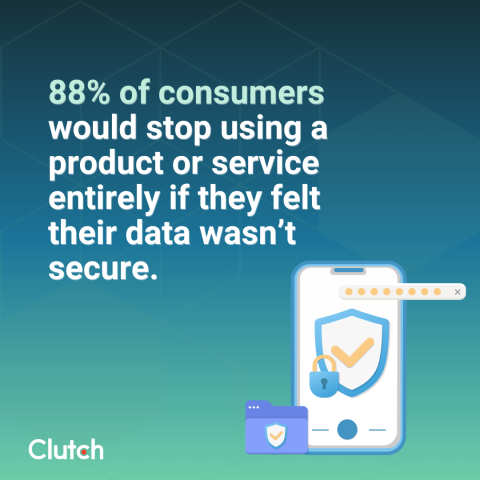
In a recent Clutch survey, 77% say a company’s data privacy policies directly influence their purchasing decisions, and 88% would stop using a product or service entirely if they felt their data wasn’t secure.
Looking for a IT Services agency?
Compare our list of top IT Services companies near you
Perhaps most telling, nearly seven in ten consumers believe the organizations collecting their personal data are fully responsible for keeping it safe. This puts high expectations on small businesses to both protect data and respond swiftly after a breach.
This guide walks small business leaders through a clear, nine-step framework for responding to a data breach. From containment to long-term trust recovery, here’s a data breach response plan you can follow to protect your customers.
The average data breach takes companies 241 days to solve. That means once you’ve detected an intrusion, moving quickly is essential, especially since every additional hour of unchecked exposure can compound the damage.
Some of the top signals of a data breach include:
Once you’ve confirmed something is wrong, containment is the next step. You can start by isolating the impacted systems from the rest of your network and disabling any compromised accounts. Most businesses don’t need to shut everything down, but should take steps to limit the breach’s ability to spread as quickly as possible.
As you work, be sure to preserve logs and documentation. This evidence plays an important role in the investigation process and may be needed in future regulatory compliance actions.
Start by notifying your IT lead, executive leadership, and legal counsel so all can begin working toward the solution. Keeping the circle small initially can help you move faster without creating unnecessary confusion.
Before communicating anything externally, you need a clear picture of what actually happened. This means identifying the exact types of customer data that were exposed, potentially including:
You should also have clarity on the number of customers affected, which accounts may be safe, and what actions users should take to protect themselves, if any.
Consider also whether the breach remains ongoing or is fully contained at the point of your first external communication. Issuing a premature “all-clear” message can erode trust much more than a brief delay in initial outreach.
To get this information, you’ll need to work with your technical team or a forensic specialist. They can help you find the breach’s origin and map its path through your systems so you can communicate about the incident confidently.
Accuracy of messaging at this stage is critical. Overstating the impact creates unnecessary panic, while understating it can be a signal that you weren’t in control of the situation, further eroding trust.
With the breach contained and assessed, it’s time to secure your affected systems to prevent further damage. Start by resetting all potentially compromised credentials to force password changes. You may also want to force or recommend multi-factor authentication (MFA) if it isn’t already required.
Next, apply patches to close the vulnerabilities. For example, if the breach involved a known software flaw, check vendor advisories and apply any available updates. If it came from a configuration error or access control gap, address those root causes internally with your IT team. If you lack the expertise, partner with a specialist.
The NIST Incident Response framework (SP 800-61) is a valuable resource at this stage. It outlines a structured approach to containing the breach and recovering.
Finally, verify the integrity of your backups. Make sure they weren’t compromised in the incident so you can restore your systems from clean copies, if needed. This is also a good opportunity to review and tighten your access controls. Limiting who can access sensitive data through the principle of least privilege can reduce your exposure to future breaches.
This is one of the most critical steps in influencing how customers will remember the breach. It’s important to be transparent and share what you’ve learned as soon as you’re confident about the integrity of the information.
For example, Uber concealed a 2016 breach impacting 57 million users by paying hackers $100,000 to stay quiet. This may have limited the initial reputational impact, but the delay resulted in a $148 million penalty and criminal charges against its former CSO.
Your notification should include:
As you plan your statement, avoid language that minimizes the situation and commit to providing updates as your investigation moves forward. Email is the standard channel for direct notification, but you may want to supplement it with a prominent website banner and social media updates to get the information out broadly.
Notifying customers without providing any actionable guidance can leave them feeling exposed and helpless. That’s why it’s also important to provide clear steps users should take immediately, often including changing their password, enabling MFA, and monitoring their accounts for unusual activity.
You may need to go one step further if particularly sensitive data is involved. Some companies offer complimentary credit monitoring services or identity theft protection when data like financial details, Social Security numbers, or health records are involved. The FTC's data breach response guide recommends offering at least a year of free credit monitoring in these situations.
This is also a moment to demonstrate that your brand understands the human impact of the situation. Acknowledge how inconvenient this may be and provide a dedicated support channel that impacted customers can use to get answers to specific questions. The main goal is to make your brand a resource for people as they navigate the impact.
Data breach notifications are also the law in every U.S. state. Although requirements vary by jurisdiction, they typically include timely notification to affected individuals and, in some cases, to state attorneys or other regulatory bodies. If your business handles financial data, the FTC's Safeguards Rule requires notifying the FTC within 30 days of any breach affecting 500 or more consumers.
This is why involving legal counsel early in the process is so important. An experienced attorney can help you navigate all state and federal requirements, coordinate with regulators, and make sure the communications you send don’t inadvertently add to your liability.
It’s also why you should document every action you take from the moment the breach occurs. That includes:
This documentation is one of the most effective ways to demonstrate your good faith to regulators. Documentation can also minimize liability to any insurance claims you may face in the wake of the attack.
Initial containment doesn’t always mean the threat has ended. You should continue monitoring for signs that stolen data is being misused in the weeks and months after the incident. That means watching:
You’ll need the same level of ongoing monitoring for customer complaints and support tickets. A spike in password reset requests or account lockouts can be a signal that the breach’s impact was wider than you initially thought.
Be proactive about communicating any new information you find. If additional data was compromised or more customers than you thought were impacted, you should disclose it promptly. Customers tend to tolerate bad news better than learning that you withheld information later.
Data breaches are challenging, but they’re also a great opportunity to make your business more resilient to future incidents. You can do that by completing a thorough post-incident review with all stakeholders. Be sure to cover:
The root cause can be especially useful. For example, if the breach came from a missed patch, it's a signal to strengthen your patching policy to close the gap. Or maybe the breach stems from a phishing email, which could lead you to invest in additional employee training.
Update your security policies and processes based on what you learn. The Verizon Data Breach Investigations Report has found that stolen credentials and phishing remain the most common attack vectors. This means ongoing employee education and strong authentication practices are often the best place to start.
It takes time to rebuild customer trust after a data breach, but you can absolutely get there with consistent, visible action over time. For example, you should communicate the improvements you’ve made to your security after the incident. Show customers how you’re protecting them better now — don’t just assume they’ll start trusting you again.
Some companies publish a transparency report or security update that outlines new safeguards, certifications, and third-party audits. These concrete examples of improvement tend to carry more weight than vague reassurance — especially in the B2B space, where your data breach could have a significant impact on another business.
It’s also smart to engage directly with your highest-value impacted customers. Personal outreach, like a call or email, signals that you value the relationship and don’t take their business for granted. Over time, the way you handle a breach can deepen customer loyalty if people believe that you were honest throughout the process and generally committed to making things right.
No business is immune to data breaches, but the amount of lasting damage done to your company can vary widely based on how you respond. The nine steps in this guide provide a practical framework you can refer to the next time you need to resolve a situation like this.
The key takeaways are:
The best time to prepare for a data breach isn’t after the next one happens — it’s now. You can take the first steps by building your incident response plan, testing it regularly, and making sure every person on your team knows the role they’ll play when the moment comes.
![How to Create a Budget for BI & Analytics Services [With Template]](https://img.shgstatic.com/clutch-static-prod/image/resize/715x400/s3fs-public/article/f07e9d6bd89e7f70df9c94301acdd847.png)