
How to Define Brand Values That Guide Every Business Decision
Brand values are the principles that guide company decisions, define what a brand stands for, and shape how it treats customers, employees, and partners.
Updated May 29, 2026

In today’s ultra-competitive market, customers can buy what they need from almost anywhere. So, why do people choose to buy from one brand and not another? While price, convenience, and previous experiences all play a role, a powerful brand story can be the ultimate deciding factor.
Research shows that brands that tell compelling stories see up to 30% more conversions. That can be the difference between hitting a growth target and falling short.
But telling a great story isn't always easy. To get there, you need to tap into your target audience's values, consider long-term strategic factors, and execute a potentially lengthy creative process.
Looking for a Public Relations agency?
Compare our list of top Public Relations companies near you
If what seems like a simple task starts to feel overwhelming, keep reading. This article will get you started on your brand story strategy. By providing a series of actionable steps and expert tips, your business will tell a better story and win more customers.
If you want your story to stand out, you'll need to effectively use the common elements found in all great stories.
Some of the most important elements include:
Donald Miller’s StoryBrand framework is a great way to think about this. He says the general framework you should follow when designing your story is:
A character with a problem meets a guide who gives them a plan and calls them to action, which results in success or failure.
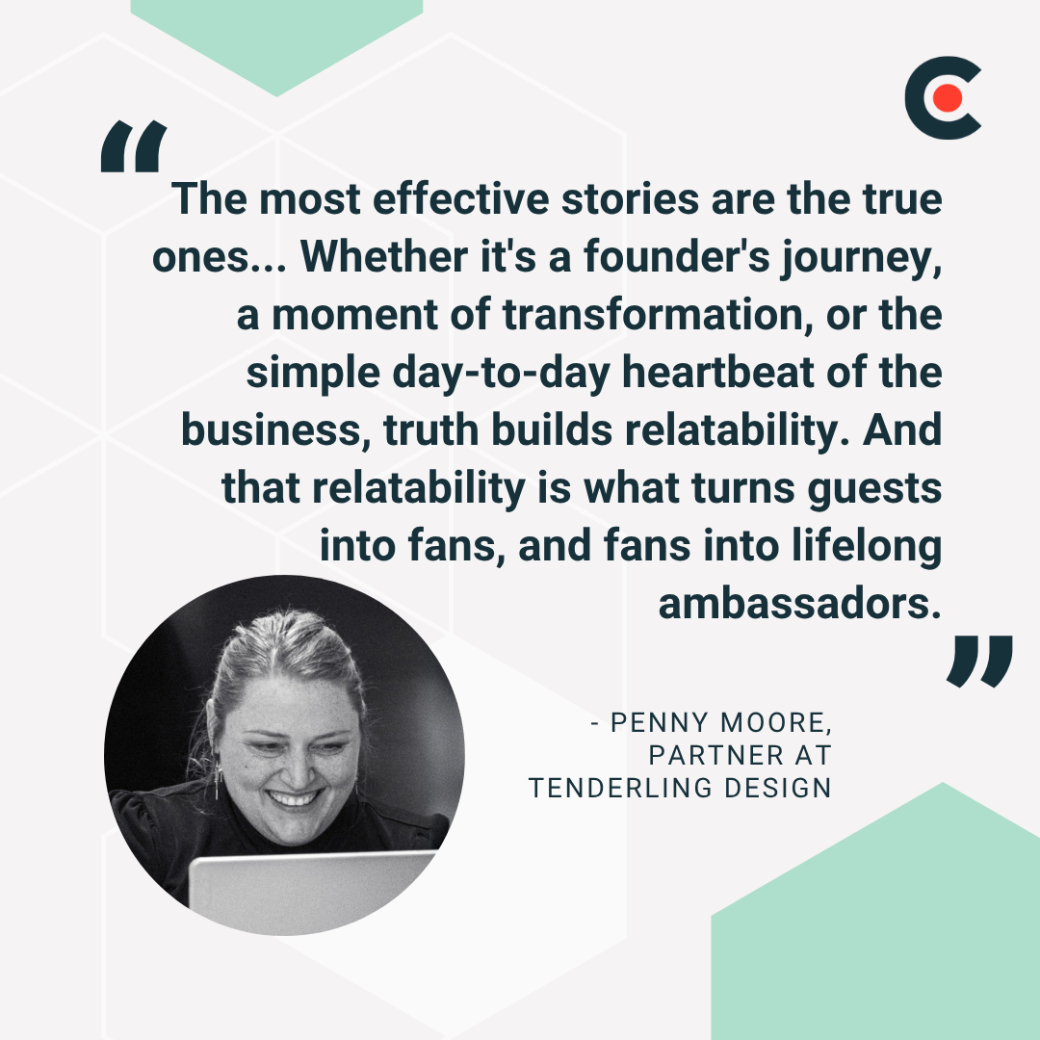
Lastly, make sure honesty is woven throughout your storytelling. As Penny Moore, Partner at Tenderling Design, states, “The most effective stories are the true ones. People are hungry for honesty. When a brand shares real stories — why it exists, who it serves, and the challenges it faces — it fosters emotional alignment. Whether it's a founder's journey, a moment of transformation, or the simple day-to-day heartbeat of the business, truth builds relatability. And that relatability is what turns guests into fans, and fans into lifelong ambassadors.”
Now that you know the core elements of a powerful brand story, let’s discuss how to create yours.
Your core purpose for existing should inform everything else you do. Therefore, the first step is clarifying the main brand narrative and what you want your audience to take away from your brand’s story. To start, get clear on answers to questions such as:
If you need help visualizing how this will go before starting, consider Simon Sinek’s Golden Circle framework. He says that effective organizations start with the “why” before moving on to the “how” and finally, the “what.”
Next, position your customer as the hero. They have a problem, and, as detailed in Miller's StoryBrand framework, your company is a guide that has a plan to help them solve it.
Understand how to communicate effectively with your target audience by homing in on the answers to these questions:
Next, dive deeper into the problems you’re addressing, which may be practical, emotional, or a blend of both. To highlight the problem effectively, dive deep into understanding:
However, it's important to note that the problems you solve can evolve.
For example, Starbucks began by addressing the practical problem of people wanting a great cup of coffee anywhere they go. They created a recognizable brand, invested in quality, and built a reputation for brightening customers’ days.
Then, Starbucks realized it could also address a separate emotional problem that its customers experienced — not having a comfortable, convenient community space to connect with others in between work and home. It built big cafes, developed food items, and trained baristas to create welcoming and lively environments.
In both cases, the brand started by considering what problems its target consumer experienced and how it could address them. This story was reflected throughout the brand and resonated with their audience, resulting in significant success.
Once the problem your brand solves is defined, map the journey that your company is taking customers on. This shows how much value you can bring to their lives.
A great way to map the transformation they experience by using your product or service is to showcase a before-and-after scenario:
For example, a project management software company might use the following transformation story in a commercial for its platform aimed at the everyday office worker:
This is just one example of how explicitly you should try to convey how your company makes a difference for its target audience. To best showcase the transformation, use active, visual language throughout.
Finally, maintain a consistent tone across all customer and lead touchpoints. This strengthens brand recognition, builds trust and credibility, and helps your story stand out in any context.
Companies like Glossier, Notion, and Mailchimp excel in this area. Their consistent use of clean, active language makes the brands feel unique and unified, no matter where users encounter them.
Storytelling drives results by helping brands build trust and emotional connections with their target audiences. It’s a way to differentiate your business in a crowded market and help your messages resonate more deeply.
As Moore says, “In a noisy, fast-paced world, real stories are what cut through. When a brand shares its truth — its values, origin, quirks, and purpose — it forms a human connection. That connection builds trust, and trust builds loyalty.” Increased brand loyalty yields significant benefits for your brand.
To ensure your brand story has the intended effect, you need to track key performance indicators (KPIs) over time. The metrics you watch will depend on your goals, but may include:
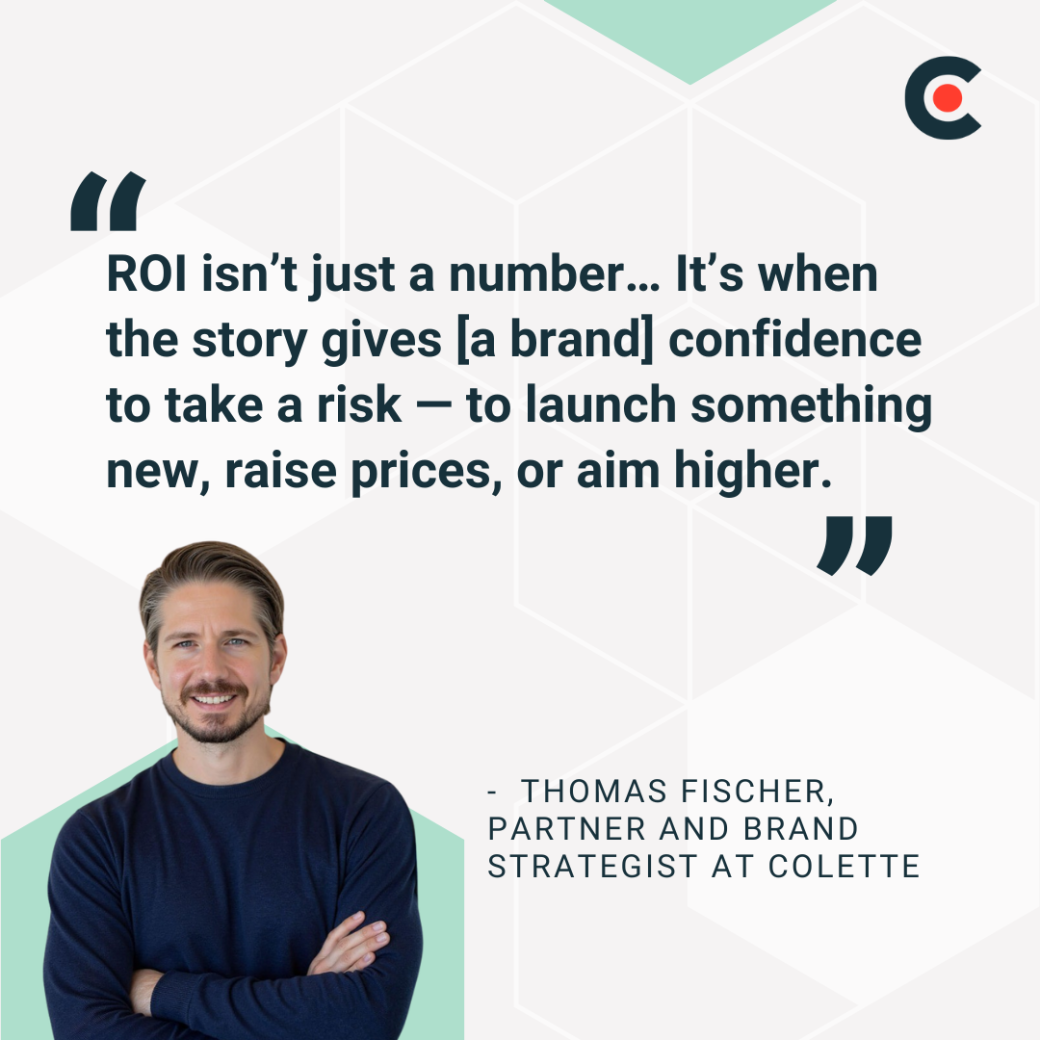
However, Thomas Fischer, Partner and Brand Strategist at Colette, says, “ROI [return on investment] isn’t just a number… It’s when the story gives [a brand] confidence to take a risk — to launch something new, raise prices, or aim higher.” Ultimately, numbers matter, but also watch for other signs of success. If telling a brand story gives you the confidence to take a risk that benefits your business, that could be another version of success.
To make sure your brand storytelling efforts provide you with the most success possible, let's discuss common mistakes you'll want to avoid.
Developing a keen understanding of your target audience is vital. You have to know who you’re talking to in order to craft a story that’s as effective as possible. Great brand stories only resonate because they’re told to the right people.
You can learn more about your audience through internal metrics, social listening activities, industry reports, and other relevant resources.
You’ll struggle to connect with your target audience if you only share vague values and make broad statements. The most effective brand stories appeal maximally to a small segment of consumers. This creates a loyal community that can grow over time. If you try to appeal to too many groups at once, you may not end up connecting with any of them.
While it can be tempting, don't position your brand as the hero in your brand story. For your story to resonate, the customer needs to see themselves in that role. Meanwhile, your brand's role is to guide, support, and equip them with the resources they need to overcome their challenges. That structure is what creates connection, empowerment, and lasting impact.
Finally, don’t try to make your company look perfect when telling its story. Alex Varricchio, Co-Owner of UpHouse, says that honesty is what builds connection: “If you can own what you’re still working on or what you don’t do, people are more likely to believe you when you talk about what you do well.”
No one is perfect, and your goal in building a story brand is to connect with people. So, embrace your imperfections. Doing so could be just what you need to cut through the noise, stand out, and connect with new leads.
The best brand stories are authentic, customer-centric, and designed to connect with a particular audience. Or, as Varricchio reminds us, “The final story isn't just a paragraph of text, it’s a shared understanding of who you are and the future you’re building.”
Brand storytelling is meaningful in customers’ decision-making processes. So, don’t wait any longer to tell yours. Get started today.
Need help turning your brand story into reality? Enlist expert help from a branding agency to craft a story that resonates.