
Task Automation: How to Cut Repetitive Work
Task automation saves time, gets work done faster, and reduces errors. Learn how to automate repetitive tasks step-by-step and how to decide what to automate.
Updated May 27, 2026

Gen Z stepped into the workforce amid a period of rapid technological transformation. With the rise of artificial intelligence and automation reshaping entire industries, this generation is laying the groundwork for their careers in an era that demands constant learning and adaptability.
Data shows that the newest members of the workforce are taking a more active approach to their careers than past generations. Clutch's recent survey of 250 full-time workers found that 47% of entry-level employees have already completed formal AI training.
This isn't just a curiosity; it’s a considered response to a future that is uncertain, but full of opportunity. As workers adapt to new challenges, they sharpen the skills needed to thrive in a dynamic workplace.
Looking for a Artificial Intelligence agency?
Compare our list of top Artificial Intelligence companies near you
These young professionals are not simply waiting to see how automation will impact their careers. Instead, they are positioning themselves to lead the change.
Learn more in, “How Businesses are Embracing AI in the Workplace”
Entry-level jobs across all industries and sectors are at risk of being replaced by AI. Consider data entry clerks, junior analysts, prompt engineers, or even your most basic customer service representatives. These positions are vulnerable to automation because most of the work is repetitive and follows a certain process.
The World Economic Forum recently published a piece discussing which roles are likely to be displaced or changed — and in particular, entry-level positions. Sam Altman, CEO of OpenAI, the company behind ChatGPT, recently shared his thoughts in an interview for the TED podcast, predicting that while AI will eliminate repetitive and monotonous tasks, it could free up workers' creative energies, allowing them to focus on strategic, higher-level work.
Until recently, many people entering the workforce learned from the repetitive tasks that are now being automated. The challenge for Gen Z and those entering the workforce is getting enough experience to take on more strategic roles.
This creates several disadvantages for younger workers, such as a larger skill gap, fewer networking opportunities, and less professional mentorship. Since automation is only becoming more advanced, it may be harder for new workers to progress in their careers using traditional methods.
One way those new to the job market can differentiate themselves is through a solid understanding of AI and how to use it at work.
With AI automation rapidly taking on so much routine work, many early-career workers are finding themselves in survival mode. Their jobs as admin support staff, developers, data-entry workers, customer service representatives, and so on are gradually being replaced by chatbots, virtual assistants, data processors, and more. Consequently, AI training is a way to secure their future.
By learning how to implement AI into their daily workflows, they can boost their productivity and prepare for a job market where understanding AI is crucial. Training classes and online courses can help pave the way.
The reality is, jobs that don't revolve around AI are already starting to look for AI-savvy job candidates. Positions in marketing and sales, human resources, customer service and support, and finance and accounting are increasingly seeking AI skills.
“[T]raining is essential,” says Penny Moore, Founder and Partner of Tenderling Design. “These tools are powerful, but without thoughtful instruction, they can feel either overwhelming or underwhelming.” For AI to truly have an impact, employees at all levels need to be able to identify how to create effective prompts and assess the quality of outputs.
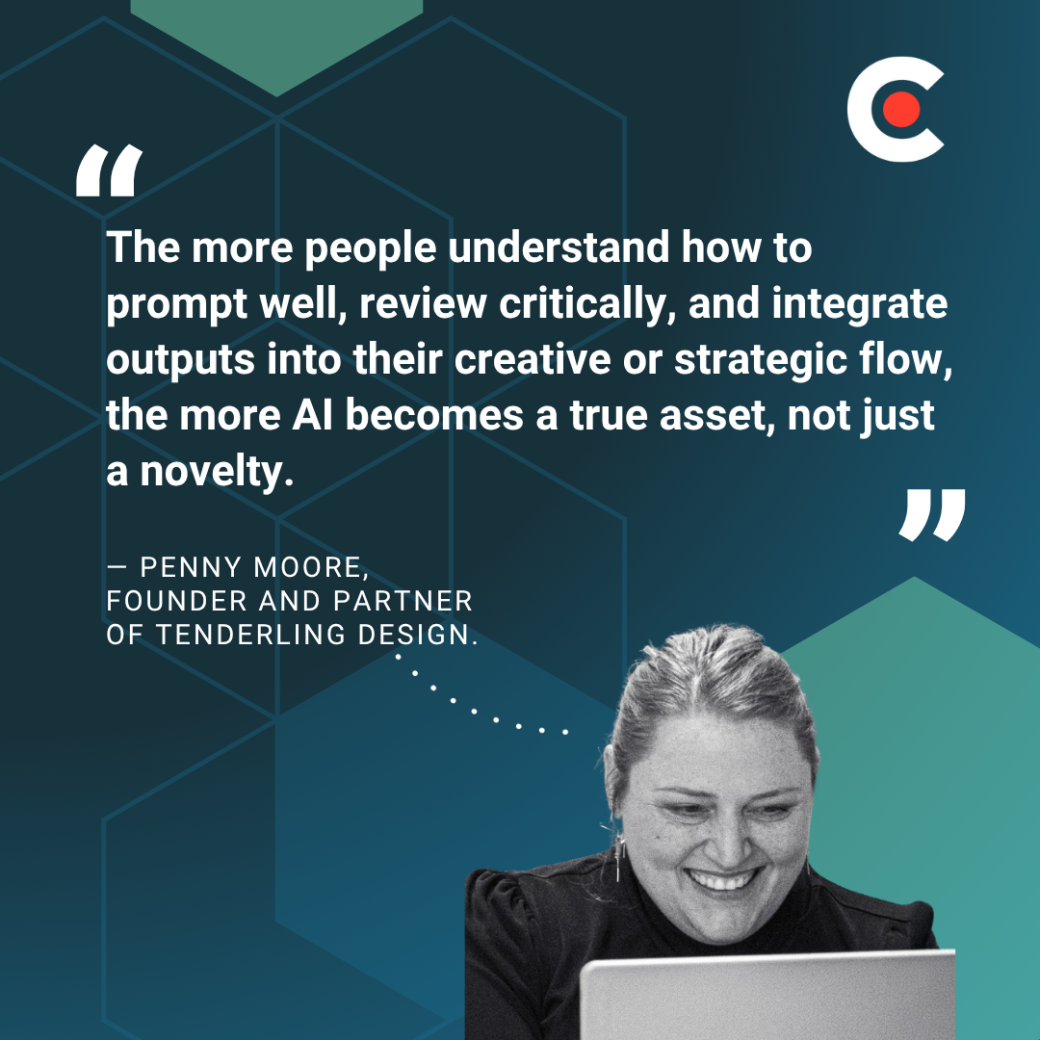
Learning the ins and outs of AI as an entry-level employee can help you stand out, open new doors, or contribute to your work in a more intelligent and strategic manner. “AI is not about replacing people—it’s about amplifying human work,” says Moore. “The more people understand how to prompt well, review critically, and integrate outputs into their creative or strategic flow, the more AI becomes a true asset, not just a novelty.”
For many, this is a skill that needs to be practiced. AI courses and training can ensure that people are using AI ethically, efficiently, and effectively.
There are many workers entering the workforce with a strong desire to be on the AI frontier, too. They don't just want to level up their careers. They want to be a part of the future, whether it's in the field of robotics, machine learning, development, or data science.
Entry-level workers aren’t just responding to change — they’re actively anticipating it, and in many cases, welcoming it.
Junior-level workers are doing more than just studying up on AI. They are actively future-proofing their careers by learning how they can use it to get ahead. With proper training, they will be able to work more efficiently and transition into new roles.
Possessing AI skills can be a great benefit to you if you're job hunting. In a competitive job market, candidates can distinguish themselves by highlighting their real-world AI experience. Consider a recent graduate who’s applying for a business analyst position. With the skills to automate reports or create data visualizations using machine learning, they bring added value to the company. Furthermore, understanding predictive analytics tools will help them proactively identify and solve problems.
Productive entry-level hires are using AI to eliminate repetitive work in order to spend time on more consequential tasks.
For example, prompt engineers use AI to generate and optimize prompts. They develop stronger, more useful outputs for a variety of tasks. By automating part of the trial-and-error process, they're able to focus more on strategy and complex problem-solving – both useful skills to grow their future with greater career potential.
Early-career professionals are increasingly able to land jobs in AI-adjacent roles as they become more familiar with AI tools. For example:
The idea that professionals can pivot into AI-related roles is not only valid but increasingly relevant in today’s job market. The beauty of AI and related fields is that they are expansive and multidisciplinary, opening doors for individuals with a diverse array of skills and backgrounds to contribute meaningfully.
There are various online certifications you can obtain to learn these skills. Here are some of the many options available:
Training on the job allows workers to acquire hands-on experience and enhance their skills while actively engaged in their work environment. Companies may offer formal training programs or provide mentorship for employees to further develop skills in their respective roles.
In addition, workers can explore workshops, online courses, certifications, and networking events that are specific to their industry. There are many online platforms, such as Coursera, LinkedIn Learning, and Udemy, that offer training resources across a wide range of fields. Joining professional associations or attending industry conferences can also present opportunities for learning. By utilizing these resources, employees can stay up-to-date with industry trends and continue to advance in their careers.
AI presents a paradox: the generation most likely to be impacted by automation is also the generation most likely to be prepared to overcome and succeed. Gen Z workers will see the future of work unfold before them, but they also have a hand in creating it.
These workers are not only interested in learning about AI adoption and how it applies to their work — they’re also quickly learning and utilizing AI in their roles. The impact of this on their personal productivity and value-add is clear, but there’s also a strong correlation to company performance and growth. Early adopters are positioned to be the biggest contributors to this technological shift that's changing how business is done.
Companies that take advantage of the trend by developing and onboarding Gen Z talent will be better positioned to use AI effectively. Gen Z’s fluency with technology and comfort with innovation make this generation a critical part of the solution to building a more efficient, innovative, secure, and agile organization.
Gen Z has grown up with smartphones and social media, and now they’re learning to lead with AI. For Gen Z, AI is not something that is happening to them passively. They are leading the charge. The readiness this generation has today will set the stage for success tomorrow. That’s why developing Gen Z talent is a savvy bet for any organization looking to win in the age of AI.