
How to Define Brand Values That Guide Every Business Decision
Brand values are the principles that guide company decisions, define what a brand stands for, and shape how it treats customers, employees, and partners.
Updated May 29, 2026

If you want your brand to be remembered, tell a story—55% of consumers are more likely to remember a story than a set of facts.
Building a narrative around your company and its products can punch through the noise, connect with more customers, and boost sales.
Brand storytelling is the strategic use of narrative to communicate your company's mission, values, and culture. The goal of the strategy isn’t to sell more products immediately but to build your image, establish what your company stands for, and shape how the average consumer views your brand.
Looking for a Public Relations agency?
Compare our list of top Public Relations companies near you
Thomas Fischer, Partner and Brand Strategist at Colette, neatly summarizes the value of brand storytelling: “It brings clarity. It brings trust. The brands we remember are the ones that made us feel something real.” But how do you do it?
This guide is the perfect place to start. Keep reading for storytelling marketing best practices, step-by-step instructions, and more tips for creating powerful stories to improve your results.
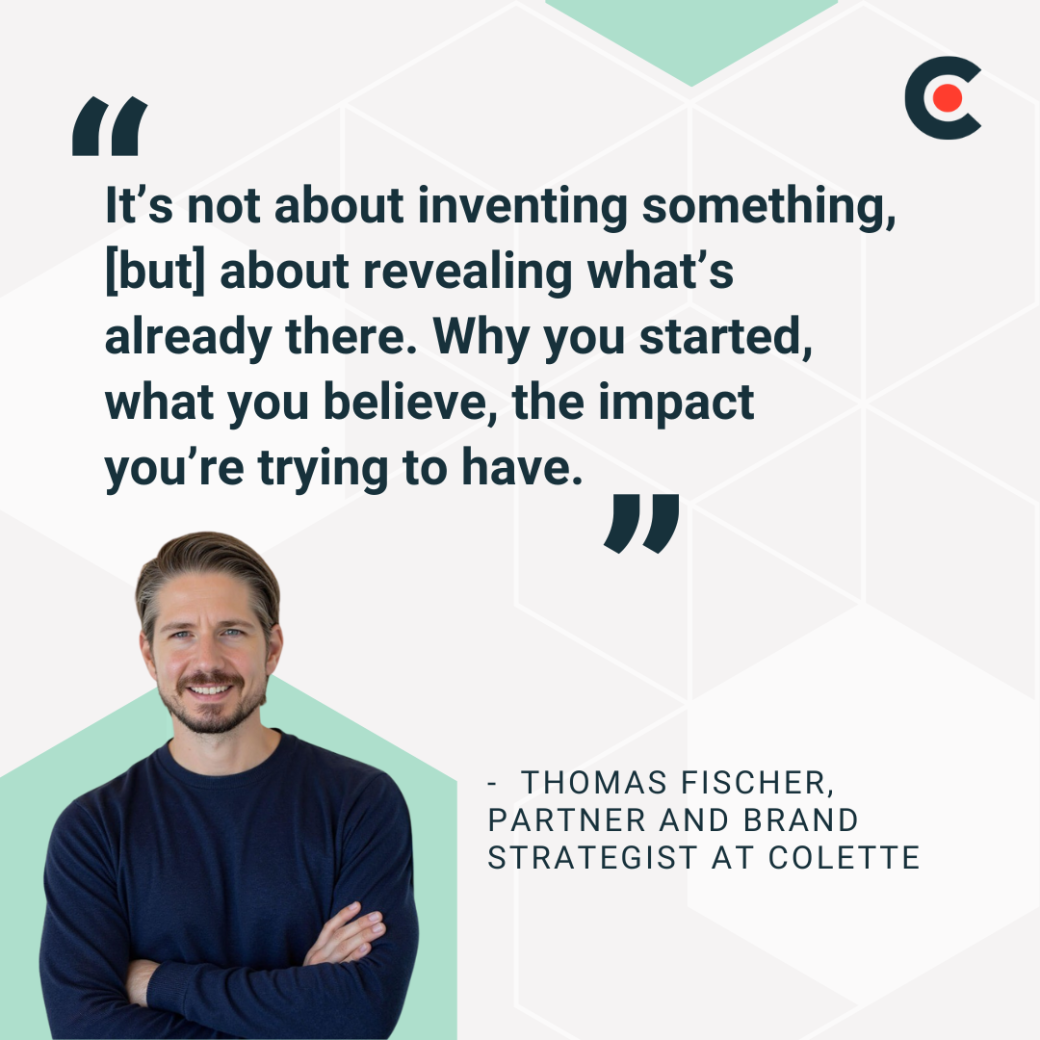
So what makes a compelling brand story? In general, aim for authenticity over polish. Fischer says, “It’s not about inventing something, [but] about revealing what’s already there. Why you started, what you believe, the impact you’re trying to have.”
Here are some aspects to focus on while chiseling away at your brand’s narrative:
Your story should be unique to your company, but make sure to feature these elements while telling it to help your stories resonate better.
While every company’s story is unique, these four steps will guide your process in telling yours:
Start by developing the core narrative that will define your brand. Fischer explains that this should be “the why, the emotion, the thing that sets you apart even if you can’t quite name it yet.”
If you’re having trouble, start by thinking about why your founder created the company.
Example: Someone might have founded a sneaker company because they were tired of spending hundreds on fashionable shoes. Their core narrative would get into the frustration of over-priced sneakers, talk about the founder’s unique vision for changing the industry, and position the company as a changemaker in the consumer's mind.
Make sure the story you tell supports your brand’s business goals. Penny Moore, Partner at Tenderling Design, suggests “mapping out a narrative structure that supports the brand’s purpose, identity, and goals.”
Depending on the goal, you will likely need distinct stories.
Examples:
Look for ways to position your customer as the central figure in the story you tell. This helps customers feel seen and positions your brand as a natural solution for their challenges.
Customer-centric stories generally follow a basic framework:
Moore is a big supporter of this model, explaining that it “taps into timeless narrative instincts — challenge, transformation, triumph. When used with authenticity and heart, it doesn’t just sell — it inspires.”
A great branding story can transform your marketing materials into something bigger.
Example: Nike's tag line, "Just Do It," is one famous example that positions the customer as the hero of their fitness or athletic journey.
The formats and channels you choose will have an impact on the effectiveness of your storytelling campaigns. Think about your goals, then consider which formats and channels are best for reaching them.
Examples:
You can also repurpose the same piece of content to help you achieve multiple objectives.
Example: Publish a longer YouTube video to build a stronger emotional connection with your customers and then share short clips from the video on TikTok to maximize brand awareness.
Finally, use feedback and data to refine and improve your storytelling over time. You're unlikely to tell the perfect story the first time you try. But you can get there by watching how customers respond and adjusting as many times as necessary.
Examples:
If you’re going to invest time and money in brand stories, you’ll want to make sure the return on investment is worth it. Here are five types of metrics to focus on to make your calculations.
Humans are designed to pay attention to stories. Psychologists say our brains have evolved to generate real emotional and behavioral responses when hearing a story. This triggers the imagination, making the listener feel connected in a way that they wouldn't if you were sharing facts instead.
When the content you share is crafted as a narrative, the listener’s brain becomes more active, they get involved emotionally, and the net result is improved engagement.
This can turn passive browsers into interested readers and, eventually, paying customers. You can track changes in engagement with metrics such as:
Pro Tip: The metrics to track depend on your goals. For example, track share and comment rates if you want to increase your social following through storytelling. If you're trying to show people what makes your product special with a demo, you could look at video completion rates.
It’s not always enough for people to believe that your product can help them. A company wins a customer when that person believes it has the right rational and emotional solution for them. They also may need to trust that your company is the right partner for their long-term goals.
Storytelling helps with all of these factors. It humanizes your brand, builds emotional trust, and ultimately boosts your conversion rates, which you can track with metrics like:
Pro Tip: If you don't immediately see an increase in your conversion rate, you may need to change something about your campaign. A/B testing helps you refine an underperforming story by testing how viewers react to changing specific elements, like copy or visuals.
Storytelling also improves brand recall by giving people a framework to remember what your company stands for and the products it sells. Plus, people tend to repeat stories more often than facts. This means telling a great story can generate organic buzz around your brand, expanding your reach without extra ad spend.
Fischer explains: “If your story is working... clients feel like they 'get' you faster. ... You get better leads [and] the right kind of projects.”
Tracking how brand awareness levels change can be tricky, but these metrics are a good place to start:
Pro Tip: Pay attention to how people talk about your digital storytelling posts. If they're using language that doesn't reflect your intentions, you may need to change something.
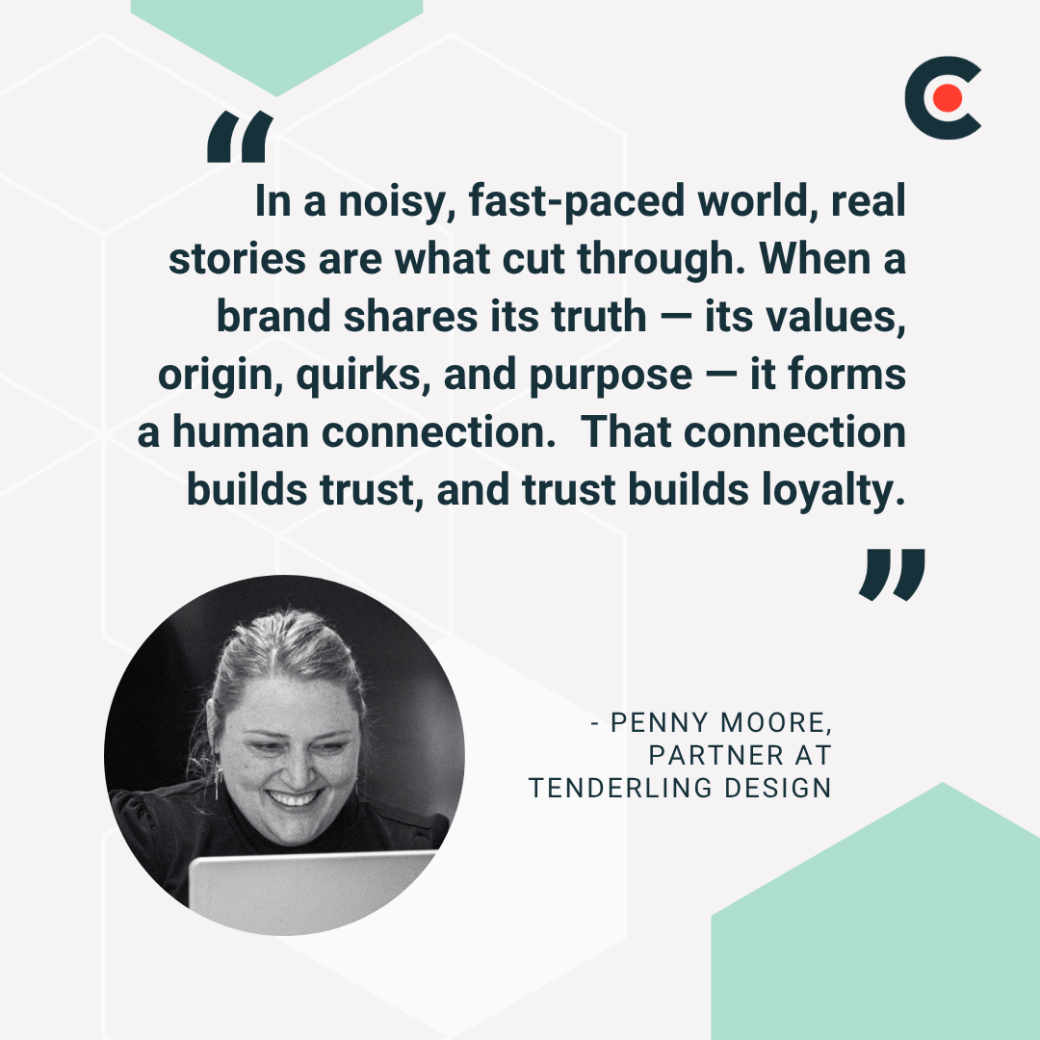
Storytelling can increase loyalty by helping people feel more connected to your brand. Moore puts it like this: “In a noisy, fast-paced world, real stories are what cut through. When a brand shares its truth — its values, origin, quirks, and purpose — it forms a human connection. That connection builds trust, and trust builds loyalty.”
This means more repeat purchases and a higher average lifetime value per customer, which you can track with metrics such as:
Pro Tip: Strengthen your bond with customers further by offering exclusive access to communities, referral incentives, loyalty programs, and other benefits designed to show how much their loyalty means to your business.
Great stories take on a life of their own. Or, as Moore puts it, “When your audience starts telling your story back to you, you know it’s working.”
A story that really resonates gets people talking, generating organic promotion, greater brand recognition, and improved sales. To track your qualitative resonance, analyze:
Pro Tip: Get more value out of a story that resonates by featuring users' posts, comments, or reviews in your content. This can increase loyalty while encouraging other users to share their experiences with your company.
The story your brand tells will directly impact how people view it. This means it’s worth taking the time and investing some resources to get this right. You can do that internally or outsource the process.
Branding agencies specialize in creative storytelling for revenue growth. They can take your vision and help you execute it, or design the narrative from scratch with your input. Either way, you’ll get a team of experts working on your narrative, increasing your odds of getting it right.
When outsourcing, look for:
Your exact criteria will vary based on your goals. So think through what you're prioritizing in an agency hire before beginning the interview process.
Storytelling has become essential as brands struggle to stand out in crowded digital marketplaces. A powerful story not only grabs attention but also increases engagement, drives more conversions, and boosts loyalty to improve your average lifetime value per customer.
As Moore reminds us, “ROI is more than just numbers — it’s about resonance. ... Good storytelling draws the community in and keeps them there. It’s a long-term investment that pays off in loyalty, reputation, and sustained growth.”
Why wait to get started on reaping these benefits? You can take the first step by connecting with branding agencies that can bring your stories to life.