Bringing AI into the SDLC: Promises, Challenges, and Best Practices
Explore the key implications of AI SDLC and its main challenges. We also provide tips and guidelines to help you overcome the obstacles of AI-powered SDLC.
Updated November 18, 2025

China's tech industry has long been known for its grueling 996 work culture, and recent reports suggest this extreme hustle mentality is spreading to tech hubs like Silicon Valley, too. But is that indicative of the rest of the workforce?
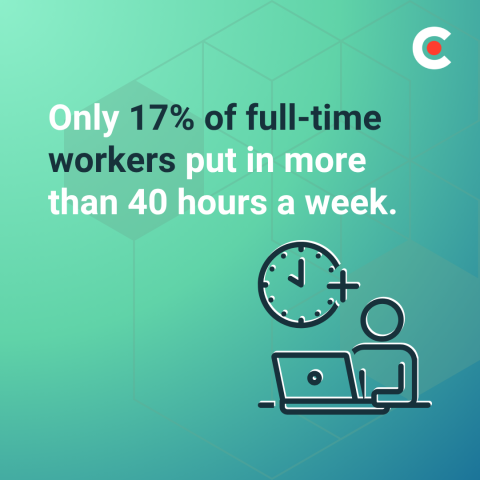
Not quite. According to new data from Clutch, only 17% of full-time workers put in more than 40 hours a week, and only 2% work over 60 hours a week.
Looking for a Artificial Intelligence agency?
Compare our list of top Artificial Intelligence companies near you
But what exactly is 996 culture, and why is logging such extreme hours so risky? This article explores the origins of this hustle mindset, the pressures that sustain it, and how AI is both intensifying the workload and emerging as a potential solution.
996 work culture is an intense schedule that involves working from 9 a.m. to 9 p.m., six days a week, for a total of 72 hours. Chinese tech companies like Alibaba and ByteDance invented this culture in the early 2010s, but China banned it in 2021.
Despite this, 996 culture has spread outside of Asia, fascinating tech leaders and journalists. Axios correspondent Emily Peck declared, "The hottest number in tech these days is 996."
Morning Brew writer Molly Liebergall seemed more troubled by the trend, writing, "Silicon Valley loves the '996' grindset trend" and, "Workers appear to be grinding their lives away." It might be trendy, but it's definitely not universally celebrated.
What's behind this shift? The tech world is incredibly competitive, for one. The AI and business-to-business pies may feel huge, but there are a lot of businesses vying for those slices. As Pylon CEO Marty Kausas wrote in a LinkedIn post, "I've been putting in ~92 hours / week for the past 3 weeks... We just really, really want to win." With this constant pressure to innovate and sell, employees may feel obligated to work more and get results.
Hustle culture plays a role, too. It's all about reaching professional success, no matter the cost. Dating, children's T-ball games, home-cooked meals — they're just distractions for hardcore hustlers.
At some companies, employees are putting it all on the line to win the AI race. That means plenty of late nights scarfing takeout over computer keyboards.
In July 2025, OpenAI announced that the entire company was shutting down for a week to let employees "rest and recharge." Workers were reportedly logging 80 hours a week, leading to widespread burnout.
OpenAI isn't the only company embracing "grindcore tech culture." Alex Reibman, cofounder of Agency, said, "Working 80, 90 hours a week is no stretch of the imagination. It's something that is basically required if you want to build here." This all-or-nothing attitude may make employees feel pressured to stay late, even if companies don't explicitly tell them, "You'd better be here until 9 p.m." It's the culture.
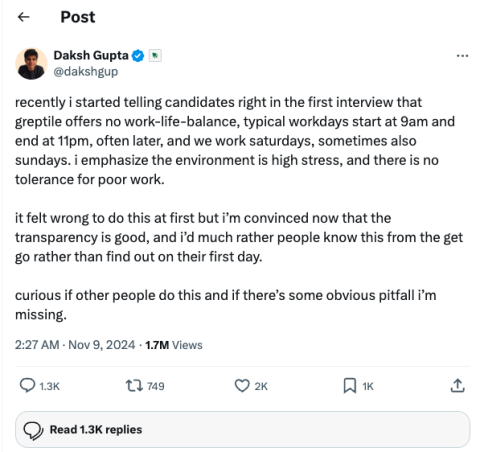
Daksh Gupta, founder of the AI startup Greptile, echoed that sentiment in a blunt tweet: "recently i started telling candidates right in the first interview that greptile offers no work-life-balance, typical workdays start at 9am and end at 11pm, often later, and we work saturdays, sometimes also sundays."
AI executives may believe that this stressful, no-mistakes environment gives them a competitive edge. It might also bring workers together as they share late-night dinners and commiserate about yet another Saturday at the office.
For some busy employees, though, AI is a remedy, not a reason to overwork. This technology can reduce repetitive work, such as debugging thousands of lines of code and writing reports. That may lead to fewer people clocking extreme hours.
With all the articles about 996 work culture, you might assume that nearly every worker is trudging into the office on Saturday morning. But that's not exactly true.
Clutch data shows that only 2% of employees work more than 60 hours per week. Overhyped? Yes. But overwork is still real, even if it's not as extreme as six 12-hour shifts a week.

Still, overwork remains a serious problem, especially in tech. Working extra hours may sound great for some business leaders, but putting in twice as many hours doesn't mean that double the work gets done. Plus, overwork has many negative consequences for people in tech and other industries, including:
The evidence is clear. Overwork may lead to short-term gains, but it's not good for employees, companies, or even society.
With so much at stake for workers and businesses, many regions have created labor laws that protect employees from extreme work hours.
In the United States, there's no maximum number of hours that employees over 16 years can work in a week. However, the Fair Labor Standards Act requires companies to pay overtime if non-exempt employees work more than 40 hours in a 168-hour period.
South Korea is stricter. Employees can only work a maximum of 52 hours a week (including 12 hours of overtime). In some cases, though, the government may grant companies special permission to exceed this limit. One example is semiconductor companies, which may ask employees to clock more hours during time-sensitive projects.
Companies that don't treat employees ethically and lawfully may face legal consequences. One cautionary tale is Tesla, which was sued by factory workers after it required them to work long hours without proper overtime pay and meal breaks.
Meanwhile, the U.S. Department of Labor recovered $555,000 from Intuit after the tech company didn't pay employees for all their overtime. Beyond finances, incidents like these can seriously hurt a business's reputation.
AI doesn't have to be the villain. This technology can help tech workers get back to their standard 9-to-5 by:
A recent Clutch survey found that many software developers already use AI to write (48%) and test (36%) code. If the software works, it shouldn't matter how many hours the creators put in.
This shift may seem small, but it can lead to a more balanced approach, where technology improves work-life balance rather than encouraging employees to clock as many hours as possible.
Even the most disciplined employees may need to occasionally pull an all-nighter or work a Saturday afternoon. But 996 work culture normalizes excessive work hours. Employees who embrace this mindset — or feel forced to follow it to keep their jobs — work demanding hours six days a week.
Even at companies where 996 culture isn't the norm, overwork can cause problems. For employees, more time glued to a desk means less time with loved ones. Overwork can also lead to a host of health problems, from headaches to stroke.
As 996 becomes trendier, AI is an overworked employee's biggest ally. By using this technology to automate tasks, workers can lighten their to-do lists and take back precious hours. That means more work-life balance and, ultimately, a more creative, sustainable workforce. Everyone wins.