
How to Define Brand Values That Guide Every Business Decision
Brand values are the principles that guide company decisions, define what a brand stands for, and shape how it treats customers, employees, and partners.
Updated May 29, 2026

In a world where consumers have more choices than ever, one question keeps brand strategists up at night: How do you get customers to stay loyal?
The answer goes beyond offering low prices and great products. To win loyalty, you'll need to build trust, form emotional connections, and show your customers they can rely on you time and time again.
The process won't be easy, but the benefits you can unlock are profound. Brand loyalty encourages clients to choose your products over the competition, even when your prices and promotions aren't as strong. This can improve revenue by increasing your average lifetime value per customer while also generating more organic marketing buzz for your business.
Looking for a Public Relations agency?
Compare our list of top Public Relations companies near you
So, how do you stand out from the competition to build loyalty, especially as it fades among younger generations? This guide will help with actionable tips, expert advice, and more guidance for building brand loyalty in 2025.
Win consumer loyalty, increase conversion rates, and grow your company with these eight expert-backed strategies:
Start by re-evaluating the factors that matter most to your customers. That could be price, an improved UX, or anything else you've identified through data and direct customer feedback.
David Gaz, Managing Partner of The Bureau of Small Projects, says, “It’s all about being different and better than your competitors. Not better at everything, of course, but better for what your client needs.” He recommends finding a touchpoint that customers value but your competitors aren’t addressing, and focusing your attention there. If you can create more value for the average customer, it could be just what your business needs to start building loyalty.

Next, look for ways to bring more personalization to the customer’s shopping experience. You can do this by recommending products based on previous shopping behavior, sharing more user-tailored content, and targeting customers with individualized promotions.
Researchers say people are 40% more likely to spend more than planned when they experience a highly personalized shopping journey. This affinity for personalization can also increase brand loyalty by giving customers a digital experience that’s more closely aligned with what they are looking for or desire. Customers who enjoy your personalized shopping experience are likely to return to your brand when they need similar products in the future.
When a client feels an emotional bond to your brand, they’re significantly more likely to return to it in the future and advocate for it with their friends and family. Our experts have shared their top tips for creating emotional connections with customers:
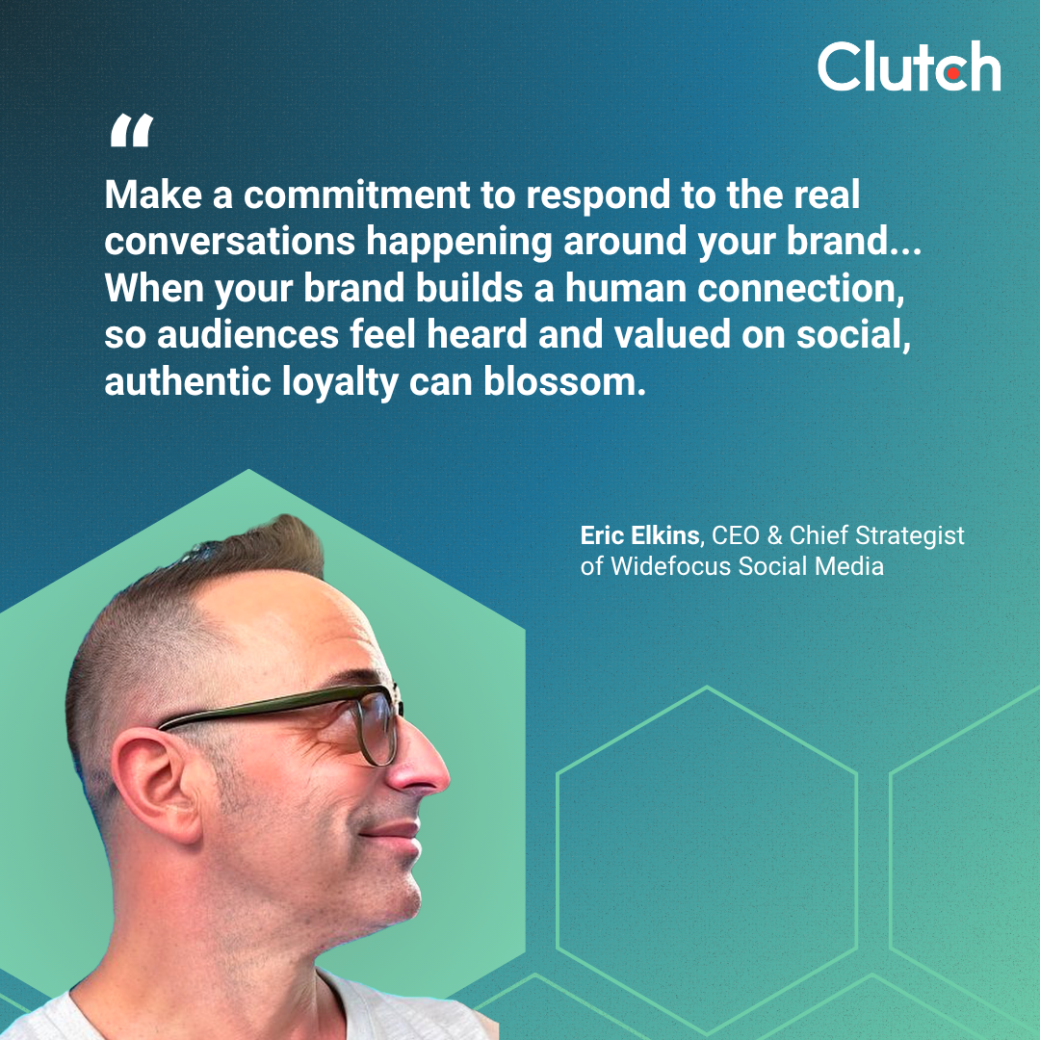
The keys are prioritizing what consumers want and speaking in an authentic tone that mirrors your brand image. It’ll also be important to track data over time to see if your efforts have their intended impact.
Customers give their loyalty to brands that they trust to continue meeting their expectations. To build that trust, you’ll need to be honest and transparent about your company’s products and services. That means accurately describing features, not over-promising, and executing consistently.
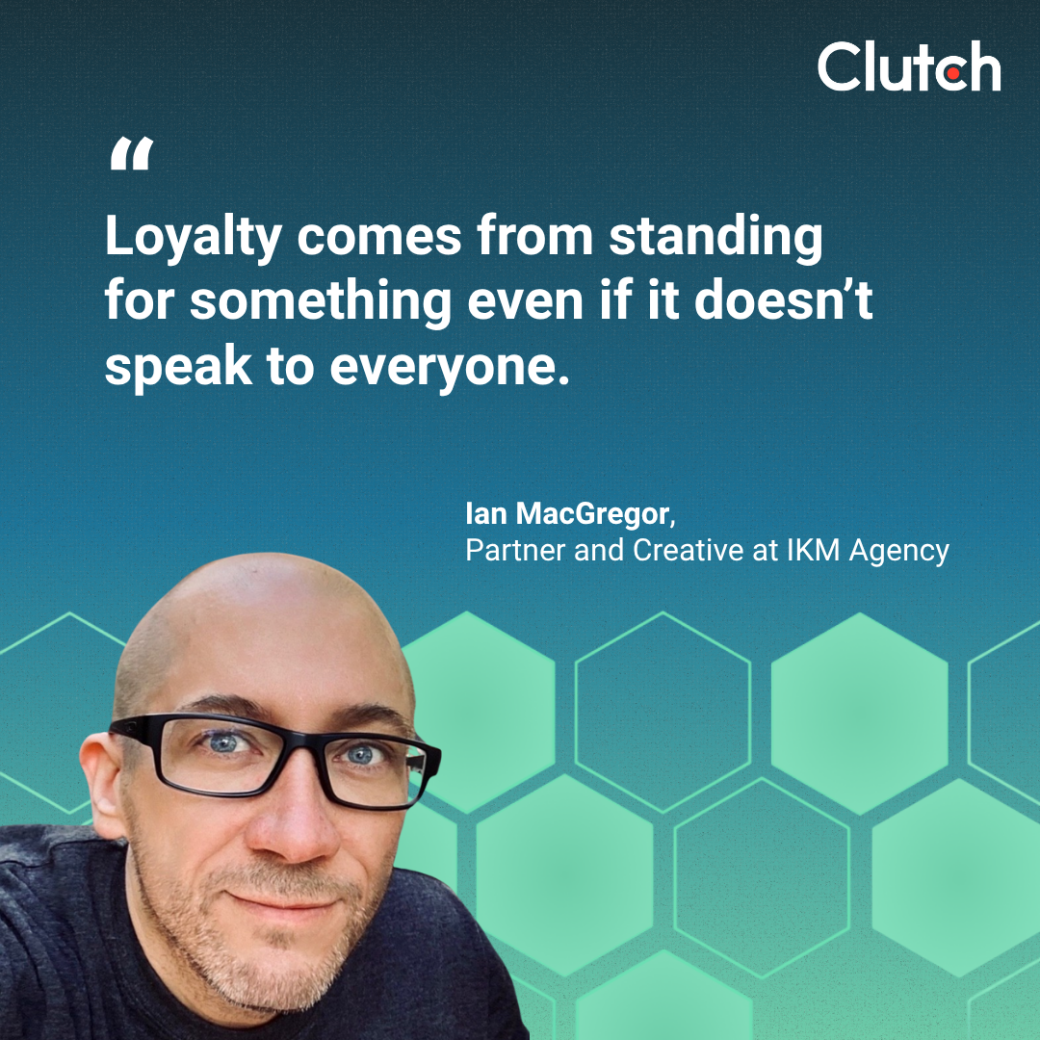
Another critical step is maintaining the same core brand values over time. MacGregor says, “When a brand knows what it stands for and doesn’t waver, people trust it.” He also says, “Loyalty comes from standing for something even if it doesn’t speak to everyone.”
Next, it could be time to increase your activity on social media. Platforms like Instagram, X, and Facebook are ideal for engaging customers directly. They can also provide valuable insights into how people feel about your brand more generally. This can help explain brand loyalty impediments and show what you may need to improve to reach your loyalty goals.
Elkins says, “Genuine two-way dialogue on social media can dramatically improve brand loyalty.” But don’t fall into the trap of only promoting your business on social media. Elkins continues, “Using socials as a megaphone instead of as a communications conduit can alienate your audience.” Focus more on quality customer engagement than marketing your products directly.
Many companies pursue strategies for tapping into user-generated content (UGC). When a customer posts about your brand on their account, it tends to build trust with their audience. The effect can amplify over time, as members of your target audience see multiple users they follow talking about your company and its products.
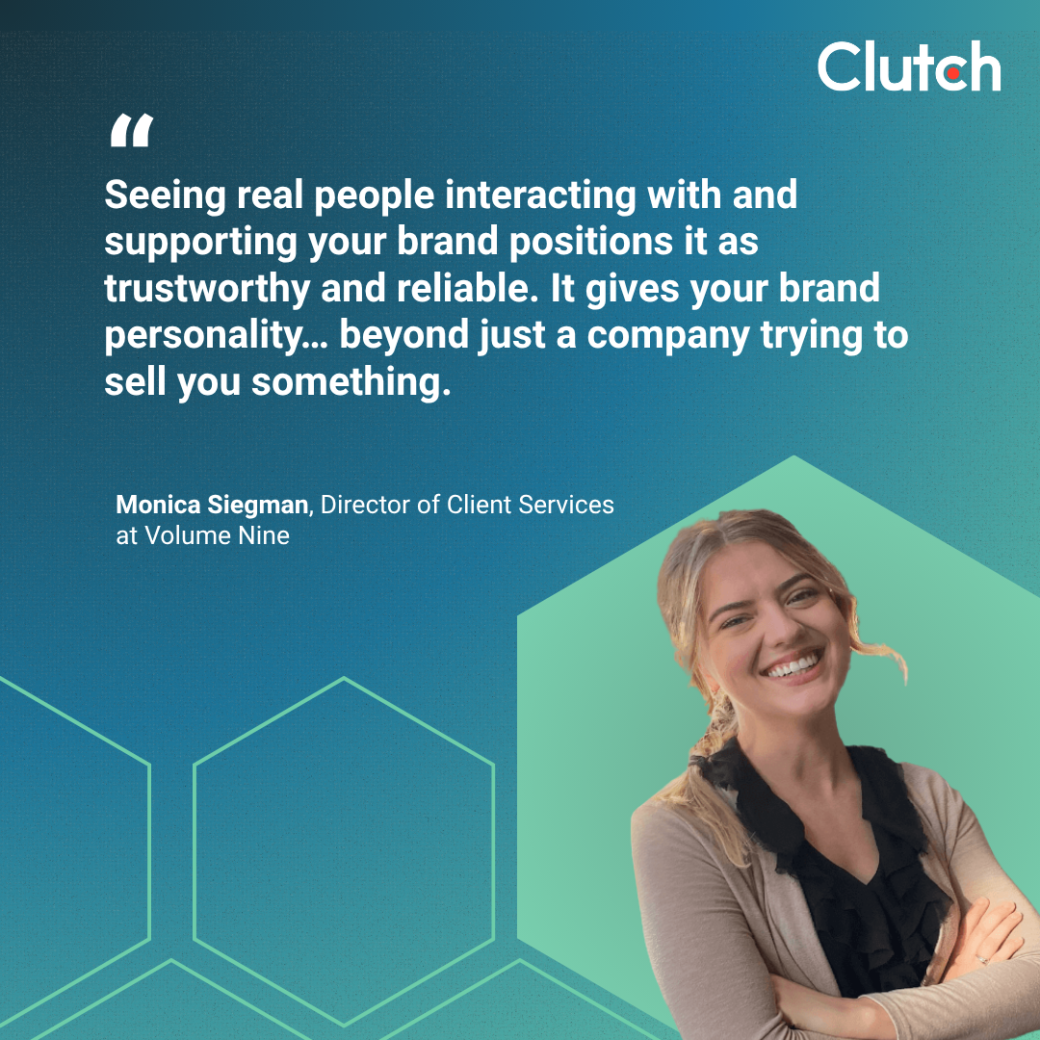
Monica Siegman, Director of Client Services at Volume Nine, explains: “Seeing real people interacting with and supporting your brand positions it as trustworthy and reliable. It gives your brand personality… beyond just a company trying to sell you something.”
You can encourage your community to post more user-generated content by:
Your company benefits in obvious ways by curating customer loyalty. But it’s not always clear what clients get out of the relationship. You can make the value more explicit by developing a loyalty program.
Brand loyalty programs reward customers who buy from your company consistently, talk about it on social media, and refer your products to friends. You can offer discounts and special access to limited-edition products, among other benefits.
Valentina Chiriacescu, Chief Commercial Officer of Ecommerce Today, says, “A strong [loyalty] program is based on how your customers actually shop, not how you wish they shopped. Think lifecycle, not just perks.”
The key will be rewarding your customers for actions that are already popular with your customers, but that are also aligned with your business's goals.
Once you've decided on the key actions you want to reward, you'll need to choose what type of loyalty program works best for your needs. Popular types of loyalty programs include:
Get step-by-step instructions for creating customer loyalty programs in our article: "Boost Customer Retention with This Loyalty Program Guide."
Finally, always be on the lookout for ways to improve customer service. You don’t want a few bad experiences to tank your online reputation or change how people feel about your brand.
Gaz says to think of bad reviews like gifts: “No matter how unreasonable the client or customer seems, look at it as an opportunity to improve. Organizations pay big bucks to learn about their weak points, and these clients are doing it for free.”
So, learn from your worst reviews, make changes when necessary, and show customers that you care. Doing so can enhance brand loyalty, especially when paired with the other methods covered in this guide.
As you work to build brand loyalty, you’ll want an objective way to measure its growth. The following metrics are some of the most widely used for this purpose. Tracking them will help you understand how your customers’ loyalty evolves over time.
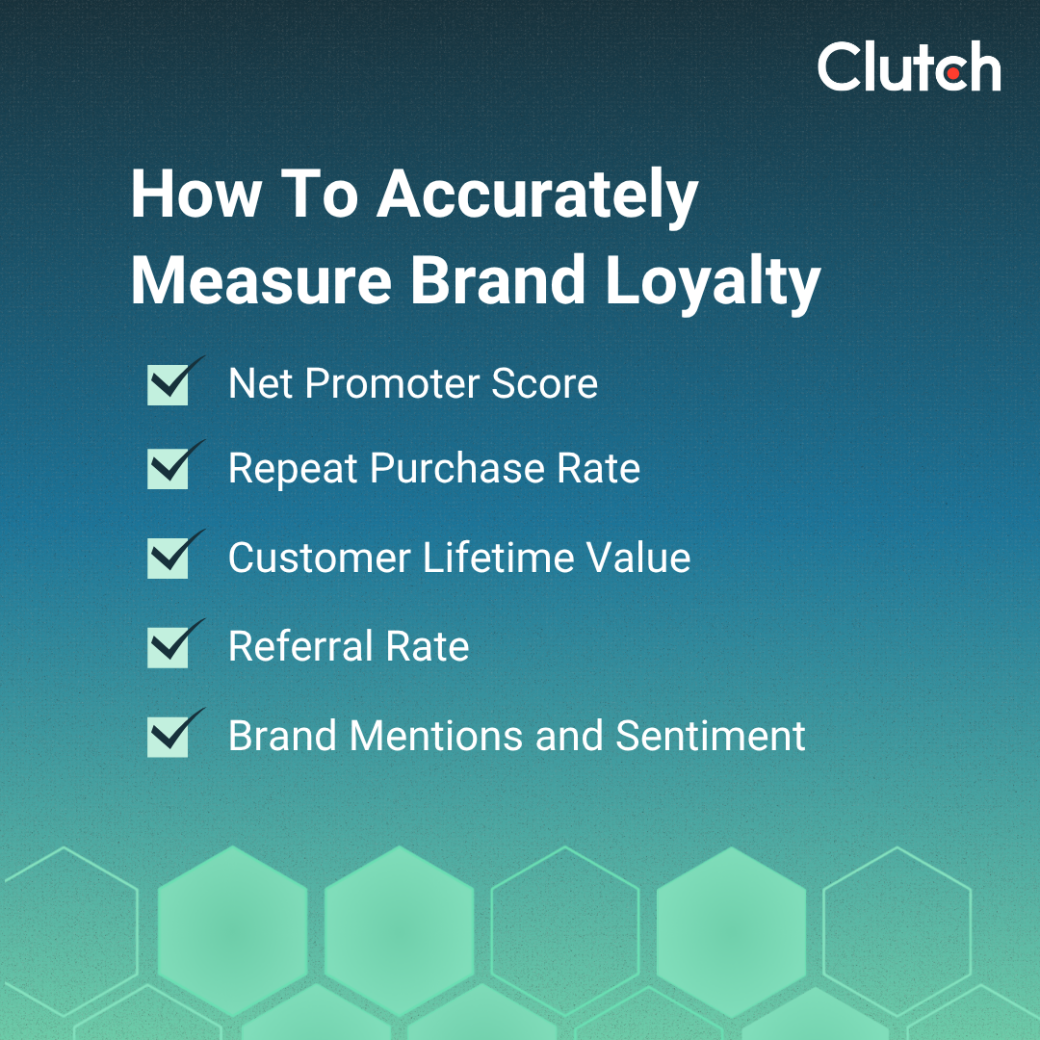
NPS measures how likely customers are to recommend your company to others on a scale of 0-10. Anybody who responds with a 9 or 10 is a promoter of your business, while anyone who responds with a 0-6 is a detractor.
The formula for tracking your NPS = (number of promoters - number of detractors) / total respondents x 100.
Suppose you have 10 promoters, 5 detractors, and 5 respondents who fall into neither category. Your NPS score would be 25, which is decent, as scores generally range from -100 to +100.
You can use this information to:
The percentage of customers who buy from your brand more than once is also a great indicator of loyalty. Gaz says, “If a client comes back for more work, that is the best indicator that they are happy.”
You can calculate your repeat purchase rate (RPR) by dividing the number of customers who made multiple purchases by your total number of customers and multiplying by 100.
To improve your RPR, try investing in loyalty programs that reward repeat purchasers and prioritizing cross-selling and up-selling on your website. Targeted campaigns to encourage loyalty can also help.
CLV measures how much a customer spends on average with your company throughout their life. Tracking CLV can help you:
CLV is a good indicator of how loyal clients are. When this number increases, it’s a sign that people are buying from your brand multiple times.
Your referral rate is how often people recommend your brand to others. This metric is significant. As Gaz explains, “People put their reputation on the line every time they recommend you to someone.” A high referral rate is a strong sign that people trust your brand to continue delivering.
You can improve your referral rate by:
You can also track brand mentions and general market sentiment on social platforms like Instagram and X. This can sometimes give you a more well-rounded interpretation of how people feel about your brand as compared to data from sources like reviews. According to Gaz, “People are quick to give a bad review. Time is precious, so only super loyal clients give good ones.”
Elkin says, “What we track in real-time are social engagement rates, brand mentions, and user-generated content volume. When customers are creating and sharing their own content featuring your brand, it’s not just a sign of satisfaction — it’s genuine advocacy.” So be sure to look beyond numerical data when evaluating your brand loyalty progress.
Finally, put it all together to create a feedback loop that drives continuous improvement. You can watch these metrics over time, identify trends as they emerge, and leverage the information to make loyalty-minded improvements.
If your brand loyalty starts to decline, these strategies can help you fix the problem before it worsens.
First, take a breath to analyze and strategize before reacting. Canton says, “Don’t panic. Analyze, stay true to yourself, and research trend shifts to see if they are affecting you.” You’ll make more informed, optimized decisions by moving at your own pace.
Next, leverage social media to see what people are saying about your brand. Elkins says, “If you’re not finding trends in complaints about product quality, customer service responsiveness, or other problems that need to be addressed internally, then a dip in loyalty metrics could be the signal that your social strategy needs a rapid refresh.” Social listening can help you identify fixes for a declining loyalty score.
Finally, you can take what you learn and use it to refresh your brand experience. Go touchpoint by touchpoint to see how it impacts your data. Gaz says, “Repeat rate and referrals are what brand loyalty is all about.” So you may want to focus on these first when considering where improvements are necessary.
Improving brand loyalty can be one of the most effective ways to grow your business. When customers keep coming back, you can grow revenue without increasing marketing spend. That opens new pathways to profits and gives you more financial freedom to experiment with emerging products and strategies.
But building brand loyalty isn’t easy. To do it, you’ll need to:
You can absolutely get there on your own, but the process can take a lot of time and energy. If you’d rather allocate those resources elsewhere, consider hiring a vetted, trusted branding expert on Clutch. Let a professional develop and implement loyalty-building strategies on your company's behalf, so your team can focus on what it does best.