
Your Brand Strategy Problem Probably Isn't a Messaging Problem
AI made brand execution cheap, but not brand strategy. Here's why agencies must shift from logos to diagnosing the gap between what companies say and do.
Updated May 27, 2026

Trust and credibility are the most important aspects of any B2B relationship. It's essential that both parties can rely on the other to fulfill their end of the deal, whether that means providing quality goods or delivering reliable services. However, building trust within the context of B2B relationships isn't always so easy.
B2B transactions pose a few unique challenges compared to traditional consumer-business transitions that can make trust-building especially difficult. For example, the longer sales cycles that make up most B2B transactions can lead to frustration and even mistrust between businesses as negotiations drag on. Likewise, B2B transactions carry higher stakes in the form of company investments, resources, and reputations, the stress of which can make dynamics particularly fraught.
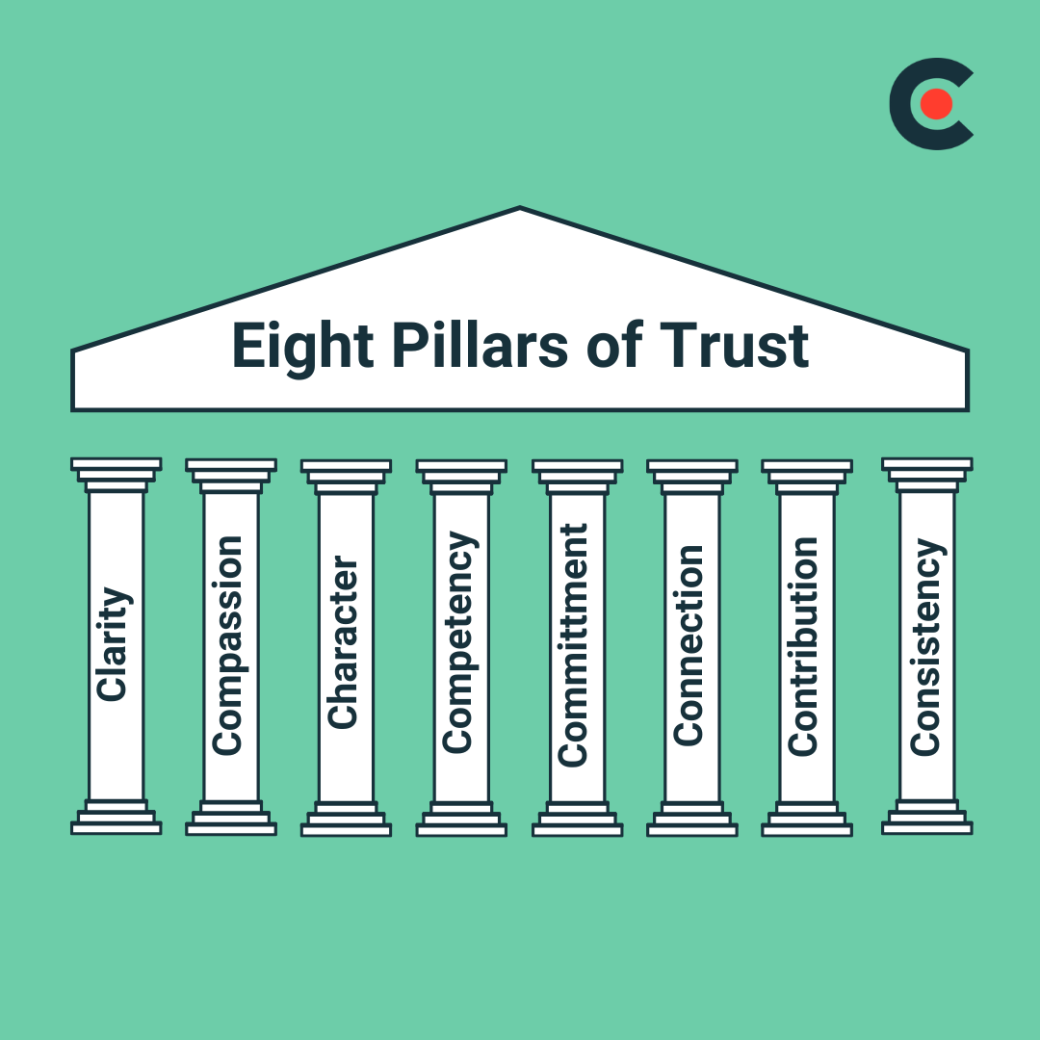
When a B2B relationship is built on trust from the beginning, however, those challenges are easily overcome. In this article, we'll walk you through the eight pillars of trust so that you can apply these principles to your business operations, enhancing the trust between you and your clients.
Looking for a Public Relations agency?
Compare our list of top Public Relations companies near you
The eight pillars of trust are recognized aspects of any relationship that seeks to build a foundation of mutual trust. For businesses, they allow you to hone in on various techniques, practices, and strategies you can implement to strengthen the perception of your company's trustworthiness and credibility among your professional contacts.
Trust in B2B relationships begins with clarity. Successful business partnerships are guided by practices that promote open, honest communication between parties regarding all aspects of the partnership or deal, such as service details and timelines.
Clarity in B2B relationships helps minimize ambiguities and misunderstandings by ensuring that all stakeholders are aligned in terms of expectations, responsibilities, and deliverables. Ultimately, clarity helps establish a principle of transparency between businesses, which signals accountability and honesty — and when you bring those to your partnership, your business partners will want to keep working with you.
Businesses can ensure clarity in B2B partnerships by focusing on:
Transparent pricing is a common practice among companies in the B2B space. For example, businesses that provide software-as-a-service solutions often make their pricing information available on their websites, especially when they use tiered pricing models.
Consider the product analytics platform MixPanel, which offers a variety of services in tiered plans designed to meet the needs of businesses based on their stage of growth. MixPanel's website features a breakdown of each plan, listing the services and functions included in each, the growth phase the plan targets, and the starting size for each plan. This gives MixPanel's customers clear insight into the company's price structure and enables them to select a service package that's aligned with their needs.
The second pillar of trust is compassion, defined as having sympathy for another's distress. In B2B relationships, compassion indicates to decision-makers at other businesses that you’re capable of approaching the business relationship with empathy when appropriate.
One way your business can practice compassion is by being willing to be flexible when extenuating circumstances impact a partnership. For example, an unrelated crisis for your client can result in delays or adjustments. A willingness to make those adjustments can make your client feel valued and cared about.
It also shows that you prioritize your client’s best interests even when it is inconvenient or requires extra work, which goes a long way to strengthening trust.
For example, the company Cariloop demonstrates compassion for the healthcare companies that use its platform by hiring healthcare coaches to consult with users. In addition to supporting their clients, Cariloop then uses these insights to improve the platform's user experience.
Merriam-Webster defines character as “moral excellence and firmness.” In the context of B2B services, you can also think of it as ethics, or as the principles and values that guide a company’s actions and operations. A strong set of ethics acts as a system of checks and balances that helps businesses conduct themselves in responsible, moral ways.
A sound character indicates a commitment to always doing what’s right. It’s an assurance that a business can be trusted to operate legally and according to the standards of a given industry. But more than that, character is a marker of a business’s integrity.
Businesses that demonstrate strong character are dependable and reliable. This means your products are always of high quality and are priced fairly. It means that you deliver services as advertised and honor agreed-upon timelines. In short, it means that your company gets the job done every time, no matter what.
For example, Newsweek recently named the marketing company Doyle Dane Bernbach one of America's most reliable companies, based on its steadfast dedication to performing excellent work for its customers.
A big part of building trust with B2B clients is establishing your company's credibility and expertise, then continually reaffirming your competency at various points throughout the partnership. Competency isn't only about skills and experience, although those are important aspects; it's also about continual education and development.
In addition to hiring and listening to experts, you'll want to be sure that your business is keeping up with the latest advancements, trends, and practices of your industry. That way, you'll be better positioned to manage and meet your clients' expectations.
One of the best ways to showcase your business’s competency is by collecting client reviews. Positive reviews act as testimonials, providing evidence of your ability to deliver on your promises and meet client expectations.
Detailed reviews can highlight specific services you offer or areas of your business that appeal to different customers. For instance, a review that praises your customer service team demonstrates your commitment to client satisfaction. Similarly, a review that commends your product's quality reinforces your dedication to excellence.
By actively managing and showcasing client reviews, you can build a strong reputation for competency and trustworthiness.
The fifth pillar of trust is commitment. People at the decision-making level of a business trust other businesses that keep their commitments. That includes sticking to the commitments that you've made to your clients, as well as the moral and ethical commitments you've made to yourselves.
For example, most businesses have a mission statement that expresses their values and business goals. One way you can establish your company's level of commitment is by doing everything you can to honor your mission statement, even when it's difficult.
Salesforce is well-known for demonstrating their commitment to their clients. They offer well-defined service level agreements (SLAs) that commit to uptime guarantees and response times for any issues that arise. Their customer success team also proactively works with clients to ensure their business goals are met. They offer regular check-ins, training, and guidance to help clients optimize their use of the platform.
These guarantees make it clear that they are dedicated to providing reliable service and support.
Forging a sincere connection with your clients is an integral aspect of building trust in B2B relationships. When your company's connections with the businesses you work with are strong, it lets you deepen customer relationships, improve collaboration, and enhance customer loyalty.
There are many ways to work on developing a more meaningful connection with B2B clients. For example, you can focus on keeping your customers engaged by reaching them with social media posts, posting on professional platforms like LinkedIn, or designing tailored marketing efforts.
Another great way to forge deep connections with your clients is by ensuring that your customer experience is enjoyable and stress-free. For example, offering reliable, helpful, and friendly customer support with multiple contact methods — like phone, email, and live chat — ensures that your customers get the help they need, when and how they need it.
When it comes to B2B credibility, it's important to show that your company is committed to helping your entire industry succeed. This can help build trust with your audience by signaling that your brand is motivated by values, not just profits.
For instance, in 2023, Clutch partnered with Tech To The Rescue for Generative AI for Good Hackathon. Tech To The Rescue is a nonprofit organization dedicated to helping companies match with nonprofits to boost their causes with technology services. Through this partnership, Clutch showed their commitment to leveraging technology for social good.
In almost every aspect of business, consistency is important for trust-building. In marketing, consistency ensures that brands present a cohesive image and message across various platforms, enabling them to build connections with their audiences. In manufacturing, consistently producing quality products boosts consumer confidence and drives sales.
Always striving to deliver quality work is an important step to establishing a business reputation of consistency. If your company continually performs above your client's expectations, they'll come to regard you as a partner they can trust to deliver satisfactory results, making them more likely to partner with you again in the future. It may also make them more likely to refer you to their professional contacts.
For a real-world example of consistency in action, consider Microsoft again. The software company has managed to build and maintain a cohesive brand image across marketing channels and its own platforms by focusing on consistent messaging that highlights the company's commitment to innovation and creating products that help its customers succeed.
Establishing credibility and growing trust in B2B relationships is an ongoing process. Remembering the eight pillars of trust and their applications to B2B partnerships can help you stay mindful of how various aspects of your business — from your customer experience to how you're perceived — impact the level of trust between you and your clients.
While you're strengthening your image, consider looking into business verification, which can help you establish credibility and stand out in a crowded market. Business verification services run checks on businesses to confirm their authenticity and legal integrity.
These checks gather and analyze an extensive range of information about a company, including its:
Verification from a respected and well-regarded business verification service can be a significant endorsement, especially for newer companies that lack an extensive customer history to point to. Displaying a badge from a business verification service can boost consumer confidence in a business and contribute to increased conversions.
When customers see the badge or other verification on your website, this assures them that your website is legitimate and that any personal data they may share is secure. That means they may be less likely to hesitate to make a purchase or schedule a service, since they don't have to worry about scams or fraud.
There are other types of business verification that can also boost consumer trust. One example is SSL certificates, which are digital files that are hosted in a website's origin server and fulfill two very important functions — they verify the website's identity and allow connections to the website to be encrypted. As such, they are incredibly important for safeguarding customer data, such as credit card information, legal names, and physical addresses.
Additional business verification techniques include:
Clutch Verified puts businesses through a rigorous verification process that includes multiple stages to prove that they are legitimate and equipped to perform its services as advertised.

The pillars of trust are invaluable when it comes to enhancing B2B credibility. By striving for consistency, exercising compassion, keeping your competency sharp, and other techniques, you can improve the level of consumer trust in your brand, convert more leads into customers, and grow your business.
Find out more about how Clutch Verified can inspire customers to trust your business and start building deeper relationships today.