
Your Brand Strategy Problem Probably Isn't a Messaging Problem
AI made brand execution cheap, but not brand strategy. Here's why agencies must shift from logos to diagnosing the gap between what companies say and do.
Updated May 28, 2026

A brand’s reputation is key to converting customers Corporate PR — or the strategic communication of company goals and messages — can help you improve your business’s image.
How companies conduct themselves and how they respond in times of crisis shape how people perceive them. Consequently, it can have a big impact on the company’s brand image and, therefore, sales.
By investing in public relations, companies aim to enhance their reputation and foster customer loyalty.
Looking for a Public Relations agency?
Compare our list of top Public Relations companies near you
Corporate PR is defined as the strategic management of a company’s reputation, relationships, and communication with key stakeholders, including the public.
Whether your company is wrapped up in a scandal or is simply trying to improve its brand awareness, an internal or external corporate PR team can help you grow your business.
Looking to hire a PR agency? Check out top-ranked public relations experts on Clutch.
Corporate PR is the strategic communication of company goals, messages, values, and more. The goal is to create a favorable public image for the business and establish relationships with key stakeholders, including customers, employees, media, and investors.
It focuses on communicating a company’s values, actions, performance, and impact in a way that fosters trust, maintains credibility, and supports long-term business objectives. Corporate PR promotes and protects the company itself.
Public relations in general, is a broad term and encompasses everything from media relations to internal communications and reputation management.
As such, corporate PR includes:
Crisis management refers to the way a business or organization responds to an emergency.
In almost any type of crisis — such as a security breach, a technical issue, a poorly received ad campaign, or personnel turnover — crisis management can be justified.
Crisis management is incredibly important because a recent study revealed that nearly two-thirds of people would consider how brands responded to a crisis and that their response would impact their relationship with them afterward.
Additionally, corporate public relations efforts can help companies recover lost business after a crisis situation.
Media relations is when a business works with media outlets, such as journals, magazines, newspapers, podcasts, and broadcast journalists, in order to deliver their message.
Often, this includes hiring media coverage, scheduling interviews, speech writing, and organizing news conferences.
Many businesses rely on media relations to promote new products, make announcements about their business, or address issues in a crisis.
Investor relations is the communication of company affairs to both private and institutional investors.
This includes coordinating shareholder meetings and press conferences, releasing financial data, and publishing reports for the SEC.
Digital strategy and content marketing are closely tied with public relations because they’re used to communicate messages online to a business’s target market.
PR companies can write press releases, develop copy, support social media campaigns, and conduct outreach, to boost the company’s brand image and awareness.
Executive visibility refers to the strategic effort to position company leaders as credible, trusted, and influential voices in their industry. The goal is to elevate executives beyond internal operations and make them public-facing assets that strengthen company's reputation.
This includes thought leadership, media engagement, social media presence, public commentary, and other related activities.
Executive visibility humanizes the brand, builds trust, and shapes industry narratives.
Employer branding is the strategic practice of shaping how current and potential employees perceive a company as a place of work. Where corporate PR promotes the company, employer branding promotes the company as an employer of choice.
This includes recruitment marketing, company culture storytelling, internal communications, and more.
Employer branding matters because it helps attract strong talent, reduces turnover, and supports corporate reputation.
While many people assume that PR is simply responding to a crisis or promoting a new product, PR teams also support maintaining a company’s brand image.
A brand image is how customers perceive a business or product. However, this is more complex than what a company’s logo looks like, what color scheme they use, or even what language they include in their ads.
A company’s reputation is multifaceted, and corporate PR is all about maintaining a public image. People form opinions about brands over time, using information they’ve seen from ads, in the news, or even from direct interactions with brands.
This means that a simple interaction online or whether a company comments on a news event, can have a lasting impact on whether or not a consumer decides to work with that brand in the future.
For example, corporate social responsibility is becoming increasingly important for consumers. — 75% of people are likely to buy from companies that support issues that they agree with. For many, this means purchasing cruelty-free, ethically sourced, or sustainably produced products. For others, it means providing living wages and safe workplaces for employees.
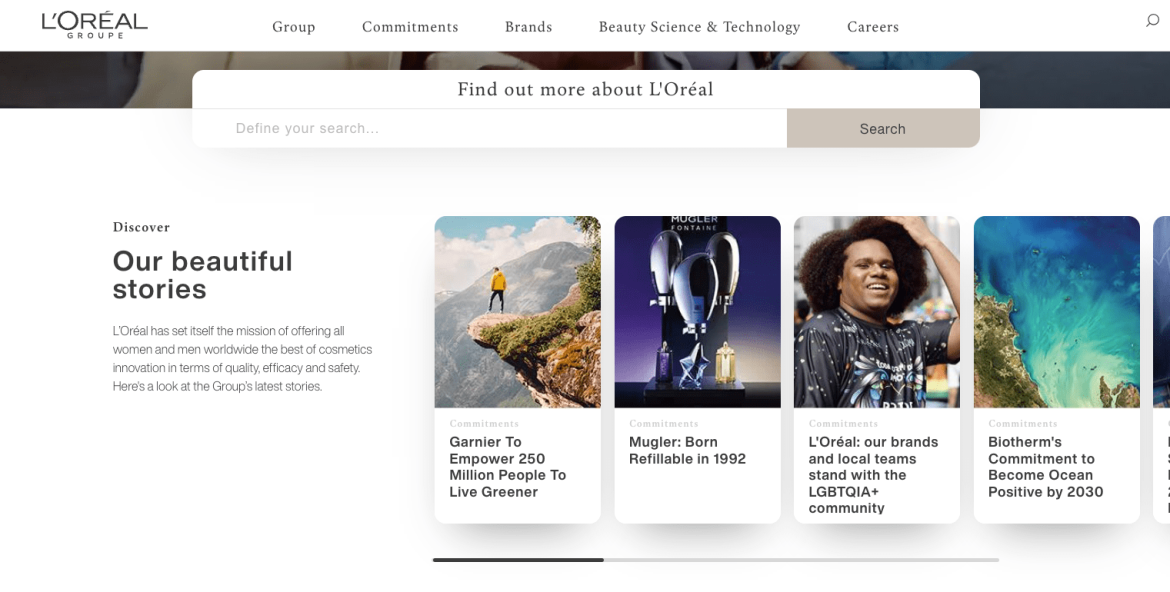
Being dedicated to ethics and social responsibility is a core tenant for many brands. For instance, the beauty brand, L’OREAL has built a brand image focused on supporting sustainability, climate action, and animal welfare.
Source: L’OREAL
For the last two decades, they’ve been dedicated to reducing carbon emissions and have committed to becoming carbon neutral by 2025. By the end of 2024, 97% of the energy used at their operated sites came from renewable sources.
For companies that are dedicated to business ethics, like L’OREAL, a PR team can help them showcase their commitments. They can put them up for ethics awards, get them included in media lists about sustainable products, and much more.
As a result, L’OREAL’s brand awareness is likely to increase and how consumers perceive the brand will be strengthened. As a result, some consumers will choose L’OREAL products over other brands that aren’t as environmentally friendly.
Over the last few years, there’s also been a growing emphasis on how a business responds to new events — 71% of people think it’s important for businesses to take a stance on social movements.
As a result, many businesses have come out in support of social movements, such as the 2020 protests for racial justice.
At the time, many companies released statements, updated their website, and spoke with their employees about how to promote societal change. Amazon, for example, changed its website header to show solidarity with the Black Lives Matter movement

Companies such as Lyft, JPMorgan, Yelp, Ellevest, and Dick’s Sporting Goods have spoken out about their responses to the overturning of Roe v. Wade. Many expanded their healthcare policies to cover travel expenses for employees seeking abortions outside their home states.
Public relations teams can help in these situations. They’re capable of handling delicate issues without sacrificing a company’s brand image or corporate reputation.
They excel particularly in writing press releases, reaching out to media outlets, and crafting the appropriate language for websites and social media.
Publicity can boost visibility for a business and improve their credibility.
Credibility is defined as the perceived trustworthiness and expertise of a brand, and it is highly impacted by brand name recall, industry leadership, integrity, consistency, and testimonials.
A consumer research study revealed that credibility influences consumers’ choices through “perceived risk, information costs saved and perceived quality in most categories.”
In other words, consumers want to buy the products they believe will provide the best value. This isn’t always based in fact. Instead, people will choose brands they trust — usually those they’ve heard of before and are reliable.
In the realm of corporate PR, establishing thought leadership is a powerful strategy. Thought leaders within a company can influence public opinion and contribute to the positive brand image. Thought leadership initiatives, when integrated into the broader PR strategy, position the organization as an industry authority, garnering trust and credibility.
Unlike advertising or marketing, PR seems more authentic to consumers because it’s not overtly promotional. However, it still gets a business’s brand name in front of potential buyers and boost brand awareness, which can add an extra layer of credibility.
PR teams may employ strategies such as:
These efforts can boost credibility by demonstrating expertise and showcasing industry leadership. Maintaining a strong online presence is imperative for effective corporate PR. Ensuring visibility on search engines is a fundamental aspect of modern PR strategies. Strategic optimization of online content contributes to positive search engine results, reinforcing the organization's standing in the eyes of the public.
Consider how Bill Gates and Microsoft used public relations to build their credibility — they’re household names now, but they weren’t always.
Back in the early days of Microsoft, many people never believed computer would be a household item. Many naysayers were quoted by the media, which impacted the credibility of Microsoft itself.
In response, Gates invited each critic to Microsoft’s headquarters and met with them individually. Afterwards, they each became supporters.

Source: MajorPR
A big believer in the power of publicity, Gates used public relations to grow the credibility of Microsoft and its ventures.
Just like advertising, a great public relations strategy will target audiences within a company’s ideal market.
As such, many public relations companies and in-house PR teams will conduct thorough market research before launching a new PR campaign.
Even though it’s not an ad, the goal of a good PR campaign is to connect and resonate with potential customers. To do so, they need to create language that appeals to them and appear in publications or media outlets that they use.
For example, there’s no better platform for a fashion brand than Vogue, the iconic fashion and beauty magazine with over 11.1 million monthly readers. An open print ad in Vogue costs nearly $200,000, but being featured in an article is priceless (and free).
Earlier this year, Vogue published an article highlighting female CEOs in the luxury fashion industry, including Anne de Vergeron, the CEO of the high-end jewelry company Repossi.

As a female CEO, she spoke about the importance of women in leadership and how she views her role at Repossi, saying, “Sharing, educating, and learning always are, for me, the keys to access positions with leading roles while keeping an entrepreneurial mindset. Like the Repossi women, I keep looking forward to staying assertive and progressive.”
The article itself had very little to do with fashion or what Repossi sells, but the brand gained invaluable exposure. Vogue’s readers, who are interested in luxury products learned more about Repossi and their leadership.
This is a great example of media relations. PR professionals can curate this type of content by working with media to schedule interviews, promote new products, highlight people in leadership, and more.
Beyond traditional marketing efforts, corporate PR also extends to community relations. Engaging with the community, whether through nonprofit collaborations or startup initiatives, adds a human touch to the brand. LinkedIn, as a platform, plays a crucial role in connecting with stakeholders and reinforcing the organization's commitment to social responsibility.
PR maintains open channels of communication with employees, customers, investors, and the media. Engaging storytelling and updates will help stakeholders feel valued and informed.
Strengthened relationships encourage loyalty and long-term support.
Media placements, press releases, public outreach, and other content produced by PR professionals help companies reach large audiences, which can help generate leads.
Generally, consumers trust businesses with which they’re familiar and have a solid reputation. By investing in PR efforts that improve brand awareness and enhance credibility, more potential customers are likely to visit a business’s website or reach out for more information.
As a result, PR efforts can have a meaningful impact on a business’s bottom line.
A company with a positive public image attracts skilled employees. PR communicates company culture, values, and employee satisfaction. It also helps retain staff by reinforcing pride in the organization.
Crafting a robust marketing strategy is essential for any organization seeking to enhance its public image. The benefits of a strategic approach to public relations are manifold, ranging from improved communication strategies to crisis communication preparedness. Incorporating digital marketing into PR efforts further amplifies the reach of key messages, contributing to the establishment of a positive brand image.
Corporate PR teams can provide a wide range of services, including crisis management, media relations, investor relations, and digital strategy insights.
By investing in a public relations strategy for your business, you’ll be able to boost your brand image, increase brand name recognition, and improve your reputation.
As a result, you’re likely to appeal more to customers, increase leads, and ultimately, improve sales.
Looking to hire a PR firm? Check out top public relations agencies on Clutch.