How Brands Make Decisions With Less Attribution Data in 2026
Brands in 2026 are making smarter marketing decisions with 40-60% less attribution data. Discover how leading teams use incrementality, MMM, first-party...
Updated February 3, 2026

There are thousands of marketing and sales tools available today, making it harder than ever for small businesses to choose the right ones. And while many sales processes now start online, not every deal is closed behind a screen — which means offline tools still matter.
For small businesses, one of the biggest goals is generating more qualified sales in an increasingly competitive landscape. Reaching the right leads at the right time requires more than just adding new software to your stack. It requires using tools that support how — and where — you actually sell.
Too often, small businesses focus exclusively on online sales tools while overlooking offline strategies that help build trust, strengthen relationships, and close high-value deals.
Looking for a Digital Marketing agency?
Compare our list of top Digital Marketing companies near you
Below are nine small business tools for online and offline sales, organized by category and use case to help you identify which tools fit your sales process.
| Tool | Category | Primary Use Case | Best For | Pricing Model |
| HubSpot CRM | CRM & Lead Management | Track leads, contacts, and follow-ups | Small businesses managing ongoing sales pipelines | Free + paid plans |
| Square | POS & In-Person Sales | Accept in-person payments and manage transactions | Retailers, pop-ups, and face-to-face sellers | Free + transaction fees |
| PandaDoc | Invoicing, Proposals & Contracts | Send proposals, contracts, and collect signatures securely | Businesses closing deals online or offline | Paid (monthly) |
| JetGlobal | Online Sales & Conversion | Analyze sales data and identify funnel gaps | Data-driven sales teams | Paid (custom / enterprise) |
| Unbounce | Online Sales & Conversion | Build and personalize landing pages | Online-first businesses running campaigns | Paid (monthly) |
| FocusMe | Sales Efficiency & Productivity | Reduce distractions and improve focus | Solo founders and small teams | Paid (one-time or subscription) |
| Coworking Spaces | Offline Sales & Relationship Growth | Host in-person meetings and close deals | Service businesses selling high-value offerings | Monthly or daily rates |
| Postalytics | Offline Sales & Relationship Growth | Run targeted, trackable direct mail campaigns | Account-based or relationship-driven sales | Paid (usage-based) |
| Twitter & Reddit | Offline Sales & Relationship Growth | Monitor conversations and customer pain points | Businesses researching demand and feedback | Free (native tools) |
Every good sales team needs a good CRM.
Currently, HubSpot is the champ of CRMs.
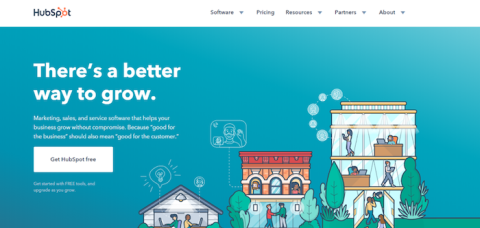
With a free forever plan, you can test the waters with contact deals, insights, and actionable tasks for each lead.
Reaching out at the right time is critical for sales. Reach out too early, and you will overwhelm leads. Reach out too late, and your nurturing process was for nothing. HubSpot can help with this.
Use a good CRM, such as HubSpot, to manage leads and contacts and reach out at the right times.
For small businesses that sell products or services in person, whether at a retail location, pop-up shop, market, or event, a point-of-sale (POS) system is essential.
Square is one of the most widely used POS solutions for small businesses because it combines payment processing, hardware, and basic sales management in one platform. Businesses can accept credit cards, contactless payments, and digital wallets without needing complex setup or long-term contracts.
Beyond payments, Square also provides tools to track in-person sales, manage inventory, and view performance reports. This makes it especially useful for small teams that want visibility into what’s selling, and when, without juggling multiple systems.
Square works particularly well for businesses that blend online and offline sales, such as brands that sell primarily online but also attend markets, host pop-ups, or take payments in person. The flexibility allows sales data from physical transactions to live alongside digital performance insights.
For small businesses that rely on face-to-face selling, a POS system like Square helps streamline checkout, reduce friction at the point of sale, and ensure every transaction is captured accurately.
In 2017, 61% of small businesses were victims of cyberattacks and/or data breaches.
That’s extremely high, especially for smaller businesses. All we hear in the news is major corporations taking the heat for leaked data or cyberattacks, but small businesses are just as at risk.
When it comes to small business sales, your customers need to trust you. And you need to handle contracts and invoicing with secure software you can trust.
That’s where PandaDoc contract management software comes into play.
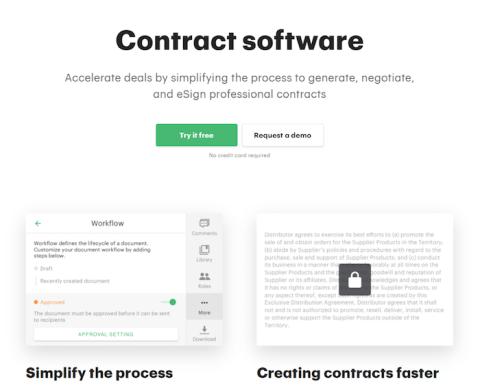
No longer are the days of sending clunky, old PDFs that aren’t secure or professional. Those old PDFs don’t integrate with your CRM either, forcing you to conduct even more data entry on your end.
Whether you are meeting in person or closing deals strictly online, PandaDoc software handles sales proposals, work contracts, quotes, and secure document signing.
As icing on the cake, PandaDoc customers are seeing 28% improvements in sales close rates.
According to HubSpot’s State of Inbound, improving the efficiency of the sales funnel is a top priority for sales teams.
Gaps in your sales funnel are a recipe for lost sales. Gaps often originate from one single cause: wrong data.
Whether it’s the wrong personalization data, customer data, or time of contact, a poor understanding of your data results in poor sales numbers.
And as a small business, every sale affects your downstream profits.
Enter: JetGlobal’s drag-and-drop BI dashboards.
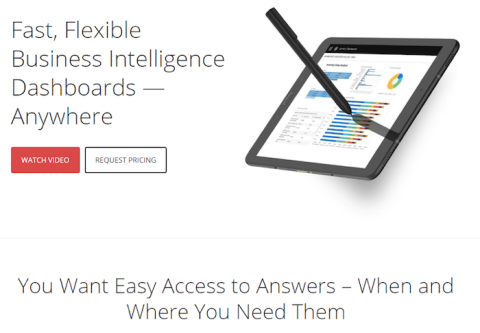
With drag-and-drop functionality, you can simply drag blocks of customizable (or templated) data, such as key performance indicators, customer information, and more.
Data is everywhere. But useful data isn’t. Create dashboards to better understand your clients, and your sales will increase.
Unbounce: Set up Sales Pages in Minutes
The name of small business sales is personalization.
It’s probably why most of your customers chose you in the first place: You are a small business that takes care of your customers, rather than treating them like another number.
And if you want to keep converting leads into sales, you’ll need to keep your personalization efforts going.
In an increasingly online world, this becomes harder and harder.
But one method is time-tested and proven: personalized landing pages. Take this landing page from Housecall Pro, for example:
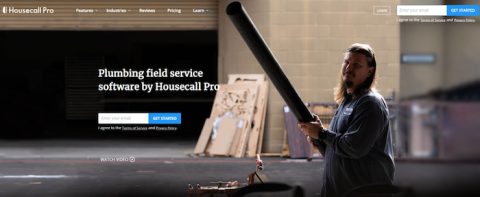
Notice how it’s directly targeted at an incredibly specific niche (plumbing)?
Now look at this landing page:
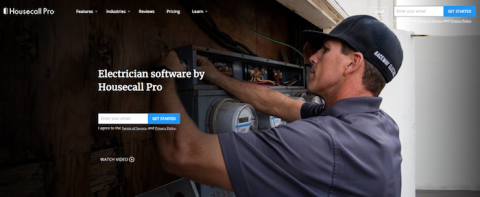
Looks nearly identical, right? Right, but it targets a new niche (electricians) and speaks directly to visitors’ pain points.
Rather than generic bullet points, Housecall Pro taps into the emotions of each segment, resulting in higher close rates.
Typically, this type of development is very expensive. And that’s why Unbounce is key for your sales tools stack.
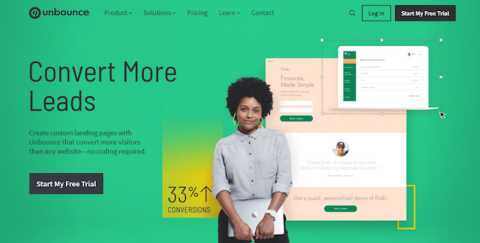
You can create drag-and-drop landing pages, develop your own templates, and publish them within 30 minutes.
Personalization doesn’t have to be hard or expensive – not with Unbounce.
Managing sales for your small business online often requires you to jump from tab to tab and app to app.
Whether it’s a spreadsheet, your CRM, a calendar, or all of the above, sales efficiency can quickly decline.
Getting distracted online can happen in just seconds.
You need an application that helps you eliminate distractions if you are running sales for a small business.
FocusMe is a great option with a range of features, from time-tracking to website blocking.
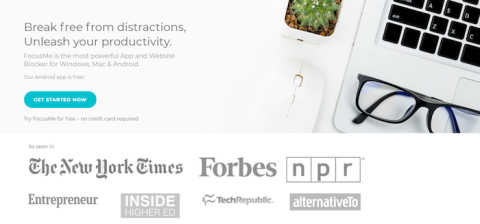
For instance, you can block specific websites that distract you, helping you focus on the tasks at hand.
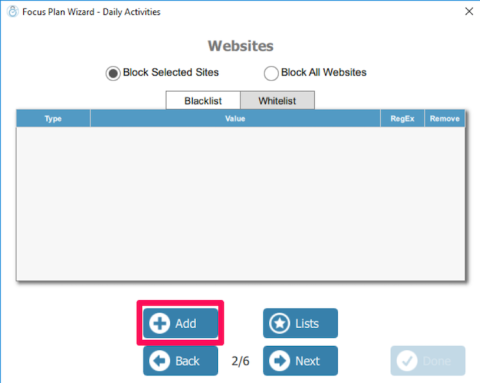
You can block any website that could distract you from getting work done.
Or you can use FocusMe to track time on sales projects to generate comprehensive ROI data.
Whether it’s staying distraction-free or tracking time, sales efficiency is key to producing bigger profits.
Sales tools aren’t just online — and they aren’t just tech products or software.
Old-school sales techniques are far from dead. In fact, sales professionals rank in-person discussions as a leading source of closing deals.
As a small business, you might be only online. Real estate is becoming increasingly expensive and far less needed than before.
But it’s still critical to closing professional, big-ticket sales. That’s where coworking spaces come into play. Coworking office space is cropping up all over, such as Expansive.
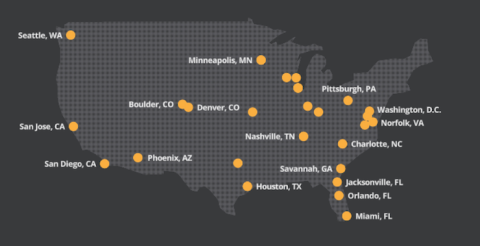
Coworking is becoming popular for many startups and small businesses and can be found in many cities across the country.
You can use a coworking space’s conference rooms, lounges, and more to provide a more professional, premium experience to big clients.
Direct mail may seem like an outdated form of communication, but for sales, it’s far from dead.
In fact, dirIn fact, direct mail is still thriving, even as many competitors have left the space for digital marketing.
This means you are grabbing more attention and appearing less spammy.
About 54% of consumers want to receive mail from companies for promotions, deals, and information.
For sales, this is a dream come true. The only problem is that managing offline analytics, tracking, and ROI is difficult, and connecting the dots is far from easy.
Thankfully, Postalytics exists.
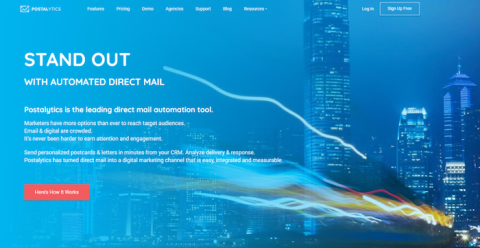
Postalytics connects directly to your CRM and lets you customize direct mail for specific targets, segments, or lead groups.
Don’t neglect offline sales marketing; it can be extremely powerful for the right leads.
Social media is great for generating sales. You can directly advertise, promote products, and engage with customers daily.
But platforms such as Facebook or Instagram aren’t going to be your biggest wins.
Instead of thinking in terms of direct sales, you want to use social media for another purpose: social listening and brand awareness.
Social listening has numerous benefits, from product feedback to customer service improvements and, most importantly for sales, attracting new customers.
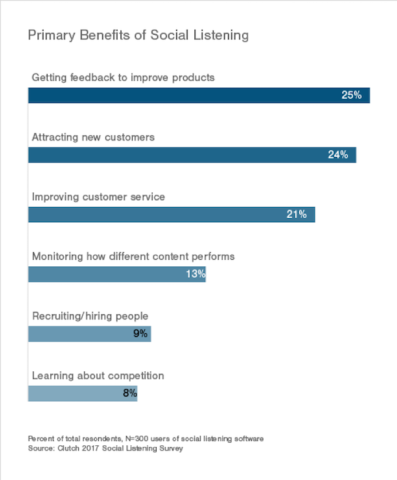
If you can understand customers’ pain points, you can solve them. If you can solve them, you can nurture them into loyal customers down the line.
Platforms like Twitter and Reddit are especially powerful for social listening because they’re primarily text-based and conversation-driven. People openly share frustrations, ask for recommendations, and compare tools in real time.
Twitter allows businesses to search keywords, follow conversations, and engage directly with users. Tools like Brand24 make this easier by monitoring brand mentions and relevant topics across the platform.
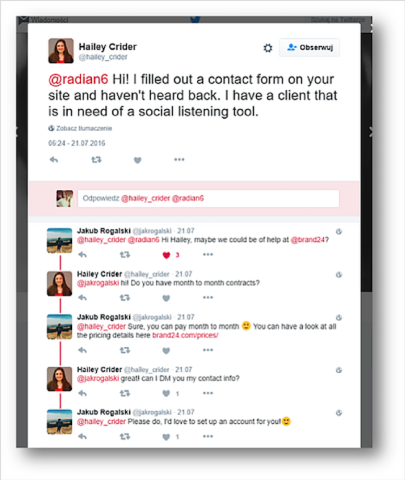
In one example, Brand24 joined a conversation with a user researching social listening tools — a timely interaction that likely sparked interest and led to a sale.
Reddit offers a different but equally valuable opportunity. Subreddits function like ongoing focus groups, where users ask detailed questions, share honest feedback, and discuss real-world use cases. Monitoring relevant subreddits can surface unfiltered insights you won’t find in traditional reviews or surveys.
Social listening also supports content marketing. You can promote a podcast episode or blog post and see how people respond, compare performance across formats, or test calls to action before rolling them out on a sales page.
For small businesses, Twitter and Reddit aren’t just social platforms — they’re listening tools that reveal what customers actually care about, in their own words.
Martech has exploded in recent years, and for good reason: Using these tools can help you expand your lead pool, make personal connections, and automate tedious processes.
But in all of this innovation, we’ve neglected our roots: offline sales.
Using these eight tools, you can better communicate with your potential customers, both online and offline, and improve sales.
I'm the founder of Codeless, a long-form content creation company who’s content has been highlighted by The New York Times, Business Insider, The Next Web, and dozens more.
See full profile