7 Tips For Designing Web Forms
Clutch surveyed 502 web users about what they actually want from form design. Here are 7 data-backed UX principles that reduce abandonment and improve...
Updated October 15, 2026

To promote an e-commerce website, help shoppers discover your products through search, email, and useful social content, then make purchasing straightforward. Start with one customer group and a small selection of products. Build a clear route from each promotion to a relevant product or category page, and measure completed orders alongside traffic.
A new store needs both an acquisition plan and a conversion plan. Acquisition brings potential customers to your website; conversion helps those visitors complete a purchase. A discount or cart reminder can support conversion, but neither replaces a way to reach new shoppers.
However, enticing traffic and conversions is challenging, especially as the digital commerce market explodes.
Looking for a Web Design agency?
Compare our list of top Web Design companies near you
My company, QuartSoft, builds custom online stores. During more than a decade of working with international clients, we’ve gathered e-commerce wisdom we want to share with you.
This guide covers nine marketing and social media tactics, explains how to adapt them to your business, and offers a launch plan for testing what works.
New e-commerce website owners tend to fall into one of the following three categories. Note if any of the following describe you and your venture:
It’s a blessing to earn money from your passions. Individuals who do so are frequently experts in their niche, as well as manufacturers of high-quality products.
These artisans, such as Asian Brushpainter, which creates custom Chinese seal stamps, tend to work in a narrow niche.
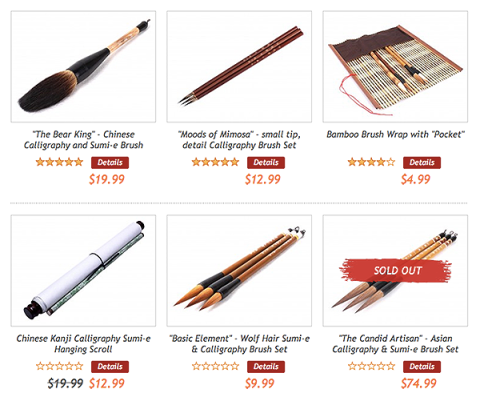
For a specialized product, prioritize shoppers looking for that specific item or use case. A broad audience is less useful if few people need what you sell.
Those who operate online shops use them to showcase their products, unique personality, and talents to customers all over the world.
Start with descriptive product pages and demonstrations that explain the craftsmanship, customization options, or practical use of your products.
Early-stage founders may be turning a hobby into a business or testing a niche product. For an e-commerce launch, choose one customer problem and a manageable set of products before expanding your promotional channels.
Use your existing expertise to explain the product clearly, while testing your assumptions about who will buy it.
Test whether customers will pay for your offer and whether you can fulfill orders profitably. Set a spending limit for the first campaign and record the questions shoppers ask before deciding what to improve.
If you already have a physical store, begin with the customers who know your business. Add the online store address to receipts, packaging, and in-store signage, and invite interested customers to subscribe to product updates.
This group’s biggest challenge is to build a professional online store that reflects their brand and is integrated into their offline business.
Expanding companies require fast and affordable web development so that they can reach existing business goals.
All three types of entrepreneurs can’t rest on their laurels once they have online stores up and running. The most daunting work – finding buyers and engaging their audiences – begins now.
The tips below will help newcomers to the e-commerce realm acquire their first prospects and attract loyal customers.
Before promotion, place a test order on mobile and desktop. Check product availability, payment, shipping charges, confirmation emails, and the return policy. Fix failures before directing customers to the store.
Marketing can help you reach a higher number of customers, as well as achieve a higher rate of conversion.
Use the following six tactics to make products discoverable, bring interested shoppers back, and address purchase questions. The first and third cover discovery and email promotion; the others support the decision to buy.
For an e-commerce store, start with the products customers are searching for. Write descriptive page titles and explain relevant features, materials, sizes, and uses in the product copy. Link categories to their products: Google’s e-commerce site-structure guidance recommends navigation that lets its crawler reach product pages through links.
For example, a handmade jewelry store might create a category for “sterling silver birthstone necklaces” and link it to matching products. This is an illustrative page structure; choose wording that accurately describes your inventory.
If customers visit you in person, check Google Business Profile eligibility before using it for local discovery. Google lists online-only businesses as ineligible. Include location details where they help customers, rather than adding city names to every product page.
For eligible products, use Google Merchant Center free listings. Provide accurate product details, prices, availability, and shipping information, and resolve eligibility issues. Free listings have no placement fee, but product setup takes work and Google does not guarantee that listings will appear.
Top conversion boosters are price, discount, speed, and cost of shipping.
It’s no secret that online shoppers visit multiple stores to compare prices. Lower prices or large discounts can make your product stand out among your competitors’.
Test an offer that fits your costs, such as a first-order discount, a bundle, or free shipping above a defined threshold. State eligibility and exclusions clearly, and send the promotion to a page showing the eligible products.
Compare orders, average order value, and the amount left after product costs, discounts, shipping subsidies, and promotion expenses. An offer that raises sales can still leave less money to cover the business’s other costs. Promise delivery times you can meet.
Invite interested visitors to subscribe to useful product updates or a welcome offer. Explain what they will receive, then send a launch email that links to a relevant product collection. Keep subscriber campaigns separate from checkout reminders.
For shoppers who leave checkout incomplete, check whether your platform supports recovery emails. Shopify’s abandoned-checkout documentation describes emails containing a link to resume checkout and lists situations in which a reminder is not sent. This feature cannot recover every anonymous visitor.
Review recipient settings and permissions, test the checkout link, and stop reminders once a purchase is complete. Track completed orders after reminders, and investigate payment or shipping problems instead of assuming every shopper needs a discount.
Use limited releases or timed offers when the limit is real. State the offer’s end date, any stock restriction, and the products covered so shoppers can make an informed decision.
Consider this Modcloth sale, which includes the phrase “LIMITED TIME.”
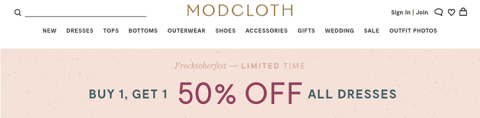
Pair a sale announcement with a link to the eligible products and explain when the offer ends. Check whether the offer produces orders at a margin you can sustain.
Show stock counts only when they reflect actual inventory. If you use a countdown, have it end with the offer rather than restart on each visit. Publish the same offer terms in your email, social post, and store.
Give customers pertinent information up front. That way, they’re more likely to make a purchase.
Invite customers to leave honest product reviews after receiving their orders. Display useful details about fit, performance, or use, and respond to recurring concerns. Avoid treating a result from another store’s testimonial test as the uplift your business should expect.
Explain return deadlines, product exclusions, refund handling, and who pays return shipping before checkout. If you offer a money-back guarantee, define its terms and make them easy to find. Use customer questions to identify missing information on your product pages.
Offer a contact method your team can maintain, such as email, chat, or phone. Put it near product and delivery information, and publish support hours and expected response times.
A toll-free number is an option when phone support suits your customers and staffing. For a small launch, a monitored email address and clear product answers may be a more manageable starting point. Record common questions and update the store to answer them.
Use social media to show how your products fit a customer’s needs. Choose a channel where you can reach the intended audience and consistently answer questions, then give viewers a clear next step on your website.
Judge social promotion by useful visits and orders as well as engagement. A popular post does not by itself show whether viewers are suitable customers.
The biggest challenge is to find the right approach to your prospects and make them want to become your customers. The following tips will help you nurture your clients through social networks.
Successful companies post video content that demonstrates how consumers can use their products, or how their products outperform those of their competitors.
Blendtec’s Will It Blend series shows its blenders in unusual demonstrations, and its YouTube channel provides a place to explore the format. The useful lesson is to make a product capability visible in a memorable way.
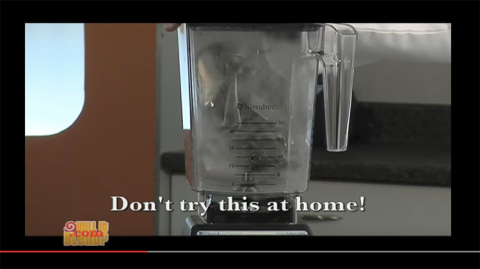
For your store, begin with a demonstration that answers a purchase question: how the product works, how to choose a size, or how it compares with another item you sell. Use a descriptive title and direct viewers to the product shown. Evaluate visits and orders from the video instead of assuming views translate into sales.
Create content around the questions customers need answered before buying. A selection guide, care tutorial, or product comparison should solve a specific problem and link to the relevant products when useful.
Choose social channels based on where your intended customers participate. Adapt the format to that channel and reuse a useful guide as a short video, image sequence, or email. Check whether visitors reach the matching product page and complete a meaningful action.
A relevant creator or complementary business can also help distribute a useful guide. As a small test, agree on the content, destination page, and cost in advance; use a distinct campaign link to evaluate the visits and orders it brings.
You can use content to educate your customers on the kind of lifestyle that fits your product.
Consider Beardbrand’s YouTube channel and its brand story, which connects grooming with founder Eric Bandholz’s personal experience and confidence. This illustrates how a product can be presented in the context of a customer’s routine and goals.
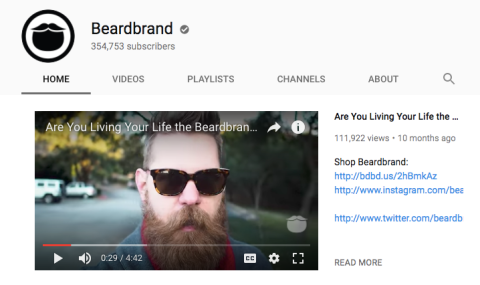
For your store, show a realistic use case: a grooming routine, a small-space setup, or a gift occasion. Explain which products appear and link to them. Ask permission before republishing customer photos, and use the example to help shoppers judge whether the product suits them.
Start with one primary acquisition channel and one way to follow up with interested customers. Use this suggested sequence to avoid launching several campaigns before you can evaluate them.
| Question | Measure | How to use it |
| Are promotions bringing shoppers? | Visits by campaign or channel | Check that visitors reach the intended product or collection. |
| Are visits turning into orders? | Purchasing sessions ÷ sessions × 100 | Use the same audience and period for both counts. |
| What does a new customer cost? | Campaign spend ÷ new customers attributed to it | State the attribution window; include agreed campaign costs. |
| Is the promotion affordable? | Order revenue less product, fulfillment, payment, discount, and promotion costs | Use a consistent revenue basis to avoid subtracting discounts twice. |
For example, $200 in campaign spend divided by 10 attributed new customers is a $20 acquisition cost. This is an illustrative calculation, not an industry benchmark or proof that all 10 customers were incremental. Compare it with what your business can afford after its other costs.
When deciding how to promote an e-commerce website, start with a clear audience, a discoverable product page, and one focused campaign. Use email and support to answer the questions that prevent interested shoppers from completing an order.
Review which promotions bring suitable shoppers and orders your business can fulfill profitably. Improve a weak destination page before buying more traffic, and expand a channel only when the results justify the next test.
Promotion requires ongoing testing; it does not guarantee steady traffic or profit. Keep a record of each campaign’s audience, offer, costs, and results so the next decision is based on evidence.
Dmitriy Nesterov is a marketing officer at QuartSoft Corp., a web design and development agency that helps start-ups and e-commerce businesses build their professional online presence.
See full profile