
Micro SaaS: How Solo Developers Build Profitable Products
Solo developers now make up 35% of startups. Discover how micro SaaS lets individuals build and launch profitable products without a big team.
Updated May 29, 2026

Whether you're building an e-commerce site, a portfolio, or a business website, the key factors for success remain the same: conduct market research, choose the right branding elements, and keep your business's future goals in mind. With our web development checklist, your team will know how to start a web development project.
Creating a website isn't just about combining a few pages and calling it a day. It requires careful planning, thoughtful design, and continuous maintenance to drive the results you desire. Now that there are 5.52 billion internet users worldwide — that's 67.5% of the global population — having an online process for your personal or enterprise brand is non-negotiable.
A website makes you more visible to your clients, customers, or followers. It's where you can sell your products, highlight your services, showcase your qualifications and work, or share your knowledge and opinions with an interested follower base. A website gives you digital real estate to establish authority in your field, build trust with your target audience, and ultimately generate revenue or foster connections.
Looking for a Software Development agency?
Compare our list of top Software Development companies near you
After analyzing the reviews of 71,742 web development companies, we found specific trends in working with a web development team. The idea of “communicative” was mentioned nearly 29,000 times.
Some of the top trends include:
More importantly, these verified companies are open to feedback and emphasize frequent communication, so you're not left in the dark about your project's progress. These companies keep you in the loop and use your feedback to deliver satisfactory results.
Since your website is often the first point of contact between you and your visitors, it must make a stellar first impression. To achieve this, we've compiled a web development checklist for you.
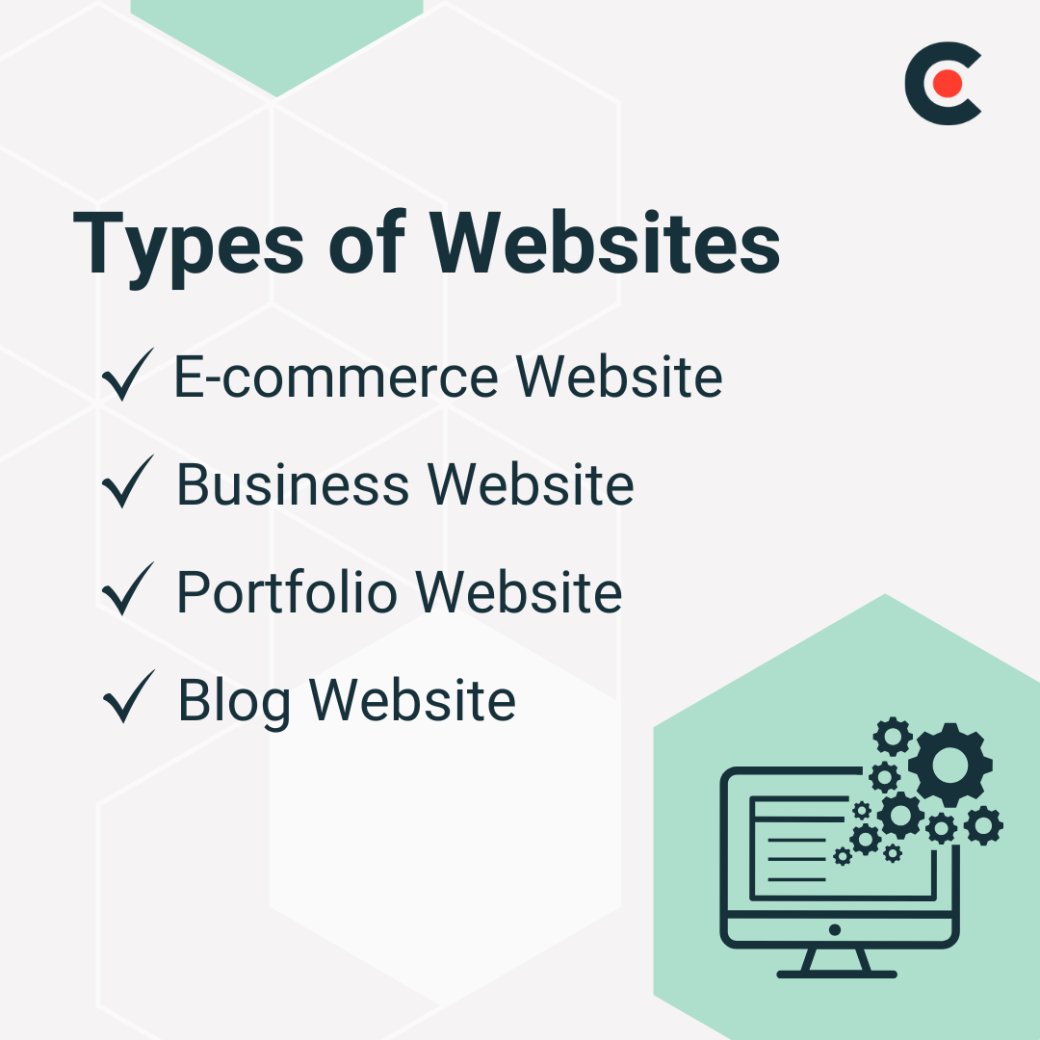
There are many different kinds of websites with different purposes and designs based on their users' needs, but there are four main types of sites that an individual or business might need to create.
An e-commerce website is one where customers can shop for products. These websites typically have product categories, product pages, shopping carts, checkout pages, and payment gateways. They're meant to generate revenue, so they must be persuasive and user-friendly.
A business website is a company's online presence that has information about its services, products, or general company information. It may also have features like a contact form, collection of white papers, newsletter sign-up, company blog, booking appointments page, or lead generation forms.
Niche professionals, including artists and freelancers, often create portfolio websites that exhibit their past work, qualifications, testimonials, and projects. These websites may also have contact or booking forms for potential clients to reach out.
A blog website hosts written content, such as articles and blog posts. Bloggers use these websites to share their ideas, experiences, knowledge, and expertise on a particular topic. They may also have affiliate marketing, merchandise, sponsorships, or ads as sources of income.
When creating a web development checklist for your project, here are the standard steps to follow:
In this phase, you decide what you expect from your website. What are your objectives? Maybe you want an e-commerce website to offer your products and services to prospective clients. Alternatively, you might want to share your home decor tips and ideas with people through a blog website.
Stephen M. Herz, CEO of Moonstone Interactive, says, “All projects require a variety of solutions and decisions. The client should be comfortable working with the developer to fulfill the client’s business goals and website requirements and resolve any issues that may arise.”
Whatever you have in mind, specify it now. You also need to spell out additional requirements like:
A clear idea of your expectations will let you communicate them better to a web development team. According to Clutch reviews, there is a high-level trend for web development companies that are able to “translate ideas into concepts” and “help clients think outside the box.”
Each website type has its technical requirements, functionality, use case, design, and end user. Your selection should be based on the target audience and the site's purpose.
Having a strong “technical understanding” and being able to help with “seamless project integration” were also highlighted in the reviews of the top web developers on Clutch.
For example, if you want to create a website for your brick-and-mortar shop to reach people in other areas with online sales, you'll need an e-commerce website. Such a site has more technical and SEO requirements than a portfolio website which is comparatively simpler and is designed to showcase your work.
The type of site you want to build should also influence your choice of platform. For example, WordPress's extensive plugin ecosystem and user-friendly interface make it suitable for small e-commerce sites and blogs. In contrast, for large-scale e-commerce, Shopify or WooCommerce (on WordPress) provide specialized tools that simplify online store management.
Wix and Squarespace are flexible and offer more customization options, which means they can be used for personal websites, portfolios, and business sites.
McKinsey's research shows that businesses that can use data and creativity in sync grow their revenues at 2x the average rate of S&P 500 companies. While design and creativity are integral components of website development, conducting some market research is also essential for success.
You'll want to determine:
These findings will help you gauge what your audience is already accustomed to and what they expect from you. Collecting this data will also let you use predictive analytics to prepare for future trends.
Since 55% of first impressions are based on visual cues, you need to get the branding right on your website. If you already have other avenues (such as a physical store) where customers know you, use the same branding elements throughout the website. These include your business logo, colors, fonts, tone, and overall aesthetic. A cohesive brand identity helps improve brand recognition, which enhances customer trust.
If you're building your brand from scratch, use branding material that aligns with your audience and business goals. Something as trivial as the color of your product can result in 90% of customers making snap judgments about it.
Use your market research to determine which branding elements will work best for your industry. For example, if you're an apparel store specializing in business attire, use subtle colors and professional-looking fonts. In contrast, a toy store's website may want to use bright colors, vibrant visuals, quirky fonts, and a playful tone.
Your website will need different features based on its type.
For example, a portfolio site requires a gallery displaying your work, a contact form for potential clients, and perhaps social media links. A blog website should have a search bar where visitors can find topics they're interested in. It should also have categories, tags, share buttons, and a comments section if you want to develop a community. Meanwhile, an e-commerce site requires an SSL certificate, a shopping cart, product pages, and payment gateways.
Ideally, you want your target audience to have a seamless experience. Consider them when choosing website features and functionalities.
Kyle Brigham, Chief Strategy Officer of Marcel Digital, believes features and functionalities should depend on the project. Still, a few good to-haves for websites are a “UX-focused design, integrations, and SEO-optimizations.”
What are they looking for? What will make their browsing experience easier?
Keep scalability in mind when designing a website. Your online presence may not be extensive, but it will likely expand. It will save you trouble and money if you make sure your website is adaptable enough to meet the requirements that come with more visitors, content, products, and features.
For example, you should choose a web host to grow with you. It’s best to offer flexible plans, starting with affordable options for small sites that are capable of handling increased traffic as your audience or customer base grows. Without this foresight, you might face downtime during high-traffic periods or need to make costly, disruptive migrations to a new server.
It's also important to consider the longevity of your branding elements. Trends may come and go, and you don't want your business to seem dated. Whether you want to feel timelessly modern or suggest a specific retro appeal, you don't want to link your identity to something that might have been briefly popular a few years ago.
One of the most important decisions you have to make is who to hire for your web development projects. If you don't have an in-house staff member with the resources and expertise to create a good public face for your business, consider working with a professional web development partner.
“A client should look for a web development partner with a proven ability to align technical expertise with creative vision…equally important is a strong portfolio of international projects, effective communication skills, and a deep understanding of local and global market trends,” said Arthur Leal, Project Owner at Buzzvel.
A good web development company doesn't just build your site; they'll help secure your domain, register your website, and handle all the technical aspects, like server setup, security protocols, and site optimization. They may also offer SEO services and optimization across devices, especially mobile phones, responsible for about 60% of global web traffic.
Additional Reading: 'Web Development Services Guide'
Finding the right web development company can be overwhelming, especially if you must research multiple business sites to learn about them. Clutch shows you top web developers based on your requirements and lets you browse an extensive collection of user reviews to ensure you choose the right developer.
“Look at reviews, request referrals, review case studies, ask questions about how they operate and who will be working on your site or project. It’s easy to get lost in flashy sales materials and sexy looking sites,” said Brigham. “You want to get a better sense of what it will be like to work with them, not just the finished product.”
Every review on Clutch is verified using the reviewer's account on the platform, their work history, and proof of identity.
By going above and beyond in its review vetting methodology, Clutch provides transparency and reliability that sets it apart from other business directories.
Our web development checklist will help you complete your website creation project without missing crucial steps. However, launching a website is just the beginning. Once your site is live, the real work begins.
Post-launch, focusing on maintenance, usability, updates, and performance optimization is essential. Monitor your site regularly for security vulnerabilities, broken links, technical SEO issues, and outdated content to keep it functional and user-friendly. A reliable web development company can also handle post-launch operations to keep your website on par with industry standards and search engine requirements.