Software development can be a difficult concept for tech novices, but our glossary is here to help you understand the most relevant terms for your development projects.
It's built for business owners, project leads, and decision-makers who work with developers but aren't developers themselves.
Looking for a software development partner? Compare the top Software Development companies on Clutch.
Looking for a Software Development agency?
Compare our list of top Software Development companies near you
100 Software Development Terms to Know
Learn the essential terms to know for a software development project.
A
- A/B Testing: A method of comparing two versions of a feature, page, or design to determine which performs better with real users. One group sees version A, another sees version B, and the results determine which to keep. A/B testing is common in product development and digital marketing.
- Acceptance Testing: The final stage of testing in which the client or end user verifies that the software meets agreed-upon requirements before it's officially released. It's the last gate between development and delivery.
- Adaptive maintenance: Updates made to software when it moves to a new operating system, environment, or platform — not because of a bug, but because the surrounding technology changed.
- Agile Software Development: A development approach that breaks work into short cycles (called sprints) to allow for flexible planning, continuous feedback, and incremental delivery. Teams using Agile ship working software frequently rather than waiting for a single large release.
- Algorithm: A sequence of steps that will accomplish a task if followed correctly. Every piece of software is built on algorithms — from sorting a list to processing a payment.
- Alpha testing: Testing that occurs within a software development company before any external users see the product. It catches obvious issues before the software moves to beta.
- API (Application Programming Interface): A set of rules that allows one software application to communicate with another. APIs are what make third-party integrations possible — like connecting your CRM to your email marketing platform, or enabling "Log in with Google" on a website.
B
- Backend: The server-side layer of software that users never see directly. It handles data storage, business logic, and the processing that powers what appears on screen. (Compare: Frontend)
- Beta testing: Testing conducted with real users (clients, selected personas, or the public) to gather feedback before a full launch. Unlike alpha testing, beta happens outside the development team.
- Bottom-up design: An area of program refinement that starts with smaller modules and builds into a complete software program.
- Bugs: An error or flaw in software code that causes it to produce an unexpected result or behave incorrectly. Bugs range from minor cosmetic issues to critical failures that crash a system.
C
- Cloud Computing: The delivery of computing services — including servers, storage, databases, networking, and software — over the internet ("the cloud"). Cloud providers like AWS, Google Cloud, and Microsoft Azure let companies scale infrastructure on demand without owning physical hardware.
- Code Refactoring: The process of editing code to reduce or eliminate technical debt.
- Compiler: A program that translates a high-level program into an independent one.
- Containerization: The process of packaging an application and its dependencies into a container — a self-contained, portable unit that runs consistently across any environment. Docker is the most widely used containerization platform.
- CI (Continuous Integration): A development practice where developers frequently merge their code changes into a shared repository, and automated tests run on every merge to catch conflicts or errors early. CI keeps the codebase stable as multiple developers work simultaneously.
- Corrective Maintenance: Takes place after a software is installed if previously undetected errors pop up.
- CSS (Cascading Style Sheets): A style sheet language that controls how HTML elements are displayed — including colors, fonts, spacing, and layout. CSS separates the visual presentation of a website from its content structure.
D
- Data Abstraction: A principle of data modeling that emphasizes the separation between the external interface and internal implementation.
- Data Modeling: A process used in object-oriented languages that identify objects and how they relate.
- Data Structures: A specialized format for organizing and processing data.
- Debugging: The process of finding and fixing errors (bugs) in a software program. It typically involves reproducing the issue, identifying the root cause in the code, applying a fix, and verifying the fix didn't introduce new problems.
- Dependencies: Correlations between tasks that show in which order they should be executed.
- Deploy: The process of making software available in its target environment — such as pushing code to a production server so end users can access the latest version.
- DevOps: A set of practices that combines software development (Dev) and IT operations (Ops) to shorten the development lifecycle and deliver updates more reliably. DevOps teams use automation, continuous integration, and continuous delivery (CI/CD) to ship code faster with fewer errors.
- Docker: A platform that packages software and its dependencies into standardized units called containers, so the application runs consistently across any environment — development, testing, or production. Docker makes it much easier to deploy and scale applications.
E
- End User: The individual that uses a particular product.
- Event Driven: A system that responds to an external event.
- Event Driven Language: Designed to handle external events.
- Executable Code: Code that can be run independently without translation.
F
- Frontend: The client-side layer of software that users see and interact with directly — the visual interface, buttons, forms, and navigation of a website or app. (Compare: Backend)
- Functional Language: A language that uses the evaluations of expressions rather than commands.
- Full Stack: A software developer that can work on the frontend and backend.
- Framework: A pre-built structure of code, tools, and conventions that gives developers a foundation to build on instead of starting from scratch. Common examples include React (for frontend interfaces) and Django (for Python backends).
G
- General Purpose Language: A language that can be used to program solutions that cover a range of situations.
- Git: A distributed version control system that lets developers track changes to their codebase, collaborate without overwriting each other's work, and revert to earlier versions when needed. Git is the most widely used version control system in software development today.
- GraphQL: An API query language developed by Meta that allows clients to request exactly the data they need — no more, no less. GraphQL is an alternative to REST APIs and is preferred in applications where flexible, efficient data fetching is critical.

H
- Hardware: Physical parts of a computer or another electronic device.
- High-level Language: A language that is easily understood by programmers and development teams.
- HTML (Hypertext Markup Language): The standard markup language for creating web pages. HTML defines the structure and content of a webpage — headings, paragraphs, links, and images — which CSS then styles and JavaScript makes interactive.
- Human Computer Interface: The interface that allows the program to interact with the outside world.
I
- IDE (Integrated Development Environment): A software application that combines a code editor, debugger, and build tools in one interface — giving developers everything they need to write, test, and run code without switching between separate programs. Examples include VS Code, IntelliJ IDEA, and Xcode.
- Independent Test Group: Testing of software by a group outside of the development team.
- Intermediate Code: Compiled code that is produced for a target computer.
- ISO: A quality assurance system for software development.
- Iterative: An iterative process that involves feedback and repetition.
Additional Reading: 'How to Budget for Custom Software Development [With Template]'
J
- Javascript: A programming language that adds interactivity and dynamic behavior to web pages. It runs in the browser and is one of the three core technologies of the web, alongside HTML and CSS. JavaScript is also used on the server side via Node.js.
K
- Kanban: A visual project management method that uses a board with columns (typically "To Do," "In Progress," "Done") to track work items through a workflow. In software development, Kanban helps teams limit work in progress and maintain a steady delivery pace.
- Kubernetes (K8s): An open-source system for automating the deployment, scaling, and management of containerized applications. Kubernetes is commonly used alongside Docker in production environments to ensure applications stay available and handle traffic spikes.
L
- Linear Search: A standard algorithm that performs searches on data items in sequential order.
M
- Machine Code: Native computer code that can be understood without translation.
- Machine Learning: The study of algorithms and models that learn from data sets to make predictions or decisions on new data.
- Maintenance: The upkeep of a software program.
- Markup Language: A text-encoding system that consists of symbols and notations to control a structure or relationship within a program.
- Methodology: A technique that enables the design and development of software to be implemented.
- Metric: In software, the measure of whether a product feature or task is quantifiable or countable.
- Microservices: An architectural approach in which a software application is built as a collection of small, independently deployable services — each handling a specific function (like authentication, payments, or notifications). Microservices make it easier to scale and update individual parts of an application without redeploying the whole thing.
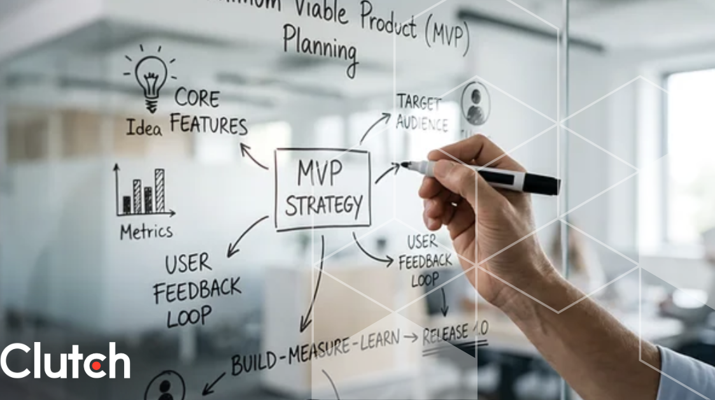
- MVP (Minimum Viable Product): The simplest version of a product that includes only the core features needed to test the product concept with real users. Building an MVP first lets teams gather feedback and validate ideas before investing in full-scale development.
N
- Normal Operation: Running of a program under expected normal conditions.
O
- Object: A data item that can be manipulated by a computer program or system.
- Object-oriented Programming: A programming system based on the idea that objects that contain both data and code can modify data.
- Open Source: Software whose source code is publicly available for anyone to view, use, modify, and distribute. Open source projects (like Linux, Python, and WordPress) are maintained by communities of contributors and often free to use.
- Operating System: The software system that supports a computer or product’s basic functions.
P
- Performance Testing: A form of testing that evaluates how software behaves under load — measuring speed, response time, and stability when many users are active simultaneously. Performance testing helps identify bottlenecks before launch.
- Programmers: A section of a development team that’s responsible for coding, testing, implementation, and maintenance.
- Programming Language: A system of notations for writing software programs.
- Project Manager: Member of the development team that supervises the project.
- Prototype: A simple, early version of software used to test ideas and gather feedback before full development begins. Prototypes help teams validate that a concept works before investing in building it out completely.
- Plugin: An add-on that adds new functionalities to a host program or software without alternating the host itself.
- Pull Request: A request submitted by a developer asking the team to review and approve their code changes before merging them into the main codebase. Pull requests are the primary mechanism for code review in collaborative software projects.
Q
- QA (Quality Assurance): A systematic process of testing and evaluating software to ensure it meets defined quality standards before release. QA teams identify bugs, inconsistencies, and performance issues across the product.
Check this out: 'Software Development Pricing'
R
- Relational Database: A database structured to recognize relations among any stored items or objects.
- Regression Testing: The process of re-running existing tests after a code change to confirm that new updates didn't break features that were previously working. Every deployment should include regression testing.
- REST API: A widely used architectural style for building APIs that allows different software systems to communicate over HTTP using standard methods (GET, POST, PUT, DELETE). REST APIs power most of the integrations between web applications today.
- Repository: A place where data is gathered and protected.
- Runtime: The length of time a program takes to run.
S
- SaaS (Software as a service): A software delivery model where applications are hosted in the cloud and accessed via the internet, typically on a subscription basis. Examples include Salesforce, Slack, and Google Workspace. Users don't install or manage the software locally.
- Scripting Language: Used for writing smaller programs or scripts that enhance existing software.
- Scrum: An Agile framework for managing software development in which cross-functional teams work in short, time-boxed sprints (usually 1–4 weeks). Scrum includes defined roles (Product Owner, Scrum Master, Dev Team) and ceremonies (sprint planning, daily standups, sprint reviews).
- SDLC (Software Development Life Cycle): The structured process a software team follows to plan, design, build, test, and deploy a software product. Common SDLC models include Waterfall, Agile, and DevOps.
- Software: Programs that help a computer system execute tasks.
- Software Engineering: An area of computing where the emphasis is on the development of high-quality software.
- Source Code: The code for a program that’s written in a high-level language that is then translated into machine code.
- Syntax: The structure or grammar of a statement in a given language.
T
- Technical Debt: The accumulated cost of shortcuts, quick fixes, and suboptimal code decisions made during development. Like financial debt, technical debt accrues interest — the longer it goes unaddressed, the harder and more expensive the code becomes to maintain or change.
- Testing: Running the program to ensure its reliability.
- Test Plan: A strategy that involves testing software under different conditions.
- Top-Down Design: A design approach that involves putting larger systems into smaller components.
- TypeScript: A typed superset of JavaScript developed by Microsoft that adds static type checking to JavaScript code. TypeScript catches type errors before runtime, making large codebases easier to maintain and scale. It compiles to plain JavaScript and is widely used in enterprise web development.
U
- Unit Testing: Testing that isolates and verifies the correctness of individual components of code — typically a single function or method — independent of the rest of the system. Strong unit test coverage makes it faster to catch bugs and safer to refactor code later.
- Usability: A quality system to determine how easy something is to use.
- User experience: Software design that focuses on usability and user satisfaction.
- User interface: Software design that focuses on the looks and style.
V
- Version Control: A system that tracks changes to code over time, allowing developers to collaborate without overwriting each other's work, revert to earlier versions, and understand the full history of a codebase. Git is the most widely used version control system.
W
- Waterfall Model: A sequential software development model that moves through defined phases in order — requirements, design, implementation, testing, deployment, and maintenance — with each phase completed before the next begins. Unlike Agile, Waterfall offers less flexibility to change requirements mid-project.
- Web App: An application program on a server that is delivered over the Internet.
- Website: Collection of web pages that share a domain name.
X
- XML (Extensive Markup Language): A markup language for encoding documents in a format that is both human-readable and machine-readable. XML is commonly used to transmit structured data between systems.
Y
- YAML: A human-readable data format commonly used for configuration files in software projects. YAML files are frequently used in tools like Docker, Kubernetes, and CI/CD pipelines to define settings and workflows.
Z
- Zero-day Vulnerability: A security flaw in software that is unknown to the vendor and has no patch available. Zero-day vulnerabilities are especially dangerous because attackers can exploit them before developers have a chance to fix them.
About The Survey
Hiring a software development partner means navigating a lot of technical language. This glossary covers essential software development terms — organized A to Z — so you can follow conversations with your dev team, evaluate proposals, and manage projects without getting lost in jargon.
About the Author
Anna Peck
Content Marketing Manager at Clutch
Anna Peck is a content marketing manager at Clutch, where she crafts content on digital marketing, SEO, and public relations. Alongside editing and producing engaging B2B content, she plays a key role in Clutch's awards program and content initiatives. Originally joining Clutch on the reviews team, she now focuses on developing SEO-driven content strategies that deliver valuable insights to B2B buyers searching for the best service providers.
See full profile