Snapchat is an underutilized platform for marketers looking to reach younger audiences. Learn how it can complement your video ad strategy, build awareness, and help your business grow.
A Clutch survey of 260 professionals in the marketing industry found that almost 76% of respondents consider video a key part of their advertising strategy.
Many use it on TikTok to connect with younger generations like Gen Z. But with TikTok’s uncertain future in the United States, now could be the right time to explore video ads on alternative platforms like Snapchat.
Looking for a Social Media Marketing agency?
Compare our list of top Social Media Marketing companies near you
Over 85% of Snapchat users are Gen Zers and Millennials. This makes it an ideal platform for targeting those elusive younger generations that can be hard to connect with elsewhere.
Despite that, only 2% of marketers surveyed by Clutch.co say they currently use Snapchat for video advertising.
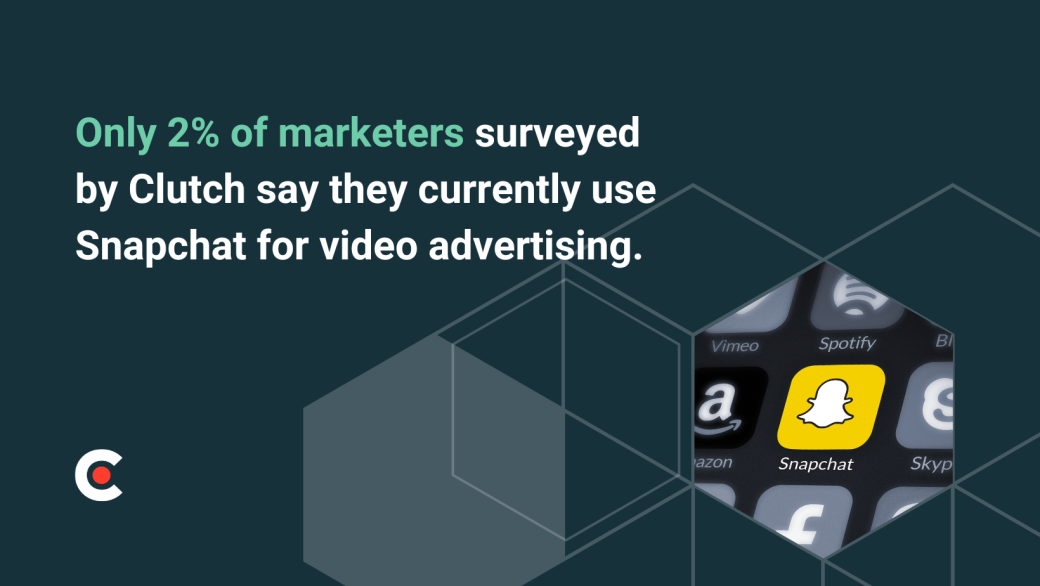
This makes it a potentially valuable opportunity for your marketing team. Sharing video ads on Snapchat could help you stand out from the competition and build awareness where others aren’t. To get there, you’ll need to understand how Snapchat advertising works, the best practices for driving engagement, and key challenges to watch out for. This guide covers it all.
Keep reading to learn how to use Snapchat ads to help your business grow.
The Rise of Snapchat Advertising
Snapchat began in 2011 as a messaging app for private conversations.
The gimmick: Messages were only accessible for a short time.
The app has grown considerably since then, becoming one of the world’s most widely used social media platforms.
Additional Reading: ‘How to Make a Group Chat on Snapchat’
Snapchat’s slow transformation into a powerful advertising channel has mirrored the journey of sites like Facebook and Instagram.
Rafał Blecharz, VP and Head of Creatives at Animwood, explains: “Social media platforms typically evolve through three stages: first, providing entertainment; second, offering educational content; and finally, becoming a full-fledged marketing tool.”
In 2014, Snapchat made that final jump to become a marketing tool with the release of Snap Ads. It has since created the Snapchat Ads Manager for self-service advertising and launched Snap Pixel for tracking conversions and retargeting.
Now, you can find your target audience on Snapchat in many of the same ways you target them on other social sites. The platform offers advanced audience segmentation based on interests, behaviors, and other custom factors you choose.
These features have made Snapchat’s ad infrastructure comparable to that of Facebook and TikTok.
However, advertising on Snap offers the added benefit of less competition. This helps keep costs low while still allowing you to target your ideal audience, a combination of benefits that can be hard to find on other social sites.
Types of Snapchat Ad Formats
Snapchat’s ad infrastructure is ready for your next campaign. Now you just have to decide which types of ads you’ll use to connect with your target audience. Snap offers the following formats to consider.
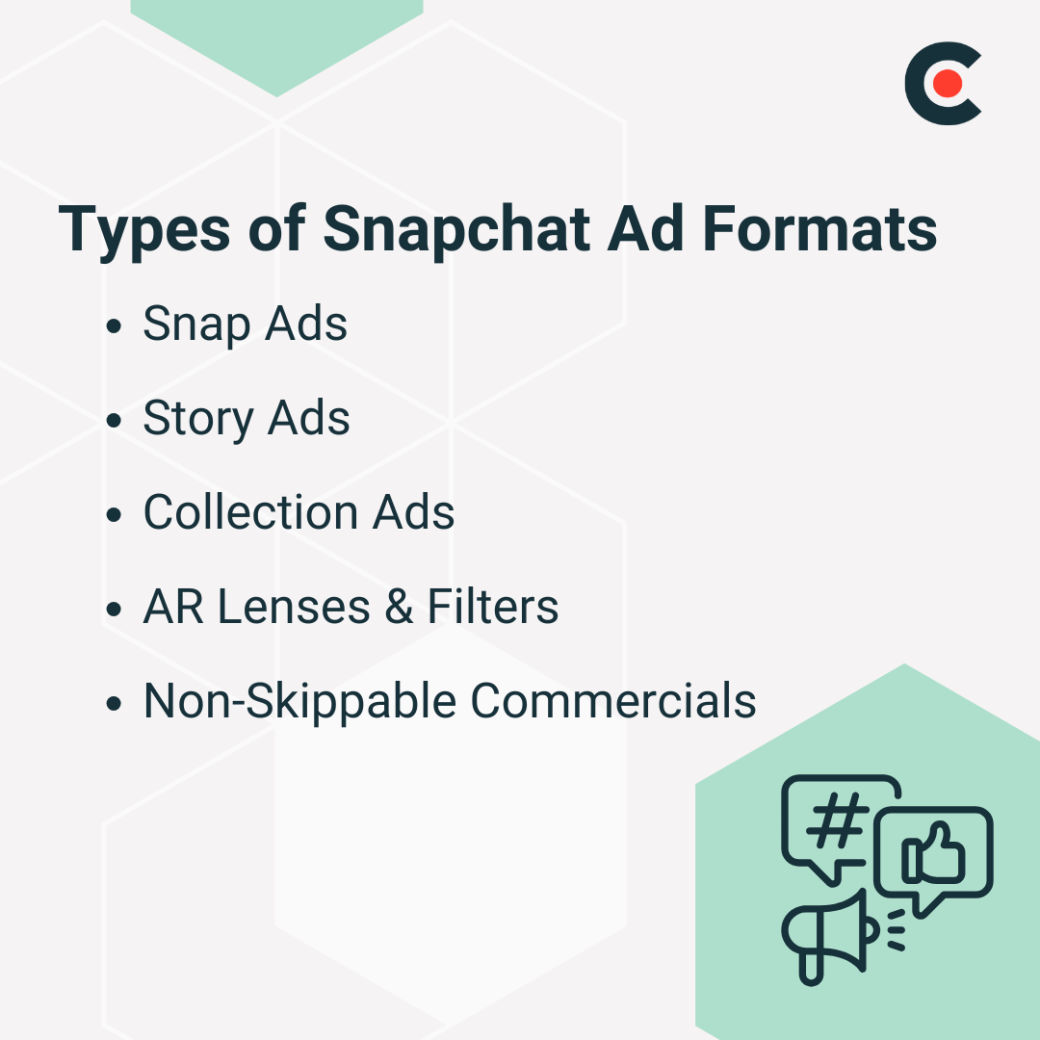
Snap Ads
First, you can pay for Snap Ads, which are full-screen vertical videos that last up to three minutes. They appear between stories and are great for brand introductions, advertising limited-time deals, and highlighting product features.
You can include a CTA on your Snap Ads to drive conversions. Brands often tell users to “swipe up” to download their app, visit their website, or explore a product page.
Source
These ads also integrate with Snap Pixel, so you can track performance, A/B test message variations, and optimize over time.
One drawback is that users tend to swipe through Snapchat stories quickly. If your ad doesn’t hook them in the first few seconds, they may move on without ever really engaging with your brand. So, if you use Snap Ads, focus on capturing attention immediately before sharing your message.
Story Ads
Another option is Story Ads, which appear in users’ Snapchat Discover sections. When users tap a Story Ad, they see a sequence of Snaps that looks something like a slide show.
This makes Story Ads ideal for building narratives and sharing mini content series.
As an example, let's look at how a hair dye brand could use Story Ads:
- Educational content relating to the brand’s products, like showing users how to get more natural colors
- Thought leadership content about industry trends, like vegan and sustainable hair care products
- Customer testimonials, like authentic user-submitted snaps about why they love a type of hair dye ads
- Behind-the-scenes content taking users through the journey of designing hair dye for curly hair
Story Ads provide an opportunity to engage users with sequenced storytelling. This requires more planning on your part, but it can also help you engage your target audience more organically. Just note that users have to tap on your Story Ads to see them, so you may not get as many views as you would with other types of Snapchat ads.
Collection Ads
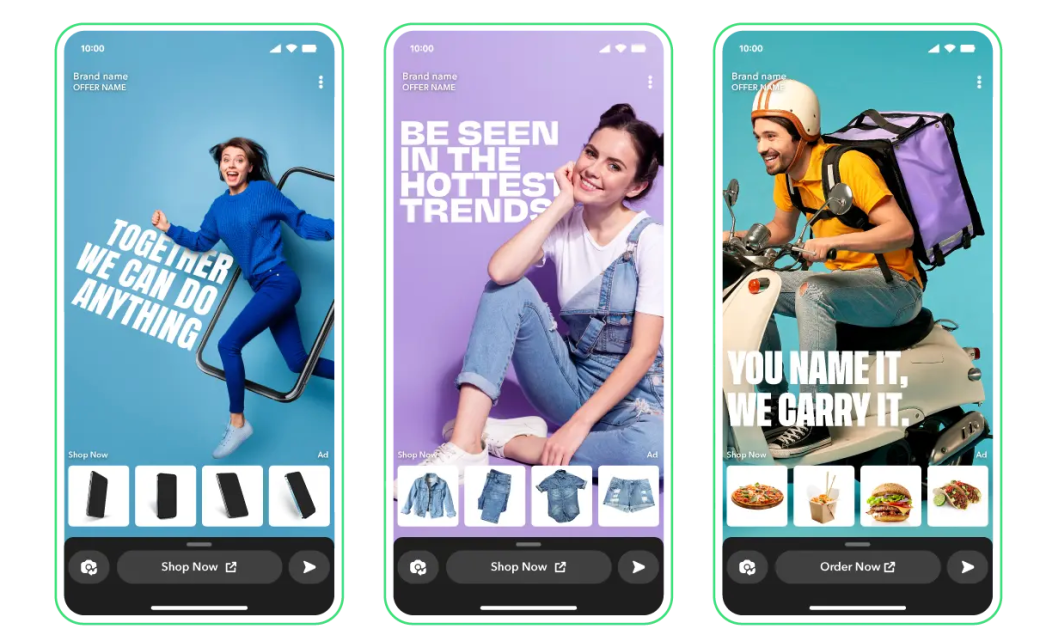
Next up are collection ads. These let you share a series of products or services under a video. For example, an e-commerce clothing brand could post a video of models wearing its clothes and share links to each item in the Collection Ad under the video.
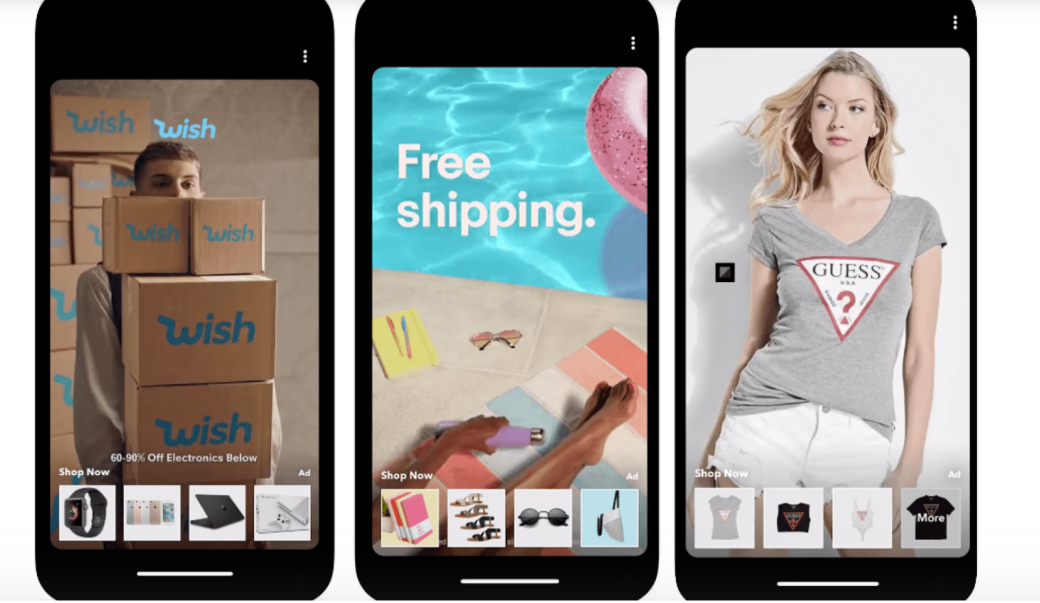
source
This option could be right for your brand if you want to drive direct engagement to more than one product. However, Collection Ads work best with high-quality visuals. If your products don’t lend themselves to this, another kind of ad may be a better fit.
AR Lenses and Filters
Snapchat also offers branded augmented reality experiences through AR lenses and filter ads. These encourage users to share Snaps featuring your brand. For example, a company that sells glasses might create a filter that lets users try on different pairs virtually or users trying out a new hairstyle.
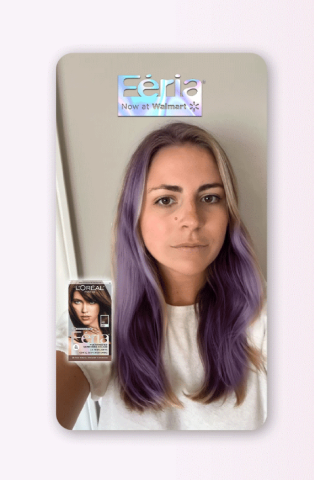
Users who like the way they look could share the content with their friends, increasing the company’s reach organically.
This interactivity works great at trade shows, campus recruiting stops, and virtual events. It gets people talking about your company and products in ways that other formats generally can’t match.
The main downside is the investment you’ll need to make to share AR lenses and filters on Snapchat. You typically have to create a 3D model, animate it, and prepare the asset for AR design. That all takes development hours, which means spending more money to get up and running.
Non-Skippable Commercials
Finally, you can run six-second ads that play between premium content, like Snapchat Shows. These are non-skippable, making them the best option for guaranteed views and brand exposure. Plus, they’re placed in premium content, which tends to have higher viewership rates. This can help your brand appeal to a larger audience.
The downside is that these commercials interrupt the show your target audience is watching. That can create frustration, which could detract from the kind of impression you’re trying to leave. You’ll also need to condense your message into a short, six-second window. That’s not always easy to do while trying to share complex benefits or product details.
Ultimately, each type of Snapchat Ad can be effective for pursuing different goals. Many companies use a combination of these to connect with a target audience in more than one way.
When Snapchat Works Best
Like all marketing channels, Snapchat has pros and cons that determine whether it’s a good fit for your needs. For example, while TV ads are great for reaching a large, diverse audience, they’re not as good for targeting niche consumer groups.
So, when should you use Snapchat over other channels? Here are three scenarios when it works best:
- Product launches, sales, and announcements: Snapchat is where users go to find urgent, in-the-moment content. This makes it a great fit for limited-time deals and special announcements. You can use Snap Ads to tease new products, tap into the excitement, and get people interested in time-sensitive company events.
- User-generated content: Snapchat enables you to generate organic social mentions through branded filters and AR lenses. These help spread the word about your product with minimal ongoing ad spend. For example, Planet Fitness created a "Big Fitness Energy" lens for users to record themselves exercising surrounded by a glowing branded filter. A filter keeps people talking about your company without frequent posts by your team.
- Live and virtual events: Finally, you can use Snapchat to chronicle your live and virtual events. This is a good way to spread the word online, encourage attendees to share their own perspectives, and increase the event’s exposure.
For some industries, like media and entertainment, Snapchat works better than other channels. In 2017, Netflix ran a Stranger Things Snapchat AR experience to build hype for the latest season. The experience allowed users to explore environments from the show in AR to uncover clues about the plot and its characters. The gamified interactivity was a hit, helping Netflix engage viewers at a level other platforms didn't offer.
Any industry heavily driven by visuals or hype can do well advertising on Snapchat. The platform may also be worth more of your advertising budget if you’re trying to appeal to younger consumers specifically.
Snapchat’s Challenges & Considerations
Snapchat can be a useful marketing platform, but it’s not without flaws. Understanding these drawbacks will help you save money and develop the right approach to advertising on Snap.
Reach and Engagement
Snapchat has a built-in limitation on the kinds of demographics you can reach. The vast majority of users are under 30, which may not align with your target market. For example, Taco Bell has done well on Snapchat, given its focus on younger demographics.
The company was one of the first to embrace Snapchat's AR filters in 2016, running a Cinco de Mayo campaign with a lens that turned users' heads into giant tacos. The lens racked up over 224 million views in a single day.
As this silly yet successful example illustrates, you may need to revamp your messaging to fit in on Snapchat. If your branding is buttoned-up and serious, it could feel out of place, and users may not engage. Consider researching some sample ads that have done well on Snapchat before investing to make sure you get it right.
Additional Reading: ‘YouTube Advertising: Video Ads Beyond TikTok’
Learning Curve for Advertising
Snapchat’s ad tools differ from those on Meta and Google, which most marketers are familiar with.
There are also Snap-specific best practices to learn, including:
- Designing ads that function with the sound on or off
- Creating vertical-first assets to fit Snapchat’s mobile-native layout
- Cutting down on polish to share ads that feel like they belong on the platform
- Testing multiple variations with Snapchat Ad Manager
- Retargeting users with Snap Pixel
- Creating custom audiences from site visitors, app installers, and other groups
These tools take time to learn, which could mean more time between investing in Snapchat ads and getting value from them.
Creative Fatigue
Snapchat users tend to swipe through Snaps very quickly. This means ads can wear out faster on Snapchat than they do on other social media platforms. You may need to redesign content more frequently than on other platforms to maintain your target engagement rate throughout a campaign.
That’s why some businesses build longer creative pipelines when advertising on Snapchat. For example, you might want to design several versions of an ad at the beginning of a campaign so that you can update it every week and keep users engaged. This is also why A/B testing matters on Snapchat. It can help you understand which ads work best with the platform's unique focus, so you can try similar ideas moving forward.
Snapchat Advertising in the B2B Space
Marketers tend to think of Snapchat as a B2C channel, but it can also deliver value to B2B brands. Think of it as a unique way to introduce your product to potential buyers, which may align more with their preferences.
Gen Zers and Millennials are starting to move into leadership roles at work, which means they have more say over purchasing decisions. Snapchat can help your brand meet these potential buyers in a more casual, human way than other platforms.
Joyce Collardé, Director of SEO & Content at Obility, puts it this way: “Because… Snapchat target[s] different audiences and [is] a visual tool, [it] allows B2B marketers to be more casual in their messaging, to humanize their brand, and to differentiate themselves from similar solutions.”
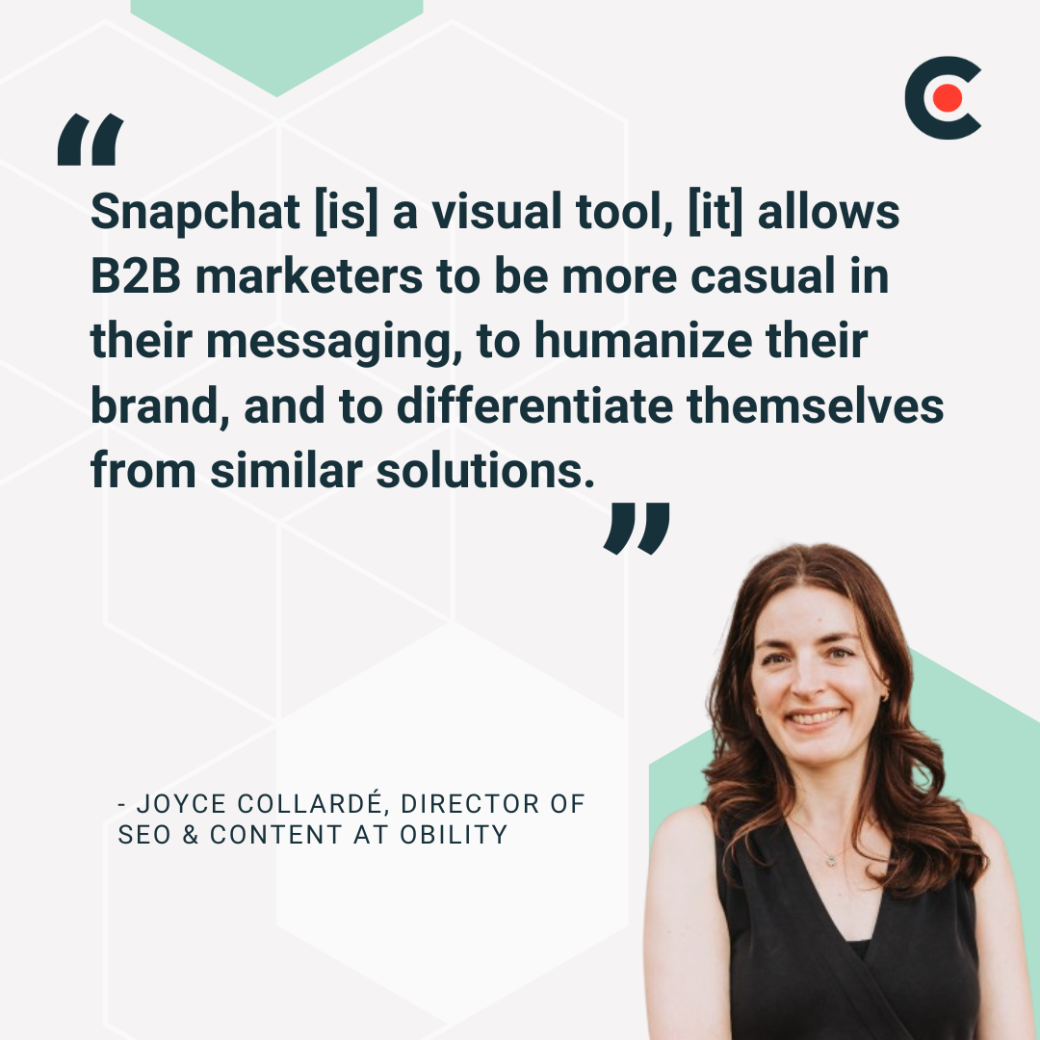
Snapchat's emphasis on natural content allows you to cut through the noise of B2B marketing and stand out. This may be particularly beneficial if you want to emphasize how easy your B2B product is to use.
Snapchat Marketing: A Unique Value Proposition
Snapchat ads may be less common than Instagram and TikTok marketing, but they offer a unique way to engage target audiences. From AR filters that encourage organic sharing to Collection Ads that let you highlight multiple products at once, advertising on Snapchat can help your business stand out.
However, you’ll need the right strategy to get maximum ROI from your video campaigns. To get there, follow the best practices throughout this guide.
About the Author
Anna Peck
Content Marketing Manager at Clutch
Anna Peck is a content marketing manager at Clutch, where she crafts content on digital marketing, SEO, and public relations. Alongside editing and producing engaging B2B content, she plays a key role in Clutch's awards program and content initiatives. Originally joining Clutch on the reviews team, she now focuses on developing SEO-driven content strategies that deliver valuable insights to B2B buyers searching for the best service providers.
See full profile