
Cyberattacks Are Common. Here’s How Small Businesses Recover
68% of small businesses have faced a cyberattack. Learn how most recover within 3 months and the steps to strengthen security after an incident.
Updated May 27, 2026

Cost-effective strategies enable SMEs to protect against cyber threats, including using budget-friendly security tools, enforcing strong passwords, training employees, and focusing on essentials like firewalls and multi-factor authentication. These steps empower SMEs to enhance security, even with limited resources.
Small and medium-sized enterprises (SMEs) have emerged as the most attractive victims of cybercriminals as the majority of them have little or no security infrastructure. However, being on a tight budget does not necessarily mean one has to have weak protection mechanisms in place.
This article offers practical, budget-friendly strategies — ranging from low-cost cybersecurity tools to employee training — to help SMEs combat evolving cyber threats without compromising their financial health.
Access tools and resources to help you connect with best-fit providers. It's all free
Looking for a IT Services agency?
Compare our list of top IT Services companies near you
SMEs handle sensitive data such as customers’ personal information, payment systems, and business logins. For malicious actors, this data can be either sold on the dark net or can be used for identity theft, fraud, and monetary benefits. Apart from that, SMEs usually become vendors or partners of larger companies, making themselves another attack surface in supply chain attacks. A compromise of a small business could potentially lead to a larger-scale compromise which is much harder to notice.
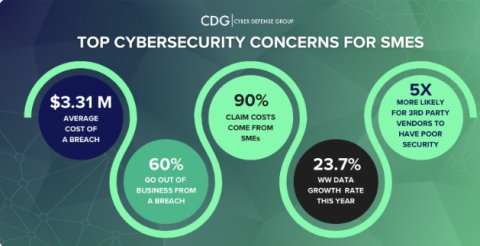
Due to limited budgets and a generalized dearth of IT infrastructure, security tools, and cybersecurity best practices, many SMEs are fundamentally vulnerable by design. For instance, they could be operating on obsolete software and may not update their systems which only makes their businesses open to attacks.
Further, there is no significant coverage on detection scopes among most SMEs meaning that attacks might occur undetected until it is too late. Close to 40% of small businesses have reported data loss due to cyber incidents.
The emergence of phishing kits and ransomware-as-a-service has increasingly eased the process of launching attacks on SMEs. These tools require no specialized technical skills, and attackers can infiltrate many businesses at once. Recent breaches, including the ICPC ransomware attack, highlight the severe risks SMEs face—such as prolonged downtimes, monetary losses, and significant damage to their reputation. These incidents emphasize how vulnerable smaller businesses are to cyberattacks and the long-lasting impacts such disruptions can have on their operations.
Every type of business has its security concerns, and all assets are not of the same importance. Over half, or 59%, of small businesses believe they are too small to be targeted by cyber threats.
Perform a simple risk assessment to determine your business’ most valuable and weakest links such as customer databases, records of transactions, or other sensitive proprietary data. After ranking your principal resources, determine how to protect your highest-risk areas.
This method allows you to achieve conservative spending while getting the most out of your protective strategies and focus on what is important rather than spreading your security efforts too thinly.
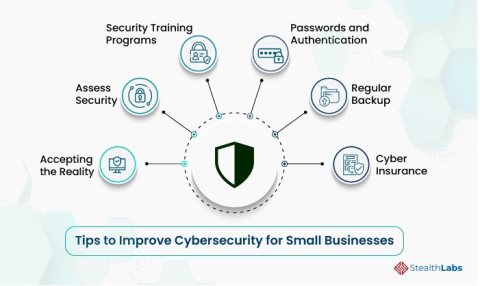
Weak credentials are a prevalent vector for attacks, and addressing this security aspect is straightforward and cost-effective. Enforce a broad password policy by encouraging the use of password managers, and deploy Two-Factor Authentication (2FA) when it is practicable.
Two-factor authentication enhances security by requiring users to undergo two forms of identification making it difficult for attackers to access the accounts. In addition, changing one’s password frequently further decreases the chances of getting one’s account hacked.
Another critical area that introduces threats is the use of outdated software as it is an easy target for every cybercriminal looking to exploit a known vulnerability.
Setting up automated software updates for operating systems, antivirus programs, and other important applications helps your business remain secure without the need for ongoing manual interventions. Not only does this reduce the chances of a successful cyber attack, but it also allows you to use most of your time doing what is of high priority to you. Putting your systems on a regular patch cycle is one of the most basic but very effective security risk management measures.
Majority of small and medium-sized enterprises often struggle with the high costs of cybersecurity. However, several cost-effective and free tools can be utilized to assist in guarding against cyber threats. Below are three practical approaches SMEs can take to leverage these solutions effectively.
To secure networks and systems without spending a lot of money, SMEs can utilize pfSense for firewall, Snort for intrusion detection, and ClamAV for endpoint protection. These open-source tools provide robust security features that are comparable to some paid solutions on the market.
It is important to note that businesses have to compare both free and paid items when deciding on what option to opt for. For example, while open-source tools are cost-effective, some companies may prefer paid solutions for ease of use, support, and advanced features.
For SMEs, cloud services effectively safeguard their data at a reasonable cost. Using Google Cloud or Microsoft Azure is more convenient, as they offer storage, regular updates, and encryption at a lower cost than establishing such facilities in-house. Cloud vendors take care of a larger proportion of the security risk, reducing the risk of data compromise. Storing data virtually tends to benefit SMEs in terms of hardware cost together with the desired security level.
SMEs can also consider a more viable option of subscribing to managed security services. Most providers have monthly subscription models that allow businesses to have access to services such as DDoS protection, malware scanning, and uninterrupted monitoring without a large upfront investment. Usage-based models are quite applicable to SMEs as they offer ways for security incorporations to be done only when required which increases efficiency while cutting costs.
Developing a security-aware company culture is crucial for businesses to stay protected from cyber threats. On average, small to mid-sized businesses incur costs ranging from $826 to $653,587 in response to cybersecurity breaches.
Employees are often the first line of defense, training them, encouraging good practices, and preparing them for incidents is important. Fortunately, building this culture doesn’t require a large budget—just the right focus on awareness, habits, and planning.
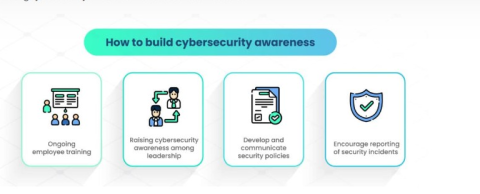
Employee training is a key starting point. Affordable programs can teach staff to recognize phishing emails and social engineering attacks, which remain common threats. Even free online resources and internal policy documents can guide employees in practicing safe digital behavior, such as using secure networks and avoiding suspicious downloads.
Beyond awareness, businesses should encourage good cyber hygiene. Regularly updating passwords, locking devices, and staying alert to unusual activities are simple but effective practices. Companies can use low-cost or free cybersecurity platforms to provide ongoing training, ensuring employees remain vigilant as new risks emerge.
It’s equally important to have a clear incident response plan in place, employees must know how to act during a cyberattack to minimize damage. Assigning roles and responsibilities ensures quick, coordinated action, while regular drills help teams respond confidently and keep downtime to a minimum.
Cyber insurance is essential due to the huge economic impact cyber incidents have on businesses. For example, policies such as data breach liability cover legal costs, costs of notifying affected customers, recovering stolen data, and PR services to limit the extent of the reputational damage. Some plans also include coverage for business interruption and ransomware losses. In 2023, IBM found that the average financial impact of a phishing attack on businesses reached $4.9 million per incident.
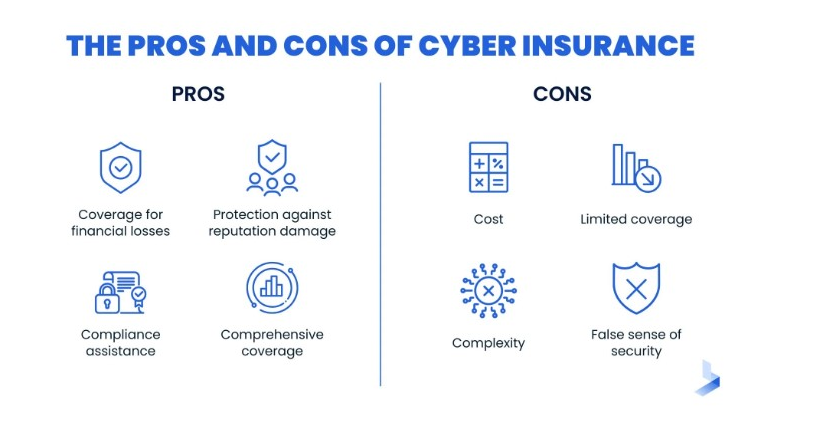
For SMEs, cyber insurance can be a lifesaver when a cyberattack occurs. Unlike large enterprises, SMEs usually don’t have enough funds to withstand the impact of a breach. Cyber insurance alleviates such risks by covering expenses that would otherwise put a firm out of business. It is always reassuring to know that should a breach occur, the firm will be able to withstand the loss and recover quickly.
Finding the right cybersecurity insurance plan that aligns with your budget requires careful evaluation. Here are some tips for selecting an affordable policy:
As a cost-cutting measure, small to medium enterprises (SMEs) can opt to outsource cybersecurity and managed security services without establishing internal teams. There are also certain guarantees offered by MSSPs such as remote monitoring, threat resolutions, and site visits to ensure that all their clients are always secure.
The establishment of internal security teams is more resource-demanding as factors such as salaries, allowances, tools, and continuous training are put into consideration. MSSPs capitalize on economies of scale by passing some of their costs to their clients allowing SMEs to acquire high levels of skills and technologies at reasonable prices.
On top of this, SMEs can also use some security vendors’ contracts to decrease some of the organization’s expenditures while enhancing its security posture. Cheap prices, bundled services, or flexible payment structures that suit the business can be obtained when the companies have a good relationship with their vendors.
It is also important to consider the security of the vendors in the process of purchasing. Any vulnerabilities from the vendor may put the SME at a great risk especially when sensitive data or important systems are concerned. Making security requirements part of the contractual obligations provides a safeguard to both parties.
SMEs can strengthen their cybersecurity through strategic partnerships with vendors or outsourcing without incurring a lot of costs trying to put up the systems themselves. This way, businesses can not only remain secure but can look for expansion opportunities in a world that is constantly evolving and filled with risks.
Investing in a cybersecurity system is a business requirement for any organization. It not only secures critical information but also enhances functionality and guarantees future sustainability. Below are some of the major benefits that businesses accrue in the long term by not neglecting to invest in cybersecurity measures.
The trust of the clients can be easily shaken due to a data breach or a successful attack on a business. Compromise of personal details or even a credit card number may lead loyal clients to lose confidence in the organization and seek services from its competition. It can take many years for a company’s image to recover, and the consequences that such damage has on revenue and expansion activities can be dire.
Investing in proactive cybersecurity measures reduces the chances of such occurrences, increasing the level of confidence and improving the image of the business as secure and trustworthy.
Certain businesses operate within very strict frameworks like the General Data Protection Regulation (GDPR) or Health Insurance Portability and Accountability Act (HIPAA), both of which mandate businesses to have effective measures for protecting sensitive information. Failure to follow the set guidelines always attracts serious sanctions in form of penalties and legal action which can cripple an organization; particularly small enterprises.
Having effective cybersecurity mechanisms in place goes a long way in ensuring these requirements are met and not only lowers the chances of suffering legal penalties but also signifies that the firm takes data protection seriously.
A cyberattack can prevent the achievement of operational objectives, resulting in revenue and productivity losses due to inactive time. If no procedures are in place, businesses may have difficulty recovering from such incidents or may be forced to close permanently after incurring substantial losses. 83% of small and medium-sized businesses lack sufficient resources or plans to recover from the financial impacts of a cyberattack.
Investments in cybersecurity reduce such risks by making detection and response to threats faster. This preserves important information and helps businesses continue processes without interruption, assuring that the company can withstand unexpected cyber incidents.
SMEs can effectively defend against growing cybersecurity threats even with limited budgets by prioritizing risk, leveraging affordable tools, and fostering a security-conscious culture. By making smart investments in key areas like employee training, cloud-based solutions, and managed services, small businesses can significantly reduce their exposure to cyberattacks. Ultimately, proactive measures and continuous adaptation to the evolving threat landscape are essential to safeguarding both their data and their reputation.
Favour Efeoghene is a digital PR strategist & content writer with cybersecurity, employee development, and marketing expertise. They create impactful strategies that enhance brand visibility and drive results across various industries. Their goal is to craft engaging content that informs and inspires action.

![How to Create a Budget for BI & Analytics Services [With Template]](https://img.shgstatic.com/clutch-static-prod/image/resize/715x400/s3fs-public/article/f07e9d6bd89e7f70df9c94301acdd847.png)