
Micro SaaS: How Solo Developers Build Profitable Products
Solo developers now make up 35% of startups. Discover how micro SaaS lets individuals build and launch profitable products without a big team.
Updated March 26, 2026

Many of the world’s top brands have implemented augmented reality in retail to allow customers to experiment virtually with their products. These AR tools allow customers to visualize fit and placement, boosting purchase confidence and reducing the need for product returns due to wrong fit, style mismatch, or buyer's remorse.
Augmented reality (AR) in retail has radically transformed the consumer shopping experience. It has become a powerful tool for retail brands seeking to bridge the gap between online and in-store shopping, enabling shoppers to visualize products in their environments, virtually try items on, and ultimately make more confident purchasing decisions.
Within digital shopping environments, augmented reality helps to replicate the tactile experience of in-store shopping. Such immersive experiences directly influence buying behavior; Clutch research shows 58% of consumers have made a purchase after using AR features.
Looking for a Software Development agency?
Compare our list of top Software Development companies near you

The impact is undeniable. Brands that leverage AR on digital platforms experience better customer engagement, higher conversion rates, and drastically fewer returns. That’s why leading retailers like Warby Parker, IKEA, and Sephora have made AR an intrinsic part of the consumer’s shopping experience: to increase engagement and reduce purchase hesitation, turning casual browsers into loyal customers.
By merging digital 3D product conceptions with the physical world, AR literally adds another dimension to shopping, especially online. These core benefits explain why AR works so well in the retail industry.
Enabling virtual “try-before-you-buy” experiences, AR gives consumers a real-time, 3D, true-to-scale look at how household products, clothing, accessories, or makeup will look in their own space or on them. This removes one of the largest hurdles to online shopping: the fear of buying something that doesn't fit.
Augmented reality in retail enables shoppers to visualize products in their environment or on their bodies in real time. Where they previously had to make decisions based on how furniture looked in a showroom or how makeup or clothing flattered a model, consumers can now see how something will look in their own home or on themselves. This immersive, interactive experience reduces uncertainty, lowers perceived risk of buying a product that doesn't work for them, and ultimately improves conversion rates.
Better visualization leads to fewer mistaken purchases and less buyer’s remorse. With increased confidence in their choice of size, fit, style, and color, consumers tend to be happier with their purchases. Companies have reported 25% to 40% lower return rates after implementing AR visualization, especially in categories like furniture, apparel, and eyewear.
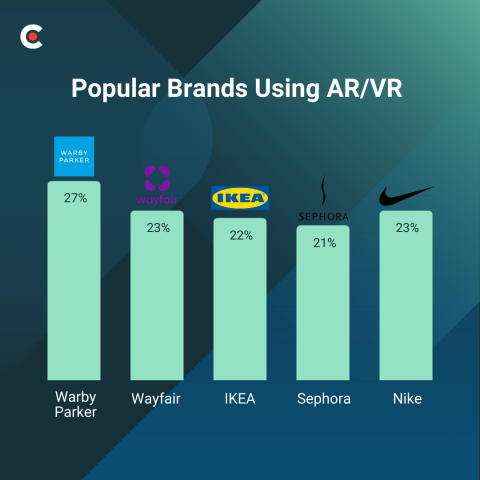
Several juggernaut brands have already implemented augmented reality in retail by adding a layer of interactivity to the shopping journey. According to a Clutch survey, consumers are most familiar with AR tools from brands like Warby Parker (27%), Wayfair (23%), Nike (23%), IKEA (22%), and Sephora (21%).
However, they’re not the only brands leveraging AR to help shoppers visualize products, test fit, or experiment with different styles. L’Oreal, Zara, and even luxury brands like Gucci and Burberry are experimenting with ways to use AR to engage with customers.
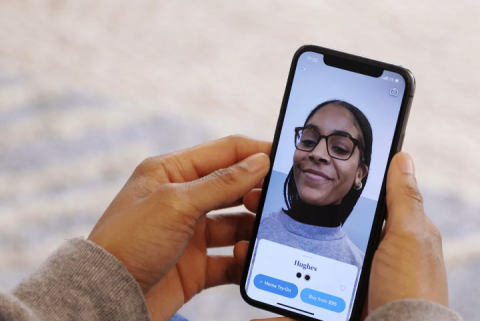
Online eyewear retailer Warby Parker offers a “Virtual Try-On” tool in their iOS and Android mobile apps. This feature, which uses facial mapping technology to position frames accurately on the individual’s face, allows the shopper to see how they look wearing various frames and styles using only their smartphone camera.
Eyewear is a highly visual and fit-dependent purchase. It’s nearly impossible to guess what you’ll look like in a particular pair of frames without trying them on, and Warby Parker’s Virtual Try-On allows precisely this. It helps customers compare multiple styles without setting foot inside a store.
The ability to see exactly how they look in any pair of glasses dramatically lowers a shopper’s hesitation when buying online. The Virtual Try-On tool also creates a fun, interactive shopping experience due to its novelty and accuracy.
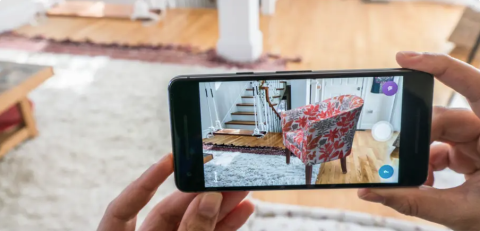
Wayfair, a company specializing in furniture, decor, and home goods, allows shoppers to visualize thousands of furniture pieces and decor items in their own homes at a true-to-life scale. Their “View in Room 3D” feature, available on both iOS and Android, lets customers rotate, move, and view items from various angles.
Furniture shopping online can feel like taking a huge gamble on a major item. These purchases depend on various factors, including the item’s size, the room’s layout, and the style compatibility between the two. Giving shoppers a chance to see the piece in their space allows them to quantify these factors.
View in Room 3D helps shoppers avoid buying furniture that doesn’t fit their homes, spatially or style-wise. The ability to see how the item fits into their space lowers their anxiety about buying the wrong piece and makes them more confident in making larger purchases.
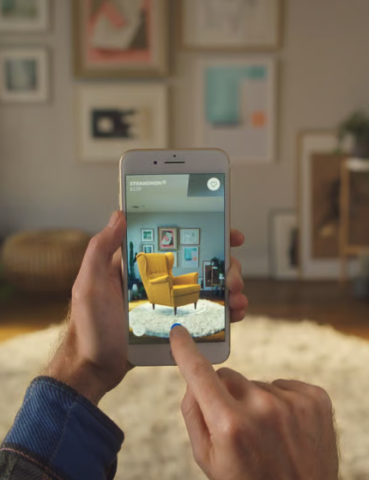
Within its mobile app, IKEA, the world’s largest furniture retailer, provides the IKEA Kreativ function. This AR tool uses AI and computer vision to scan any room and create a 3D model, allowing users to “erase” existing furniture and redesign the space.
Because IKEA is such a well-known brand, many customers shop online or consider their purchases before visiting a store in person. The IKEA Kreativ AR tool helps them visualize potential room layouts and design choices accurately.
In IKEA’s case, AR simplifies interior planning for shoppers, encouraging them to experiment with multiple products and styles.
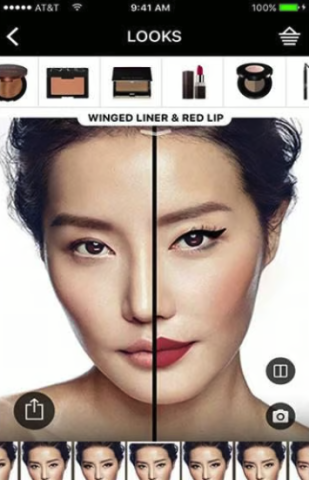
Sephora, a multinational retailer of personal care and beauty products, provides its AR offering within its app, website, and even in-store mirrors. Sephora Virtual Artist enables customers to try on various products digitally in real time, including lipsticks, eye shadows, foundation, and even false eyelashes.
Makeup and beauty products are inherently and intensely personal. Beauty shoppers want to see how certain colors and textures appear on their own skin tone before purchasing.
Using Virtual Artist encourages shoppers to experiment with new products and drives online conversions by replicating in-store testing.
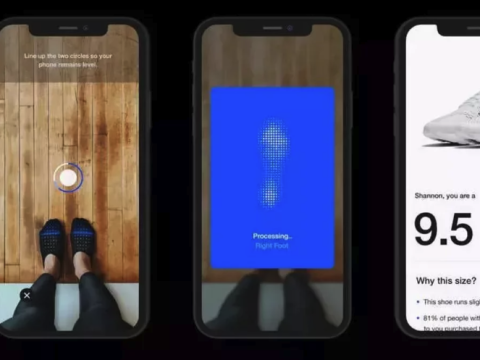
Shoe giant Nike uses augmented reality in retail for more than selling shoes. Their various AR applications include:
Nike has invested heavily in digital, AI-driven, and AR technologies to enhance their digital and physical retail presence.
Shoe sizing can vary significantly by style and brand, and improper fit is a common return reason. Nike’s virtual try-on and sizing tools vastly mitigate these issues.
Nike’s virtual sizing and try-on features reduce return rates and improve customer satisfaction by helping shoppers find the correct size more quickly.
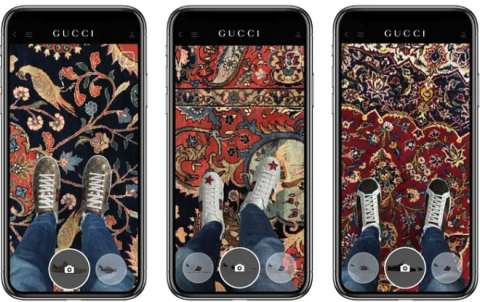
Global luxury fashion leader Gucci sells footwear, fashion, accessories, and high-end leather goods at a premium. The brand uses AR to provide a virtual try-on function, both in its app and in-store, overlaying products on the user’s feet or face. In-store shoppers can also visualize custom designs on products, such as shoes and handbags.
Many luxury items are costly enough to qualify as high-consideration purchases. AR lets shoppers preview these items before they buy.
For a luxury brand like Gucci, AR increases engagement and gives shoppers more confidence to make these expensive purchases.
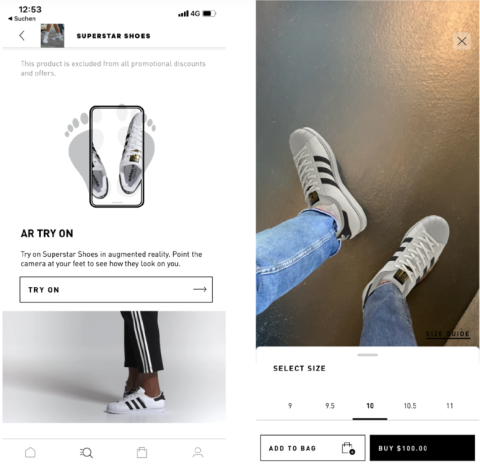
Another popular brand for sneakers and athletic wear, Adidas allows customers to try shoes on virtually through its app and its partnership with Snapchat. Customers can see how sneakers look on their feet and explore product details through AR overlays.
Much like Nike, Adidas uses AR for immersive marketing campaigns, product launches, and in-store experiences.
Style and fit are critical factors for shoe shoppers, so virtual try-ons give them the confidence to make a purchase.
Virtual try-on encourages product exploration and helps lower sizing uncertainty.
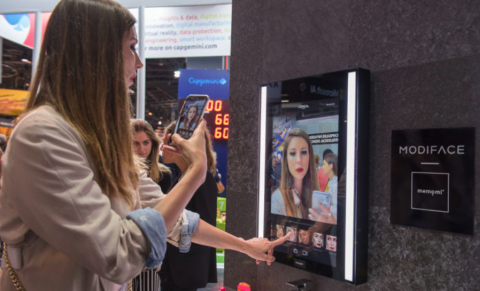
L’Oréal, a world leader in beauty and cosmetics, uses AR in the form of ModiFace, a virtual try-before-you-buy technology available through its website, app, and social media. Using their smartphone camera, customers can virtually test hundreds of makeup or hair color shades. L’Oréal also offers digital skin diagnostics, which use AI and AR to analyze skin and suggest personalized routines.
The brand offers the same features through in-store “Magic Mirrors.”
Beauty purchases are visual by nature. They depend on personal appearance and skin tone compatibility, which ModiFace can help shoppers determine.
ModiFace allows customers to experiment with multiple products instantly, which increases engagement and conversions by increasing customer confidence.
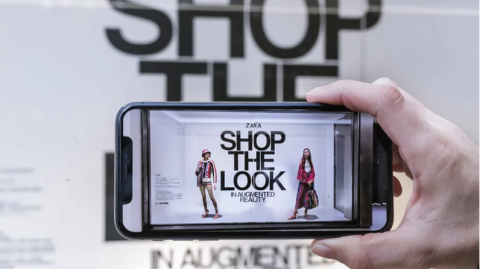
Fast-fashion powerhouse Zara has experimented with augmented reality in retail, both in stores and through its mobile app. By scanning designated sensors in over 120 flagship stores or on shipping boxes for home deliveries, shoppers can see 12-second scenes of virtual models strutting and posing in the featured clothing on their smartphone screens.
As of 2026, Zara has added an in-app feature that allows users to upload a photo to generate a video of themselves virtually trying on different outfits.
Fashion shoppers want to visualize how clothing looks in motion and imagine styling combinations. Zara’s AR experience brings this to life for them.
High-quality digital, interactive, immersive AR brand experiences like Zara’s attract customers, especially enthusiasts of both fashion and tech, both online and in-store.
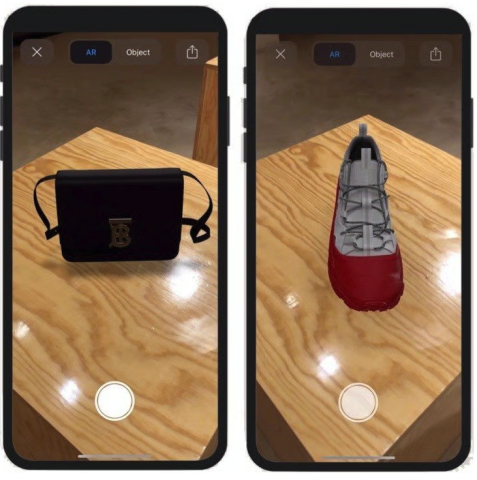
Burberry, a renowned British luxury fashion house, uses an AR tool that allows shoppers to preview luxury items, including bags and accessories, on surfaces in the shopper’s environment to understand size and detail. Customers can use their smartphone cameras to see how scarves look on them in real time.
Burberry's tool integrates AR directly into Google search results. When consumers use Google Search on their phone to look up Burberry products, they can see an AR version of the item, scaled against other real-life objects.
AR significantly enhances the premium brand storytelling associated with luxury fashion like Burberry by transforming passive viewing into interactive, immersive experiences.
Burberry’s AR campaigns drive brand engagement, showcase the fine craftsmanship of its products, and create exclusive, shareable brand moments.

Another luxury fashion brand, Louis Vuitton, uses AR to combine digital innovation and luxury. The brand has launched AR-enabled fashion experiences, digital showrooms where customers can interact with products, such as examining a handbag on a table, and virtual try-ons.
It has also created unique interactive experiences like store takeovers called “Zoooom with Friends,” in which users point their phones at flagship stores to see animated characters climb out the windows, up the walls, and onto the roof.
Luxury brands' customer engagement benefits from immersive storytelling and interactive digital experiences. AR is more than a static ad, so brands can tell their stories in interactive, memorable ways.
AR experiences build brand excitement and increase digital engagement around new collections and product launches.
Augmented reality in retail is headed toward even more hyper-personalized, immersive experiences that meld online and in-store shopping into a “phygital” (physical + digital) approach. More brands will begin to integrate AR into their mobile apps, websites, social media, e-commerce platforms, marketing campaigns, and in-store experiences.
Within the next few years, AR will become standard for virtual try-ons, in-home product visualization, user-tailored recommendations, and real-time product customization. AR retail apps could function as digital guides, using smartphone cameras to lead customers directly to products in-store or to provide detailed product comparisons as shoppers walk the aisles. AI and AR will continue to personalize shopping and customize product suggestions based on the individual’s product preferences and past behavior.
The bottom line is that AR has only just begun creating more immersive shopping experiences, and there’s plenty more on the horizon.