Lead Quality vs. Lead Quantity: Why B2B Teams Are Rethinking Their Funnel in 2026
Bigger buying committees and tighter budgets are forcing B2B teams to rethink lead quality vs. quantity. Here's how top teams rebalance the tradeoff in 2026.
Updated May 19, 2025

Cold calling and bulk emailing are so 2014. Switch up your lead generation tactics with our six practical strategies.
Here’s a nightmarish scenario that can happen to any marketer. You spend hours creating a series of Instagram posts that are, in your humble opinion, absolutely hilarious. But although the likes and comments pour in when you share them, your phone never rings. In fact, your sales team sees no change at all after your campaign.
What went wrong? You generated likes, not leads.
Looking for a Digital Marketing agency?
Compare our list of top Digital Marketing companies near you
Hundreds or thousands of people saw your content, but for some reason, it didn’t inspire them to buy anything. Maybe your posts reached the wrong users. Or perhaps your call to action (CTA) was a little hazy, so people just kept scrolling after watching your videos.
A lead generation strategy can help you avoid these common issues. It focuses on attracting quality leads: people who are more likely to convert with a few friendly nudges. Prioritizing quality over quantity is the key to growing your customer base.
Jason Odgen, President of Syrup Marketing, recommends focusing on your customers' needs. “Start with user experience in mind and consider all other marketing activities in advance of making decisions,” he advises. “Look at the overall picture and make sure the frequency and multi-channel blend make sense. “
This article unpacks six lead generation examples.
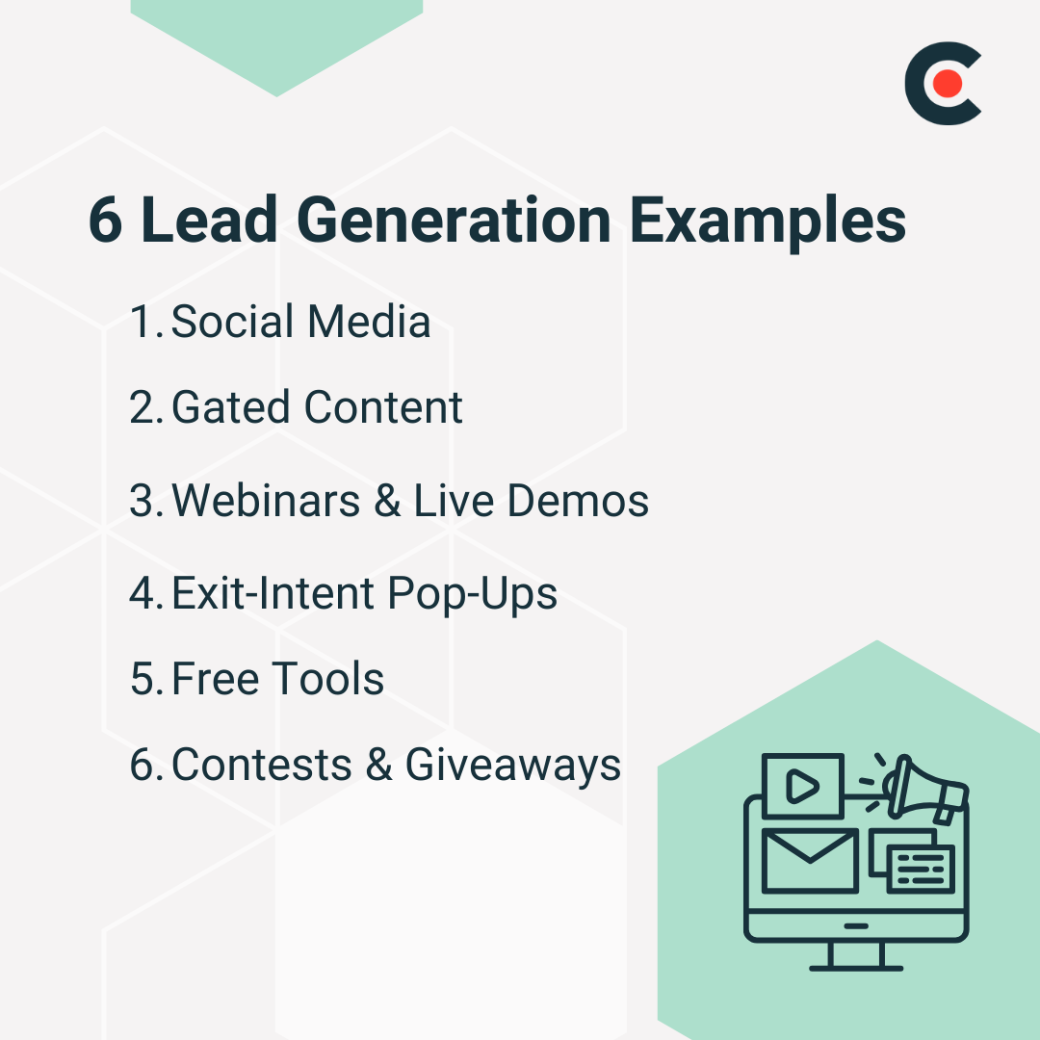
These techniques are all high-converting because they help you show your value immediately.
Okay, you just read about a scenario where social media fails to boost sales. But don’t rush to delete your profiles. With the right strategies, these channels can be powerful magnets for leads.
Social media works best when you focus on engagement, not participation. In other words, your content should make users feel a deeper connection to your brand.
For instance, anyone can laugh at a silly cat meme and click the like button. However, only dedicated pet owners will engage with content about caring for their cat’s dental hygiene, and those are precisely the kind of people you want to reach.
Social media has been incredibly valuable for Chris Cozzolino, CEO & Co-Founder at Uptown Creation.
“Our most successful lead generation strategy is our LinkedIn-First approach,” he shares. “We target active users within our ideal customer profile using Sales Navigator and send problem-oriented messages after connecting.”
Of course, a single message isn’t enough to win over most customers, especially if their LinkedIn inbox is already overflowing. That’s why Uptown Creation has also developed a vast content ecosystem, posting valuable content five times a week on its blog, YouTube, and other channels. This content gives prospects multiple touchpoints, building their interest over time.
Uptown Creation also uses its existing network by strategically tagging its LinkedIn connections and engaging with their content. These actions only take a few minutes, making the company more visible.
Follow in Cozzolino’s footsteps with these social media best practices:
Make sure you’re using the same platforms as your audience. For instance, Snapchat is perfect for connecting with people aged 18 to 29, who comprise 65% of its users. But if you’re promoting a retirement community there, you might not find a single lead.
These days, everyone seems to be asking for your email address, immediately flooding your inbox. So it’s no surprise that many customers need an incentive to hand over their contact details.
Gated content offers something of value — using some sort of digital product — in exchange for basic contact information.
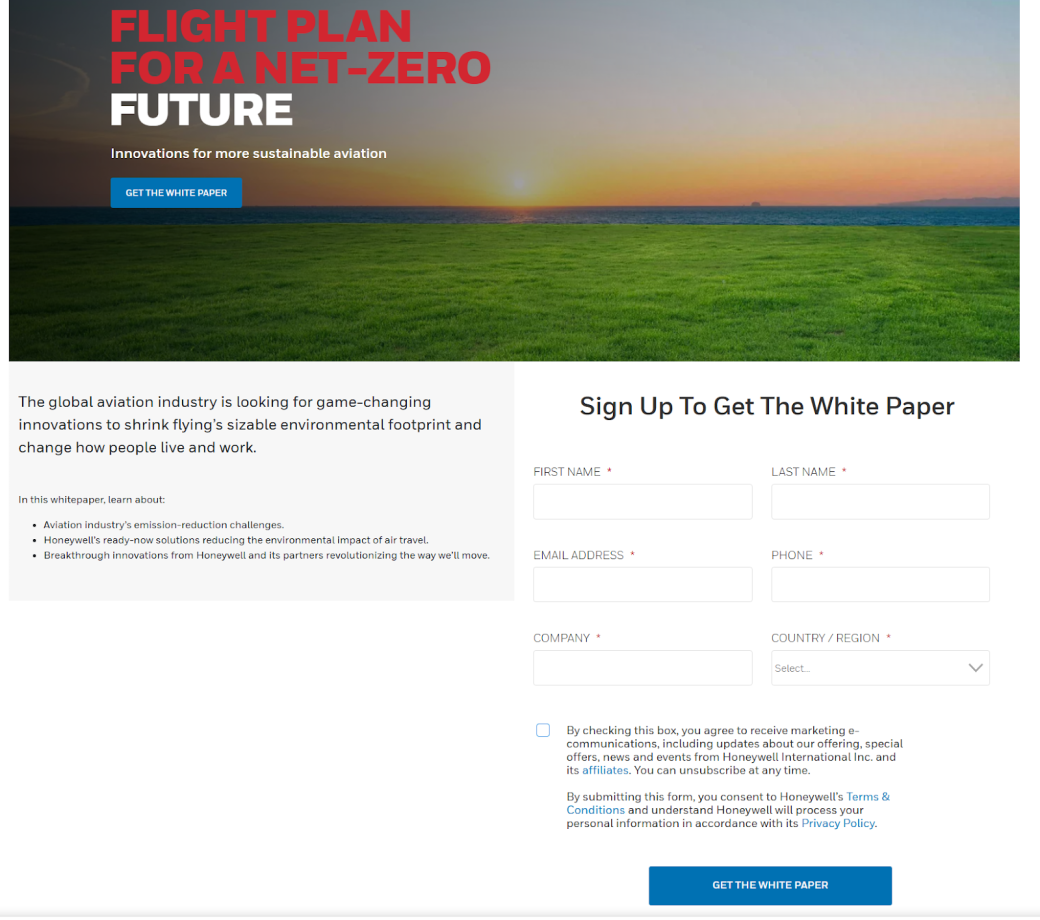
Take the aerospace company Honeywell, for example. It offers a free white paper about sustainability trends in the aviation industry. Readers can only access this exclusive report by sharing their details and company name.
Other popular examples of gated content include:
This approach is useful because it leads to self-selection. A nurse, for instance, probably wouldn’t take the time to submit their information for an ebook about higher education software. That means you’re automatically starting with a pool of qualified leads.
Set yourself up for success with these best practices for gated content:
Switch up your gated content periodically, too, to attract new leads.
Additional Reading: ‘To Gate or Not Gate: Pros & Cons of Gated Content’
Spotlight your expertise with regular webinars or product demonstrations. These events help you build trust with leads and create a sense of urgency — “do X to solve Y now!”
“Offering helpful content, such as guides or webinars, has worked very well for us,” remarks Valentina Chiriacescu, Chief Commercial Officer at eCommerce Today. “Building strong relationships with other companies and attending industry events has also brought great results.”

Adobe is another brand that frequently hosts webinars. Attendees learn how they can use the company’s software to level up their marketing campaigns. Informal demos like these are a great way to win over leads stuck in the decision phase.
Follow these webinar best practices:
With a little planning, webinars can significantly boost your brand reputation.
Sometimes, people enjoy exploring your website but are not quite ready to make a purchase yet. A pop-up with a small discount — perhaps 10% to 20% — could be enough to win them over before they leave (potentially forever). This approach is often very effective at grabbing leads’ attention.
Here are a few pop-up best practices:
Be sure to limit yourself to a single pop-up to avoid annoying visitors.
Give your customers a glimpse of your offering with a free digital tool. Here are a few examples for inspiration:
These resources let you demonstrate your value before you ask leads for their payment info. You can also invite users to share their email addresses to access more tools.
“Lead magnets like free downloads and targeted email campaigns have worked well for us,” reports Abdelrahman Al Sehetry, Managing Director at Eko.
For instance, their leads can receive a free project proposal that might cost hundreds from another agency.
Of course, not just any calculator will get results. Be sure to follow these free tool best practices:
You should also take the time to research your competitors' tools for inspiration.
It might seem counterintuitive, but giving things away for free often boosts sales in the long run.
Creative giveaways may even go viral. For example, Poppi’s gorgeous PR box giveaways took social media by storm.
Some creators filmed unboxing videos, while others made TikTok videos with tips for receiving one of the boxes.
These giveaway best practices will help you create memorable competitions:
Offering small incentives — like extra entries for every referral — could also encourage participants to tell their friends to enter your contest.
Giveaways, LinkedIn messages, webinars — there are plenty of powerful lead generation campaign examples. These methods haven’t replaced cold calling, but they can help you find quality leads before you start dialing.
There is no need to try all six strategies at once. Pick one or two to test with your audience, and use metrics to find the most successful options.