
Evaluating an Marketing Agency in the AI Search Era
AI search has completely changed how people interact with online content. When an AI summary appears at the top of search results, Google users only click a...
Updated December 16, 2024

Gated content is a content opportunity that many businesses are beginning to invest in. While gated content can boost leads and assist with content distribution, some drawbacks exist, such as the lack of brand visibility and SEO benefits. Learn if your company should invest in gated content for your 2025 marketing strategy.
Content is one of the more valuable tools for companies who want to market their business and engage their target audience. In the current digital landscape, content gating has become a strategy for businesses looking to capture leads while enhancing their user engagement.
But the question stands: is it truly beneficial for businesses to invest in gated content?
In this article, we will explore the advantages and disadvantages of gated content, popular examples, and more.
Gated content is a resource that requires someone to provide contact information or payment before gaining access.
Marketing is used to attract prospects seeking solutions to their business problems. Gated content qualifies leads by requiring contact information or payment for the content, leaving only those who are interested enough in the material to provide those things. While gated content can effectively capture interested users, it may also limit immediate access for prospects looking to browse without barriers.
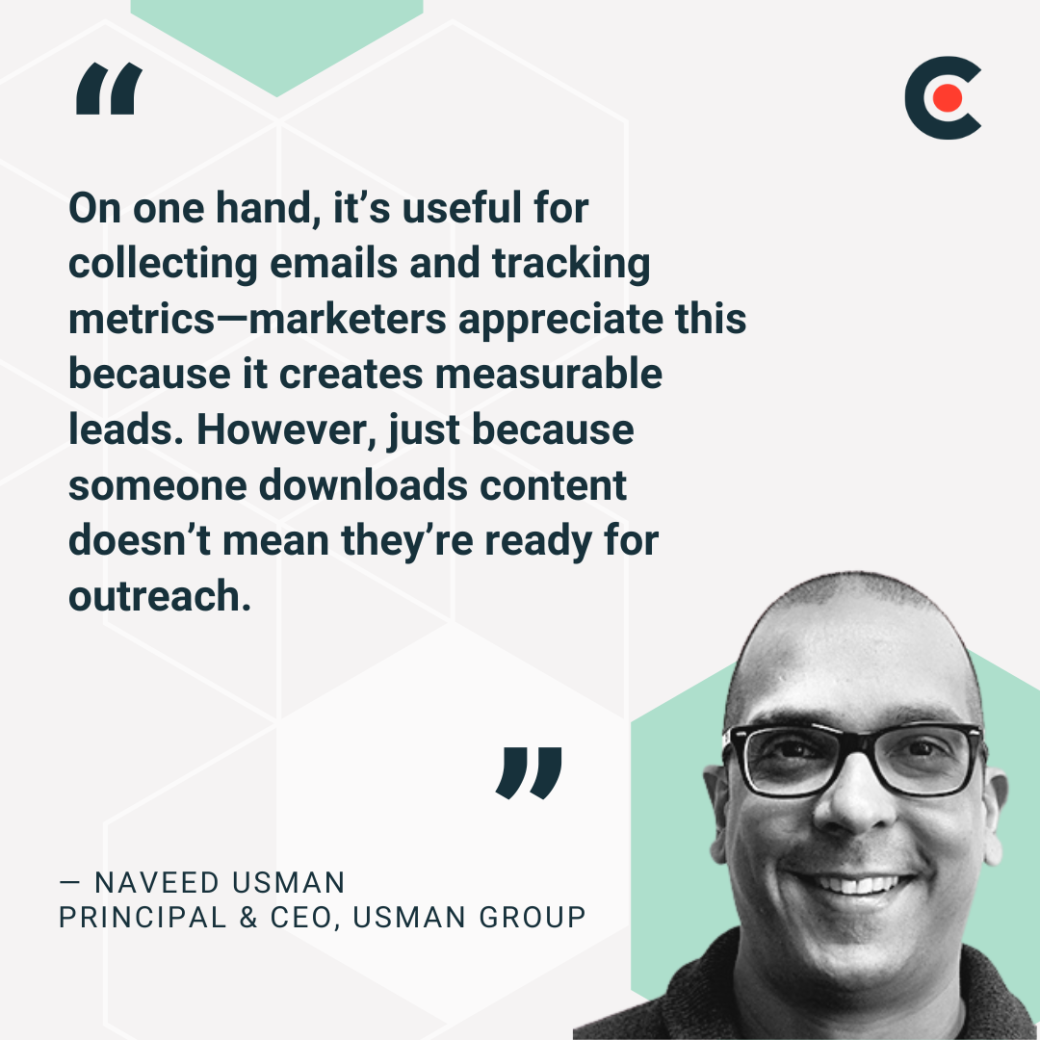
Naveed Usman, CEO and Principal of Usman Group, sees the benefits and drawbacks of gated content.
“I have a love-hate relationship with gated content,” said Usman. “On one hand, it’s useful for collecting emails and tracking metrics—marketers appreciate this because it creates measurable leads. However, just because someone downloads content doesn’t mean they’re ready for outreach.”
Gated content works best with a clear nurturing and marketing strategy behind it.
Businesses with strong marketing budgets have invested in establishing the best methods for gated content.
Matt Watson, CEO of Watson Creative, has worked with several clients, primarily sports teams and membership-driven organizations, to create gated content strategies.
“The key to our success has always been pairing the gated content with a robust campaign designed to generate curiosity,” said Watson. “It's about creating a sense of exclusivity—offering something people can't get anywhere else.”
Instead of going through the trial-and-error process yourself, use the proven examples below to streamline your efforts:
One of the most popular gated content types, e-books can be used by businesses in almost any industry. Most companies require visitors to fill out a short form with basic contact information to access the content.
For example, a B2B cloud solutions company could create an e-book on maximizing cloud efficiency for storage and streamlined operations. The insights would entice businesses to provide their email and name to understand the basics of cloud solutions, leading to possible new customers.
Education, tech, or SaaS companies often use webinars as gated content. The business's highly technical or informative nature is better understood when shown live in front of an audience.

Requiring visitors to provide their name, email, and additional details helps follow up with attendees and deliver additional value, like free slides or recordings of the event.
A whitepaper serves two purposes: educating readers about a complex topic and promoting a service as a solution to a problem. Technology companies are the most likely to use a whitepaper since potential customers need to understand what the tech does before realizing its value. Use a gated whitepaper to attract decision-makers at the bottom of the purchasing funnel.
Similar to whitepapers, reports include market research, industry analysis, or performance metrics related to a particular service.
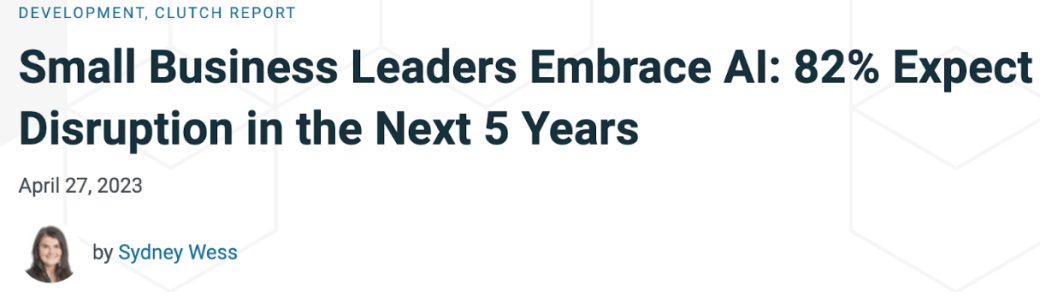
For example, a marketing agency could create a gated report on the latest AI business trends and strategies, offering it as valuable information for businesses looking to improve their online presence.
Most infographics are included in a blog post or displayed on web pages, but downloaded versions are gated behind a short form.

Because infographics distill information into easily digestible visuals, decision-makers use them as proof of concept or to showcase particular insights to their team.
Software companies often gate product demos to show potential customers their products while capturing contact information. Personalized demos establish a quick connection between businesses while highlighting impactful features that solve specific problems.
Before deciding to invest in gated content, businesses need to consider the pros and cons of gated content.
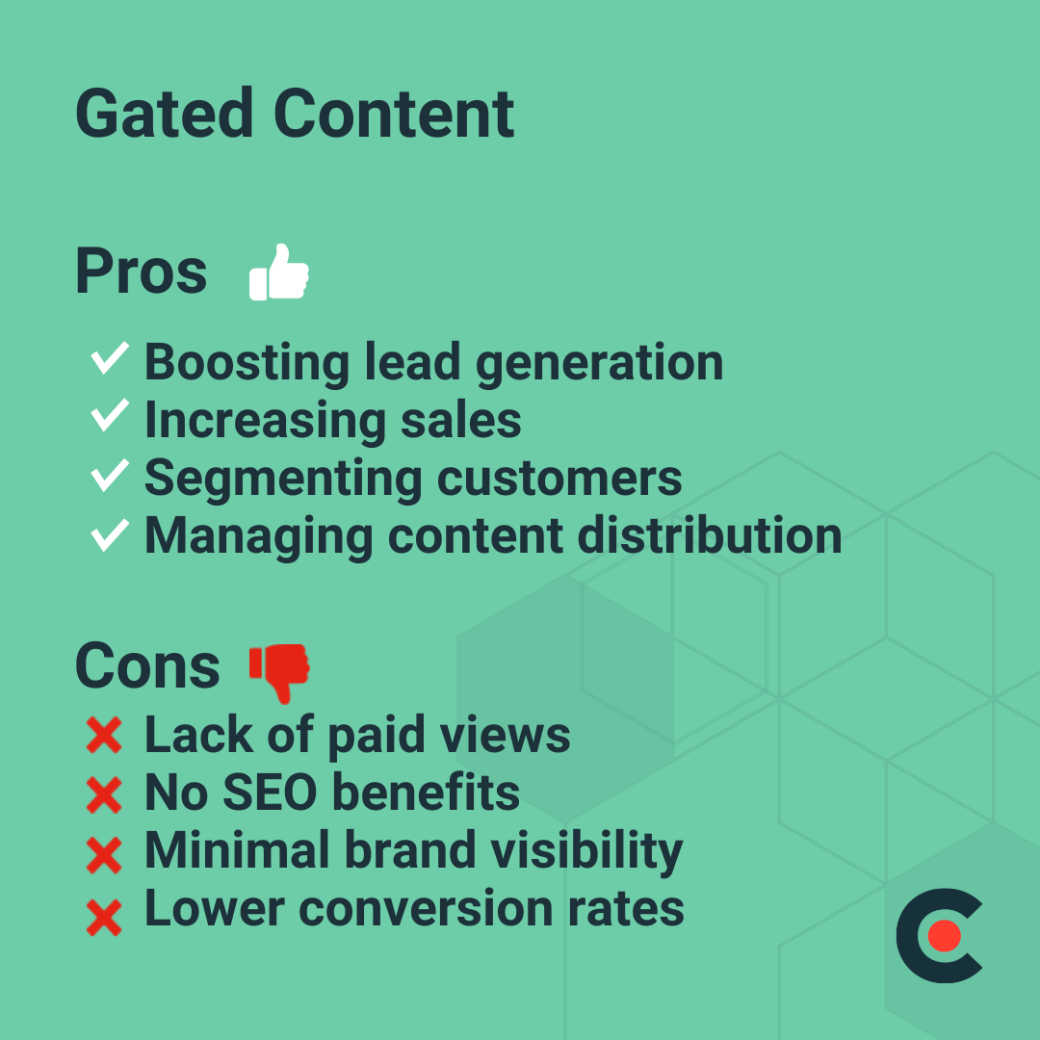
Focusing on these four major benefits of gated content will concentrate your efforts and help align your goals with your materials.
If you're going to use gated content, make sure you understand the benefits your company will receive. This will help inform your marketing strategies and, ultimately, your business goals.
Understanding the potential drawbacks of gated content sets realistic expectations and strategies for achieving your goals. You won't have expectations that lead your efforts in the wrong direction or cause disappointing results.
Understanding these issues lets you make informed decisions about when to use gated content strategically and when it's best to keep access open to everyone.
Drew Blumenthal, Founder and CEO of Digital Drew SEM, believes that if done right, gated content can be a valuable lead generation tool, but it needs to live up to expectations and remain balanced.
“For me, it’s about delivering quality first, then asking for the gate,” said Blumenthal.
Instead of immediately implementing gated content and experiencing the mistakes that come with trial and error, use the proven steps below to streamline your content strategy creation process.
The quicker your business creates and experiments with gated content, the closer you'll be to increasing leads and driving conversions.
When executed effectively, gated content has the potential to propel qualified leads further down your sales pipeline, expanding your lead pool.
The decision to gate content hinges on the specific marketing goals and audience preferences made by your company.
To achieve this without draining time and resources, you need to partner with experts who have experience creating successful gated content.