The State of Content in the Age of AI
2026 Clutch and Conductor data reveals how marketers are adapting content strategies for AI and LLMs, from bigger budgets to new success metrics and...
Updated January 3, 2025

Earned media can create a positive feedback cycle that helps boost brand awareness and drive traffic to your site.
If you look at a list of the most popular websites on the internet (think Apple, Google, Ebay), you will find an interesting story.
First, almost all of the sites are web-based businesses that have grown astronomically since the start of the 21st century and are now valued at millions (or even billions) of dollars.
Looking for a Digital Marketing agency?
Compare our list of top Digital Marketing companies near you
Second, these businesses can attribute part of their growth to earned media.
Earned media is the organic promotion of your brand or business achieved through media mentions – public relations, media coverage, social media mentions, etc.
Earned media provides a sense of authority for your business. If your businesses can effectively leverage earned media, you can both grow your audience and influence how audience members engage with your services.
This article explains earned media and its benefits. It also uses case studies to demonstrate how businesses have achieved growth through leveraging earned media and creating brand ambassadors.
Earned media, also known as "free media", attributes publicity and recognition to brands and businesses based on their promotional efforts (press releases, market research, etc.).
Companies benefit from earned media’s power to leverage influencers to mention their product, service, or brand, and promote it freely to their audience.
Trust in your brand helps your business earn media mentions, interviews, contributions, and recommendations. The more audiences trust your brand, the more publications, businesses, and influencers want to be associated with you.
Publications like Forbes, for example, are considered to be excellent sources of information in the world of business. Part of this reputation has been earned through providing consistently engaging and informative content. However, the culture of trust that they have developed from external organizations constantly referencing their output has also been a major attributing factor to its growth.
It is important that web businesses recognize the influence of earned media for increasing their brand’s authority and growing their customer base.
Successfully leveraging earned media requires targeting audience segments likely to serve as brand ambassadors and advocates.
Find your target audiences by looking for web communities, such as Facebook groups, web forums, fan pages, and blogs, where people who share interests relevant to your company congregate.
If audiences appreciate and value your business' services and offerings, they are more inclined to share and recommend your product or service to their audiences.
Once you create a list of influencers or companies that your target audience engages with, reach out with a value proposition. Consider the following outreach approaches:
Each of these three approaches allows your company to achieve the ‘Be everywhere’ effect, a term used by blogger Pat Flynn of Smart Passive Income.
The Be Everywhere Effect describes how, in order to build a successful brand, your business needs to be everywhere its target audience is. Through engaging influencers and relevant sites in your industry, you can create this effect and have your target customer base consistently exposed to your brand.
Some of the most recognizable brands have built their reputation and customer base through earned media. Paypal, Amazon, and Twitch are 3 in particular.
Paypal’s success with earned media comes from its unique value proposition, which provided a solution to issues with online payments and transfers.
Prior to Paypal, money had to be sent through banking systems or wire transfer companies, such as Western Union. Paypal's system allowed people to transfer and receive money anywhere in the world for a relatively low fee. It also allowed people to receive their money instantly, which was incredibly useful for the burgeoning e-commerce community.
Paypal grew its database by offering “sign-up bonuses”, where people would receive money for getting their peers, colleagues, and friends to sign-up for Paypal.
Paypal's success is a result of its ability to grow its customer database, and it comes mainly from the power to influence.
In the image below, you can see a sample of the organic mentions in a blog search result from Google. You'll notice the high domain authority (DA) – a Moz software that measures the relative authority of websites and pages – of the first few results.
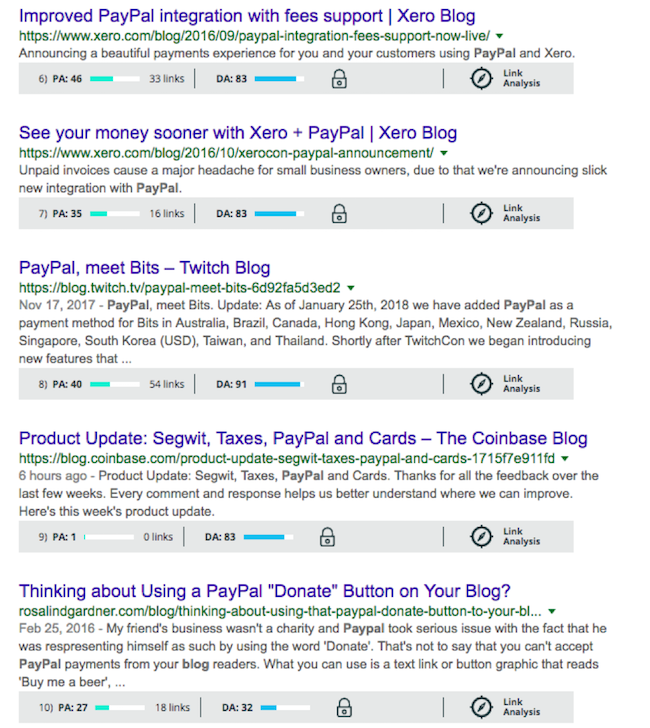
The higher the domain authority of the companies and sites that discuss your brand, the more authority search engines assign to your site and its content, which in turn helps your search rankings.
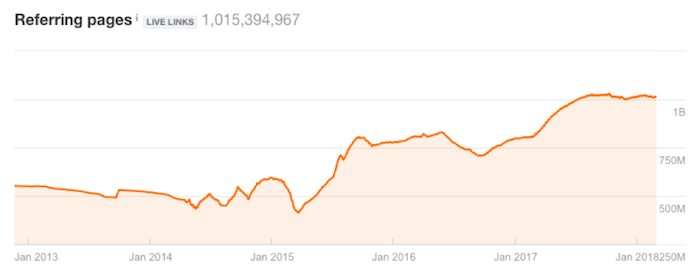
You can also see the growth in referral pages from the graph below.
Source: ahrefs
Not only has this large number of referring mentions allowed them to reach a global audience, it has also allowed them to cement themselves as one of the world’s leading authorities on e-commerce transfers.
This has, in turn, led to more earned media, which demonstrates how the proliferation of brand mentions can create a positive feedback loop that boosts your brand awareness and web authority.
Amazon is now the largest retailer in the world. However, it originally started as a website to sell second-hand books.
Its growth strategy soared as a result of revenue-sharing through affiliate partnerships. Because of this arrangement, internet influencers would promote Amazon products, with the incentive of a commission if their product sold.
This online promotion and advocacy strategy is paid. However, many of the websites that publish affiliate links also endorse the product. Over time, many other webmasters who see products mentioned by those affiliates end up endorsing those products without any financial incentive.
Over time, the company has expanded into different products and dominates the web space.
Twitch.tv started in 2011 and was sold to Amazon for $970 million in 2014. The platform grew by catering to a niche audience of gamers who wanted to watch streamed gameplay without any lag.
Its unique value proposition coupled with the promotional support of the gaming audience quickly catapulted the growth of its site to the 12th most popular in the U.S.
There are a couple of factors that have triggered the earned media success of Twitch.tv.
The popularity of the service will continue to grow as influencers mention Twitch on blogs, forums, and social media, which will help its user base to snowball.
Your business needs to create a web publishing strategy to benefit from earned media.
Earned media works like a snowball effect: endorsements for your product or services facilitate further endorsements through word-of-mouth, referrals, organic digital mentions, reviews, and influencer marketing.
The more earned media your site generates, the more likely it is that your business will be noticed and talked about. This creates more potential for further earned media and, in turn, makes it more likely that customers will connect with your brand.
Your website is essentially your storefront, so it’s important to publish content that resonates with the influential audience that you are targeting.
The blogger behind Crazy Vegan Kitchen, for example, won over several hundred thousand people with authentic vegan recipe ideas.
As a trained Cordon Bleu chef, Crazy Vegan Kitchen's Amrita was able to specialize in the vegan niche and publish vegan recipe guides, which allowed her to be positioned as a “go to” expert in vegan cuisine.
Amrita's growth came as a result of influencers sharing her content on social media platforms and the high search rankings that resulted from endorsements and traffic from earned media.
Earned media is achieved through the demonstration of value via relationships, credibility, and advocacy. Earned media influences customers to become brand ambassadors who will advocate and promote your brand.