
12 Years With Clutch: How Intuz Builds on a Partnership That Delivers
A Relationship That Has Stood the Test of Time Intuz is an AI consulting and development company established in 2008, with operations in Silicon Valley...
Updated November 18, 2025

Imagine this . . . It’s 7 p.m. on a Tuesday. You logged off hours ago and finally made it to the grocery store. Now you’re just perusing the cereal aisle. Then your phone buzzes. A Slack notification lights up your screen: your coworker wants an update on the presentation you’re collaborating on.
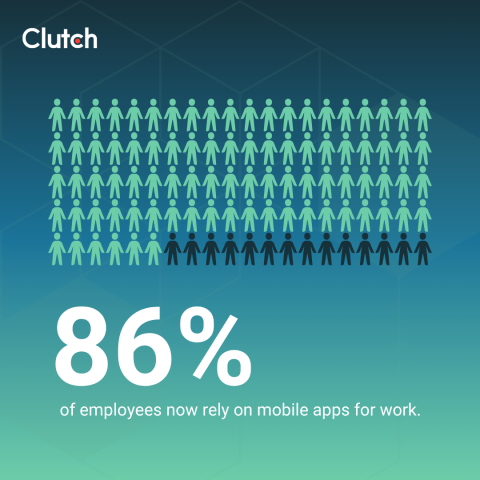
This is quickly becoming the norm. With 86% of workers now relying on mobile apps to get work done, the line between work and home life is blurring. For most workers, mobile tools offer freedom and flexibility by allowing them to stay productive from anywhere, but that has also introduced new security risks for businesses.
To explore this shift, we surveyed 500 full-time employees to understand how they’re using mobile apps at work and how these tools are reshaping productivity, work-life balance, and business security.
Key findings:
Even after logging off, many employees still feel tethered to their phones. They feel like they still need to check work-related messages, review tasks, or answer quick questions.
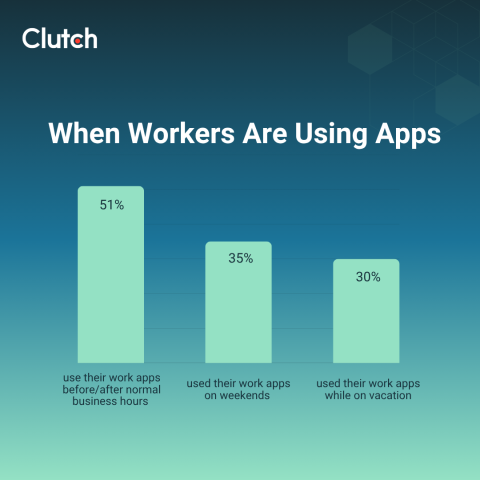
Our survey revealed that 89% of full-time workers said they have felt the urge to check in through their mobile apps when they’re not working, and 66% of workers use mobile apps to complete tasks outside normal business hours.
"I sometimes check work-related apps like Teams or Slack after working hours, because unexpected situations can arise," says Virendra Sharma, CEO of Emizen Tech. "For example, a client can call for an immediate update, or the project would possibly need last-minute changes. Keeping in touch allows me to act quickly and maintain project momentum in those situations. To keep an excellent work-life balance, I generally avoid checking apps when there is no urgent need."
In fact, only 17% of respondents said they don’t feel the need to check their work apps when they’re not working.
The constant connectivity can make it hard for workers to mentally switch off, which over time can lead to burnout. Even quick messages that don’t require urgent responses can cause stress and prevent workers from switching out of “work mode.”
When this happens frequently, especially if colleagues or managers are clearly working after-hours, it fuels a culture where workers feel pressured to always be available.
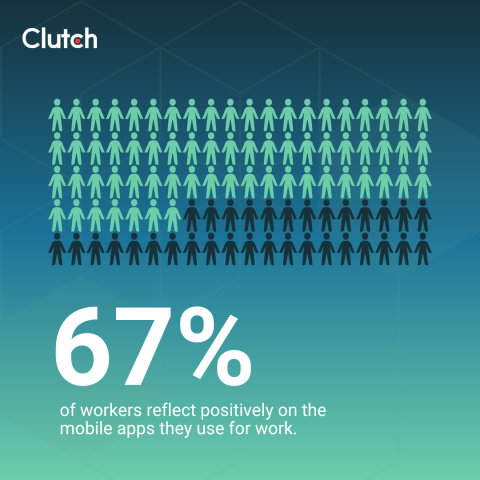
While mobile apps may make it harder to fully disconnect, most full-time workers still see them as a net positive. More than two-thirds (67%) reflect positively on the mobile apps they use for work, with flexibility (46%) being the top reason.
For many employees, mobile apps make it easier to get things done outside the office, like catching up on emails during the morning commute or quickly checking in between errands.
This level of flexibility is something today’s workers deeply value. According to Randstad’s annual review of the world of work, work-life balance now ranks alongside job security and even surpasses pay as a top factor when deciding whether to take or stay in a job, marking a huge shift in how the world views work since the COVID-19 pandemic.
“Post-COVID, flexibility isn’t a perk, it’s part of the infrastructure,” says Serhii Kholin, CEO of Onix-Systems. “The freedom to handle a school run and finish a code review later keeps great people engaged and lowers turnover. Productivity now comes from autonomy and fewer “always-on” meetings, not longer workdays.”

The ability to check in occasionally provides many workers with more control over when and where they get things done, supporting flexible schedules and reducing pressure during the work week. weekdays.
Ultimately, mobile apps provide the freedom for employees to get tasks done wherever they are. By enabling work on their own terms, these tools help create a work-life balance defined by autonomy, adaptability, and trust.
Mobile apps have become indispensable tools for most teams. A striking 89% of workers say they use their work apps at least once a week, most often to stay connected and collaborate.
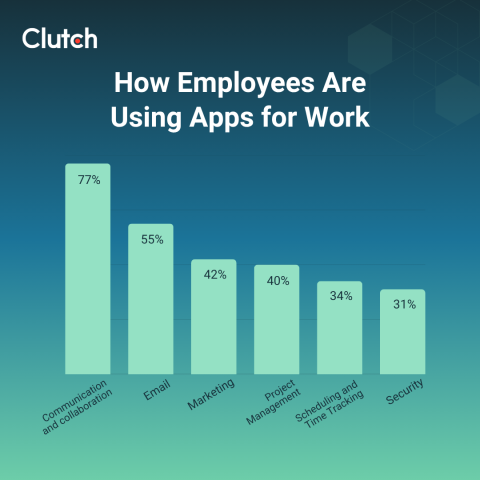
“Because mobile apps keep people connected in real-time, they significantly facilitate teamwork,” says Sharma. “Our team can resolve issues and share ideas without needing conferences, thanks to features like instant messaging, file sharing, and video updates.”
Mobile apps, like Slack and Microsoft Teams, have become indispensable tools for streamlining communication, especially when workers aren’t meeting face-to-face. They allow colleagues to connect in real time and share updates instantly, so work continues to move forward.
“We mostly use Microsoft Teams because it integrates video conferences, file sharing, and chat right into one platform, which makes it simpler for us to stay prepared, respond quickly, and work collectively with clients and associates,” says Sharma.
This kind of instant, seamless contact supports the flexibility today’s workforce values most. Since these apps sync between desktop and mobile, employees can stay connected and productive wherever they are. It’s this ability to stay in sync on the go that makes mobile apps such a powerful tool for modern work.
The flexibility offered by mobile apps allows employees to work from anywhere, but that poses security risks for many businesses.
“Because teams regularly use those apps to discuss confidential files and client information, security is crucial,” says Sharma. “Even a minor breach ought to jeopardize the company's statistics and reputation if it isn't adequately protected.”

Sensitive company information can be exposed if apps are not properly secured, mobile devices are more likely to be stolen than desktops, and mobile apps can be targeted by malicious software or phishing attempts disguised as legitimate notifications or links.
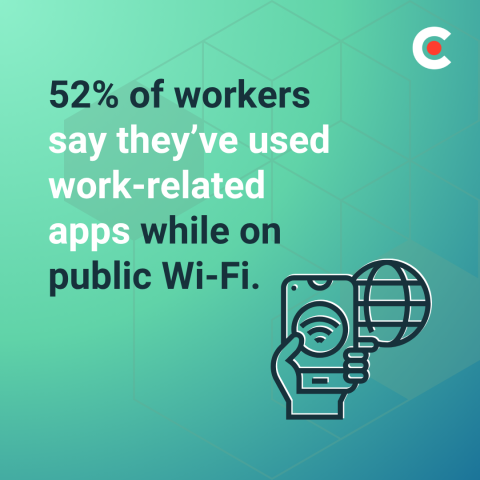
More than half (52%) of workers say they’ve used work-related apps while on public Wi-Fi, posing a major cybersecurity risk for businesses.
With so many workers on the go, it’s no surprise that they would. It would be easy to log into the Wi-Fi at a local coffee shop so they can quickly get some work done before running to their next appointment. However, that opens up the risk of:
Even if the app uses encryption, some apps have poor security configurations that leave data exposed when used on open networks. That’s why it’s so important for businesses to have policies in place to protect mobile app security.
“Secure the identity, secure the device, log everything - trust is what you engineer, not what you assume,” advises Kholin.
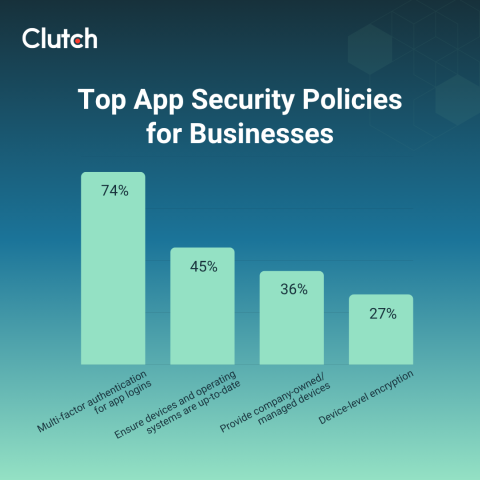
Four in five (81%) of businesses have policies in place to ensure the security of their mobile apps, including:
“Most importantly, security should be treated as a core architectural principle from the outset, not an afterthought” say Szymon Boniecki, co-CEO of Monterail.
Multi-factor authentication is one of the most popular security measures because it requires a second verification, making it much harder for attackers to access sensitive data. It’s a simple step that protects company information and keeps employees’ work safe, even on the go.
“Work-related mobile apps should incorporate strong authentication, encrypted data transmission, and secure on-device storage utilizing native mechanisms, such as iOS Keychain or Android Keystore,” says Boniecki. “They also require regular penetration testing, careful vetting of third-party libraries, continuous threat monitoring, and clear device management policies—especially in BYOD setups, where the ability to remotely wipe corporate data is crucial for maintaining security.”

Companies should also require their teams to regularly update their mobile apps. This allows them to patch known vulnerabilities, strengthen app protections, and reduce the risk of malware infections. Sensitive data should also be encrypted to prevent data breaches and ensure compliance with regulatory standards.
With these security measures in place, businesses can keep their data safe while still giving employees the flexibility they need to work from anywhere.
Building your own app? Learn more about what you need to consider in Clutch’s “App Development Checklist.”
One of the most effective ways for companies to strengthen mobile security is by issuing mobile devices to their employees, rather than relying on them to follow best practices on their own.
Work-issued devices give businesses greater control, ensuring that critical protections — like multi-factor authentication, VPNs, and encryption — are always in place. Before deployment, IT teams can configure each device to meet company security standards, reducing the risk of vulnerabilities.
It also makes ongoing management easier, by allowing administrators to monitor usage, push updates, and remotely wipe data if a device is lost or stolen.
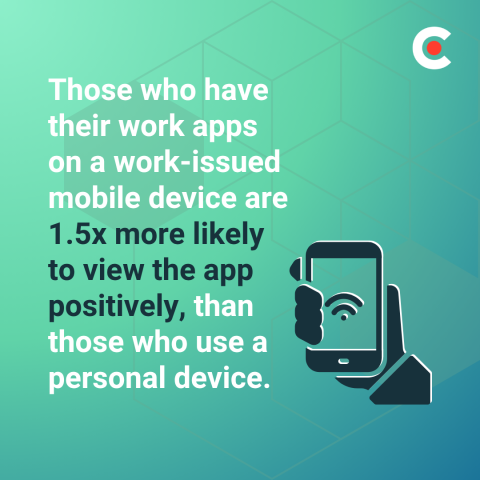
Workers are happy with that deal too — those who have their work apps on a work-issued mobile device, rather than a personal device, are 1.5x more likely to view the app positively.
This is probably because it provides a clear separation between personal and professional life.
Employees still have the flexibility they need to work when and where they want, but they can disconnect more easily. At the same time, companies benefit from knowing their information is secure.
86% of businesses use an off-the-shelf mobile app, signaling that in most cases, businesses don’t need to invest in custom app development for internal workflows. Usually, ready-made tools provide the tools teams need to communicate and manage tasks effectively.
This is particularly true given that most workers are using their apps for communication and collaboration. Popular platforms like Slack, Microsoft Teams, and Asana already offer robust features like file sharing, task management, and integration options. The cost and complexity of building a custom app for communication probably wouldn’t make sense for most businesses.
However, there are plenty of other reasons why a company would need to build a bespoke mobile app. If a business needs to deliver a unique e-commerce experience to their customers, or manage complex operations like logistics, off-the-shelf solutions might not meet their needs.
In these cases, a custom-built app can be tailored to the organization’s exact requirements, offering features, integrations, and user experiences that off-the-shelf apps cannot provide.
Custom app development can be challenging and requires a lot of resources. That’s why 59% of companies who have a custom app worked outsourced development. App development companies provide specialized expertise and can help companies scale their development process. It can be more affordable to outsource app development than hiring an internal team or scaling development projects in house. This means that projects are complete faster while ensuring that the app meets user expectations and performance standards.
Search for industry-leading app development companies on Clutch.
Mobile apps have become essential to how modern teams communicate, collaborate, and stay productive. They offer the flexibility workers increasingly expect, and for many, they make managing day-to-day responsibilities easier. But that same flexibility blurs the boundary between work and personal time, introduces new security risks, and reshapes expectations around availability.
As businesses continue to use mobile apps, the challenge is to balance convenience with protection and flexibility with clear boundaries. Companies that invest in strong security practices, set clear expectations, and equip employees with work-issued devices when appropriate can unlock the full benefits of mobile productivity without compromising worker well-being or organizational safety.