
How to Choose a 3PL: 5 Mistakes E-Commerce Brands Make
Learn how to choose a 3PL that fits your channel mix, avoids hidden costs, and scales with your brand. Real selection criteria, and top providers compared.
Updated July 22, 2025

Coming in with their unique perspective on careers and work life, Generation Z is steadily influencing how work arrangements and roles evolve. The new age group brings their global mindset, hunger for authenticity, and diverse skills to the workplace; however, they have work preferences that businesses need to adapt.
Generation Z consists of people born between approximately 1996 and 2010. This generation grew up with the Internet and related technological advances (including smartphones, tablets, streaming services, and virtual classes) as an integral part of their everyday lives.
The COVID-19 pandemic only made reliance on the Internet for everything from grocery shopping to entertainment to employment even more prominent. Some members of Generation Z have already made it into upper management and the C-suite through jobs they have found, been hired for, and started working without ever stepping foot in a central office building.
Looking for a BPO agency?
Compare our list of top BPO companies near you
They expect work to be flexible and allow them to spend more time living life than working. This trend means that employers wanting to maintain a top-tier talent pool would do well to explore new options for recruiting and retaining the best employees from this generation and those entering the workforce after them.
Based on the circumstances under which they came of age, it’s no surprise that nearly 75% of Gen Zers prefer working from anywhere or hybrid work that allows them to operate without a daily commute. Gen Z is fully comfortable with using technology to communicate, gather information, complete tasks, and submit deliverables.
Gen Z employees are most attracted to jobs that offer the freedom that working from anywhere and hybrid work provides.
Companies that fail to adapt to changing market conditions risk failure. Gen Z employees represent the next generation of workers who have seamlessly adapted to advanced technology and the societal acceptance of its use in daily tasks. They enhance business efficiency while embracing the advantages of working from anywhere.
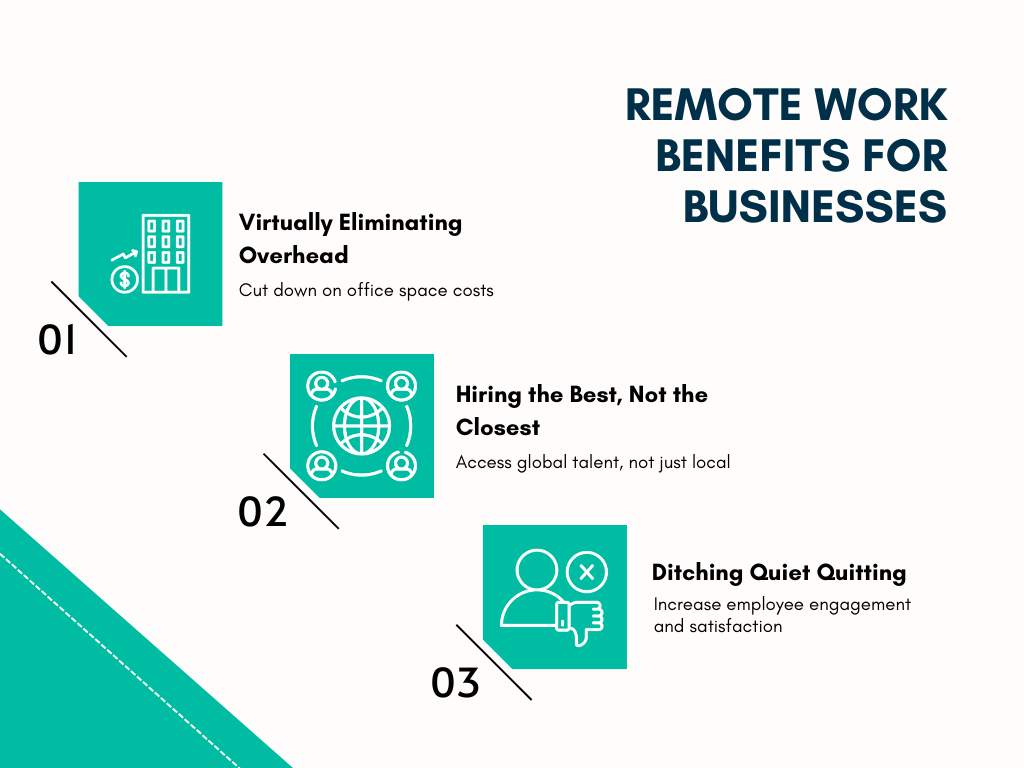
An office space large enough to comfortably house dozens of employees can easily cost thousands of dollars monthly. Meanwhile, using remote work productivity SaaS solutions would incur monthly costs starting in the mid-hundreds. Eliminating physical overhead would save the vast majority of businesses more than enough money each year, making a switch to virtual work too lucrative to ignore.
When enterprises are too focused on their geographic location, they can shrink their talent pool significantly. However, by recruiting Gen Z employees who are comfortable operating from all over the world, businesses can bring workers on board who truly are the best candidates for the position, not just the best of those who live nearby. Stronger recruitment means hiring better workers and building a better team to make meeting productivity and revenue goals faster and easier.
Quiet quitting is when employees do exactly what is stated in their employment contract, versus going above and beyond on behalf of the company. For example, while an employee reviewing an ad copy may do so multiple times to ensure it is concise, compelling, and clear, an employee who is “quiet quitting” may superficially review the copy a single time before submission but take the same amount of time.
This concept is often a response to being taken advantage of on the job, including being given more responsibilities without additional pay or losing previously enjoyed benefits like working remotely.
For instance, a mandatory return to the office can feel like a step back for employees who enjoyed working from home and appreciated the work-life balance it provided. Feeling their preferences and needs are not taken into account, employees may respond by mentally disengaging—doing just enough to get by. Instead of investing energy in doing their current job, an employee who wants to leave may spend more time and effort finding a new position at another company.
However, quiet quitting does not always mean an employee actively leaves but rather signals a deeper disengagement from the role. Addressing this issue requires companies to understand and respond to the factors driving employee dissatisfaction, fostering a workplace where team members feel valued and motivated to contribute fully.
Compared to the traditional on-site work model, hybrid and remote work arrangements are beneficial and desirable for Gen Z employees for a few key reasons:
There are 168 hours a week, 112 of which are usually waking hours. With a traditional work setup, employees working full-time will spend more than 60 of those hours at or doing activities related to that job. This includes picking up and dropping off children at school or daycare (versus staying home with them or engaging in homeschooling), grooming and dressing based on a company code, using public transportation or driving to and from work each day, preparing and packaging food to take to work for lunch, and so on.
Working at a traditional on-site business means spending about 47% of waking hours just earning a living. Meanwhile, a remote worker who works for 40 hours a week just needs to log on to work—about 35% of their waking hours. That 12% difference means that remote workers get additional free time each week, which is almost equal to an entire day. This makes them more alert and able to be more effective in their work.
On the other hand, on-site workers are actually losing those 20 hours. What’s worse, they aren’t being compensated for that time (employees generally aren’t paid for their commute to and from work each day or the time they spend meal-prepping their lunches for the week).
Remote workers have better work-life balance as they spend the extra time doing the things that help them recharge and come back to work feeling refreshed and energized. These activities include spending time with their loved ones, engaging in hobbies, resting, exercising, and learning new skills, or some just work longer hours!
Because someone working from anywhere can work at any company, they can better manage their finances. Employees can move to locations with a lower cost of living than the area where their company originated or is located. If a salary of $90,000 is on the lower end of the range for a particular position, opening the role to remote work means that someone only needing $50,000 to live comfortably in their location would be more eager to win the position and likely to stay in the position longer because they are getting paid almost twice the amount that they need to live.
But if a company only hires people who live within commuting distance of their location, that $90,000 could be the bare minimum someone needs to live in that more expensive area, and they may start job hunting again within the year as the prices of necessities like gas and car insurance continue to rise and eat into their salary.
The practice of working from anywhere is here to stay. While teleworking isn't feasible in industries like manufacturing, construction, or services such as hospitality and delivery, it is becoming essential in other sectors. The most successful businesses will attract talented Generation Z workers by prioritizing the autonomy and flexibility that these young professionals value.
Human resources departments and business owners should consider how much flexibility they can offer in their hiring positions. Higher compensation and greater work location flexibility will make open positions more appealing to potential Gen Z employees and be more cost-effective for employers. Companies that don’t adapt to the remote work culture risk ending up with a burnt-out, rapidly aging, costly, and less productive workforce.