How to Measure SEO Success When Traffic Declines
Organic traffic is down, but is your SEO failing? Learn which metrics show real SEO success when AI Overviews and zero-click searches are reducing clicks.
Updated April 8, 2026

Today, the fastest path to B2B visibility isn't traditional SEO or paid ads—it's getting mentions in AI search engines. As more buyers turn to AI tools for research, brands should position their business as a trusted source that AI engines cite, not just index.
With the rise in AI search engine use (37% of consumers use AI tools to search), brands are focusing on ranking in AI search engines rather than traditional ones. Though the power of SEO and keywords is not completely lost, businesses are increasingly striving to be captured in AI search engine mentions.
Now, the question arises: how do you get AI search engines to mention your B2B brand? Well, the key to rising to the top of an AI search engine ranking is to establish authority, context, and neutrality in the content. If your online content is detailed and answers the user queries directly and in detail, you can earn a mention in AI search engine rankings.
Looking for a SEO agency?
Compare our list of top SEO companies near you
What does citation-ready content mean? The content that an AI engine trusts to resolve a user query. Today, generative AI models like ChatGPT and Google Gemini do not filter content based on keywords, but on clarity. They prioritize content that answers a query so deeply and properly that the user doesn’t need to click away.
Hence, to be the cited authority, your B2B content must be structured as a high-velocity information hub. Moreover, the pages that you create for your business website must follow a structure.
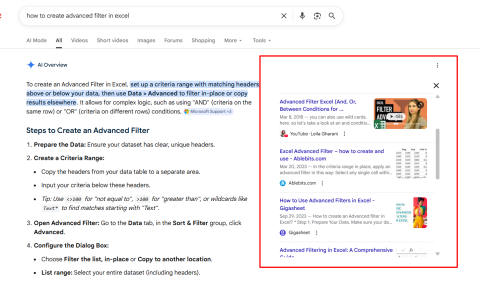
From answering “What is a payment gateway? to "How does it integrate?" and finally "What are the real-world results?", these questions should follow a logical layering.
Here are some tactics to convert your content into citation-ready data:
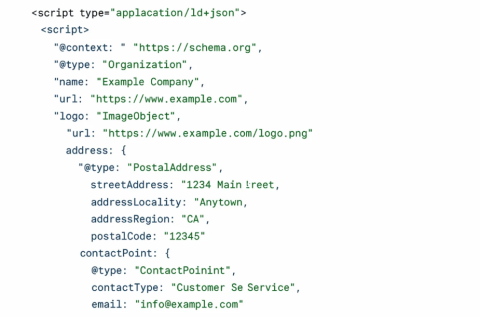
Creating citation-ready content is a long-term strategy for building authority. In the AI era, clarity is currency for B2B businesses. That’s why it is important to answer questions most clearly, accurately, and authoritatively — and ensure your tone feels human, not machine-generated, by leveraging tools like an AI humanizer to improve readability and trust.
In traditional SEO, the number of backlinks played an important role in achieving a higher Google ranking. Focusing on targeted SaaS link building can help your software business earn high-quality backlinks and improve its online authority.
However, with AI models, the case is opposite. AI models do not consider the number of links, but rather their quality. For example, a link from a cybersecurity firm mentioned in a TechCrunch article about data breaches carries more weight than 50 links from generic business directories.
To an AI model, a link is a vote of confidence proving the authority of your B2B business. If any of the high-authority publications like .edu or .gov include your insights in their content, AI will consider you as trustworthy.
A practical way to build topical authority is to publish your content across different platforms. They present structured, verified data that is easy to summarize, and AI refers to these sites more frequently. If you don’t have the internal resources to manage outreach at scale, it’s often more efficient to explore how to outsource link building while maintaining quality and contextual relevance.
Another effective way to make your content stand out is by using clear, engaging infographics that summarize key insights. Sharing these visuals through an AI presentation agent can help position your B2B business as an authority and make your information more accessible to both AI and human audiences.
"Building topical authority isn't about collecting links — it's about earning ones that signal trust. When your link profile reflects real editorial decisions, AI search engines don't just index you, they recommend you."
— Sujan Sarkar, OneLittleWeb
Here are ways to do it:

To make your B2B business a trusted source for AI search engines, create a clear network of high-quality content. This network should connect different pieces of information and include reliable external links. By doing this, your business will gain the strength needed to stand out and attract more attention.
Above all, AI models no longer associate your brand with keywords, but with entities. For example, your business website is an entity that AI considers and establishes its relationship with specific topics, industries, and sentiment. This is known as a cluster.
Therefore, if your brand is associated with high implementation costs or slow support in user reviews or anywhere else on the web, it will not be recommended by AI, no matter how optimized your SEO is.
There are two ways to optimize for AI here:
The next step is to update your content. That includes detailed client quotes, 5-star ratings, and specific project costs. Specific, in-depth details influence positive sentiment and your brand's authority. So, next time when someone queries about the most reliable or best-rated brand in the niche, AI is likely to recommend your business.
As AI has become prevalent, the phenomenon of AI Sameness has emerged. AI sameness means that the AI engine produces homogenized, safe, and often generic recommendations. One reason is the use of self-promotional marketing copy.
When AI analyzes this copy, it is seen as unworthy of AI mention. Therefore, B2B brands must look beyond their own domains. AI models today are trained to prioritize neutral, unbiased sources. If you are the only one saying that you are the best and not anyone else (third-party validation), you are likely to be ignored. Using an agentic RAG approach can help your brand systematically gather and present verified information that AI recognizes as trustworthy.
Here are some effective ways to leverage third-party validation:
Use Partnership Opportunities: Search for authoritative content that might mention or create your brand. For example, they might create YouTube videos, test your product, or write a LinkedIn post. When AI search engines offer tool recommendations, they can show dedicated content about your B2B business.
Businesses are also looking for better ways to stream live video under their own brand. A dependable white-label video platform lets companies customize and manage their streaming experience while expanding their reach.
"For law firms aiming to be featured in AI-powered search results, authentic client mentions on trusted forums are a strategic advantage. Encourage your satisfied clients to mention your firm organically on platforms like Quora, Reddit, Clutch, Avvo, Thomson Reuters, etc., as these threads are AI goldmines,” said Jason McMinn, Founder of McMinn Law. “The best thing about forums is that they capture highly specific, long-tail queries that traditional SEO often misses.”
These nuanced, conversational questions are exactly what B2B and high-stakes individual buyers ask AI search engines today. When your business is cited authentically in these discussions, you increase the likelihood of being recommended by AI assistants—building visibility, trust, and credibility where it matters most.
You can make your own pages become sources instead of looking for mentions on other websites. This long-term strategy can be highly effective when combined with path A and the right resources.
One of the best ideas is to identify topics where your B2B business doesn’t appear in AI responses. Use the Sources feature to analyze the perspectives those pages offer, consider their format (such as listicles, guides, or data reports), and create content that aligns with what AI already cites.
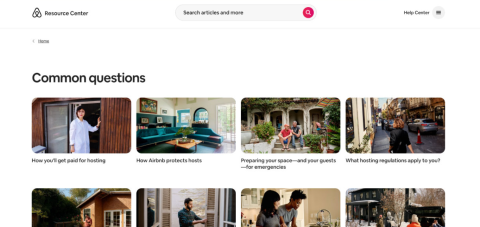
Focus on breaking down big questions into smaller, clear sections. For example, if you ask how to make a website faster, it can lead to several topics, such as improving images, reducing CSS size, and understanding Core Web Vitals. That helps improve relevance and makes it easier for AI to find and reference your content. You can also adjust your existing content to follow this structure.
Notice: AI search engines may not always mention your website when giving product overviews. They might use information from your articles about other tools, such as alternatives. However, the information about your brand may come from a different site.
Unlike SEO, which may take months to show results, AI optimization can have your brand reach the top of the page or Google AI Overviews within a few days.
For B2B businesses, it is important to be referred to or featured by reputable third-party websites to accelerate optimization. Moreover, it is crucial to create in-depth content that clearly answers users' queries. Lastly, build a qualitative and strategic link ecosystem.