
Ads in the Answer: How Consumers Respond to Advertising in AI Assistants
Clutch surveyed AI assistant users about ads in tools. Learn how ads affect user trust, loyalty, and brand perception.
Updated July 9, 2026

AI-generated ads are faster and easier to scale, but human-led campaigns still drive stronger emotional engagement and brand recall. Here’s where each performs best and how smart teams combine both.
Advertising has always absorbed whatever technology gave marketers an edge.
AI changed something different: the actual production process.
Looking for a Advertising agency?
Compare our list of top Advertising companies near you
How ads get written, assembled, tested, personalized, and optimized while campaigns are still live has changed with it.
That matters because most teams are under pressure from both sides now.
They need more creative output, faster iteration, tighter targeting, shorter reporting cycles, and lower acquisition costs simultaneously. AI helps with some of that immediately. But it also introduces a new problem: many campaigns are starting to look and feel strangely interchangeable.
The real question is no longer whether AI-generated ads work.
They do.
The harder question is where they outperform human-led campaigns, where they break down, and what actually happens when you try to run both inside the same marketing operation.
AI-generated ads are good at one thing most human teams struggle to do consistently: processing huge amounts of feedback quickly enough to adjust before the opportunity disappears.
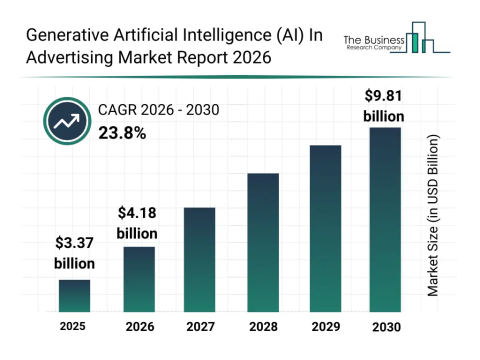
That includes:
Platforms like Renderforest’s AI Ad Generator now put several of these capabilities directly in marketers’ hands, turning a short brief or product description into finished ad variations, complete with copy and visuals, in minutes rather than days.
Google's Performance Max is the clearest example.
The system automatically distributes creative and budget across Google's inventory while continuously optimizing toward conversion goals. Google has reported average conversion lifts of around 18% at similar CPAs for advertisers using it.
Meta's Advantage campaigns follow the same logic on the social side. Feed the system enough creative assets and enough conversion data, and it starts testing combinations at a scale most internal teams simply cannot match manually.
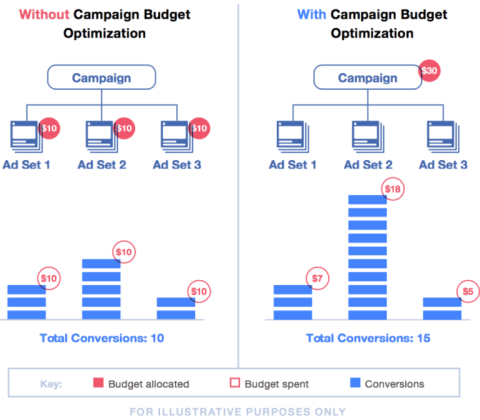
So AI becomes genuinely useful in the iteration loop here.
A human team might launch five variations because approvals, production timelines, and coordination slow everything down.
But AI systems can quietly test hundreds of combinations in the background while automatically reallocating to whatever starts working.
You see this operationally in e-commerce environments, too. Teams running large-scale campaigns for bulk t-shirts often rely heavily on automated testing because product variations, seasonal demand shifts, and audience segments change too quickly for manual creative iteration alone. The automation becomes useful when the testing volume is high enough to surface patterns that human teams would miss manually.
Human-created campaigns usually start somewhere AI struggles to replicate convincingly: tension, instinct, cultural timing, and emotional judgment.
A real creative process often begins with someone noticing something uncomfortable, funny, frustrating, embarrassing, aspirational, or emotionally true about how people behave. Then the campaign gets built around that insight.
That's why memorable campaigns rarely feel mathematically optimized. They just feel specific.
Old Spice's The Man Your Man Could Smell Like worked because it was absurdly confident at exactly the right moment. KFC's FCK apology campaign worked because the brand acknowledged failure in a way most corporate teams would have over-sanitized during approvals.
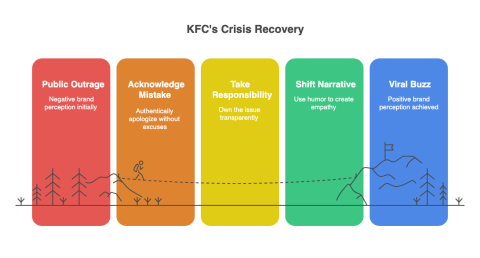
Those campaigns were risky enough that many AI systems trained on historical performance patterns probably would not have generated them.
This is where many AI-first creative discussions oversimplify reality.
Advertising performance is a memory problem.
People remember campaigns that create emotional texture. Nielsen Catalina Solutions has repeatedly argued that creative quality remains one of the strongest drivers of advertising effectiveness, often outweighing targeting advantages alone. That still shows up constantly in practice.
A mediocre offer with strong creative regularly outperforms strong targeting paired with forgettable messaging.
AI can optimize delivery, but that alone rarely creates brand attachment.
Many debates over AI versus human advertising fall apart because teams define performance differently.
If you're measuring:
AI often wins at scale.
The advantage becomes obvious inside paid acquisition environments where speed matters. AI systems can continuously adjust bids, placements, creative combinations, and audience allocation without waiting for reporting cycles or review meetings.
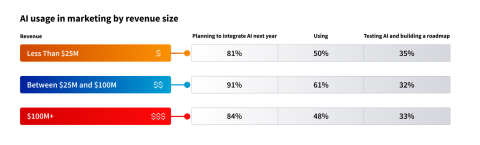
While AI-generated ads consistently outperform in optimization speed and testing velocity, human-led campaigns tend to generate stronger emotional engagement.
That split shows up in real campaign behavior all the time.
AI tends to improve efficiency curves. Humans tend to improve memorability.
Those are not the same thing.
Human-led campaigns often create stronger downstream effects that don't appear immediately inside platform dashboards:
The problem is that many attribution systems undervalue those outcomes because they are harder to isolate cleanly. Attribution models in general often miss out on a lot because of the way they are structured, as you can see below.
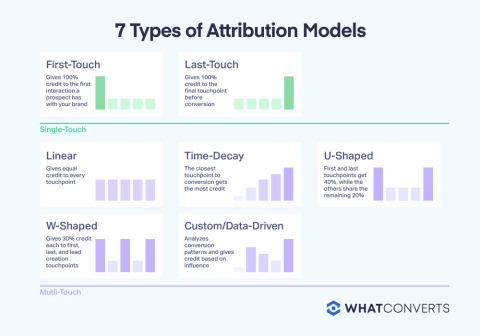
If a campaign changes how customers perceive a brand six months from now, that may never show up properly in last-click reporting.
This is why more mature marketing teams increasingly combine attribution models with incrementality testing, lift studies, marketing mix modeling, and global mobility insights rather than relying solely on platform-reported ROAS.
Otherwise, the system naturally pushes teams toward whatever converts fastest today, even if it weakens the brand long term.
Jason Ledbetter says many B2B marketing teams unintentionally train themselves to think short-term because platform reporting rewards immediate movement over long-term positioning.
He explains, “When teams stare at performance dashboards all day, they naturally start optimizing toward whatever creates the fastest visible response. The problem is that many high-trust buying decisions don’t happen that way.
Especially in B2B, people may see a campaign multiple times, ignore it for weeks, then come back later once the timing changes. If you only measure what converts immediately, you can slowly optimize the brand into something technically efficient but strategically forgettable.”
Teams using AI in contract management software find this out fast. Inconsistent approvals, fragmented records, messy data entry, automation doesn't fix any of that. It just scales it.
Personalization itself is not new. The scale has changed.
A good example is Cadbury's Shah Rukh Khan campaign in India, where machine learning and synthetic media generated localized versions of ads promoting nearby businesses. Manually producing that level of variation would have been operationally unrealistic.
AI unlocks forms of personalization that were previously too expensive, too slow, or too operationally messy to execute consistently.
But personalization only works when the underlying context still makes sense.
Adrian Iorga, founder of Stairhopper Movers, says service businesses usually see the difference between useful personalization and meaningless automation very quickly because customer stress levels are already high.
Iorga says, “People booking a move are already dealing with uncertainty, scheduling pressure, and cost concerns. If messaging feels overly automated or disconnected from what they actually need in that moment, trust drops fast. Personalization only works when it reflects the real situation the customer is dealing with, not just data points pulled into a template.”
A lot of bad AI advertising right now technically personalizes creative while completely misunderstanding emotional relevance. You see campaigns inserting names, locations, or product references into ads that still feel hollow because nothing meaningful has actually changed beneath the surface.
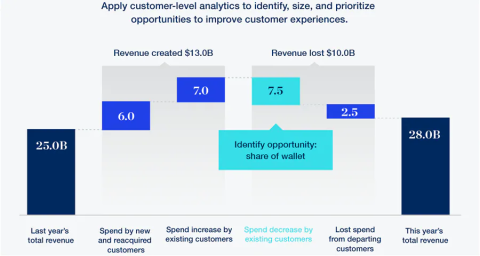
McKinsey's findings on personalization reflect the upside when teams do it properly: revenue lifts of 5–15% and marketing efficiency improvements of 10–30%. But the gains usually come from thoughtful implementation, not personalization for its own sake.
The strongest AI-personalized campaigns usually anchor personalization to moments where customer intent or context genuinely shifts:
Not random token swapping. That's an important difference operationally.
AI systems have a tendency to drift toward sameness surprisingly fast.
Especially when multiple brands rely on similar tools, prompts, datasets, and optimization goals.
After a while, campaigns begin converging stylistically, with the same pacing, hooks, formatting, and emotional cues and structures.
This is happening noticeably across paid socials. A lot of ads are becoming statistically optimized but creatively disposable.
AI also inherits the weaknesses of its training data. Bias issues, poor representation, flawed assumptions, overfitting to historical patterns, and short-term optimization behavior don’t take a back seat just because the system is computationally sophisticated.
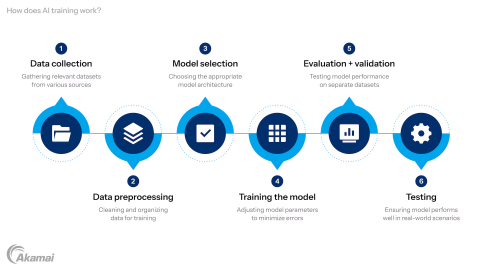
Human oversight matters more once scale increases, not less.
But human-led campaigns come with their own operational problems. Creative production, approvals, localization, testing, and large-scale personalization are slow and expensive.
And sometimes teams become emotionally attached to creative concepts long after performance data says the campaign is weakening.
Data privacy complicates everything further.
Between GDPR, CPRA, the EU AI Act, and ongoing browser-level tracking changes, marketers are losing some of the granular targeting infrastructure digital advertising depended on for years.
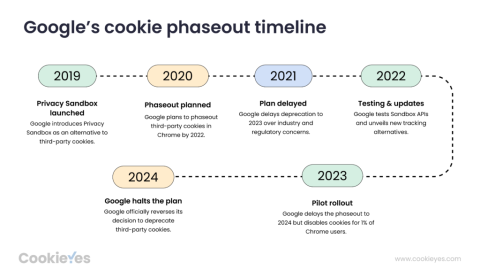
Google's delayed third-party cookie deprecation reflects how difficult the transition still is operationally.
So clearly, both methods have their challenges. While AI helps when used smartly, creative teams have to pay more attention to:
AI will move deeper into creative workflows, whether teams are comfortable with it or not.
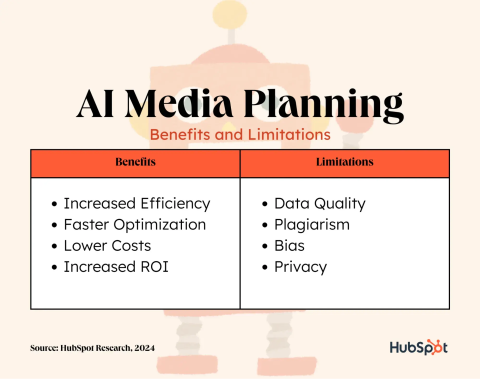
You can already see the direction:
A lot of future campaign work will involve humans reviewing, refining, rejecting, steering, and shaping AI-generated starting points instead of building every variation manually from scratch.
At the same time, brand differentiation may become even more valuable precisely because AI-generated content is getting easier to produce.
When everyone can generate volume cheaply, distinctive judgment matters more.
You also see growing pressure around:
Those governance layers will likely be embedded directly into advertising workflows rather than treated as separate compliance reviews later.
AI is good at testing, optimizing, and scaling.
Humans are good at positioning, judgment, and knowing what actually resonates.
The teams doing this well aren't debating which one wins. They've just figured out what each is better at and split the work accordingly.